
PDF-documented product
Stainless Steel GB Strainer
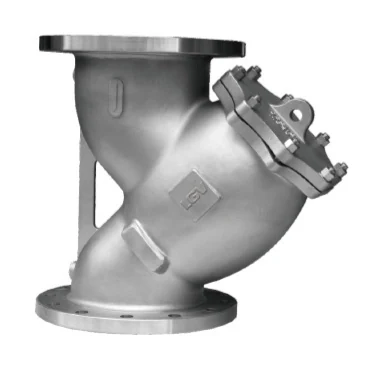
The supplier catalog identifies this item as Stainless Steel GB Strainer. Use this record to define the debris-protection duty; the catalog does not specify the body pattern, screen opening, element construction, pressure limits or dimensions needed for a final selection.
- Product type: Strainer
- Catalog material descriptor: Stainless steel
- Catalog descriptor: GB
Product identity
What the catalog record confirms
This page identifies one supplier-catalog entry, not a complete technical datasheet. Define the filtration duty, pipeline conditions and maintenance layout before requesting an order-specific configuration.
Product family
Strainer. This is the parent commercial route for category-level selection.
Catalog section
Integrated Product Series. This is the printed catalog section heading for the entry; it identifies where the product appears in the catalog, not a product-specific strainer series or construction.
Evidence source
Recovered supplier product catalog, PDF page 113.
Catalog evidence
Catalog-documented product data
The available catalog entry confirms the product identity and its printed descriptors only. “Stainless steel” is not a complete material schedule, and “GB” does not identify a specific standard number, edition or compliance scope.
| Field | Catalog-documented value | Evidence status |
|---|---|---|
| Product type | Strainer | VERIFIED — PDF catalog label |
| Material descriptor | Stainless steel | VERIFIED — catalog wording only; grade and wetted-part schedule not stated |
| Catalog descriptor | GB | VERIFIED — catalog wording only; standard number and edition not stated |
| Catalog section | Integrated Product Series | VERIFIED — printed catalog section heading |
| Catalog source page | PDF page 113 | VERIFIED — recovered PDF mapping |
Important: The catalog does not establish a model code, body pattern, screen type or opening, line size, connection, pressure-temperature rating, pressure-drop curve or inspection record. Do not infer these values from the product name or photograph. Resolve them against the exact offered datasheet and approved order drawing.
Evidence boundary
Known facts and open configuration fields
The catalog establishes a product identity, not filtration performance. Selection depends on the particle size to retain, the expected solids load, the effective screen area and the pressure loss the protected equipment can tolerate.
Confirmed by the catalog
- Product identity: Stainless Steel GB Strainer. The catalog labels it as a Strainer; no model code or body pattern is stated.
- Material descriptor: Stainless steel. This does not identify the exact grade or prove that every wetted part, screen and seal uses the same material.
- Catalog descriptor: GB. The label does not state a specific GB number, edition, scope or compliance declaration.
Confirm before quotation
- Body pattern, cover arrangement, nominal size, end connection, face-to-face dimensions and design pressure/temperature
- Screen construction and actual aperture in µm or mm; mesh/wire details or perforation size; effective open area and support arrangement
- Body, cover, screen element, support and gasket/seal material grades for the actual fluid and cleaning method
- Protected equipment, particle size to retain, solids type, concentration and expected accumulation rate
- Minimum, normal and maximum flow; clean-screen pressure drop; allowable loaded differential pressure and screen differential-pressure limit
- Installation orientation, flow direction, element withdrawal clearance, drain/blowdown access and cleaning or bypass arrangement
- Order-specific datasheet, dimensional drawing, IOM, material certificates and test/inspection records required by the project
Engineering review
Specify the strainer around the debris and the protected equipment
Start with the downstream component and the largest particle it can tolerate. Then match the screen opening and effective area to the expected solids load while staying within the system’s pressure-loss limit. A finer screen is not automatically safer: it can load faster, increase pressure drop and shorten cleaning intervals.
Filtration duty
Identify the pump, control valve, meter, nozzle, heat exchanger or other component being protected. State the harmful particle size or required retention, and whether the duty is occasional coarse debris or continuous fine solids. If fine filtration is essential, request evidence that the offered element meets the specified aperture; the catalog label does not establish micron performance.
Particle size and solids loading
Describe particle material, shape, hardness, abrasiveness and any fibrous or sticky tendency, together with solids concentration and expected accumulation rate. Separate commissioning debris from normal operating load. Specify the actual screen opening in µm or mm; mesh count alone is incomplete because wire diameter and weave affect the clear opening and open area.
Screen, body and seal materials
Confirm the body and cover material separately from the screen element, support cage, fasteners and gasket/seals. “Stainless steel” is only the catalog descriptor; it does not identify a grade or prove that all wetted parts share one material. Match each part to the fluid chemistry, temperature, solids abrasion and cleaning method. Also confirm line size, end connection, facing and mating dimensions.
Clean and loaded pressure drop
Request clean-screen pressure drop at minimum, normal and maximum flow for the actual fluid. Set the allowable loaded differential pressure and cleaning trigger against downstream equipment limits and the screen element’s own differential-pressure rating. Do not use the body pressure rating as the screen limit. For pump suction service, include the loaded strainer loss in the available NPSH review.
Installation and maintenance access
Provide the piping layout, flow direction, installation orientation, face-to-face dimensions, cover-opening path and screen-withdrawal clearance. Confirm access to the drain or blowdown connection and a safe route for collected solids and drained fluid. Define isolation, depressurization, cleaning and disposal requirements. If the line cannot stop for cleaning, ask whether a separately engineered duplex or bypass arrangement is required; this catalog entry does not establish one.
Application boundary
Service conditions that change the selection
The catalog label cannot establish whether a manual strainer is suitable for every duty. These service conditions can change the screen specification or point to a different arrangement; include them in the RFQ.
Pump suction service
For a suction-side installation, compare clean and loaded strainer pressure loss at the required flow with the pump’s available NPSH and the pump maker’s required margin. If the margin cannot be demonstrated, hold the selection and request lower-loss screen/area data or a different layout; do not guess a finer mesh.
Heavy solids or continuous operation
High, sticky or abrasive solids can cause frequent cleaning even when the opening is appropriate. Confirm the element’s solids-holding capacity and expected cleaning interval. If the process cannot stop for maintenance, specify a separately engineered duplex/parallel or automatic-cleaning arrangement rather than assuming this catalog entry includes one.
Fine particle retention
When downstream equipment requires fine retention, request the actual aperture, effective open area and clean pressure-drop data at the operating flow. If those data cannot demonstrate the retention target within the available pressure-loss margin, a separate fine-filtration stage may be required. Do not assume this cataloged strainer is a filter-grade element.
Visual evidence
Catalog image for product identification
This mapped supplier-catalog image identifies the Stainless Steel GB Strainer entry. It is not a dimensional drawing and does not confirm body pattern, screen construction, material grade, pressure rating or pressure-drop performance.
Related product routes
Compare related strainer catalog records
These separate catalog records may help when another documented description better matches the duty. Review each product’s own evidence, drawing and configuration; specifications do not transfer between pages.
Stainless Steel Basket Strainer
A separate stainless-steel basket-strainer record. Compare its own debris capacity and basket-removal arrangement against the expected solids load.
Forged Steel ASME Straight Flow T-Type Strainer
A separate forged-steel straight-flow T-type record. Review its own body geometry, screen access and connection drawing.
Water Pipeline Strainer
A water-labeled strainer record. Review its stated service descriptor, water quality and screen access on its own product page.
Buyer questions
Stainless Steel GB Strainer FAQ
These answers separate the catalog identity from the engineering information needed to select, install and maintain the offered configuration.
What does the catalog confirm about the Stainless Steel GB Strainer?
It identifies the product name, Strainer type, Stainless steel material descriptor and GB catalog descriptor. The entry appears under the catalog section heading Integrated Product Series on PDF page 113. The catalog does not state a specific GB number or edition, material grade, screen opening, pressure rating or dimensions.
How should the screen opening and element be specified?
Start with the particle size the protected equipment must reject or retain, then request the actual aperture in micrometres or millimetres, screen construction and effective open area. Mesh count alone does not fully define the opening because wire diameter and weave also matter. Include the expected solids type and loading so element capacity and cleaning frequency can be reviewed.
What pressure-drop information is needed?
Request clean-screen pressure drop at the specified flow range and fluid conditions, plus the allowable loaded differential pressure and the screen element’s maximum differential-pressure limit. Set the cleaning trigger against downstream equipment and system limits; do not assume a generic threshold or use the body pressure rating as the screen limit.
What should accompany the RFQ?
Send the process fluid, solids and particle target, minimum/normal/maximum flow, operating and design pressure and temperature, line size and connection, body/screen/support/seal material requirements, allowable clean and loaded pressure loss, piping drawing, and screen-removal and drain clearance. Request the exact datasheet, dimensional drawing and IOM; list material certificates and test/inspection records where the project requires them.
Technical inquiry
Request a Stainless Steel GB Strainer configuration review
Reference this catalog identity and submit the filtration duty, flow conditions and piping layout. Request the proposed screen opening, element construction, material schedule, clean/loaded pressure-loss data and maintenance dimensions for the exact configuration offered.
- Protected equipment, harmful particle size or required retention; fluid and solids type/loading
- Minimum, normal and maximum flow; operating/design pressure and temperature
- Screen opening and construction; body, screen/support and gasket/seal material requirements; line size and connection
- Allowable clean and loaded pressure loss; screen differential-pressure limit; pump suction margin where applicable
- Piping/layout drawing, flow direction, screen-removal and drain clearance, cleaning/bypass plan, quantity and required documents