Technical guide
Pilot-Operated Safety Valve Working Principle
This evidence-led guide answers pilot operated safety valve working principle intent for industrial buyers. It supports a product decision without replacing the selected product datasheet, project specification or engineering review.
Engineering definition
Pilot-Operated Safety Valve Working Principle in an industrial system
A pilot-operated safety valve uses a pilot control to manage pressure acting on the main valve's closing or opening areas. Exact set behavior, capacity, blowdown, back-pressure response and certification require a verified product and sizing basis.
What the mechanism owns
It explains the physical or control action at a technology level.
What the product owns
Before using pilot operated safety valve working principle guidance in an RFQ, exact construction, capacity, materials, limits, dimensions and tests belong to the documented product.
What the project owns
When researching pilot operated safety valve working principle, operating cases, safety basis, acceptance criteria and governing specifications come from the buyer or engineer.
Working sequence
How the pilot operated safety valve mechanism responds
In a pilot operated safety valve working principle review, the sequence is conceptual. Product drawings and instructions determine the exact components, flow paths and safe operating procedure.
System pressure reaches the pilot
Pressure is sensed through the documented pilot circuit.
Pilot action changes control pressure
At the defined condition, the pilot changes pressure acting on the main valve.
Main valve opens and recloses
The main element responds according to its area ratio and control circuit; reset behavior is product-specific.
Design and application context
Configuration differences that change the technical review
At the pilot operated safety valve working principle decision point, terms that look similar in search results may represent different mechanisms, accessories or duties. Keep the product identity visible.
Pilot circuit integrity
Clean passages, correct sensing and maintained components are essential.
Back pressure and discharge
Outlet-system conditions can affect performance and must be included in sizing.
Protection basis
The credible overpressure scenario and governing code remain the project owner's responsibility.
Selection data
Inputs required before the principle becomes a product selection
In a pilot operated safety valve working principle review, a working-principle explanation cannot size or approve a valve. The RFQ should expose the real operating boundary.
| Technical review area | Project input | Decision to verify |
|---|---|---|
| Protection scenario | Credible overpressure case, required relieving rate and governing code/edition. | The protected system and sizing basis must be established before product selection. |
| Inlet and discharge | Accumulation, inlet loss, built-up/superimposed back pressure and discharge routing. | Check whether the pilot/main-valve arrangement remains suitable for the whole system. |
| Pilot circuit | Medium cleanliness, sensing route, pilot supply, maintenance and failure philosophy. | Assess circuit integrity rather than assuming pilot operation is inherently superior. |
| Certification and test | Exact model, set pressure, capacity basis, current certification scope and test records. | A working-principle article cannot establish code compliance or certified capacity. |
Limitations and safety
Do not turn a working principle into an unsupported operating claim
For a traceable pilot operated safety valve working principle inquiry, a generic explanation cannot establish suitability, set point, capacity, leakage, service life or compliance. Those outputs require product and project evidence.
- Do not infer a model or configuration from keyword wording
- Do not publish unverified pressure, temperature or material values
- Do not claim certification or code compliance without scoped evidence
- Do not use the article as an installation or maintenance manual
- Do not bypass sizing, transient or protection analysis where required
Visual evidence
Use mapped product images as context—not as a hidden specification
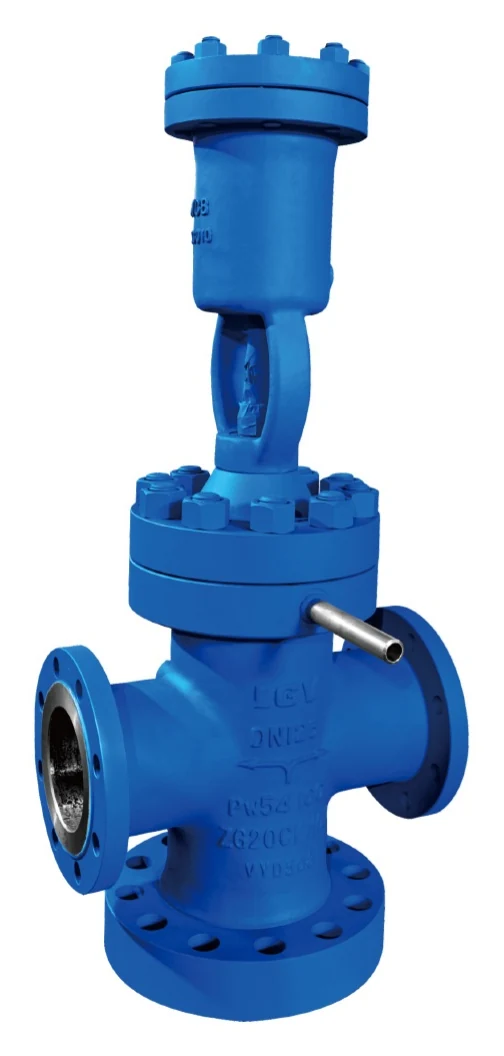
In a pilot operated safety valve working principle review, the images show documented Lianggong product context. Visible geometry does not prove internal materials, dimensions, performance or approval.
Verified context
Documented page identity, product route and mapped image context.
Product evidence needed
Construction drawing, datasheet, limits, tests and exact offered configuration.
Project evidence needed
Operating cases, governing basis, acceptance criteria and responsibilities.
Engineering and procurement use
Convert the pilot-operated safety valve working principle into a controlled project decision
When researching pilot operated safety valve working principle, a useful guide creates shared language across process, piping, mechanical, maintenance and procurement teams. It should make missing information obvious before a vendor is asked to confirm a configuration.
Engineering review
In a pilot operated safety valve working principle review, record the service cases, assumptions, consequences and acceptance criteria that determine technical suitability.
Commercial comparison
For a traceable pilot operated safety valve working principle inquiry, issue the same data and document requirements to each supplier, then compare explicit inclusions, exclusions and deviations.
Approval handoff
For engineering teams comparing pilot operated safety valve working principle, tie the selected product identity to the approved drawing, datasheet, calculations, material records, tests and revision-controlled submittal list.
Commercial-owner sovereignty
Use this pilot-operated safety valve working principle guide to support—not replace—the product owner
In a pilot operated safety valve working principle review, use Resources for education and comparison, then continue to product pages for manufacturer evaluation, specifications and RFQ preparation.
Review the commercial product owner
Continue to documented product categories or series for buying intent.
Browse all products
Before using pilot operated safety valve working principle guidance in an RFQ, compare the relevant product routes, then continue to the product page that matches the selected design.
Explore industry applications
Connect the decision to service conditions and operating consequences.
Prepare an RFQ
Send operating cases and evidence requirements for technical review.
Technical questions
Questions to ask after learning pilot operated safety valve working principle
Before using pilot operated safety valve working principle guidance in an RFQ, use the answers to prepare the next engineering conversation, not to pre-approve a product.
Can this principle select a valve?
In a pilot operated safety valve working principle review, no. It clarifies behavior; selection still requires system data and verified product evidence.
Which values can be assumed?
For engineering teams comparing pilot operated safety valve working principle, none. Mark missing pressure, temperature, capacity, material and standard fields for confirmation.
Where should buying intent go?
Follow the commercial-owner link to the correct product category or series.
Decision handoff
Turn the pilot operated safety valve working principle research into a reviewable inquiry
At the pilot operated safety valve working principle decision point, provide the actual medium, operating cases, line interface, duty, actuation, project standards and required evidence. Unknowns may stay open for confirmation.
- Minimum, normal, maximum and upset operating cases
- Medium composition, phase, solids and temperature
- Line size, ends, orientation and available envelope
- Required function, cycling, fail action and controls
- Applicable standards, editions and project exceptions
- Drawings, testing, inspection and document deliverables