
Industrial product category
Knife Gate Valves for Slurry and Solids Isolation
Explore seven catalog-listed knife gate valve options, including lug, large-diameter, pneumatic and electric designs. Start with the solids, sealing direction and operating method—then check the actual seat, flange and pressure conditions before ordering.
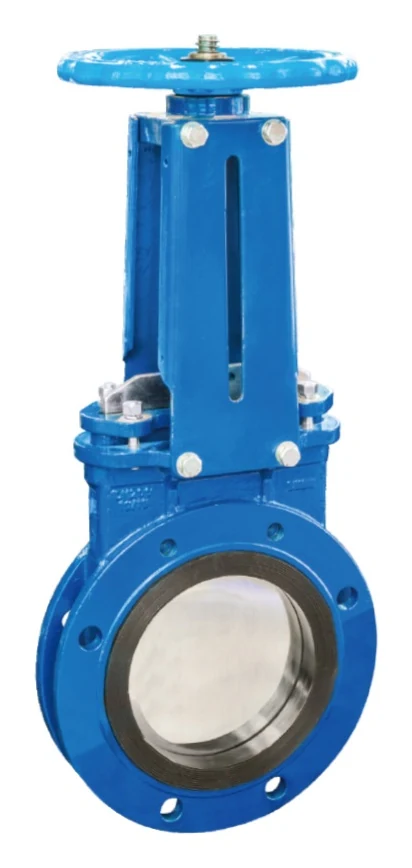
Explore knife gate valve types
These seven catalog-listed options are different procurement starting points, not interchangeable pressure or sealing specifications. Select a design to see its product record, or send your duty for a configuration review.
Ceramic-related option
The catalog names ceramic but does not identify the ceramic-lined or wetted components. Request a material and seat schedule.
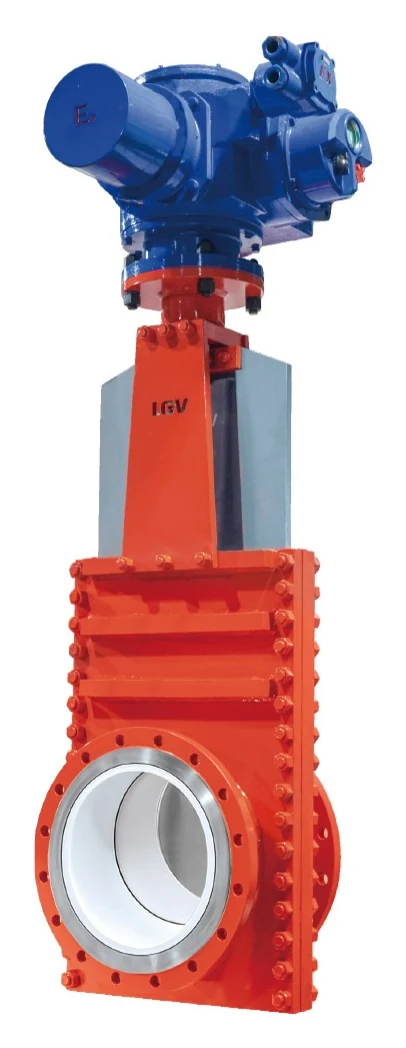
Electric + ceramic descriptor
Review the ceramic components, seat arrangement, actuator power and controls for the offered build.
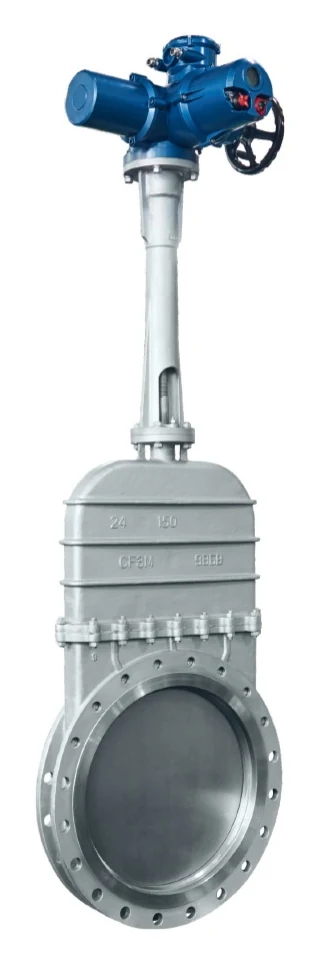
Electric + stainless steel descriptor
Confirm the exact stainless grade, wetted surfaces, sealing design and motorized actuator specification.
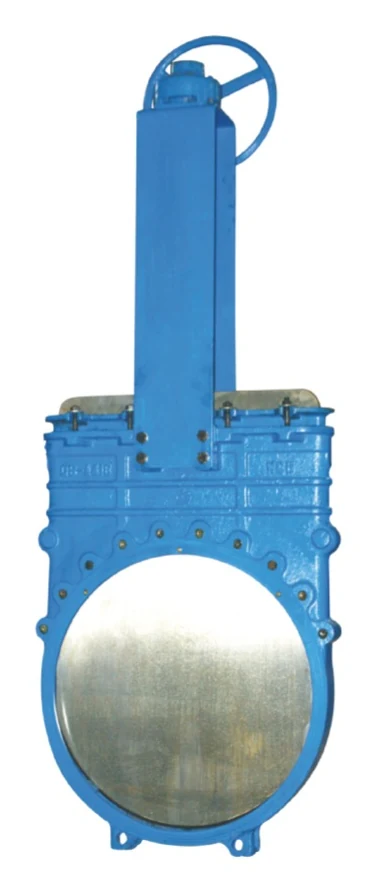
Large-diameter configuration
Start with required DN/NPS, face-to-face length, pipeline loads and drawing approval; the label provides no size limit.
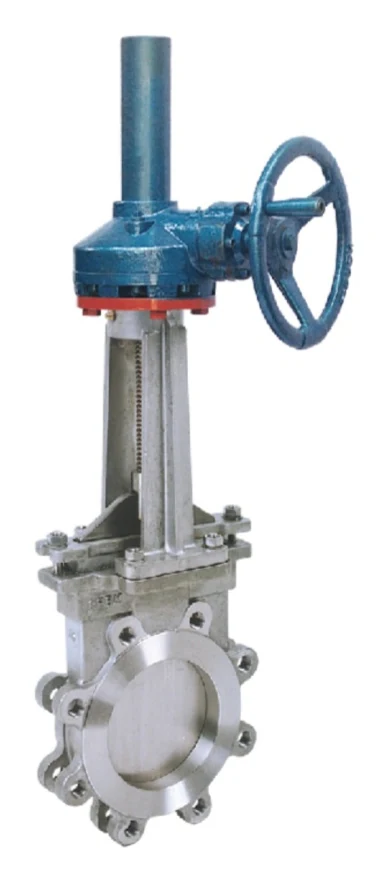
Lug-style connection
Check flange drilling, bolt engagement, gasket arrangement and any proposed end-of-line duty before selection.
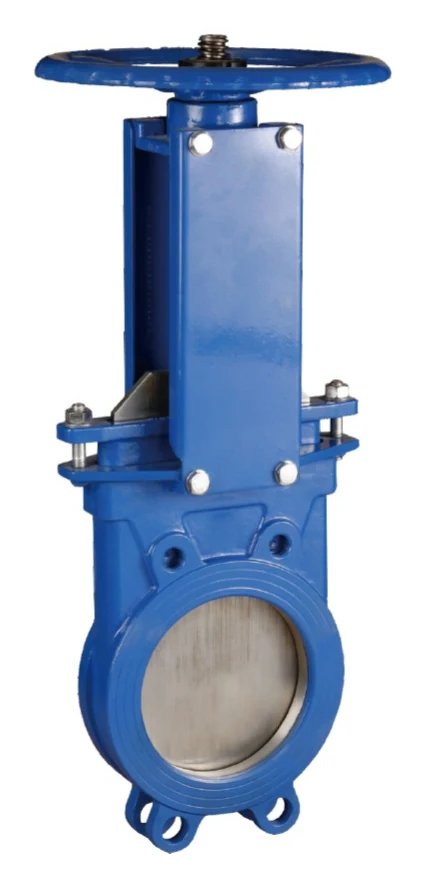
Catalog-listed new type
The name does not explain the design change. Ask for the sectional drawing and body, gate and seat arrangement.
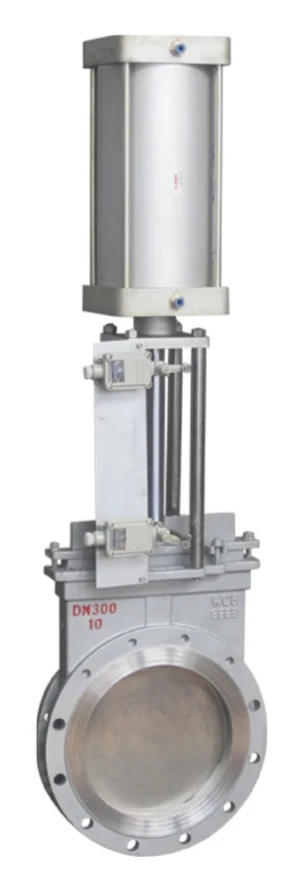
Pneumatic operation
Confirm site air supply, actuator thrust, travel, operating cycles and required loss-of-air behavior.
Selection decisions
Match the seat, body and drive to the duty
Use the operating cases—not the catalog thumbnail—to narrow the design. The final directionality, shutoff rating and actuator force must be stated on the offered drawing and datasheet.
Can pressure act from either side?
If differential pressure can reverse, specify bidirectional sealing and ask for its rated differential pressure in both directions. Do not install a unidirectional seat as though it seals equally both ways.
What happens to solids at the seat?
With coarse or settling solids, compare gate travel, seat position, cavity clearance, flushing and maintenance access. A ceramic descriptor does not establish that the entire flow path is abrasion-resistant.
How will the gate be driven?
Choose manual operation where access and operating frequency permit it; consider pneumatic drive where suitable air and cycling are available, or electric drive where electrical power and control are specified. Verify required thrust, stroke and loss-of-power/air behavior for the exact valve.
Service conditions
Different solids require different valve details
The solids profile can be more important than the industry label. These are service questions to resolve, not claims that every pictured valve suits the listed process.
Mineral slurry and abrasive particles
Hardness, solids concentration and particle size affect gate and seat wear. Supply the normal and worst-case slurry duty, including whether material settles while the valve is closed.
Pulp stock and fibrous material
Fibers can bridge in cavities or around the seat. Describe stock consistency, fiber length or tendency to mat, cleaning practice and cycling frequency before selecting body and packing details.
Sludge, wastewater and ash handling
Sludge may settle or scale; ash can be abrasive and may be hot. Provide the actual medium, cleaning method and temperature rather than treating these as one interchangeable service.
Specification and procurement
Data that changes the valve selection
A drawing and pressure rating alone will not resolve a solids-handling application. The following information makes it possible to check the closure, actuator and piping interface together.
| Decision area | Buyer inputs | Why it matters |
|---|---|---|
| Solids profile | Particle size, hardness, concentration, fibers and settling | Frames cutting, packing and blockage risks |
| Hydraulic duty | Pressure, differential pressure, velocity and flow direction | Supports seat and actuation review |
| Cleaning | Flushing, purge, drain and maintenance practices | Affects body style and service access |
| Installation | Orientation, space, actuator support and removal envelope | Prevents gate and actuator access conflicts |
| Sealing duty | Required shutoff, pressure from each direction, vacuum or backflow cases | Determines whether the proposed seat and flow-direction rating are suitable |
| Mechanical fit | DN/NPS, flange drilling, face-to-face, bolt engagement and available stroke clearance | Distinguishes a physically installable valve from a matching nominal size |
| Automation | Available air or electrical supply, cycles, fail-position requirement and signals | Allows actuator sizing and control-scope review |
Further information
Related product and project information
If the service or connection is still uncertain, use these existing site sections to compare valve families and prepare the required documents.
Browse all valve products
Browse other isolation valve families when solids are absent or the shutoff duty changes.
Review industry applications
Review application context for mining, pulp processing and water systems; confirm the actual service separately.
Manufacturing information
See published manufacturing information. Request product-specific inspection and material documents with the quote.
Use technical resources
Use technical guides for design background; the offered datasheet still governs the purchased valve.
Technical inquiry
Request a knife gate valve quotation
Tell VALMORA what the valve must isolate and how it will operate. Include the available process conditions, then ask for a configuration-specific datasheet, dimensional drawing and any required test or material records. You may mark unknown fields for review.
- Medium, composition and phase (such as wet slurry, sludge or dry solids); particle size, concentration, fibers, settling and cleaning method
- DN/NPS, operating/design pressure, maximum differential pressure in either direction, and minimum/normal/maximum operating temperature
- Mating flange standard, face-to-face requirements, installation orientation and access
- Required seat shutoff behavior and frequency of opening/closing
- Manual / pneumatic / electric drive, available utilities, controls and fail-action requirement
- Applicable design/test standards and editions, project specifications, quantity and destination; required drawings, material documents, inspection and test records