
Catalog-identified product
Forged Steel Power Plant Check Valve
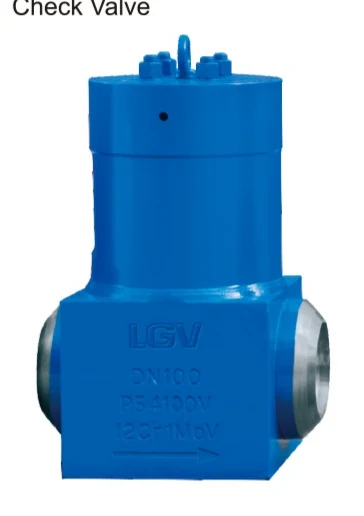
The catalog identifies this item as a Forged Steel Power Plant Check Valve and places it in the Check Valve series. It confirms the product identity and forged-steel descriptor, but does not state the closing mechanism, pressure class, size, material grade or permitted installation orientation. Match the offered configuration to the actual line duty before specifying it.
- Valve type: Check Valve
- Material descriptor: Forged steel
- Product-name context: Power plant
Catalog identity
What the catalog identifies
The product family and catalog series are both Check Valve. “Power Plant” appears in the product name, not in a separate catalog application field. The name does not identify the working fluid or establish suitability for a particular power-plant duty.
Product family
Check Valve — the parent category is the route for broader construction and type selection.
Catalog series
Check Valve — the source catalog section label, not a construction or mechanism designation.
Evidence source
English valve product catalog, PDF page 83.
Catalog evidence
Catalog-documented product data
The table separates the catalog labels from wording supplied by the product name. “Power plant” is name context, not an independently documented application field, working medium or verified operating condition.
| Field | Catalog-documented value | Evidence status |
|---|---|---|
| Valve type | Check Valve | VERIFIED — PDF catalog label |
| Material descriptor | Forged steel | VERIFIED — PDF catalog label |
| Product-name context | Power plant | VERIFIED — product name |
| Catalog source series | Check Valve | VERIFIED — PDF catalog section |
| Source PDF page | PDF page 83 | VERIFIED — recovered PDF mapping |
Important: This record does not state a size, pressure class, design standard, connection, temperature range or material grade. Obtain those values from the offered datasheet and approved drawing.
Evidence boundary
What this catalog record does not establish
The catalog label and mapped image confirm product identity only. They do not identify the internal closure design or provide the performance and installation data needed for line selection.
Not identified in the catalog
- Closure design: not identified (for example, swing, lift, piston, ball or another arrangement)
- Pressure class, size and pressure-temperature rating: not stated
- End connection and dimensional standard: not stated
- Flow performance, opening differential and closure response: not stated
- Permitted installation orientation: not stated
Documents to request for the offered configuration
- Sectional or assembly drawing showing the actual construction
- Datasheet with pressure-temperature limits and flow / pressure-drop data
- Installation and maintenance instructions stating permitted orientations
- Material specifications for the body and any pressure-retaining cover or bonnet, where fitted; identify which pressure-retaining components are forged; material schedule for the actual closure element and its seat or sealing surfaces, as applicable; materials for other wetted or moving parts only where fitted; bolting and gasket materials where applicable; traceability records
- Inspection and test documents required by the project
Engineering review
How to specify the Forged Steel Power Plant Check Valve
For a power-generation line, do not size a check valve from nominal pipe size alone. Check the minimum sustained flow needed for stable opening, pressure loss at maximum flow and the closing response during shutdown or pump trip. The exact design data is not stated in this catalog record.
Minimum flow and pressure loss
Provide minimum, normal and maximum flow, fluid phase and density (or other relevant properties), and allowable valve pressure drop. Ask for the manufacturer’s full-open criterion and pressure-drop data at each case; if an opening or cracking differential applies to the offered design, request its value. A line-size match alone does not prove stable opening.
Pump trip and reverse flow
Describe the pump arrangement, pump-trip or power-loss case, rundown behavior and expected flow deceleration. Ask for the valve’s dynamic closing data or response curve and the resulting reverse-flow / pressure-transient assessment for the system. The fastest-closing option is not automatically the safest choice.
Installation orientation
State whether the line is horizontal or vertical, the direction of flow, and any inclined or offset run. Obtain written confirmation of the permitted valve position and flow-arrow direction for the exact construction. If the supplied design has a separate pressure-retaining cover or bonnet, confirm any orientation restrictions for that component. Do not assume that a check valve can be installed in any position.
Forged steel material basis
Confirm the material specifications and grades for the body and any pressure-retaining cover or bonnet, where fitted, and identify which pressure-retaining components are forged. Request the heat-treatment condition where applicable. Provide a material schedule for the actual closure element and its seat or sealing surfaces, as applicable, plus any other wetted or moving parts (such as a stem, hinge pin or spring only where fitted), and for bolting, gaskets or other pressure-boundary joint materials where applicable. Match the materials to the actual fluid and temperature, and state the project’s traceability or inspection requirements. “Forged steel” alone is not a material grade.
Pressure rating, ends and documents
Specify DN/NPS, design and operating pressure, minimum / maximum temperature, end type, applicable design and dimensional standards, mating-pipe details and face-to-face requirements. Request the configuration drawing, pressure-temperature rating, test scope and inspection documents for the exact offered valve.
Application boundary
Match the product name to the actual line duty
The product name places this catalog item in a power-plant context, but it does not identify the working fluid or verify suitability for any particular service. For the proposed line, state whether it carries water, steam, condensate, gas or another fluid, then assess its phase, chemistry, pressure, temperature and operating cycle before confirming the offered configuration.
Identify the medium
State the actual fluid and phase, composition, contaminants or solids, viscosity / density where relevant, and any corrosion or erosion concern. These inputs determine material compatibility and the flow data needed for sizing.
Cover all operating cases
Include start-up, normal load, low-load, standby, maximum-flow and shutdown conditions. Provide the pressure and temperature at the relevant cases rather than only a single normal operating point.
Define what reverse flow could affect
Identify the equipment upstream and downstream, any parallel pump or train arrangement, and the consequence of reverse flow. This context determines whether a routine non-return check is sufficient or a detailed transient review is needed; the catalog title alone cannot decide that.
Visual evidence
Catalog image for this product
The image confirms the catalog appearance associated with this product identity. It is not a sectional drawing or dimensional reference; use the approved drawing and datasheet for installation and procurement.
Related product routes
Related check valve catalog entries
These links lead to separate catalog identities in the Check Valve category. Use them to navigate the range; compare each entry against its own drawing and datasheet rather than transferring construction, material or ratings between products.
GB Standard H44W Check Valve
A separate catalog entry in the Check Valve range. Review its own construction and configuration documents.
ASME Stainless Steel Check Valve
A separate stainless-steel catalog entry. Do not transfer its material or design details to this forged-steel item.
GB Vertical Lift Check Valve
A separate catalog entry with its own design and mounting requirements. Confirm these from its own drawing and installation instructions.
Buyer questions
Forged Steel Power Plant Check Valve FAQ
These answers distinguish the catalog identity from the technical data required for an engineered offer.
What does the catalog confirm?
The catalog identifies a Forged Steel Power Plant Check Valve in the Check Valve series. “Forged steel” and “Power Plant” are parts of the product name; the latter is not a separate verified application field. The record does not establish the internal design, size, pressure class, connection, material grade, working medium or suitability for a specific duty.
Does the catalog identify the closing mechanism?
No. It does not specify whether the valve is swing, lift, piston, ball or another design. Confirm the actual construction from the offered sectional drawing and datasheet before assessing pressure loss, orientation or closure behavior.
How should the valve be sized for a power-generation line?
Use minimum, normal and maximum flow, fluid properties and allowable pressure drop. Ask the supplier to confirm the minimum flow or opening differential needed for stable / full opening and the pressure loss at the required flow cases. Nominal pipe size alone is not enough.
What is needed for a pump-trip review?
Provide the pump arrangement, trip or shutdown case, flow rundown / deceleration and the system’s allowable pressure transient. Request dynamic closing data or a response curve for the exact valve construction; no generic closing-time claim can replace a system review.
Can the valve be installed in any orientation?
Do not assume so. Permitted mounting positions depend on the actual construction and closing mechanism. State the line orientation and flow direction, then confirm the approved position in the valve’s installation instructions.
Technical inquiry
Request a configuration review for Forged Steel Power Plant Check Valve
Use the form to request a configuration review against the actual line duty. Include the fluid, operating cases, pressure and temperature, pump-trip scenario, installation orientation, material basis and document requirements.
File attachments are not available through this form. Enter the key data in the Technical Requirements and Message fields; if a drawing is relevant, identify its document number and revision.
- Fluid composition and phase; line function; minimum, normal and maximum flow
- Operating / design pressure and temperature; allowable valve pressure drop
- Pump arrangement, shutdown / trip case, reverse-flow and transient limits
- DN/NPS, end connection, flow direction and line orientation
- Body and any pressure-retaining cover or bonnet, where fitted; identify which supplied pressure-retaining components are forged; material grades for the actual closure element and its seat or sealing surfaces, as applicable; materials for other wetted or moving parts (such as a stem, hinge pin or spring) only where fitted; bolting and gasket materials where applicable; quantity, inspection and traceability requirements