
Im Katalog bezeichnetes Produkt
Rückschlagventil aus Schmiedestahl für Kraftwerke
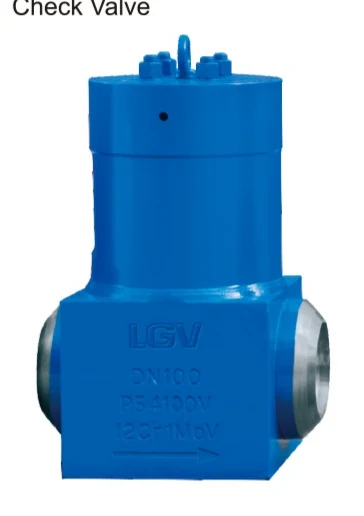
Der Katalog führt diesen Artikel als Rückschlagventil aus Schmiedestahl für Kraftwerke und ordnet ihn der Baureihe Rückschlagventil zu. Er bestätigt die Produktidentität und die Bezeichnung als Schmiedestahl-Ausführung, nennt jedoch weder Schließmechanismus, Druckstufe, Nennweite, Werkstoffgüte noch zulässige Einbaulage. Gleichen Sie die angebotene Ausführung vor der Spezifikation mit dem tatsächlichen Einsatzfall in der Leitung ab.
- Ventiltyp: Rückschlagventil
- Materialmerkmal: Schmiedestahl
- Produktnamen-Kontext: Kraftwerk
Katalogidentität
Was der Katalog angibt
Produktfamilie und Katalogbaureihe sind beide Rückschlagventil. “Kraftwerk” erscheint im Produktnamen, nicht in einem separaten Katalog-Anwendungsfeld. Der Name benennt weder das Fördermedium noch belegt er die Eignung für einen bestimmten Einsatzfall im Kraftwerk.
Produktfamilie
Rückschlagventil — die übergeordnete Kategorie ist der Einstieg für die breitere Auswahl von Bauart und Typ.
Katalogbaureihe
Rückschlagventil — die Bezeichnung der Katalogrubrik in der Quelle, keine Bauart- oder Mechanismusangabe.
Nachweisquelle
Englischer Ventil-Produktkatalog, PDF-Seite 83.
Katalogbelege
Im Katalog dokumentierte Produktdaten
Die Tabelle trennt die Katalogbezeichnungen von den Angaben aus dem Produktnamen. “Kraftwerk” ist Namenskontext, kein eigenständig dokumentiertes Anwendungsfeld, Fördermedium oder verifizierter Betriebszustand.
| Feld | Im Katalog dokumentierter Wert | Nachweisstatus |
|---|---|---|
| Ventiltyp | Rückschlagventil | VERIFIZIERT — PDF-Katalogetikett |
| Werkstoffangabe | Schmiedestahl | VERIFIZIERT — PDF-Katalogetikett |
| Produktnamen-Kontext | Kraftwerk | VERIFIZIERT — Produktname |
| Katalog-Quellserie | Rückschlagventil | VERIFIZIERT — PDF-Katalogabschnitt |
| Quell-PDF-Seite | PDF-Seite 83 | VERIFIZIERT — wiederhergestellte PDF-Zuordnung |
Wichtig: Dieser Datensatz enthält keine Angabe zu Nenngröße, Druckstufe, Auslegungsnorm, Anschluss, Temperaturbereich oder Werkstoffgüte. Diese Werte sind dem angebotenen Datenblatt und der freigegebenen Zeichnung zu entnehmen.
Nachweisgrenze
Was dieser Katalogdatensatz nicht belegt
Die Katalogbezeichnung und das zugeordnete Bild bestätigen ausschließlich die Produktidentität. Sie geben weder die interne Verschlussbauart an noch liefern sie die für die Leitungsauswahl erforderlichen Leistungs- und Einbaudaten.
Im Katalog nicht angegeben
- Verschlussbauart: nicht angegeben (zum Beispiel Schwenk-, Hub-, Kolben-, Kugel- oder eine andere Ausführung)
- Druckstufe, Nenngröße und Druck-Temperatur-Zuordnung: nicht angegeben
- Endanschluss und Maßnorm: nicht angegeben
- Strömungsverhalten, Öffnungsdifferenzdruck und Schließverhalten: nicht angegeben
- Zulässige Einbaulage: nicht angegeben
Für die angebotene Ausführung anzufordernde Unterlagen
- Schnitt- oder Zusammenbauzeichnung mit der tatsächlichen Bauart
- Datenblatt mit Druck-Temperatur-Grenzen und Durchfluss-/Druckverlustdaten
- Montage- und Wartungsanleitung mit zulässigen Einbaulagen
- Werkstoffspezifikationen für das Gehäuse und jede drucktragende Abdeckung oder jedes Gehäuseoberteil, sofern vorhanden; Angabe, welche drucktragenden Komponenten geschmiedet sind; Werkstoffplan für das tatsächliche Verschlusselement und seine Dichtflächen bzw. Sitzflächen, soweit zutreffend; Werkstoffe für sonstige benetzte oder bewegte Teile nur sofern vorhanden; Schraub- und Dichtungswerkstoffe, soweit zutreffend; Rückverfolgbarkeitsunterlagen
- Vom Projekt geforderte Inspektions- und Prüfunterlagen
Technische Prüfung
So spezifizieren Sie das Rückschlagventil aus Schmiedestahl für Kraftwerke
Für eine Stromerzeugungsleitung darf ein Rückschlagventil nicht allein anhand der Nennweite dimensioniert werden. Prüfen Sie den minimalen Dauer durchfluss für ein stabiles Öffnen, den Druckverlust bei maximalem Durchfluss und das Schließverhalten beim Abschalten oder bei Pumpenausfall. Die genauen Auslegungsdaten sind in diesem Katalogeintrag nicht angegeben.
Mindestdurchfluss und Druckverlust
Geben Sie Mindest-, Normal- und Maximaldurchfluss, Fluidphase und Dichte (oder andere relevante Eigenschaften) sowie den zulässigen Ventildruckverlust an. Fragen Sie nach dem Vollöffnungskriterium des Herstellers und den Druckverlustdaten für jeden Fall; falls für die angebotene Ausführung ein Öffnungs- oder Ansprechdifferenzdruck gilt, fordern Sie dessen Wert an. Eine Übereinstimmung mit der Nennweite allein belegt kein stabiles Öffnen.
Pumpenabschaltung und Rückströmung
Beschreiben Sie die Pumpenanordnung, den Pumpenausfall- oder Stromausfallfall, das Auslaufverhalten und die erwartete Durchflussverzögerung. Fragen Sie nach den dynamischen Schließdaten bzw. der Ansprechkurve des Ventils und der daraus resultierenden Bewertung von Rückfluss und Drucktransienten für das System. Die schnellstschließende Option ist nicht automatisch die sicherste Wahl.
Einbaulage
Geben Sie an, ob die Leitung horizontal oder vertikal verläuft, die Durchflussrichtung sowie etwaige geneigte oder versetzte Leitungsabschnitte. Lassen Sie die zulässige Ventilposition und die Richtung des Durchflusspfeils für die genaue Ausführung schriftlich bestätigen. Falls die gelieferte Ausführung eine separate drucktragende Abdeckung oder ein Gehäuseoberteil besitzt, bestätigen Sie etwaige Lagebeschränkungen für diese Komponente. Gehen Sie nicht davon aus, dass ein Rückschlagventil in jeder Lage eingebaut werden kann.
Werkstoffbasis Schmiedestahl
Confirm the material specifications and grades for the body and any pressure-retaining cover or bonnet, where fitted, and identify which pressure-retaining components are forged. Request the heat-treatment condition where applicable. Provide a material schedule for the actual closure element and its seat or sealing surfaces, as applicable, plus any other wetted or moving parts (such as a stem, hinge pin or spring only where fitted), and for bolting, gaskets or other pressure-boundary joint materials where applicable. Match the materials to the actual fluid and temperature, and state the project’s traceability or inspection requirements. “Forged steel” alone is not a material grade.
Pressure rating, ends and documents
Specify DN/NPS, design and operating pressure, minimum / maximum temperature, end type, applicable design and dimensional standards, mating-pipe details and face-to-face requirements. Request the configuration drawing, pressure-temperature rating, test scope and inspection documents for the exact offered valve.
Anwendungsgrenze
Match the product name to the actual line duty
The product name places this catalog item in a power-plant context, but it does not identify the working fluid or verify suitability for any particular service. For the proposed line, state whether it carries water, steam, condensate, gas or another fluid, then assess its phase, chemistry, pressure, temperature and operating cycle before confirming the offered configuration.
Identify the medium
State the actual fluid and phase, composition, contaminants or solids, viscosity / density where relevant, and any corrosion or erosion concern. These inputs determine material compatibility and the flow data needed for sizing.
Cover all operating cases
Include start-up, normal load, low-load, standby, maximum-flow and shutdown conditions. Provide the pressure and temperature at the relevant cases rather than only a single normal operating point.
Define what reverse flow could affect
Identify the equipment upstream and downstream, any parallel pump or train arrangement, and the consequence of reverse flow. This context determines whether a routine non-return check is sufficient or a detailed transient review is needed; the catalog title alone cannot decide that.
Visueller Nachweis
Catalog image for this product
The image confirms the catalog appearance associated with this product identity. It is not a sectional drawing or dimensional reference; use the approved drawing and datasheet for installation and procurement.
Verwandte Produktrouten
Related check valve catalog entries
These links lead to separate catalog identities in the Check Valve category. Use them to navigate the range; compare each entry against its own drawing and datasheet rather than transferring construction, material or ratings between products.
Rückschlagventil H44W nach GB-Norm
A separate catalog entry in the Check Valve range. Review its own construction and configuration documents.
Rückschlagventil aus Edelstahl nach ASME
A separate stainless-steel catalog entry. Do not transfer its material or design details to this forged-steel item.
GB vertikales Hub-Rückschlagventil
A separate catalog entry with its own design and mounting requirements. Confirm these from its own drawing and installation instructions.
Fragen von Einkäufern
Forged Steel Power Plant Check Valve FAQ
These answers distinguish the catalog identity from the technical data required for an engineered offer.
What does the catalog confirm?
The catalog identifies a Forged Steel Power Plant Check Valve in the Check Valve series. “Forged steel” and “Power Plant” are parts of the product name; the latter is not a separate verified application field. The record does not establish the internal design, size, pressure class, connection, material grade, working medium or suitability for a specific duty.
Does the catalog identify the closing mechanism?
No. It does not specify whether the valve is swing, lift, piston, ball or another design. Confirm the actual construction from the offered sectional drawing and datasheet before assessing pressure loss, orientation or closure behavior.
How should the valve be sized for a power-generation line?
Use minimum, normal and maximum flow, fluid properties and allowable pressure drop. Ask the supplier to confirm the minimum flow or opening differential needed for stable / full opening and the pressure loss at the required flow cases. Nominal pipe size alone is not enough.
What is needed for a pump-trip review?
Provide the pump arrangement, trip or shutdown case, flow rundown / deceleration and the system’s allowable pressure transient. Request dynamic closing data or a response curve for the exact valve construction; no generic closing-time claim can replace a system review.
Can the valve be installed in any orientation?
Do not assume so. Permitted mounting positions depend on the actual construction and closing mechanism. State the line orientation and flow direction, then confirm the approved position in the valve’s installation instructions.
Technische Anfrage
Request a configuration review for Forged Steel Power Plant Check Valve
Use the form to request a configuration review against the actual line duty. Include the fluid, operating cases, pressure and temperature, pump-trip scenario, installation orientation, material basis and document requirements.
File attachments are not available through this form. Enter the key data in the Technical Requirements and Message fields; if a drawing is relevant, identify its document number and revision.
- Fluid composition and phase; line function; minimum, normal and maximum flow
- Operating / design pressure and temperature; allowable valve pressure drop
- Pump arrangement, shutdown / trip case, reverse-flow and transient limits
- DN/NPS, end connection, flow direction and line orientation
- Body and any pressure-retaining cover or bonnet, where fitted; identify which supplied pressure-retaining components are forged; material grades for the actual closure element and its seat or sealing surfaces, as applicable; materials for other wetted or moving parts (such as a stem, hinge pin or spring) only where fitted; bolting and gasket materials where applicable; quantity, inspection and traceability requirements