
Ölfeld-Armaturen Produktserie
Ölfeld-Armaturen: Plattenschieber-Ausführungen und Antriebsoptionen
Vergleichen Sie sechs im Katalog dargestellte Plattenschieber-Ausführungen für Absperraufgaben im Ölfeld, von Handrad und Getriebebetrieb bis zu elektrischem und pneumatischem Antrieb. Prüfen Sie vor der Auswahl einer Konfiguration die Geräteschnittstelle, den maximalen Differenzdruck, das Medium und die Betriebsart.
For wellhead and tree equipment, verify the governing specification and product qualification separately; a catalog illustration is not an API 6A approval. Betriebsoptionen vergleichen oder Betriebsdaten und Schnittstellendetails senden.
Sechs Ölfeld-Plattenschieber-Ausführungen
Der Originalkatalog zeigt sechs benannte Plattenschieber-Ausführungen. Wählen Sie zuerst nach Betriebsaufgabe und verfügbaren Medien; jedes Produkt erfordert weiterhin eine auftragsspezifische Druck-Temperatur-Bewertung, Anschlusszeichnung, Dichtungsanordnung und Materialprüfung.
Nur PDF-Katalog · gedruckte S. 211–212
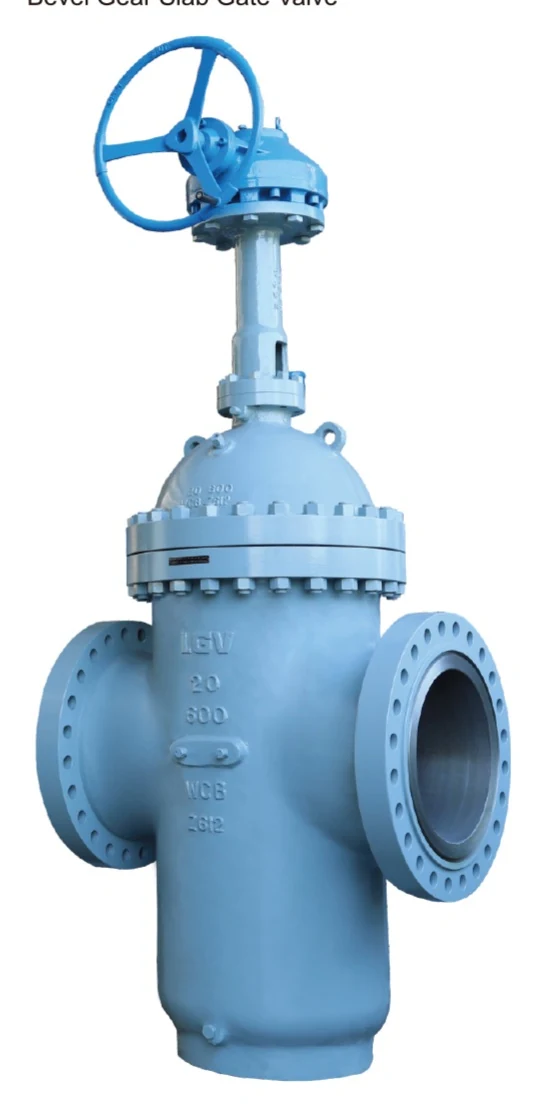
Hochdruck-Plattenschieber mit Kegelradgetriebe
Eine im Katalog ausgewiesene Hochdruck-Ausführung mit Getriebe. Die Bezeichnung definiert keine zertifizierte Nenndruckstufe; fordern Sie das genaue Druck-Temperatur-Schema und die Anschlusszeichnung an.
Ölfeld-Katalog · S. 211–212
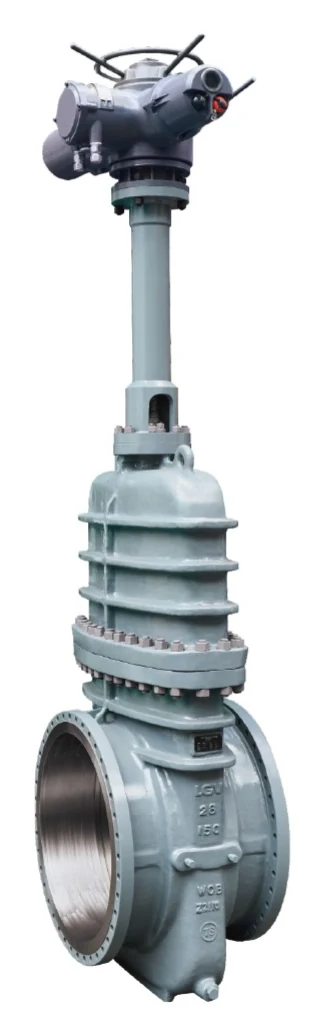
Elektrischer Plattenschieber
Für Fern- oder motorisierten Betrieb Versorgungsspannung, Steuerung, Stellantriebsdrehmoment, Stellzeit und erforderliche Stellung bei Stromausfall bestätigen.
Ölfeld-Katalog · S. 211–212
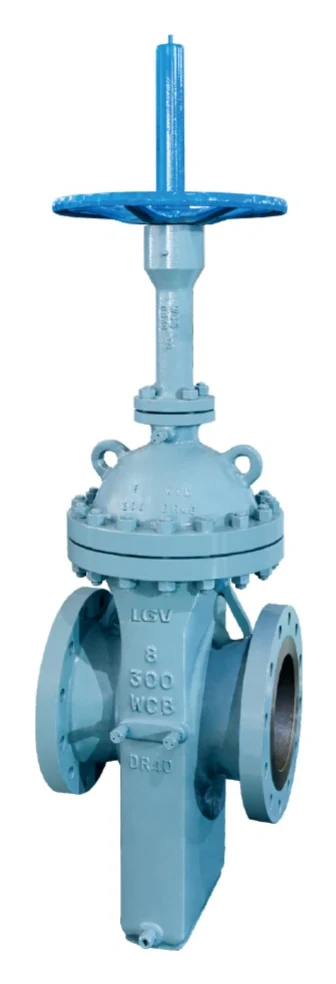
Plattenschieber
Eine manuell betätigte Plattenschieber-Darstellung zum Vergleich der Absperrfunktion. Nennweite, Dichtungsanordnung, Drehmoment bei maximaler Differenzdruck und Betriebsbeanspruchung bestätigen.
Ölfeld-Katalog · S. 211–212
Plattenschieber mit Kegelradgetriebe
Für den örtlichen Handbetrieb mit Getriebe das erwartete Ventildrehmoment und die Umdrehungen mit dem zulässigen Bedienaufwand und den Platzverhältnissen abgleichen.
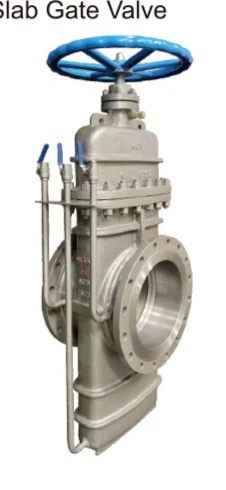
Ölfeld-Katalog · S. 211–212
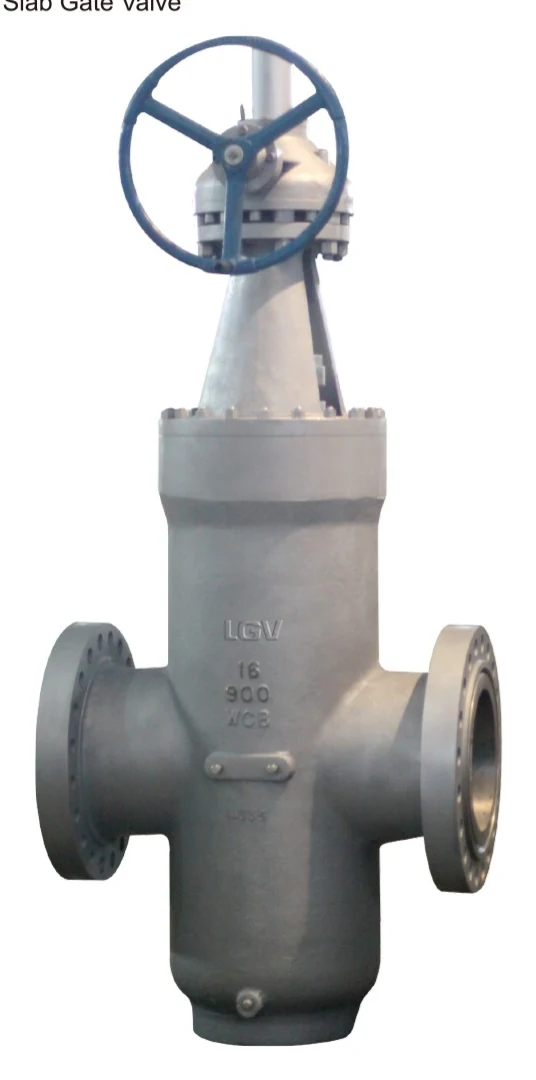
Gasspezifischer Plattenschieber mit nicht steigender Spindel
Im Katalog ausgewiesene Ausführung mit nicht steigender Spindel für Gasbetrieb. Gaszusammensetzung, Dichtheits- und Emissionsanforderungen angeben; die Eignung ergibt sich nicht aus der Bezeichnung.
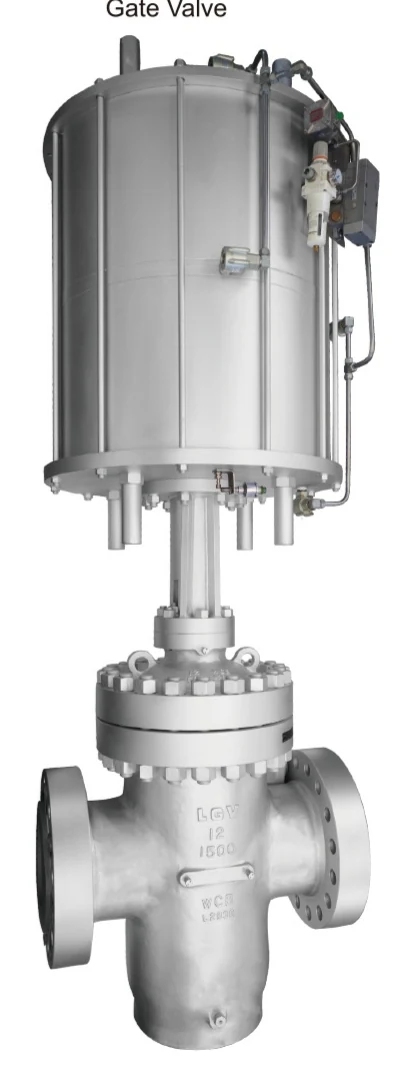
Ölfeld-Katalog · S. 211–212
Pneumatischer Plattenschieber
Pneumatischen Betrieb in Betracht ziehen, wenn Instrumentenluft oder ein geeignetes Gasversorgung zur Verfügung steht. Versorgungsbedingungen, erforderliche Stellzeit und Ausfallverhalten angeben.
Match the operating method
Manual, geared, or actuated: which arrangement fits?
All six illustrations belong to the slab gate family, but their operators and identified service variants differ. Choose the operating method by available power, required response, accessible maintenance space and torque under differential pressure—not by the size of the handwheel in an image.
Handwheel vs. bevel gear
Where local operation is acceptable, compare direct manual and geared arrangements. Gear reduction can reduce operator effort but adds turns; request operating torque and travel data for the specific valve.
Electric vs. pneumatic
For remote operation, compare available electrical power and controls with suitable pneumatic supply. Define the commanded and loss-of-utility positions; an actuator type alone does not establish a fail-safe action.
Special-service variants
The catalog separately labels a high-pressure bevel gear design and a gas-specific non-rising stem design. Verify rating, sealing, fluid compatibility and project standard for the quoted configuration before treating either label as suitable.
Where slab gate valves fit
Use isolation valves for isolation—not for continuous choking
For an oilfield surface package or line that needs block isolation, a slab gate configuration is worth reviewing once the design code and mating connections are known. Different duties require different valve designs; this catalog series does not establish suitability for every oilfield function.
Surface line or manifold isolation
Compare bore, end connections, shutoff requirements, pressure and temperature cases, cycling frequency and maintenance access. For a pipeline package, start from the applicable piping or pipeline specification.
Continuous throttling or choke service
Do not specify a slab gate design as a modulating choke merely because it appears in an oilfield catalog. Evaluate a purpose-designed Regelventil or choke for pressure reduction, erosion and control requirements.
Wellhead or Christmas tree equipment
If the valve is part of a wellhead or tree, identify the exact equipment specification and required API 6A product and quality requirements. This page does not verify that any illustrated item is API 6A-qualified.
Quick selection reference
What changes the valve choice and the quotation?
Do not compare offers based on a generic “oilfield valve” description. Use one duty sheet for every quoted option, then check that the operating method, end connections and document requirements describe the same product.
| Selection factor | Projekteingaben | Purchase decision |
|---|---|---|
| Einsatzfall | On/off isolation or frequent cycling; minimum/maximum differential pressure | Exclude a gate valve when continuous throttling is required; request duty-specific torque and shutoff details. |
| Betätigung | Local handwheel or bevel gear; electric or pneumatic remote operation | Compare utilities, operating time, duty cycle, controls, override and loss-of-power or loss-of-air position. |
| Anschluss | Nominal bore, flange or other end detail, face-to-face and installation space | Request a dimensional drawing and mating connection requirements, not only a nominal size. |
| Fluid and environment | Gas/liquid composition, solids, H₂S/CO₂ if present, pressure and temperature cases | Review materials, seals, corrosion and erosion against actual service; no blanket sour-service suitability. |
| Design and records | Project code, wellhead or pipeline scope, inspection, test and traceability requirements | Assess the correct standard and edition and request order-specific conformity evidence. |
Avoid expensive specification mistakes
Three shortcuts that can produce the wrong valve
A supplier can quote the correct catalog name yet still miss the connection, operator or governing standard. Resolve these points before evaluating unit price.
- Treating the six slab gate designs as interchangeable without checking duty and operating method
- Assuming API 6A, API 6D or sour-service conformity from a product photograph or catalog heading
- Treating “high-pressure” or an actuator image as an orderable pressure rating or tested fail action
Drawings and documents
Request a technical package for the exact configuration
The illustrations show design identities, not an approved bill of materials. Compare the following records for the offered valve and agreed project standard; the exact document set must be specified in the purchase order.
Dimensional fit
Ask for a general-arrangement drawing identifying bore, end connections, face-to-face length, installed height, operator envelope and interface details.
Operating and pressure limits
Request pressure-temperature limits, body and trim material schedule, seat and seal description, operating torque or actuator sizing, and any cycle or utility constraints.
Inspection and compliance
Identify the governing standard and edition, agreed inspections and tests, material traceability, manufacturing records and any certification scope required by the project. These are documents to request, not credentials implied by this page.
Related product and application routes
Continue with the right valve family or service guide
This page compares the catalog-illustrated slab gate variants. For wider industrial gate choices or process-application requirements, use the dedicated pages below. Model-level catalog entries remain separate detail pages.
Industrial gate valves
Review other gate designs when the isolation duty or installation does not match these slab gate arrangements.
All valve product families
Return to the product directory when the duty calls for a ball, check, control or other valve family.
Oil and gas applications
Compare production, processing and pipeline service concerns without treating this series as a complete oil and gas solution.
Fragen von Einkäufern
Common questions about oilfield slab gate valves
Use the product-specific drawing and quote to settle the final size, rating, materials, actuation and acceptance requirements.
Are these catalog valves automatically qualified to API 6A?
No. API 6A applies to specified wellhead and tree equipment. For wellhead duty, request the offered model’s relevant conformity, qualification and documentation; the catalog heading alone does not establish compliance.
When should I choose electric or pneumatic actuation?
Use the available utilities and required operation to narrow the choice. For electric, specify power, controls and required behavior on power loss; for pneumatic, specify supply pressure, air quality, stroke time and required fail position. Both need duty-based sizing.
Can a slab gate valve be used as a choke?
Not as a default selection for continuous throttling. Where controlled pressure drop or erosion is significant, evaluate a purpose-designed choke or control valve rather than assuming a slab gate valve can modulate flow.
What should accompany an oilfield valve RFQ?
State the equipment function, fluid and contamination, design pressure and temperature cases, differential pressure, bore and end connections, operator, governing standard and edition, inspection records, quantity and required drawings.
Technical quotation
Send a valve duty sheet or request a drawing
Share the catalog variant (or a photo), equipment location, operating conditions and the project specification. If a rating or standard is not yet established, mark it as open rather than guessing; include quantity and destination for quotation logistics.
- Valve configuration, equipment location and required isolation duty
- Maximum/minimum pressure and temperature; differential pressure at operation
- Fluid phase and composition; solids, H₂S or CO₂ conditions if relevant
- Nominal bore, end details, mating dimensions and available space
- Local/remote operation, utility supply, cycle and fail-position requirements
- Project code and edition, required testing, drawings and documentation
- Quantity, destination and which fields still require confirmation