
Power station valve / electric isolation
Electric High Pressure Self-Sealing Power Plant Gate Valve
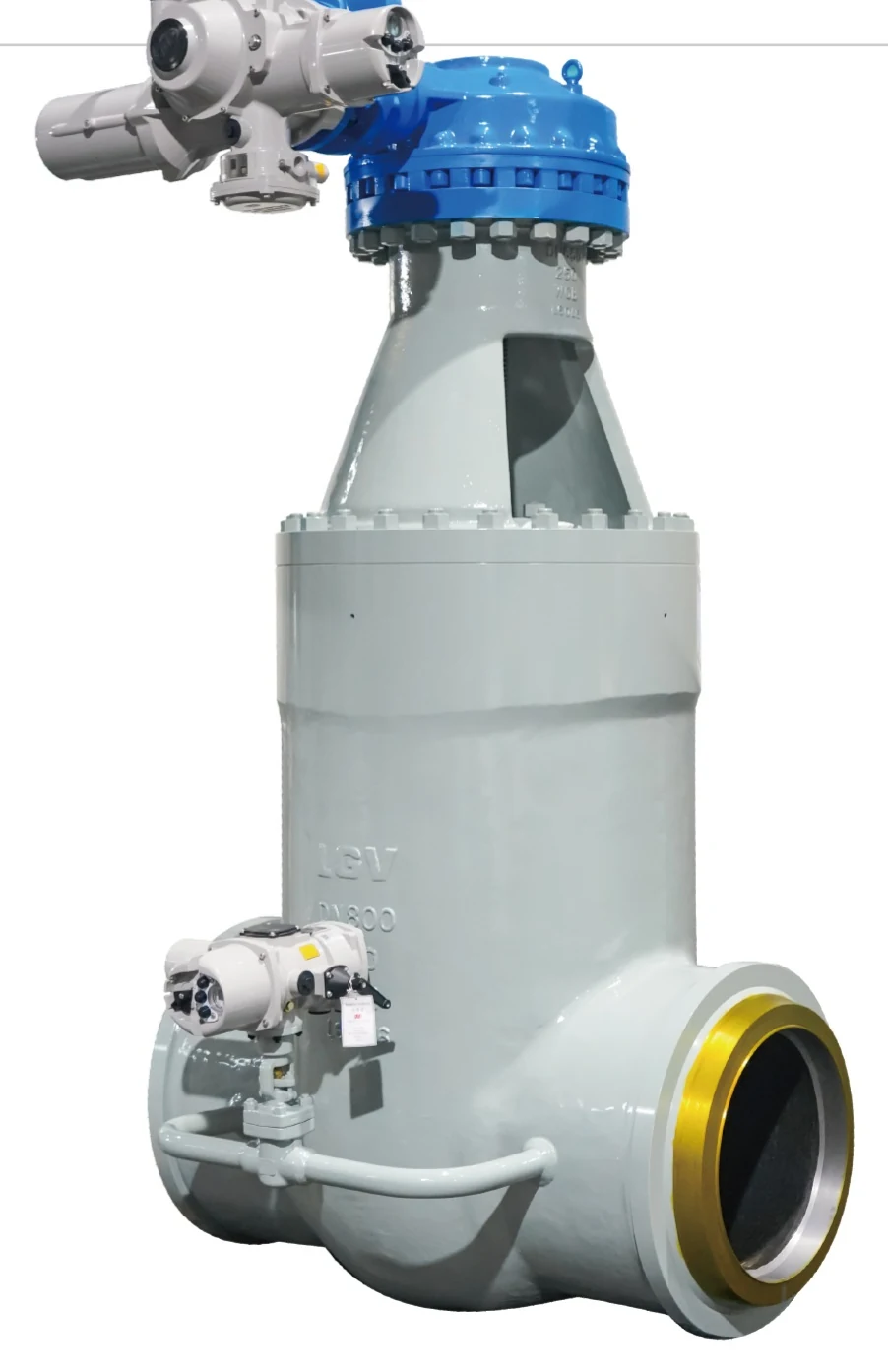
The Electric High Pressure Self-Sealing Power Plant Gate Valve is identified in the original Power Station Valve catalog as an electric-operated gate valve. Its pressure-seal bonnet construction concerns the body-to-bonnet joint, while shutoff across the gate seats must be specified separately. For a workable quotation, provide the design pressure and temperature, maximum differential pressure during opening or closing, and electrical/control requirements.
- Gate valve — intended selection route: open/close isolation, not assumed throttling
- Construction — pressure self-sealing bonnet (catalog designation)
- Operator — electric; actual thrust, torque and travel still to be sized
- High-pressure designation — no numerical pressure class verified
Three distinct engineering tasks
What the gate, pressure seal and electric drive each do
The catalog name identifies a valve type, a bonnet-joint concept and an actuation method. It does not establish a complete orderable model. Review these three functions separately rather than treating “self-sealing” or “electric” as a performance rating.
Gate isolation
A gate valve is normally selected for open/close isolation, with the actual shutoff requirement defined for the duty. An electric drive does not make it a continuous throttling control valve; if repeated intermediate-position regulation is required, first evaluate a valve and trim specifically rated for that duty.
Body–bonnet pressure seal
In pressure-seal bonnet designs, internal pressure helps load the body-to-bonnet sealing interface. That is not the gate-to-seat seal and is not evidence of a specified seat leakage class, stem packing arrangement, or low-pressure test result for this catalog item.
Motor-driven stem movement
The electric operator must be matched to the actual valve stem, travel, opening/closing loads, duty cycle and mounting interface. The catalog image identifies the actuation route, but it cannot establish motor output, gear ratio, control package or fail position.
Catalog facts versus required data
Identified product details and evidence limits
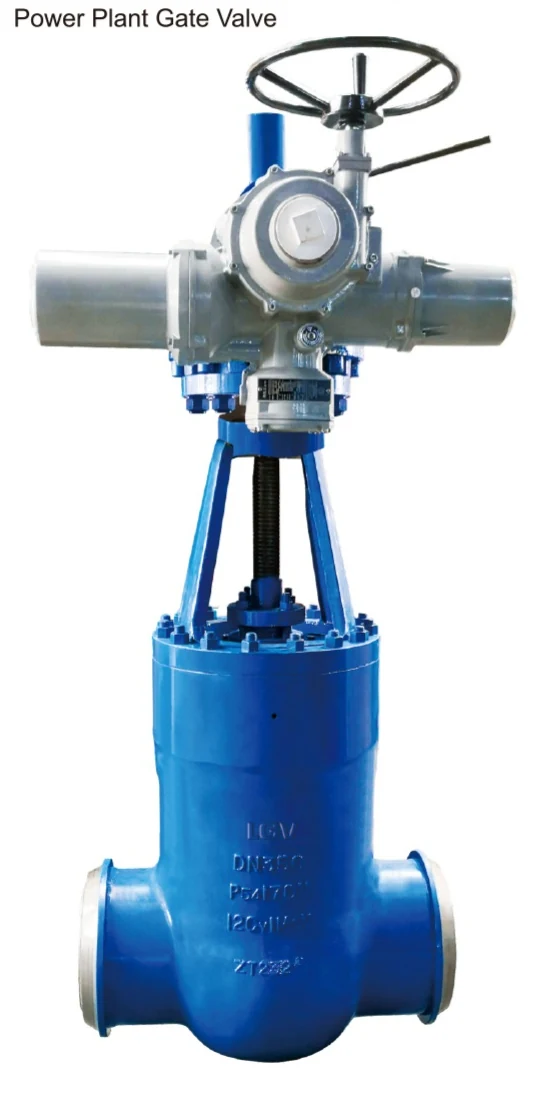
Two catalog photographs carry this electric high-pressure self-sealing gate-valve label (printed pages 108 and 111). The descriptions below are catalog identity evidence, not a verified pressure-temperature schedule or material list for a specific purchase.
| Item | What is supported | Boundary for quotation |
|---|---|---|
| Catalog designation | Electric High Pressure Self-Sealing Power Plant Gate Valve | Catalog identification; order model not supplied |
| Valve family | Gate valve | Seating mechanism and leakage criterion not specified |
| Bonnet construction | Pressure self-sealing / pressure-seal bonnet | Bonnet joint detail and gasket materials not provided |
| Actuation | Electric operator | No electrical, thrust, torque or speed data specified |
| Pressure | “High pressure” in the product name | No confirmed PN/Class or pressure-temperature values |
| Application category | Power Station Valve series | Actual process fluid and piping code not specified |
| Catalog photographs | Printed pp. 108 and 111; PDF physical pp. 59 and 61 | Media 161 and 1389; visual identification only |
| Offer-specific data | Size, materials, end connections, test criteria and documentation | Must be established on the offered datasheet/drawing |
Selection boundary: pressure-seal bonnet construction does not assign a Class/PN rating. Confirm the offered valve’s pressure-temperature rating at the project design temperature, along with material, end preparation and the required shutoff-test criteria.
Two sealing interfaces
Bonnet tightness and gate-seat shutoff are separate checks
Pressure-assisted bonnet sealing addresses the closure joint above the valve body. The wedge/disc-to-seat interface controls isolation through the bore. A successful body/bonnet pressure test does not, by itself, establish the specified seat leakage or stem-packing performance.
Body-to-bonnet joint
- Catalog establishes the “self-sealing” construction name, not the specific gasket, ring or bonnet geometry.
- Ask for the actual pressure-seal joint drawing, assembly method and sealing limits through start-up and low-pressure conditions.
- Identify the required shell/bonnet test method and acceptance criteria in the purchase specification.
Gate seats and stem packing
- Specify shutoff direction, expected operating differential pressure and the allowable seat leakage.
- Confirm whether the offered disc/seat arrangement meets the required closing and unseating loads.
- Identify the proposed seat, trim, packing and stem materials for the fluid and temperature.
- Ask for the actual seat-test procedure and acceptance criteria; no leakage class is documented here.
- If trapped cavity pressure or thermal cycling is credible, require the supplier to document its design provisions.
- Check applicable packing/emissions requirements independently of bonnet and seat tightness.
- Confirm maintenance access and any bonnet-reassembly requirements before installation.
Configuration and motor sizing
Specify around the worst credible differential pressure
Start with the maximum pressure difference across the gate when it must move, not only the normal line pressure. Differential pressure, seat load, friction, stem arrangement and operating time determine the valve loads that the electric actuator must handle. Without a valve load sheet, motor voltage alone is not a sizing basis.
Line duty and isolation requirement
State the medium, isolation function, flow direction, normal/start-up/shutdown conditions, required leakage acceptance and maximum opening/closing differential pressure. If the job requires frequent throttling, do not assume this gate-valve record is suitable for modulating service.
Pressure, temperature and piping interface
Give the design and operating pressure/temperature combinations, transients, DN/NPS, end type and piping specification. Request an approved pressure-temperature rating for the actual offered material; a Class designation is not a constant allowable pressure at every temperature.
Stem thrust, torque and travel
Ask for calculated maximum stem thrust, running and unseating torque, stroke, stem diameter/pitch or lead, gear ratio, permissible stem load and actuator attachment dimensions. Rising-stem and non-rising-stem constructions have different output-drive requirements; neither is proven by this page’s title.
Electric supply and control sequence
Define voltage, phase/frequency, open-close duty, required stroke time, local/remote selector, torque and travel limits, position feedback, DCS signals/interlocks, ambient temperature and enclosure protection. Loss-of-power action is not inherently fail-closed for an electric actuator; specify the required behavior and the method to achieve it.
Required supplier documents
Request the offered GA/sectional drawing, material schedule, pressure-temperature table, body and seat test plan, actuator sizing and wiring documents, inspection/witness plan and applicable certificates. Treat them as RFQ deliverables to verify, not documents already proven to exist for WP165.
Plant integration
Check service, start-up and installation together
The Power Station Valve catalog category gives a useful starting point. It does not identify the exact fluid, plant line or allowable temperature for this offered item, so site conditions must be matched to the final valve and drive design.
Steam and feedwater are possible duties, not a claim
Pressure-seal gate valves are used in high-pressure steam and feedwater systems as a design class. For this product, provide fluid chemistry, operating and upset temperatures, pressure cycles, solids/erosion exposure and any permitted seat leakage before asserting service compatibility.
Start-up and pressure cycling
Include low-pressure start-up, thermal transients, pressure reversals and shutdown conditions in the technical review. Verify the bonnet seal procedure and gate opening loads across those cases rather than extrapolating from steady-state high pressure.
Piping fit and maintainability
Use an approved drawing to check end preparation, face-to-face length, flow/orientation limits, pipe loads, actuator clearances, cable entry, manual override access and the space needed for stem/bonnet maintenance.
Catalog-matched photography
Two images of the correct product designation
Both photographs match catalog labels for this electric high-pressure self-sealing gate valve (printed pp. 108 and 111). They show product appearance and actuator layouts only; they cannot verify size, pressure rating, materials or interchangeability between the pictured arrangements.
Separate catalog identities
Compare operator and construction before selecting another valve
These records link to related gate-valve products, but none is automatically interchangeable with WP165. Compare the required actuation, bonnet construction, specification and documents—not photo similarity.
Electric Forged Steel Power Plant Gate Valve
Electric operation and a power-plant catalog context; the bonnet design and rated envelope must be checked on its own page.
Manually Controlled Self-Sealing Forged Gate Valve
Manual self-sealing forged gate valve. Compare manual operation with a motor-operated duty; its photo and specifications do not belong to WP165.
GOST Electric Forged Steel Gate Valve
GOST-designated electric forged gate valve. Confirm its governing standard and offered limits separately; a common actuator does not establish interchangeability.
Buyer decisions
Questions that affect the purchase specification
The catalog establishes the product designation and appearance. The following questions resolve the main configuration decisions before an offer can be evaluated.
Does a pressure-seal bonnet guarantee tight gate-seat shutoff?
No. The pressure-assisted bonnet joint and the gate-seat seal are separate interfaces. State the required seat leakage, test direction and test medium, and obtain the offered valve’s test procedure and results.
Can the electric operator be used for continuous throttling?
Not on the basis of this catalog record. This is a gate-valve isolation selection route. Frequent intermediate-position control requires an explicitly suitable valve/trim and an actuator duty rating; do not infer that capability from electric operation alone.
What pressure, temperature and materials can be ordered?
The catalog label does not establish an orderable size, Class/PN, material grade or pressure-temperature rating. Ask for the offered datasheet, material schedule, applicable design standard and the allowable rating at the project design temperature.
What data are essential to size the electric actuator?
Provide maximum differential pressure during movement, stem thrust/torque and travel data (if available), duty cycle, stroke time, power supply, ambient conditions and the local/remote control logic. Require supplier verification of actuator sizing and valve mounting compatibility.
Configuration-based inquiry
Request the WP165 gate valve and electric drive configuration
Reference catalog identity CCE-R2-0003 and identify the worst operating case. The quotation should distinguish confirmed valve/actuator data, the specified test and document package, and any open technical exceptions.
- Fluid, isolation duty, DN/NPS, flow direction and seat-leakage requirement
- Normal/design/upset pressure and temperature; maximum differential pressure for opening and closing
- End connection, piping specification and requested materials/trim
- Stroke and load data if available; power, travel time, duty, local/DCS control and power-loss behavior
- Quantity, ambient conditions, test/witness requirements and required drawings/certificates