
Válvula para usina / isolamento elétrico
Válvula Gaveta Elétrica de Alta Pressão Autovedante para Usina
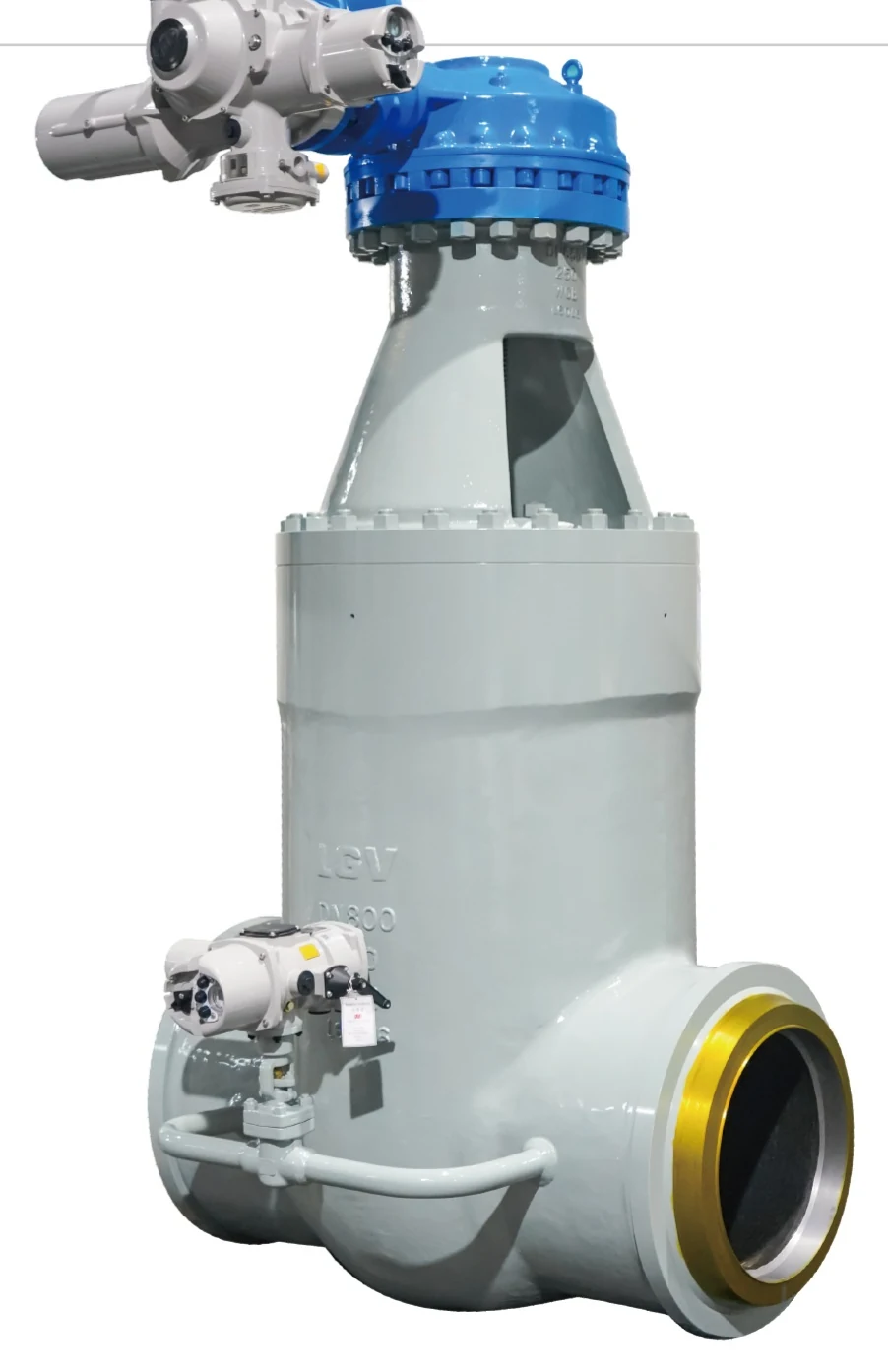
A Válvula Gaveta Elétrica de Alta Pressão Autovedante para Usina é identificada no catálogo original Power Station Valve como uma válvula gaveta com acionamento elétrico. Sua construção com castelo de vedação por pressão refere-se à junta entre corpo e castelo, enquanto o fechamento pelas sedes da gaveta deve ser especificado separadamente. Para uma cotação viável, informe a pressão e a temperatura de projeto, a pressão diferencial máxima durante a abertura ou o fechamento e os requisitos elétricos/de controle.
- Válvula gaveta — rota de seleção pretendida: isolamento por abertura/fechamento, sem presunção de estrangulamento
- Construção — castelo com autovedação por pressão (designação do catálogo)
- Acionamento — elétrico; empuxo, torque e curso reais ainda a dimensionar
- Designação de alta pressão — nenhuma classe de pressão numérica verificada
Três tarefas de engenharia distintas
O que a gaveta, a vedação por pressão e o acionamento elétrico fazem
O nome do catálogo identifica um tipo de válvula, um conceito de junta do castelo e um método de acionamento. Ele não estabelece um modelo completo e pedível. Avalie essas três funções separadamente, em vez de tratar “autovedante” ou “elétrico” como uma classificação de desempenho.
Isolamento por gaveta
Uma válvula gaveta é normalmente selecionada para isolamento por abertura/fechamento, com o requisito real de fechamento definido para o serviço. Um acionamento elétrico não o torna uma válvula de controle de regulagem contínua; se for necessária regulação repetida em posições intermediárias, avalie primeiro uma válvula e um trim especificamente classificados para esse serviço.
Vedação de pressão corpo–castelo
Em projetos de castelo com vedação por pressão, a pressão interna ajuda a carregar a interface de vedação entre corpo e castelo. Isso não é a vedação entre gaveta e sede e não é evidência de uma classe de vazamento de sede especificada, de um arranjo de gaxeta da haste ou de um resultado de teste de baixa pressão para este item de catálogo.
Movimento da haste por motor
O operador elétrico deve ser compatível com a haste real da válvula, o curso, as cargas de abertura/fechamento, o ciclo de trabalho e a interface de montagem. A imagem do catálogo identifica o meio de acionamento, mas não pode estabelecer a potência do motor, a relação de engrenagem, o pacote de controle ou a posição de falha.
Dados do catálogo versus dados necessários
Detalhes identificados do produto e limites de evidência
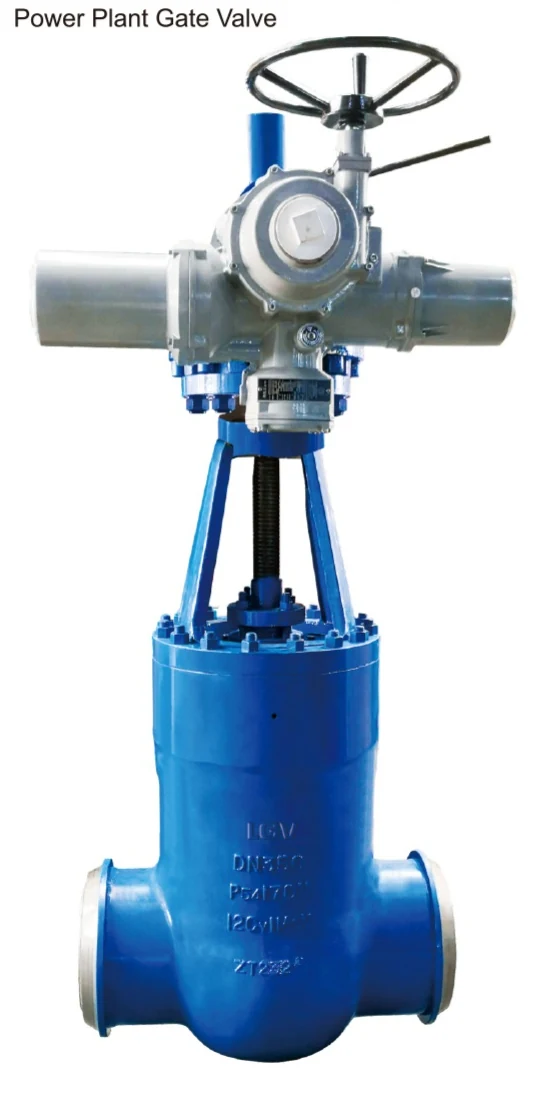
Duas fotografias do catálogo acompanham esta designação de válvula gaveta de alta pressão com vedação própria e acionamento elétrico (páginas impressas 108 e 111). As descrições abaixo são evidência de identificação do catálogo, não uma tabela de pressão-temperatura verificada ou uma lista de materiais para uma compra específica.
| Item | O que é suportado | Limite para cotação |
|---|---|---|
| Designação no catálogo | Válvula Gaveta Elétrica de Alta Pressão Autovedante para Usina | Identificação do catálogo; modelo de pedido não fornecido |
| Família de válvulas | Válvula gaveta | Mecanismo de assentamento e critério de vazamento não especificados |
| Construção do castelo | Vedação por pressão / castelo com vedação por pressão | Detalhe da junta do castelo e materiais da gaxeta não fornecidos |
| Acionamento | Operador elétrico | Nenhum dado elétrico, de empuxo, de torque ou de velocidade especificado |
| Pressão | “Alta pressão” no nome do produto | No confirmed PN/Class or pressure-temperature values |
| Application category | Power Station Valve series | Actual process fluid and piping code not specified |
| Catalog photographs | Printed pp. 108 and 111; PDF physical pp. 59 and 61 | Media 161 and 1389; visual identification only |
| Dados específicos da oferta | Size, materials, end connections, test criteria and documentation | Must be established on the offered datasheet/drawing |
Limite de seleção: pressure-seal bonnet construction does not assign a Class/PN rating. Confirm the offered valve’s pressure-temperature rating at the project design temperature, along with material, end preparation and the required shutoff-test criteria.
Two sealing interfaces
Bonnet tightness and gate-seat shutoff are separate checks
Pressure-assisted bonnet sealing addresses the closure joint above the valve body. The wedge/disc-to-seat interface controls isolation through the bore. A successful body/bonnet pressure test does not, by itself, establish the specified seat leakage or stem-packing performance.
Body-to-bonnet joint
- Catalog establishes the “self-sealing” construction name, not the specific gasket, ring or bonnet geometry.
- Ask for the actual pressure-seal joint drawing, assembly method and sealing limits through start-up and low-pressure conditions.
- Identify the required shell/bonnet test method and acceptance criteria in the purchase specification.
Gate seats and stem packing
- Specify shutoff direction, expected operating differential pressure and the allowable seat leakage.
- Confirm whether the offered disc/seat arrangement meets the required closing and unseating loads.
- Identify the proposed seat, trim, packing and stem materials for the fluid and temperature.
- Ask for the actual seat-test procedure and acceptance criteria; no leakage class is documented here.
- If trapped cavity pressure or thermal cycling is credible, require the supplier to document its design provisions.
- Check applicable packing/emissions requirements independently of bonnet and seat tightness.
- Confirm maintenance access and any bonnet-reassembly requirements before installation.
Configuration and motor sizing
Specify around the worst credible differential pressure
Comece pelo maximum pressure difference across the gate when it must move, not only the normal line pressure. Differential pressure, seat load, friction, stem arrangement and operating time determine the valve loads that the electric actuator must handle. Without a valve load sheet, motor voltage alone is not a sizing basis.
Line duty and isolation requirement
State the medium, isolation function, flow direction, normal/start-up/shutdown conditions, required leakage acceptance and maximum opening/closing differential pressure. If the job requires frequent throttling, do not assume this gate-valve record is suitable for modulating service.
Pressure, temperature and piping interface
Give the design and operating pressure/temperature combinations, transients, DN/NPS, end type and piping specification. Request an approved pressure-temperature rating for the actual offered material; a Class designation is not a constant allowable pressure at every temperature.
Stem thrust, torque and travel
Ask for calculated maximum stem thrust, running and unseating torque, stroke, stem diameter/pitch or lead, gear ratio, permissible stem load and actuator attachment dimensions. Rising-stem and non-rising-stem constructions have different output-drive requirements; neither is proven by this page’s title.
Electric supply and control sequence
Define voltage, phase/frequency, open-close duty, required stroke time, local/remote selector, torque and travel limits, position feedback, DCS signals/interlocks, ambient temperature and enclosure protection. Loss-of-power action is not inherently fail-closed for an electric actuator; specify the required behavior and the method to achieve it.
Required supplier documents
Request the offered GA/sectional drawing, material schedule, pressure-temperature table, body and seat test plan, actuator sizing and wiring documents, inspection/witness plan and applicable certificates. Treat them as RFQ deliverables to verify, not documents already proven to exist for WP165.
Plant integration
Check service, start-up and installation together
The Power Station Valve catalog category gives a useful starting point. It does not identify the exact fluid, plant line or allowable temperature for this offered item, so site conditions must be matched to the final valve and drive design.
Steam and feedwater are possible duties, not a claim
Pressure-seal gate valves are used in high-pressure steam and feedwater systems as a design class. For this product, provide fluid chemistry, operating and upset temperatures, pressure cycles, solids/erosion exposure and any permitted seat leakage before asserting service compatibility.
Start-up and pressure cycling
Include low-pressure start-up, thermal transients, pressure reversals and shutdown conditions in the technical review. Verify the bonnet seal procedure and gate opening loads across those cases rather than extrapolating from steady-state high pressure.
Piping fit and maintainability
Use an approved drawing to check end preparation, face-to-face length, flow/orientation limits, pipe loads, actuator clearances, cable entry, manual override access and the space needed for stem/bonnet maintenance.
Catalog-matched photography
Two images of the correct product designation
Both photographs match catalog labels for this electric high-pressure self-sealing gate valve (printed pp. 108 and 111). They show product appearance and actuator layouts only; they cannot verify size, pressure rating, materials or interchangeability between the pictured arrangements.
Separate catalog identities
Compare operator and construction before selecting another valve
These records link to related gate-valve products, but none is automatically interchangeable with WP165. Compare the required actuation, bonnet construction, specification and documents—not photo similarity.
Válvula Gaveta Elétrica de Aço Forjado para Usina
Electric operation and a power-plant catalog context; the bonnet design and rated envelope must be checked on its own page.
Válvula Gaveta Forjada Autovedante com Controle Manual
Manual self-sealing forged gate valve. Compare manual operation with a motor-operated duty; its photo and specifications do not belong to WP165.
Válvula Gaveta Elétrica de Aço Forjado GOST
GOST-designated electric forged gate valve. Confirm its governing standard and offered limits separately; a common actuator does not establish interchangeability.
Buyer decisions
Questions that affect the purchase specification
The catalog establishes the product designation and appearance. The following questions resolve the main configuration decisions before an offer can be evaluated.
Does a pressure-seal bonnet guarantee tight gate-seat shutoff?
No. The pressure-assisted bonnet joint and the gate-seat seal are separate interfaces. State the required seat leakage, test direction and test medium, and obtain the offered valve’s test procedure and results.
Can the electric operator be used for continuous throttling?
Not on the basis of this catalog record. This is a gate-valve isolation selection route. Frequent intermediate-position control requires an explicitly suitable valve/trim and an actuator duty rating; do not infer that capability from electric operation alone.
What pressure, temperature and materials can be ordered?
The catalog label does not establish an orderable size, Class/PN, material grade or pressure-temperature rating. Ask for the offered datasheet, material schedule, applicable design standard and the allowable rating at the project design temperature.
What data are essential to size the electric actuator?
Provide maximum differential pressure during movement, stem thrust/torque and travel data (if available), duty cycle, stroke time, power supply, ambient conditions and the local/remote control logic. Require supplier verification of actuator sizing and valve mounting compatibility.
Configuration-based inquiry
Request the WP165 gate valve and electric drive configuration
Reference catalog identity CCE-R2-0003 and identify the worst operating case. The quotation should distinguish confirmed valve/actuator data, the specified test and document package, and any open technical exceptions.
- Fluid, isolation duty, DN/NPS, flow direction and seat-leakage requirement
- Normal/design/upset pressure and temperature; maximum differential pressure for opening and closing
- End connection, piping specification and requested materials/trim
- Stroke and load data if available; power, travel time, duty, local/DCS control and power-loss behavior
- Quantity, ambient conditions, test/witness requirements and required drawings/certificates