
Oilfield valve catalog
Bevel Gear Slab Gate Valve
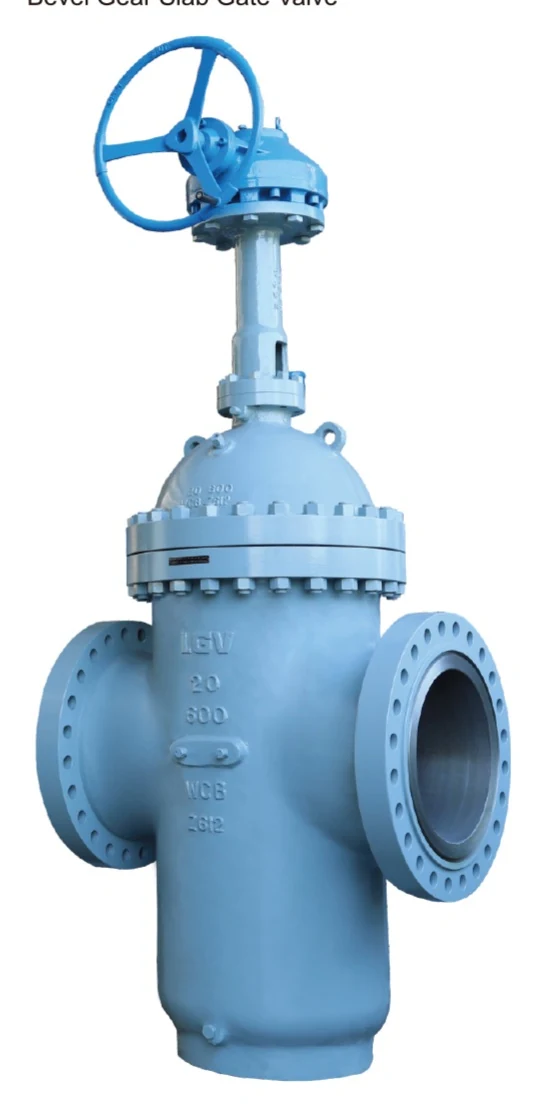
The Bevel Gear Slab Gate Valve is listed in the oilfield valve series as a slab-type gate valve with bevel-gear operation. The catalog illustrates a handwheel-operated assembly, but does not specify the stem motion, seat design, bore, pressure-temperature rating or operator effort. Provide your actual operating conditions to review an orderable configuration.
- Valve type: Gate valve
- Gate construction: Slab gate
- Operator: Bevel gear with handwheel shown in catalog
Catalog identification
Catalog identification and operating arrangement
This entry identifies the illustrated slab gate configuration. For a procurement decision, distinguish the gate, the stem arrangement and the gearbox; none of those details can be substituted for the offered general arrangement drawing and datasheet.
Product family
Gate valve. Browse the Gate Valves range for other constructions and operating arrangements.
Catalog series
Oil Field Valve Series. This is the source catalog grouping, not confirmation of a pressure rating or compliance with a particular oilfield specification.
Catalog reference
English valve catalog, PDF viewer page 111 (printed pages 211–212). The illustration is identified as Bevel Gear Slab Gate Valve.
Catalog details
What the catalog actually identifies
The catalog names a slab gate valve with a bevel-gear operator. The table records what that identification means for selection; sizes, design limits and construction details must be checked against the offered assembly.
| Item | Catalog description | Buyer check |
|---|---|---|
| Valve type | Gate valve | Specify isolation duty and shutoff/leakage requirement |
| Gate construction | Slab gate | Request seat arrangement, bore and cavity details |
| Operator | Bevel gear; handwheel shown | Confirm gearing, operating effort, stem movement and access |
| Catalog grouping | Oil Field Valve Series | Grouping does not establish project qualification |
| Catalog location | PDF p. 111; printed pp. 211–212 | Confirm final dimensions using the offered drawing |
For quotation and installation approval, use the offered datasheet, dimensional drawing and documented operating limits rather than the catalog image alone.
Configuration review
Confirm the gate, stem and gear arrangement separately
The product name identifies a slab gate and bevel-gear operation. It does not establish whether the stem rises externally, whether the passage is full bore, or how the seats seal at differential pressure.
What the product name tells you
- Slab gate: a gate construction descriptor; full bore, piggability and seat behavior must be demonstrated by the offered drawing.
- Bevel gear: the depicted manual operating arrangement; gear ratio, handwheel force and number of turns are not specified.
- Stem layout: rising versus non-rising movement, extension and position indication require model-specific confirmation.
Details that determine the quoted configuration
- Design and operating pressure, including differential pressure during opening or closing
- Minimum, normal and maximum temperature with the relevant pressure-temperature limits
- Nominal size, passage bore and any pigging requirement
- End connection, facing or weld preparation, and mating pipe/flange details
- Body, bonnet, stem, gate, seat and packing materials; corrosion or erosion duty
- Seat sealing direction, allowable leakage and cavity pressure relief where applicable
- Stem travel, overall height, handwheel position and operating access clearances
- Gear ratio, maximum required input effort, number of turns and operating frequency
- Governing project specification, edition, acceptance tests and inspection points
- General arrangement drawing, datasheet, material/test records, quantity and delivery requirements
Installation and service conditions
Is bevel-gear operation suitable for your isolation duty?
For accessible, local on/off isolation, compare the required handwheel effort and number of turns with the site operating constraints at the worst specified differential pressure. If the valve must be operated remotely or within a defined short travel time, request a different operating arrangement rather than assuming the pictured handwheel will meet that duty.
Shutoff function and seat leakage
Use this entry as a starting point for shutoff service, not routine throttling. State the required isolation direction, differential pressure across a closed gate and acceptable seat leakage. For flow regulation, evaluate an appropriate control-valve design instead. Seat sealing arrangement, cavity relief and leakage performance remain subject to the actual offered valve.
Operating pressure, temperature and bore
Specify design pressure, operating pressure and the largest differential pressure expected during opening or closing, together with minimum, normal and maximum fluid temperatures. Add nominal size, end connections and any full-bore or pigging requirement. Do not infer the pressure rating or through-bore dimensions from the catalog photograph or series title.
Materials, seats and interfaces
Describe the fluid phase and composition, solids, corrosion or erosion risks and any project material restrictions. The offer should identify body, bonnet, stem, gate, seat, packing and other wetted materials, plus sealing and end-connection details appropriate to the specified service.
Manual gear, stem motion and space
Confirm whether the offered stem rises, its full travel, the gearbox ratio and mounting orientation, the required input effort and operating turns. Check handwheel reach, available headroom, access during the entire stroke and maintainability against the general arrangement drawing; the catalog image cannot establish these dimensions.
Offer and inspection documents
Request the offered model datasheet, general arrangement drawing, applicable design and test standards with editions, pressure and seat test acceptance, material documentation and any project witness requirements. A catalog series name is not a certificate or completed inspection record.
Application boundary
Check operating access and sealing before approval
Before choosing the geared design, verify that the site can accommodate its handwheel and stem movement, and that the offered seat and materials suit the specified shutoff duty.
Fluid and isolation requirement
Send the fluid composition, temperature range, pressure differential, solids/contaminants and any corrosion or erosion concerns. Define the required seat-leakage acceptance rather than assuming the slab design is bidirectionally tight for every service.
System and specification
Identify the equipment or piping duty and provide the governing project specification and connection details. Placement in an oilfield catalog is not evidence of conformity with a particular API standard or service qualification.
Footprint, stem clearance and mounting
Request the offered overall drawing showing valve orientation, stem position at both travel limits, gearbox and handwheel envelope, lifting/support points and maintenance access. Check piping alignment and allowable loads; do not use the catalog illustration as an installation drawing.
Product image
Bevel Gear Slab Gate Valve in the source catalog
This image shows the catalog-identified valve and handwheel arrangement. It does not provide reliable dimensions, pressure limits, internal seat details, exact material grades or a configuration-specific approval drawing.
Compare operating arrangements
Other slab gate catalog entries
Compare the operator and stem arrangement first, then verify each alternative against the same pressure differential, shutoff requirement and installation limits. Product names alone do not establish interchangeability.
Electric Slab Gate Valve
Catalog-listed electric-operated alternative. If remote operation or timed travel is required, request its electrical and operating details separately.
Gas Specific Non-Rising Stem Slab Gate Valve
The catalog explicitly names a gas-specific, non-rising-stem alternative. Do not transfer its stem design or service suitability to the bevel-gear entry.
Slab Gate Valve
A separate slab gate entry without the bevel-gear designation. Compare its offered operator and stem arrangement before selecting one.
Common selection questions
Bevel Gear Slab Gate Valve: common questions
The catalog establishes the product identity; the selected configuration and its limits must come from the technical offer.
What does bevel gear tell me about this slab gate valve?
It identifies the mechanical operating arrangement, with a handwheel shown in the catalog. It does not establish rising or non-rising stem construction, gearing ratio, operating torque, full-bore dimensions or pressure rating.
Can I specify it for frequent cycling or piggable service?
Not from the product name alone. Provide the expected operating frequency, differential pressure and any full-bore or pigging requirement. Ask for the offered valve design, operating data and bore drawing before approving that duty.
How do I confirm installation and handwheel clearance?
Request an offered general arrangement drawing showing the gearbox position, overall height, handwheel access, stem travel and both end positions. The catalog photo is not a dimensional drawing.
What should I include in the RFQ?
Provide the isolation duty and fluid, design pressure and operating differential pressure, temperature range, size and connections, seating/leakage requirement, available access and stem clearance, required materials, standards, tests, quantity and documentation scope.
Technical inquiry
Request a Bevel Gear Slab Gate Valve configuration
Send the operating duty and available pipe/interface information using the inquiry form below. Identify any unknown values; the offered design, documents and commercial terms should then be confirmed for the exact configuration.
- Isolation function, service medium, seat-leakage requirement and operating frequency
- DN/NPS, passage/bore requirement, connections, design pressure, differential pressure and temperature
- Handwheel access, required stem/gearbox clearance and manual operating limits
- Body/trim/seat materials, corrosion/erosion conditions and applicable standards
- Quantity, requested drawings, pressure/leakage tests, inspection and material documentation