
PDF-documented product
Socket Weld Gate Valve
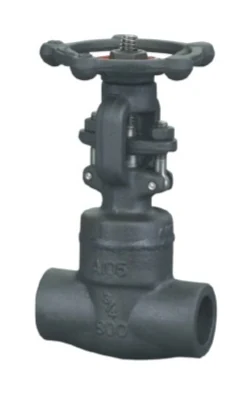
The recovered product catalog identifies this item as Socket Weld Gate Valve in the Forged Steel Valve series. The catalog confirms the connection type, but not the valve’s socket dimensions, pipe compatibility, material grade or pressure-temperature limits. For a useful quotation, provide the line-pipe specification, service envelope and project welding and inspection requirements.
- Valve type: Gate Valve
- Connection: Socket weld
Product identity
What this catalog record owns
This is the product-level record for one catalog identity. Use the Gate Valve category for family-level selection and the Forged Steel Valves series for series context.
Product family
Gate Valve. Browse the parent Gate Valve category for family-level selection and duty comparisons.
Catalog series
Forged Steel Valve. This is the source-series label, not a material grade or pressure designation. See the Forged Steel Valves series for the wider product route.
Evidence source
Recovered English product catalog, PDF page 112. The mapped illustration corresponds to the Socket Weld Gate Valve entry.
Catalog evidence
Catalog-documented product data
Only fields stated by the PDF catalog label are shown. “Socket weld” identifies the connection type; it does not define the mating pipe dimensions. “Forged Steel Valve” is the source-series label, not a material grade.
| Field | Catalog-documented value | Evidence status |
|---|---|---|
| Valve type | Gate Valve | VERIFIED — PDF catalog label |
| Connection | Socket weld | VERIFIED — PDF catalog label |
| Catalog source series | Forged Steel Valve | VERIFIED — PDF catalog section |
| Catalog source page | PDF page 112 | VERIFIED — recovered PDF mapping |
Important: the catalog does not state size, socket geometry, material grades, pressure-temperature limits, valve standard, actuation or test scope. Confirm these on the offered datasheet and dimensioned end drawing; price and lead time must be quoted separately.
Evidence boundary
Known facts and open configuration fields
The two confirmed entries are catalog labels, not an order-ready specification. The list below separates buyer inputs from details the supplier must confirm for the offered configuration.
Confirmed by the catalog
- Valve type: Gate Valve — the catalog identifies the valve family, not the complete construction.
- Connection: Socket weld — the catalog confirms the end type only; socket dimensions, mating pipe size and governing standard remain unverified.
Confirm before quotation
- SUPPLIER TO CONFIRM — body/bonnet construction, gate or wedge, stem and seat design for the offered configuration
- BUYER INPUT — required body/bonnet/trim/seat/packing/bolting grades and traceability level; supplier to state the offered material schedule
- BUYER INPUT — operator preference, access and duty; supplier to confirm the available stem and operator arrangement
- BUYER INPUT — design/operating pressure, differential pressure and transients; supplier to confirm the rating basis
- BUYER INPUT — minimum, normal and maximum temperature; supplier to confirm pressure-temperature limits for the offered materials
- BUYER INPUT — pipe NPS/DN, pipe standard, actual outside diameter, schedule/wall thickness and material
- SUPPLIER TO CONFIRM — socket bore, engagement depth, tolerances and valve end-to-end dimensions on the approved drawing
- BUYER INPUT — governing valve design standard, piping construction code, connection standard and applicable editions
- BUYER INPUT — fluid composition, phase, solids, corrosion/erosion and cleaning requirements
- BUYER / INSTALLER — field WPS/PQR/WPQ, filler, fit-up, preheat/interpass and PWHT where required; supplier to confirm valve-specific instructions
- BUYER INPUT — required valve factory tests, MTRs, dimensional inspection, NDE, acceptance criteria, ITP hold/witness points, quantity, destination, packing/marking and delivery terms; supplier to state records supplied
Engineering review
How to specify the Socket Weld Gate Valve
The socket-weld label is only the starting point. A quote becomes comparable when the valve end is matched to the actual line pipe and the valve duty, welding responsibility and inspection records are defined.
Valve duty and service
A gate valve is generally selected for on/off isolation, not routine flow modulation. State the required shutoff, operating frequency, differential pressure and any transient conditions. If the duty requires continuous throttling, compare a suitable globe or control valve instead of treating this catalog entry as a control valve.
Pipe-to-socket fit
Provide the pipe NPS/DN, governing pipe standard, actual outside diameter, schedule or wall thickness and material. Request a dimensioned valve-end drawing that states socket bore, engagement depth, tolerances and end-to-end dimensions. Nominal size alone does not prove that the pipe will fit the valve socket.
Materials and pressure basis
Specify the body, bonnet, gate or wedge, stem, seat, packing and bolting grades against the fluid and temperature. “Forged Steel Valve” is a catalog-series label, not a grade. Ask for the offered material schedule, pressure-temperature basis and valve design standard and edition for the exact construction. Do not assume that a standard for the mating socket-weld fitting also establishes the valve design or pressure-temperature rating.
Welding and installation
The pipe-to-valve joint is a permanent socket-weld connection: the pipe enters a recessed socket and an external fillet-type weld secures the pipe to the valve end. Set fit-up clearance, welding process and filler, preheat/interpass control, and any postweld heat treatment (PWHT) under the governing piping code and approved welding procedure specification (WPS) for the actual materials. The valve supplier should provide the exact end drawing and valve-specific welding instructions; do not apply a generic gap or another maker’s parameters.
Separate valve records from field-weld records
Separate factory records for the valve from records for the field pipe-to-valve weld. For the valve, agree the required material test reports (MTRs) and heat-number traceability, dimensional inspection, pressure/seat-test reports and any specified non-destructive examination (NDE). For the field weld, the project or installer controls the WPS, procedure qualification record (PQR), welder performance qualification (WPQ), filler and heat-treatment records, weld inspection/NDE method and extent, acceptance criteria, and inspection and test plan (ITP) hold or witness points. Ask the supplier to confirm which valve records and welding instructions apply to the quoted configuration.
Application boundary
Check service and installation constraints
Suitability depends on the fluid, line specification and installation environment—not on the words “socket weld” alone. Review the connection where crevice corrosion, solids retention, cleanability or field-welding access could change the decision.
Service medium
Provide fluid composition, phase, contaminants and solids, plus corrosion or erosion and cleaning requirements. A socket recess can create a pocket where residue may collect; if cleanability, drainability or crevice-corrosion control is critical, have the project engineer review the joint geometry or compare another permitted end connection.
Industry and system
Provide the line class or piping material specification, design code and edition, pipe material, NPS/DN, outside diameter, schedule and design conditions. The same nominal size can have different wall thicknesses and materials; the actual pipe specification is needed to check the valve end and weld procedure.
Installation boundary
Confirm access for a full circumferential weld, valve orientation, pipe alignment and support, external piping loads, adjacent-weld clearance, maintenance space and the ability to protect the valve bore and seat from heat and weld debris. Valve-specific instructions and the approved WPS govern the installation sequence.
Visual evidence
Catalog image and dimensional evidence
Both image placements use the same catalog asset for product identity. The illustration is not a dimensional drawing and does not establish socket bore or depth, pipe schedule, material grade, pressure rating, certification or weld preparation. Use the approved valve-end drawing for fit-up.
Related product routes
Related Gate Valve catalog entries
These are separate gate-valve catalog identities, not confirmed drop-in substitutes for this socket-weld product. Check each page’s own end connection, materials, service limits and drawing before comparing it for the same line.
Cryogenic Extended Stem Gate Valve
A separate low-temperature and extended-stem catalog identity. Its name does not establish a substitute end connection or a matching temperature limit.
Forged Steel Cryogenic Gate Valve
A separate forged-steel cryogenic gate valve entry. Confirm its own connection, materials and design temperature before considering it for the same service.
Stainless Steel High Pressure Gate Valve
A separate stainless-steel, high-pressure-labeled entry. Confirm its material grade, pressure-temperature basis and end details from its own documents.
Buyer questions
Socket Weld Gate Valve FAQ
These answers distinguish the catalog identity from the pipe interface, field-welding procedure and inspection package that must be agreed for the project.
What does the catalog confirm for this Socket Weld Gate Valve?
It identifies the product as a Socket Weld Gate Valve, classifies it as a Gate Valve, places it in the Forged Steel Valve source series and maps it to the product image on PDF page 112. It does not supply an order-ready dimensional or pressure specification.
What pipe information is needed to verify the socket fit?
Provide NPS/DN, the governing pipe dimensional standard, actual pipe outside diameter, schedule or wall thickness and material. Ask for the valve’s socket bore, engagement depth, tolerances and end-to-end dimensions on an approved drawing.
Does the catalog set the socket-weld gap or field welding procedure?
No. The required pre-weld clearance, welding process, filler, preheat and interpass control, and any postweld heat treatment depend on the governing piping code, actual materials and approved WPS. The valve supplier should confirm the end drawing and valve-specific welding instructions; do not apply a generic gap or another manufacturer’s procedure.
Which inspection and welding records should be agreed before order?
Separate the valve’s factory records—material test reports (MTRs), dimensional inspection and pressure/seat-test reports—from field-weld records controlled by the project or installer, such as WPS/PQR/WPQ, filler and heat-treatment records, weld inspection/NDE, acceptance criteria and inspection and test plan (ITP) hold or witness points. Confirm the exact records required and which the supplier will provide for the quoted configuration.
Technical inquiry
Request a configuration review for Socket Weld Gate Valve
Reference this catalog identity and send the pipe specification, service conditions and required document scope. Mark unknowns for confirmation. A comparable offer should state the exact socket-end drawing, offered materials, pressure-temperature basis and which factory and field-weld records are included. Also state the quantity, delivery destination, packing/marking requirements and requested delivery timing.
- BUYER: valve duty, fluid composition and phase, design/operating pressure, differential pressure and temperature range
- BUYER: pipe NPS/DN, pipe dimensional standard, actual outside diameter, schedule/wall thickness and pipe material
- SUPPLIER: dimensioned socket-end drawing with bore, engagement depth, tolerances and end-to-end dimensions
- BUYER: required valve construction, body/trim/seat materials, operator, tag numbers and quantity
- BUYER / INSTALLER: governing valve, piping and welding codes/editions, WPS/PQR/WPQ, NDE, acceptance and ITP/witness requirements; SUPPLIER: factory test/material/dimensional records and valve-specific welding instructions; include destination and packing/marking