
PDF-documented product
ASME Bellows Seal Gate Valve
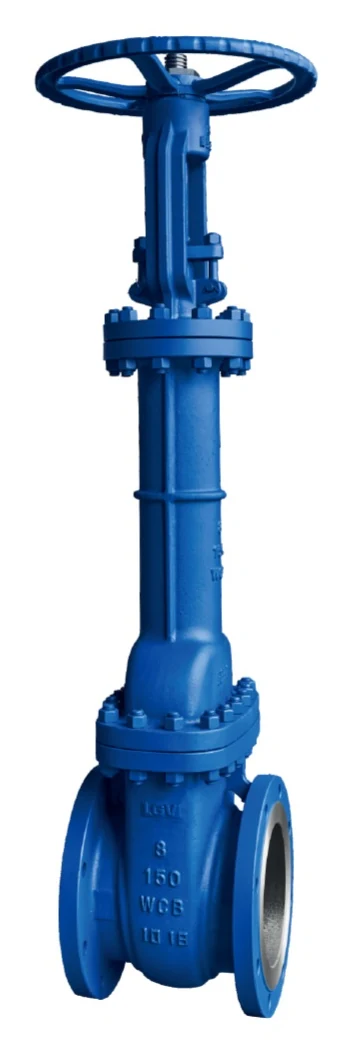
The Lianggong catalog lists this model as an ASME Bellows Seal Gate Valve on PDF page 109. Here, ASME is a catalog descriptor—not a confirmed design code or pressure class. The bellows seal describes the stem-sealing arrangement; the gate and seat perform line shutoff. Confirm the offered construction, rating and operating limits from its datasheet and approved drawing.
- Valve type: Gate Valve
- Stem-sealing descriptor: Bellows seal
- Catalog designation: ASME (specific standard and edition not stated)
Product identity
What this catalog record identifies
This is the ASME-labeled record within VALMORA’s Gate Valve range. Use the parent category for broader construction selection; this page covers only the catalog identity below. Do not transfer ratings, materials or construction details from the separate Bellows Seal Gate Valve entry.
Product family
Gate Valve. The catalog identifies the valve type, not the exact gate or seat geometry.
Catalog series
Bellows Valve. This is the source catalog’s series heading, not a bellows material grade or a complete design specification.
Evidence source
Recovered Lianggong English product catalog, PDF page 109.
Catalog evidence
Catalog-documented product data
Only fields stated by the PDF catalog label are shown as product data. A descriptive term such as high pressure, large diameter or ASME does not create a numeric rating, orderable range or certification claim.
| Field | Catalog-documented value | Evidence status |
|---|---|---|
| Valve type | Gate Valve | VERIFIED — PDF product label |
| Stem-sealing descriptor | Bellows seal | VERIFIED — PDF product label |
| Catalog standard descriptor | ASME | VERIFIED — wording in product name only |
| Catalog source series | Bellows Valve | VERIFIED — PDF section heading |
| Catalog source page | PDF page 109 | VERIFIED — recovered PDF mapping |
Important: The catalog does not state NPS/DN, pressure class, body or bellows material, pressure-temperature limits, end connection, face-to-face dimensions, test basis or certification. Resolve these on the offered datasheet and approved general-arrangement or sectional drawing before order approval.
Evidence boundary
Confirmed product identity vs. open configuration
The catalog and matched image establish the model name, valve type, stem-seal descriptor and source series. They do not provide a complete drawing, rating or material schedule.
Confirmed by the catalog
- Valve type: Gate Valve — stated in the PDF product label; closure details are not specified.
- Stem-sealing descriptor: Bellows seal — stated in the product name; the bellows assembly is not detailed.
- Catalog standard descriptor: ASME — appears in the product name; no specific ASME document or edition is identified.
Confirm before quotation
- Parent valve standard and edition; bellows-specific standard if required
- NPS/DN, pressure class and pressure-temperature rating at design temperature
- Body, bonnet, gate/wedge, seat, stem, bellows and secondary-packing materials
- End type, flange facing or weld preparation, face-to-face, stem arrangement and travel
- Medium, phase, concentration/solids, differential pressure, shutoff criterion and cycle frequency
- Operator and installation envelope, bellows qualification/life basis, leakage tests and inspection records
Engineering review
Specify the gate, stem seal and operating duty
The gate or wedge and seat close the flow path. The bellows is a separate stem-sealing element where the moving stem crosses the pressure boundary; it is not the gate and does not replace the valve’s body/bonnet pressure boundary. Specify the isolation duty and the bellows assembly as separate parts of the same valve.
Isolation duty and cycling
Define on/off isolation or any throttling/frequent travel. Gate valves are normally for full-open/full-closed service; if modulation is required, confirm suitability or compare a globe/control valve. State shutoff direction, leakage criterion, maximum differential pressure and expected cycles.
Pressure and temperature
Give design/operating pressure, minimum/normal/maximum temperature and start-up or shutdown cases. Request the body-material pressure-temperature rating and any separate bellows pressure, temperature or cycle limits.
Gate, stem and material details
Use a sectional drawing to identify the gate/wedge, seat, stem, bonnet, bellows and any secondary packing. Specify body, bonnet, gate, seat, stem and bellows grades against fluid chemistry, phase, concentration and solids.
Connections, operator and clearance
Provide NPS/DN, end type, flange facing or weld preparation, and face-to-face. Choose handwheel, gear or powered operation from differential pressure, required thrust/torque, cycle frequency and utilities. Verify stem travel, full-open height and operator clearance from the general-arrangement drawing.
Bellows qualification and inspection records
Request bellows material, qualification/cycle-life basis, leakage-test criteria, pressure/temperature limits and secondary-seal details. State the parent-valve standard and edition. If metallic bellows are specified, confirm whether MSS SP-117:2023 applies and request documented compliance and test records.
Application boundary
Check service fit, installation space and maintenance
A bellows seal addresses external leakage at the stem; the rest of the assembly must still suit the medium, piping and maintenance plan.
Process medium and contamination
Identify fluid composition and phase, concentration, contaminants, solids, corrosion/erosion risks and cleaning media. These determine compatibility of body, gate/seat and stem-seal materials; the catalog names no service medium.
Piping layout and operating envelope
Check line size, ends, face-to-face, flow direction, orientation and piping loads. Confirm full-open stem height, handwheel/gear/actuator clearance, insulation and maintenance access from the general-arrangement drawing.
Seal maintenance and failure response
Ask whether secondary packing or leak monitoring is included, how bellows failure is detected/contained, the inspection or replacement interval, spare-part identification and whether line isolation is required. These details are not documented in the catalog.
Visual evidence
What the catalog image can—and cannot—confirm
The mapped image is the correct catalog identity reference for this model. It shows the external valve assembly, but not the internal bellows, gate profile, stem motion, dimensional envelope, pressure rating or test performance. Use an approved sectional and general-arrangement drawing for those decisions.
Related product routes
Related gate-valve records—not interchangeable specifications
These are separate catalog entries, not proven substitutes. Compare each record’s own drawing and specifications.
Bellows Seal Gate Valve
A separate entry without the ASME qualifier. Do not transfer this page’s standard basis or rating; compare its own datasheet and drawing.
Electric Forged Steel Power Plant Gate Valve
A separately named electric power-plant gate valve. Confirm its own body material and operator; its title does not establish bellows sealing.
Manually Controlled Self-Sealing Forged Gate Valve
A separate manually controlled self-sealing forged gate valve. Confirm its bonnet and stem seals from its own drawing; do not equate self-sealing with bellows sealing.
Buyer questions
ASME Bellows Seal Gate Valve: buyer questions
The answers below distinguish the catalog designation from the construction, rating and test records needed for an order.
What does the bellows seal do in a gate valve?
The bellows seals the moving stem where it passes through the valve pressure boundary. The gate/wedge and seat perform line shutoff; these are separate functions. The sectional drawing must show the offered arrangement.
Does the ASME catalog label confirm a pressure class or code compliance?
No. ASME is a catalog descriptor. The source does not identify a specific ASME standard/edition, size, class, material or pressure-temperature rating. Require those details on the offered datasheet and drawing.
Does the catalog photo confirm the stem or actuator arrangement?
No. The photo shows external appearance only; it does not establish rising/non-rising stem, internal bellows, gate profile, travel or actuator dimensions. Request the general-arrangement and sectional drawings.
What should a bellows-seal gate valve RFQ include?
Provide fluid and phase, size, pressure/temperature, differential pressure, leakage requirement, cycle frequency, materials, ends, operator and clearance. Request bellows material, qualification, test basis, secondary-seal details and inspection records.
Technical inquiry
Request a configuration review for ASME Bellows Seal Gate Valve
Reference this exact catalog identity and provide the operating data you know. Ask the technical offer to identify the gate/seat construction, stem and bellows assembly, pressure-temperature limits, operator and document scope. Mark unresolved values as open rather than guessing.
- Valve duty, fluid and required internal/external leakage criteria
- NPS/DN, pressure class, design and operating pressure, and temperature range
- Body, gate/wedge, stem, bellows and seat materials; end connection
- Stem arrangement, expected cycles, operator preference and installation clearance
- Applicable standards/editions, drawings, bellows qualification, tests and inspection records