
PDF-documented product
Pneumatic Piston High Temperature Control Valve
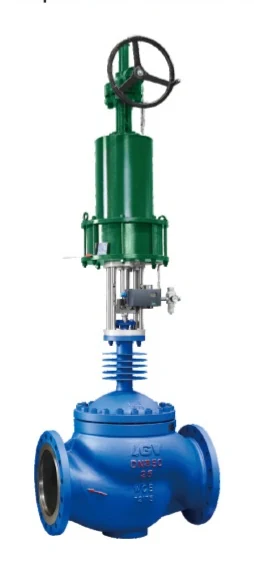
The supplier catalog identifies this product as a pneumatic piston high-temperature control valve. That name confirms the catalog route, not a numeric temperature limit or a complete operating specification. Treat it as a candidate: size the trim against the minimum, normal and maximum flow cases with matching inlet and outlet pressures, then verify materials and packing for the stated temperature, the control interface, shutoff requirement and required failure position for the offered assembly.
- Valve type: Control Valve
- Actuation: Pneumatic
Catalog evidence
What the supplier catalog actually confirms
The source English product catalog names this item Pneumatic Piston High Temperature Control Valve on PDF page 101 and lists it in the Control Valve series. The catalog confirms the product type and pneumatic actuation, but it does not publish the sizing data or operating limits needed to approve a specific process duty.
| Field | Catalog-documented value | Evidence status |
|---|---|---|
| Valve type | Control Valve | VERIFIED — PDF catalog label |
| Actuation | Pneumatic | VERIFIED — PDF catalog label |
| Product-name descriptors | Piston; High Temperature | VERIFIED — product name only; actuator action and numeric temperature limit are not stated |
| Catalog source series | Control Valve | VERIFIED — PDF catalog section |
| Catalog source page | PDF page 101 | VERIFIED — recovered PDF mapping |
Not specified in this catalog entry: Cv/Kv, rated capacity, size, pressure rating, numeric temperature limits, material grades, end connection, seat-leakage class and actuator fail action. Obtain these for the exact offered configuration from the supplier datasheet and approved order drawing.
Engineering review
Size the valve for the actual process duty
A control valve can match the pipe connection and still be oversized at low flow or unable to pass the maximum case. The supplier needs each flow point with its corresponding pressure conditions and fluid properties to select the trim and assess installed control performance. Do not accept a valve size or flow coefficient without a case-based calculation.
Flow cases and pressure drop
Provide minimum, normal and maximum flow with units. For gas/vapor volumetric flow, state whether values are actual or standard and give the reference temperature and pressure for standard-volume data. For each flow case, give matching upstream and downstream pressures and identify gauge or absolute pressure basis; do not pair a flow value with pressures from a different case. State the fluid phase and relevant properties. Ask the supplier for the sizing method, required Cv or Kv, selected trim capacity and predicted travel at each case. No flow coefficient is established by this catalog entry.
High-temperature operating envelope
Provide normal and design pressure, minimum/normal/maximum operating temperatures, design temperature, and any startup, shutdown, transient, vacuum or thermal-cycling conditions that apply. Ask the supplier to confirm the pressure-temperature limits and the body, trim, seat, packing and bonnet arrangement for the exact offered configuration. “High Temperature” is a catalog name, not a numeric rating.
Pneumatic package and control signal
Identify the available instrument-air pressure and quality, controller output type and signal range, and whether a positioner or I/P conversion is required. If a solenoid, limit switches or feedback are required, specify the solenoid voltage and electrical interface. Confirm compatibility of the complete valve, actuator and instrument package; pneumatic actuation alone does not define the control signal.
Shutoff and failure behavior
Specify the required seat-leakage or shutoff class, the differential pressure at closure, and the test medium/conditions or governing project standard. Separately define the required valve position after loss of instrument air, control signal and electrical power to accessories. Ask the supplier to confirm the actuator action and available closing force at minimum air supply; do not infer fail-open, fail-closed or fail-in-place from “pneumatic piston.”
Mechanical interface and documents
Confirm line size, pressure designation, end connection, dimensional standard and edition, flow direction, installation envelope and maintenance access. Request the configuration-specific datasheet, sizing sheet, outline drawing, applicable material certificates, pressure/leakage test records, marking and inspection or third-party witness documents required by the project. The catalog does not establish a nominal size, pressure class, material grade, connection or certification.
Application boundary
Check the medium, control loop and installation
The same catalog label can cover different process conditions. Fluid properties, control objective and installation constraints determine whether the proposed trim and high-temperature package are suitable.
Service medium
Identify whether the service is liquid, gas, vapor or mixed phase. Provide composition, concentration, density/viscosity where relevant, vapor pressure for liquids, solids, corrosive or erosive constituents, and cleaning requirements. Where applicable, ask for a liquid cavitation/flashing review or a gas/vapor choking and noise assessment.
Control loop and process function
State whether the valve must modulate flow, pressure or temperature, or perform on/off service. Identify the plant, equipment and piping function, the controlled variable, measurement point, normal load range and response requirements. If the duty is mainly isolation, confirm that a control-valve arrangement is the intended function before specifying the assembly.
Installation boundary
Confirm flow direction, mounting orientation, piping loads, face-to-face or end-to-end space, ambient conditions, actuator clearance and maintenance access. Use the supplier’s approved dimensional drawing for layout and mating interfaces; catalog images are not dimensional drawings.
Visual evidence
Catalog images for product identification
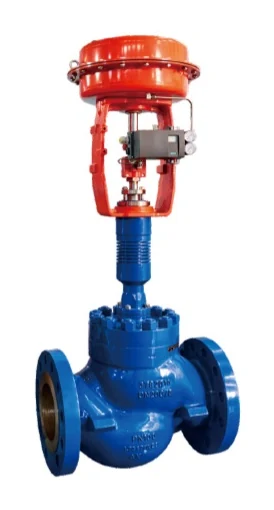
Both archived images map to this product name in the supplier catalog on PDF page 101. They support product identity and appearance only; neither image establishes the offered trim, material, dimensions, pressure-temperature envelope or actuator accessories.
Related product routes
Related control-valve catalog entries
These are separate catalog records, not automatic substitutes. Compare the actual duty, valve construction and actuation package using each product’s own datasheet; do not transfer limits or accessories between pages.
Pneumatic Forged Steel Control Valve
A separate pneumatic catalog entry. Confirm its own construction, trim, pressure-temperature limits and actuator package.
Electric Control Valve
An electric-actuated catalog entry. Its power and control interface differ from this pneumatic product.
Electric High Temperature Control Valve
A separate electric high-temperature entry. Do not transfer its temperature limits or actuator package to this pneumatic valve.
Buyer questions
Questions buyers ask before quotation
The catalog confirms product identity. Operating limits, sizing and package details must come from the exact configuration offered for review.
Does the catalog state a maximum operating temperature?
No. “High Temperature” is part of the product name only. PDF page 101 does not state a numeric operating or design limit or a pressure-temperature curve. Obtain the applicable limits for the offered body, trim, seat and packing from the supplier datasheet.
What information is needed to size the valve?
Provide minimum, normal and maximum flow with the corresponding inlet and outlet pressures for each case, plus the fluid phase and relevant properties. Ask the supplier for the sizing method, required Cv or Kv, selected trim and predicted travel across the cases. Do not size from line size alone.
Does pneumatic piston actuation define the control signal or fail position?
No. The catalog identifies pneumatic actuation but does not state the control signal, positioner, air pressure or actuator action. Specify available instrument air, controller output and the required valve position on loss of air, signal or power; the supplier must confirm the compatible package.
What shutoff performance should be specified?
State the required seat-leakage or shutoff class, the differential pressure and the test conditions. Ask the supplier to confirm seat leakage and actuator closing force for the offered configuration; the catalog does not state a leakage class.
Technical inquiry
Request a configuration review for Pneumatic Piston High Temperature Control Valve
Reference this catalog identity and share the process cases, control interface and shutoff/failure requirements you know. The supplier should return a configuration-specific sizing basis, datasheet and drawing. Mark unknown values for clarification rather than treating them as confirmed specifications.
- Minimum, normal and maximum flow with matching inlet/outlet pressures and units; gas/vapor flow basis
- Fluid phase and composition, plus operating and design temperatures
- Available instrument air, controller output and required control signal
- Required shutoff performance and fail position for loss of air, signal or accessory power
- Line size, end connection, material requirements, quantity and requested project documents