
Catalog-listed non-return valve
ASME Check Valve
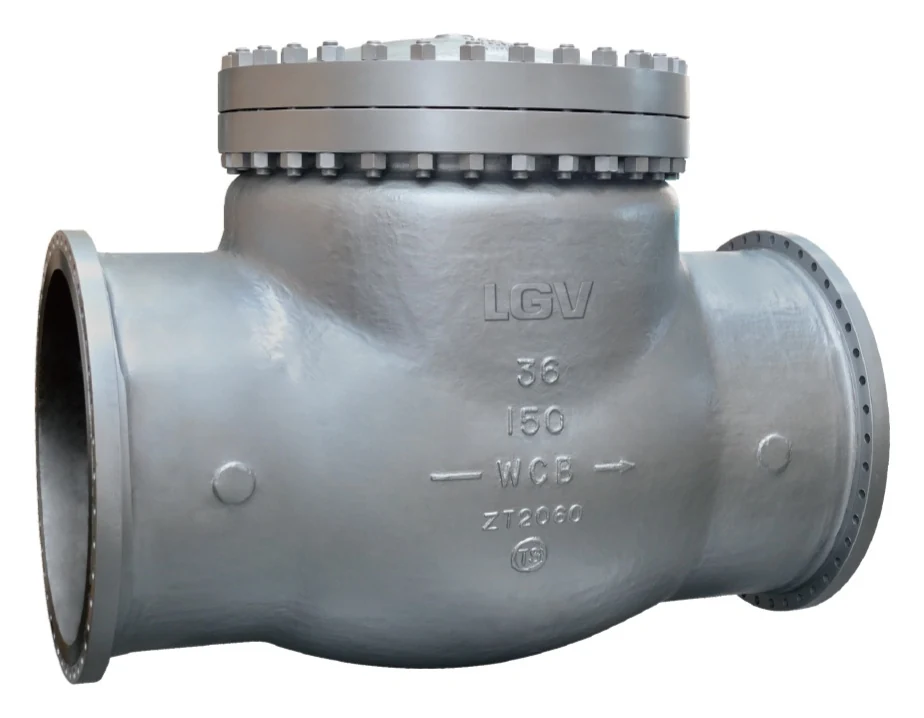
CATALOG REFERENCE · PHYSICAL PDF PAGE 82
ASME Check Valve
Use the original catalog page to identify the product listing. For dimensional approval, request the quoted valve’s drawing and installation instructions; the catalog thumbnail is not a purchase-order drawing.
The printed catalog lists ASME Check Valve under its Check Valve Series (physical PDF page 82, printed page 154). The catalog uses this label for more than one pictured item but gives no orderable model or configuration table. To request a usable proposal, provide the flow duty, installation orientation and line conditions, then obtain a configuration-specific drawing and datasheet.
- Function: prevent unintended reverse flow
- Catalog designation: ASME Check Valve; exact design and standard edition to be specified
Product identity
What the catalog establishes
The name identifies a check-valve offering, not a single specified assembly. The catalog image and label cannot establish its internal closing mechanism, size range, pressure rating, material grade or code compliance. Those details must appear on the quoted configuration.
Valve function
A check valve allows flow in the intended direction and closes against reverse flow. The mechanism and closing response vary by design; this catalog entry does not name one.
Catalog location
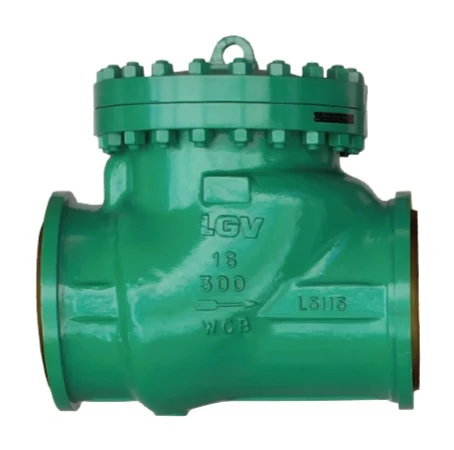
Check Valve Series, physical PDF page 82 (printed page 154). Two differently pictured items carry the label “ASME Check Valve”; the catalog does not assign their individual specifications.
What “ASME” means here
“ASME” is part of the catalog name. The entry does not identify a code number or edition, nor demonstrate certification, testing or conformance of a particular quoted valve.
Catalog evidence
ASME Check Valve: verified catalog information
The listing gives a commercial product name and catalog location, not a dimensioned data sheet. Use the original PDF to identify the entry, then request a document set for the exact construction being quoted.
| Item | What the catalog actually shows | Quotation implication |
|---|---|---|
| Product name | ASME Check Valve | A product heading, not an assigned model number |
| Product family | Check Valve Series | Non-return function; exact closure mechanism unspecified |
| Catalog location | Physical PDF page 82, printed page 154 | Refer to this page when requesting the matching specification |
| Dimensions, materials, pressure/temperature and ends | Not stated for an orderable configuration in this entry | Request dimensional drawing, material list and rating data |
| ASME design/test requirement | No code or edition cited for this product | State the project standard(s) and ask for documented conformity |
Do not order from the picture or nominal description alone. Match the offered valve to a document set showing construction, dimensions, ratings and installation limitations.
Evidence boundary
First decide how the valve must close
A check valve is usually flow-operated rather than commanded like a control valve. A line that reverses rapidly after a pump trip needs a different closure review from a steady line with slow changes in flow. Neither application proves that this specific catalog entry has a spring, damper or anti-slam feature.
Start with the duty
- For steady service, check that the proposed closure element opens stably at the minimum operating flow and has an acceptable pressure drop at the normal and maximum flow.
- For pump stops, rapid reversal or surge-sensitive piping, request a closing-response and hydraulic-transient review before approving a generic check valve.
Exclude unsuitable offers early
- If the line is vertical, require explicit approval of the offered design for the stated upward or downward flow; the catalog label is not approval.
- If velocity falls well below normal operation, request opening/stability data rather than assuming a nominal-size valve will stay fully open.
- If reverse-flow transients could damage equipment, do not accept a “non-slam” guarantee without configuration-specific closing evidence.
- If the duty involves solids, corrosive fluid or unusual temperatures, request wetted-material and seat compatibility details.
- If an ASME/API specification is contractual, state its exact designation and edition, and request applicable records for the proposed valve.
Engineering review
Information needed to select the quoted valve
Provide these operating inputs with the RFQ. Ask the supplier to return one configuration-linked datasheet and drawing, so its opening behavior, dimensional fit and material/rating limits can be checked against the same valve.
Flow profile and minimum stable opening
You provide: minimum, normal and maximum flow rate (or velocity), medium density or phase, and allowable pressure loss. Supplier confirms: the candidate valve’s opening requirements, operating range and pressure-drop data. A nominal line size by itself is not enough.
Pressure, temperature and nominal size
You provide: DN/NPS, design and operating pressures, temperature range, and possible surge or vacuum. Supplier confirms: the valve’s material-dependent pressure–temperature rating and the quoted size/rating combination. Do not treat a Class number as a universal pressure limit.
Line connection and installation
You provide: mating flange or other end specification, line orientation, intended flow direction, upstream/downstream fittings and available service clearance. Supplier confirms: end details, face-to-face dimensions, flow arrow, permitted orientations, and installation guidance for the selected mechanism.
Reversal event and closing response
You provide: pump trip, compressor shutdown or other reverse-flow scenario, pipe profile and surge sensitivity. Supplier confirms: the actual closing arrangement and any available dynamic evidence. A motor, pneumatic actuator, set fail position or anti-water-hammer performance is not assumed.
Material, seat and document requirements
You provide: fluid chemistry, solids, erosion/corrosion risks, leakage expectations and required inspection or witness points. Supplier confirms: wetted-material grades, seat construction, drawing revision, test criteria and the material/test records that can be furnished.
Application boundary
Installation checks that change the selection
Confirm these site conditions against the actual proposed valve rather than assuming any ASME-labeled check valve will work in every orientation. A layout constraint that conflicts with the mechanism is a reason to select a different design, not to force the installation.
Vertical piping
Some check-valve closing arrangements depend on gravity or spring assistance. For a vertical run, specify whether flow travels upward or downward and accept only a construction whose installation instructions permit that orientation.
Low or fluctuating flow
A check valve that cannot open steadily at minimum flow may chatter, wear or cause excessive head loss. Ask for opening/pressure-drop information at the real low-flow condition; do not size from peak flow alone.
Nearby fittings and maintenance access
Show elbows, pumps and other valves near the proposed location and provide the space available for servicing. Turbulence and access requirements depend on the chosen design; apply its installation drawing rather than a generic fixed straight-run distance.
Visual evidence
Source catalog and product drawing
Use the source catalog as an identity reference, not as a dimensioned or installation drawing. For the proposed construction, request the documents below before approving a purchase order.
Catalog entry: page 82
Product label: ASME Check Valve, Check Valve Series, printed page 154. More than one pictured item shares the label. The source supplies no separate orderable model specification.
Documents to request
Ask for an offer-specific datasheet, general arrangement drawing, flow-direction and orientation instructions, material/seat list, pressure–temperature limits and required inspection/test documents.
Include the operating duty and required standards in the technical inquiry.
Related product routes
Other check-valve product routes
If a project calls for a specific construction or service descriptor, use the corresponding product record for its own documentation. These are separate inquiry routes, not approved equivalents of this ASME catalog entry.
Forged Steel High Pressure Check Valve
Review this separate forged-steel/high-pressure catalog designation when the project specification explicitly calls for it; verify its own size, material and rating data.
High Temperature and High Pressure Power Plant Check Valve
A separate power-plant/high-temperature catalog route; it cannot be substituted solely because both are check valves.
GB Standard H44W Check Valve
Use this separate GB H44W entry if the project specifically names that designation, and verify the required code and interfaces.
Buyer questions
Questions before ordering an ASME Check Valve
These questions help prevent an incorrect configuration being ordered from a broad catalog title.
Does “ASME Check Valve” identify a particular ASME code or edition?
No. “ASME” appears in the catalog name, but the listing cites no specific standard or edition. Specify the applicable design, dimensional and inspection/test requirements in the RFQ, and verify the proposed valve against them.
Is this catalog entry approved for vertical installation?
Not on the evidence provided. State the flow direction and whether the line is horizontal or vertical. The supplier must identify a construction whose installation instructions allow that orientation; the pictures do not establish it.
What drawing should be approved before ordering?
Request a configuration-specific general arrangement drawing identifying the valve body, flow direction, end connection, face-to-face dimension, installation envelope and drawing revision. A catalog photograph is not sufficient for dimensional approval.
What should accompany a request for quotation?
Send the medium, minimum/normal/maximum flow, line orientation and flow direction, size, pressure and temperature duty, end connection, requested materials/seat, reverse-flow event, quantity and required standard/inspection documents. Ask for a matched datasheet, dimensions, allowable orientations and test criteria in the offer.
Technical inquiry
Request an ASME Check Valve configuration review
Send the operating conditions and specify any contractual standards. Ask VALMORA to identify the offered check-valve construction and return the applicable drawing, materials, pressure–temperature rating, installation orientation, tests and quotation conditions. The original catalog label alone is not an order specification.
- Service medium, solids and corrosivity; minimum, normal and maximum flow
- DN/NPS, design and operating pressure, temperature and transient conditions
- Line orientation, flow direction, connection standard and available space
- Pump/compressor stop or reverse-flow event and acceptable leakage/head loss
- Quantity, exact project standards/editions, drawing, test and inspection requirements