
Catalog-listed manual ball valve
Manual Fixed Cast Steel Ball Valve
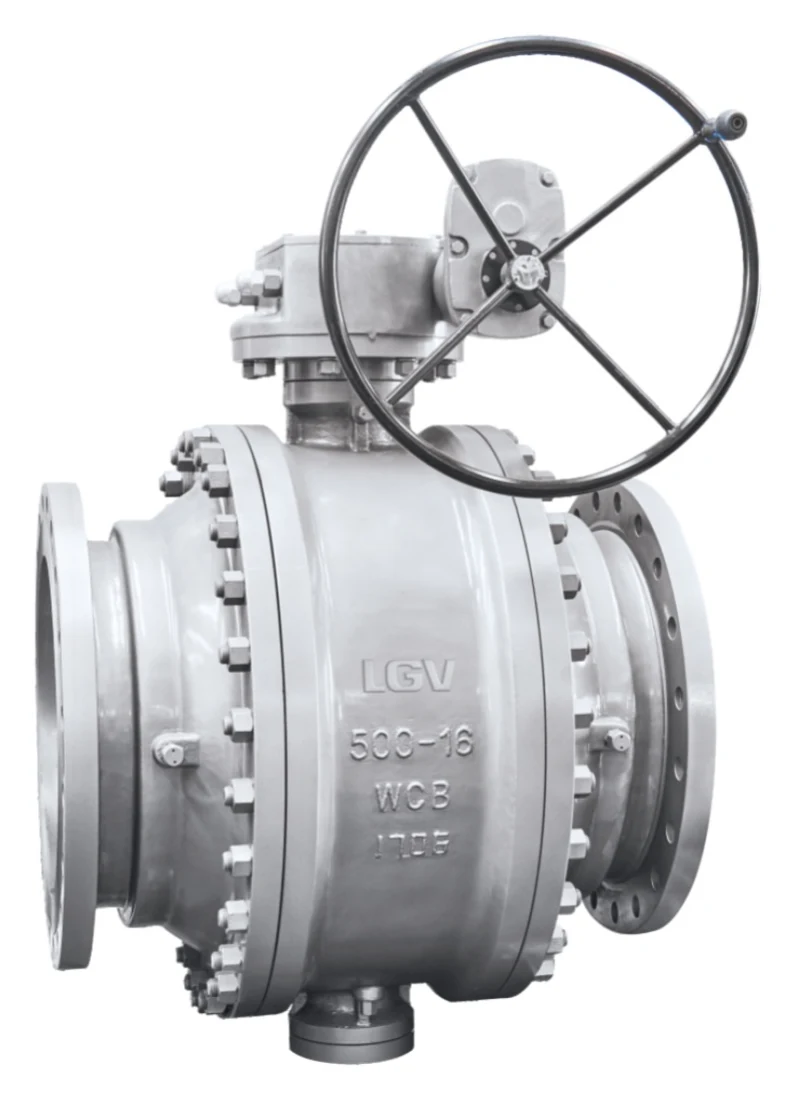
The recovered product catalog lists this item as a Manual Fixed Cast Steel Ball Valve on PDF page 92. The mapped image shows a handwheel operator and what appear to be flanged ends; a WCB casting mark is also visible. These details identify the catalog entry, but they do not establish the gearbox design, flange standard or rating, or a certified material specification. Use the checks below to define the exact configuration for quotation.
- Catalog designation: Manual Fixed Cast Steel Ball Valve
- Catalog family: Ball Valve
- Source evidence: PDF page 92; mapped image AST-R1-0285
Catalog identity
What the product name and image establish
The catalog record gives the product identity and several useful visual cues. It is not a complete technical datasheet or an order-ready specification.
Fixed-ball descriptor
“Fixed” appears in the catalog product name. Confirm the actual ball support and seat arrangement from a sectional drawing before describing the offered valve as trunnion-mounted.
Manual operator
Manual is the catalog actuation label. The mapped image shows a handwheel, but the drive type, gearbox ratio, number of turns and operating torque are not stated.
Cast-steel evidence
The catalog identifies the material as cast steel, and a WCB mark is visible on the pictured casting. Neither establishes a certified body grade or the complete material schedule.
Catalog evidence
Catalog-documented product data
The table separates catalog wording from observations made on the mapped image. Neither source supplies the full pressure, dimensional or material specification for an order.
| Field | Catalog record or image observation | Evidence status |
|---|---|---|
| Catalog product name | Manual Fixed Cast Steel Ball Valve | Verified — PDF page 92 |
| Valve family | Ball Valve | Verified — catalog section |
| Construction wording | Fixed | Verified — product name only; internal ball support and seat design are not shown |
| Material descriptor | Cast steel | Verified — catalog wording; exact grade is not stated |
| Actuation | Manual | Verified — catalog label |
| Visible casting mark | WCB | Visual observation — not a material test report or traceability record |
| Operator and end appearance | Handwheel; flanged ends appear in the image | Visual observation only — operator details and flange interface are not specified |
Use the approved datasheet, sectional drawing and general arrangement drawing for selection, installation and purchase approval. The catalog image is not a dimensional or certification reference.
Construction review
Verify what “fixed” means in the offered valve
The catalog title preserves the word “Fixed,” but it does not show the internal ball support or seat action. Those details affect how the valve carries pressure loads, seals and manages pressure trapped in the body cavity. For background, see the Trunnion vs. Floating Ball Valve guide; use the offered product drawing to verify this valve.
Request the sectional drawing
- Ball support and stem-to-ball connection
- Seat arrangement and sealing direction
- Cavity venting or pressure-relief provision, where required by the design
Do not infer these features from the name
- The word “Fixed” does not, by itself, confirm trunnion support.
- The catalog label does not establish DBB/DIB function or seat sealing direction.
- Seat self-relief and cavity pressure control require design evidence.
Engineering review
Check the manual operator, piping interface and duty
A handwheel valve is practical only when its required torque and installed access envelope match the site. Confirm the following against the offered configuration—not the catalog photo.
Handwheel and clearance
Confirm whether the pictured wheel operates through a worm gearbox or another manual drive. Request the wheel diameter, overall operator height, side offset, mounting orientation and dimensioned operating envelope. Check full wheel sweep, hand access, overhead clearance and maintenance access against adjacent pipework, insulation and structures.
Operating torque
Ask for maximum valve stem torque at the specified differential-pressure and temperature extremes, with breakaway, running and seating values where available. If a gearbox is supplied, obtain its ratio, rated output torque, number of turns and expected handwheel rim force. No torque value is published for this catalog entry; do not size the operator from nominal valve size or appearance.
Pipe connection
The catalog image appears to show flanged ends, but no end standard or rating is stated. Specify NPS/DN, standard and edition, Class/PN, facing (RF, RTJ or FF), bore, face-to-face, bolt pattern and mating flange details. If ASME B16.5 is the specified flange interface, identify its edition, NPS and Class, then confirm facing, bolting and gasket compatibility against the approved valve drawing.
Service and operating duty
Provide medium composition and phase, solids, abrasives, corrosion or erosion risks, minimum/normal/maximum pressure and temperature, maximum differential pressure, transients, vacuum and cycle frequency. State whether the duty is on/off isolation or throttling. Do not assume an isolation ball valve is suitable for continuous flow control.
Body and trim materials
The catalog identifies cast steel, while the image shows a WCB mark. If ASTM A216/A216M Grade WCB is required, specify it on the datasheet and request traceable material records for the offered body. Confirm the body, end pieces, ball, stem, seats, seals and bolting as one material schedule.
Manual operation fit
When a manual operator is the right choice
Choose manual operation only when the valve can be reached, the handwheel can be operated through its full travel, and the required effort is acceptable at the worst specified operating case.
Local isolation
A manual handwheel can suit a locally accessible isolation valve when the operator has safe access and the required operating effort is within the site’s accepted limit.
Frequent or remote duty
If the valve must cycle frequently, operate remotely, or perform an emergency function without local access, a manual-only arrangement may not meet the duty. Ask for an engineered gear or powered operator option and its complete sizing data.
Installation envelope
Before release, compare the general arrangement drawing with the installed space: wheel sweep, overall height, side clearance, orientation, access platform and the space needed for maintenance or operator removal.
Related product routes
Compare separate catalog entries before RFQ
The following pages represent different catalog records. They are not interchangeable variants of this manual fixed cast steel valve; review each page’s own construction, material and service evidence.
Three-Piece Forged Steel High Pressure Ball Valve
A separate forged-steel product record. Review its own pressure and size documentation rather than transferring those values to this cast-steel item.
High Temperature and High Pressure Three-Piece Forged Steel Fixed Ball Valve
A separate forged-steel fixed-ball entry. Its temperature and pressure designation does not establish the limits of this manual cast-steel valve.
Three-Piece Forged Steel Hard Sealed Fixed Ball Valve
A separate hard-sealed forged-steel entry. Confirm the seat material, service duty and construction on that product’s own documentation.
Buyer questions
Manual fixed cast steel ball valve: buyer questions
These answers distinguish catalog identity and image observations from the documents needed to approve a supplied valve.
What does the catalog confirm?
The catalog title identifies a Manual Fixed Cast Steel Ball Valve, and the catalog record confirms Ball Valve, cast steel and manual actuation. The mapped image is from PDF page 92. The WCB stamp and flanged appearance are visual observations only.
Does the WCB mark confirm ASTM A216/A216M Grade WCB?
No. It is a visible casting mark, not a material test report. If the project requires ASTM A216/A216M Grade WCB, request that grade on the approved datasheet and a traceable material certificate for the supplied body.
Does the image confirm a gearbox or flange standard?
No. It shows a handwheel and what appear to be flanged ends, but it does not identify the gearbox type, ratio, torque, handwheel dimensions, flange standard, rating, facing or dimensional series. Use the supplier’s drawing.
What should be checked before ordering?
Confirm the ball support and seat arrangement, valve stem torque under maximum differential pressure and temperature, handwheel clearance, pipe-end dimensions, service medium and complete material schedule.
Technical inquiry
Request a configuration review for Manual Fixed Cast Steel Ball Valve
Reference catalog entity CCE-R2-0099 and provide the project duty. The review should resolve the manual operator, end connection, material grade and documentation for the exact offered configuration. Items not yet defined can remain open for written confirmation.
- Valve function, medium, phase and cycle frequency
- DN/NPS, design pressure, operating cases, temperature range and maximum differential pressure
- End standard and edition, Class/PN, facing, bore, face-to-face and mating flange details
- Handwheel or gearbox type, wheel diameter, operating envelope and required rim effort
- Body grade, ball/stem/seat/seal materials, quantity, drawings, tests and inspection records