
LOW-TEMPERATURE BALL VALVE
Cryogenic Stainless Steel Ball Valve
Before technical approval
Verify the cold-service design
The catalog establishes the product identity. The offered valve still needs a defined operating envelope, a verified stem-seal arrangement and low-temperature test evidence.
- Minimum design temperature and pressure cases
- Stem packing position and bonnet extension
- Seat, seal and low-temperature test basis
Source catalog reference: page 93
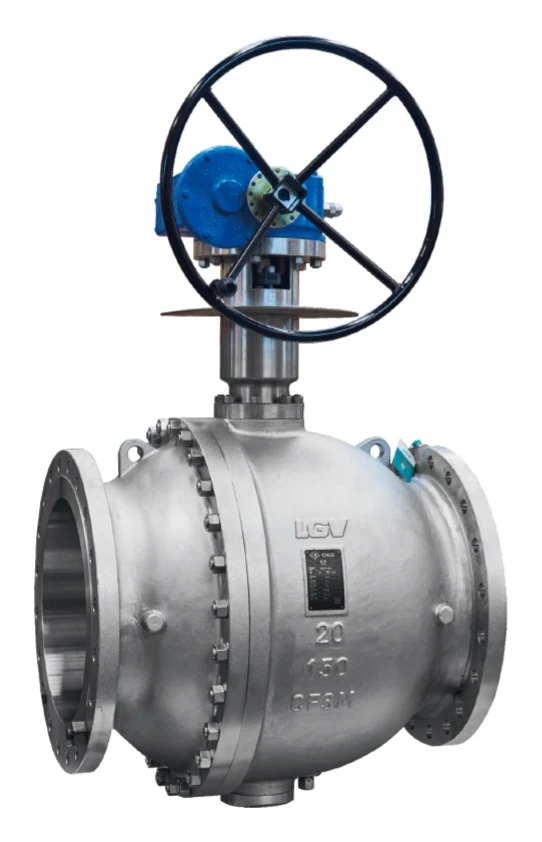
Listed in the Ball Valve series as a stainless-steel ball valve for cryogenic / low-temperature service. The source catalog shows two illustrations under this same product name, but does not assign separate model numbers or publish a pressure-temperature rating, size range, end connection or material grade.
- Valve type: Ball Valve
- Catalog material descriptor: Stainless steel
- Catalog service: Cryogenic / low-temperature
Catalog evidence
Catalog-documented product data
The source catalog confirms the identity fields below. It does not publish an orderable model number, temperature limit, pressure rating, size range, end connection or detailed material schedule.
| Field | Catalog-documented value | Evidence status |
|---|---|---|
| Valve type | Ball Valve | Printed product label |
| Material descriptor | Stainless steel | Printed product name; grade not stated |
| Service designation | Cryogenic / low-temperature | Printed product name |
| Catalog series | Ball Valve | Source catalog section |
| Public model designation | Not stated | No separate model number appears beside either illustration |
| Pressure-temperature rating | Not stated | No rating data on the source page |
| Size and end connection | Not stated | No dimensional or end-connection data on the source page |
| Detailed material schedule | Not stated | Only the general descriptor “stainless steel” is given |
The two catalog illustrations shown below appear under the same printed product name and are presented in their original left-to-right order. The catalog does not identify them as separate orderable models or provide configuration data. Request the exact offered model designation and an approved general-arrangement drawing before comparing the depictions.
Cryogenic design review
Cryogenic design details that need evidence
Low temperature affects stem sealing, material toughness, seat behavior and trapped-liquid pressure. The source catalog does not describe these design details, so they must be verified on the offered configuration rather than inferred from the product name or illustration.
Stem seal and bonnet extension
- An extended bonnet can keep the stem packing in a warmer vapor region, away from direct contact with cold liquid.
- The required extension length depends on the minimum design temperature and the insulation boundary; an unscaled catalog illustration does not establish that length.
- Request a general-arrangement drawing showing the packing position, extension length and permitted installation orientation.
Ball, seats, materials and cavity pressure
- Identify the body, ball, stem, bolting, seat, seal and packing materials by exact grade or material specification and product form. “Stainless steel” is not a complete material schedule.
- Thermal contraction changes clearances and can affect seat loading and operating torque. Request cold-temperature leakage criteria and the torque basis for the offered configuration.
- Austenitic grades such as 304 and 316 are commonly considered for cryogenic service because of their low-temperature toughness; confirm the exact grade and project impact requirements for the offered valve.
- Specify seat leakage acceptance at the required low temperature and whether shutoff must be unidirectional or bidirectional.
- If liquid can be trapped in the body cavity, confirm how thermal-expansion pressure is relieved and whether a preferred flow direction must be observed.
Configuration and RFQ inputs
Build a reviewable cryogenic ball valve RFQ
A quotation is only comparable when each supplier is working from the same operating case. Define the minimum design temperature and pressure conditions first, then specify the shutoff duty, materials, operator and test basis.
Valve duty
State whether the valve is for isolation, emergency isolation, bypass, modulating service or another defined duty. Treat a conventional ball valve as an on-off device unless a control-specific port, flow data, seat duty and actuator sizing are documented. Include cycle frequency and required shutoff direction.
Operating envelope
Identify the fluid, composition, concentration, contaminants and phase; minimum, normal and maximum operating temperatures; design and operating pressure; differential pressure; and any vacuum, start-up, cooldown or warm-up cases. The catalog name does not establish a rated temperature.
Materials and connection
Specify body, ball, stem, bolting, seats, seals and packing by exact grade or material specification and product form. Confirm end type, facing, dimensional standard and mating pipe details. The catalog only gives the general descriptor “stainless steel”.
Actuation requirement
State the preferred operator—manual, gear, electric, pneumatic or hydraulic—and the available utilities, fail action, control signal and required travel time. Request the torque basis at minimum design temperature and maximum differential pressure; the catalog does not specify an operator.
Inspection and documents
Request the offered datasheet and general-arrangement drawing, material and trim schedule, applicable low-temperature design, type and production test records, seat and stem leakage results, inspection plan, certificates and marking requirements. State the required standard edition and acceptance criteria.
Standards and testing
Select the low-temperature standard from the service scope
The catalog does not state a design or test standard for this product. ISO 28921-1:2022 is relevant to industrial isolation valves within its stated temperature scope, including ball valves. It is not proof that this catalog product complies. First confirm whether the equipment is a process isolation valve or a cryogenic vessel valve, then specify the governing project standard.
ISO 28921-1:2022 — design and production
Its scope covers metallic-body industrial isolation and check valves from −50 °C to −196 °C, including ball valves, and addresses design, dimensions, materials, fabrication and production testing. It excludes valves for cryogenic vessels designed under ISO 21011 and does not apply to control valves. Read the ISO 28921-1 scope.
ISO 28921-2:2015 — type testing
Part 2 specifies low-temperature type testing to verify valve performance from −50 °C to −196 °C. ISO lists the 2015 edition as published and shows a replacement edition under development. Confirm the edition required by the project and whether the test covers the offered design, size and pressure rating. Check the ISO 28921-2 status.
Evidence to request
Ask for a test report identifying the valve design or model, size, pressure class, minimum test temperature, test medium and pressure conditions, operating cycles, seat-leakage results and stem-leakage results. A type test does not replace the production test record for the valve being supplied.
Visual evidence
Catalog illustrations in printed order
These images support product identity and appearance only. They do not establish dimensions, material grade, pressure rating, certification or the final supplied configuration.

Related product routes
Other ball valve catalog records
These links lead to separate catalog identities, not confirmed cryogenic alternatives. Review each product against its own documents; do not transfer pressure, temperature, material or construction details between products.
Three-Piece Forged Steel High Pressure Ball Valve
A separate high-pressure product identity. Its name does not establish suitability for cryogenic duty; review its own datasheet and project limits.
High Temperature and High Pressure Three-Piece Forged Steel Fixed Ball Valve
A separate high-temperature and high-pressure product identity. Its service label is not evidence of low-temperature qualification.
Three-Piece Forged Steel Hard Sealed Fixed Ball Valve
A separate hard-sealed product identity. Confirm its own seat materials and temperature envelope; do not infer them for this valve.
Buyer questions
Cryogenic ball valve questions
These answers distinguish the catalog identity from the technical evidence needed for project approval.
Does “stainless steel” identify the exact material grade?
No. The catalog uses stainless steel as a general material descriptor. The offered material schedule should identify the body, ball, stem, bolting, seats, seals and packing, together with any low-temperature toughness requirements.
Do the two catalog illustrations represent separate models?
The source page shows two illustrations under the same product name but does not print separate model numbers or configuration data. Request the exact offered model and a dimensioned general-arrangement drawing before comparing them.
Can this ball valve be used for throttling?
The catalog identifies a ball valve but does not state port geometry or control characteristics. Treat it as an isolation valve unless a control-specific design, flow data, seat duty and actuator sizing are documented.
What evidence confirms suitability at the design temperature?
Request the material schedule, pressure-temperature limits, bonnet and packing arrangement, seat-leakage criteria and low-temperature test records for the exact offered configuration. A catalog name or illustration alone is not qualification evidence.
Technical inquiry
Request a technical review for cryogenic service
Send the operating case and project specification. If a value is not yet defined, mark it as open; do not substitute an assumed temperature rating, material grade or test compliance.
- Fluid, composition, phase and minimum design temperature
- Nominal size, pressure class, design and operating pressure, differential pressure and vacuum cases
- Isolation or control duty, cycle frequency and leakage requirement
- Body, ball, stem, seat, seal and packing material requirements
- Bonnet extension, end connection, installation orientation and operator preference
- Installation constraints: flow direction, piping loads, available space and access, ambient conditions, and maintenance method and clearance.
- Applicable standard and edition, low-temperature test evidence, inspection and certificate requirements
- Quantity and required order documents