
PTFE-lined product series
Lined & Anti-Corrosion Valves
Compare catalog-listed PTFE-lined ball, butterfly, globe and gate valves for corrosive process duties. Start with the valve function and complete fluid conditions; then verify the exact wetted construction, limits and documents before specifying a product.
Where to start: ball valves for quarter-turn isolation, butterfly designs for compact quarter-turn duties, and globe designs where a specified throttling characteristic is required. Chemical compatibility is not established by a product name or photo.
Valve-function selection
Select the valve mechanism before the lining specification
PTFE-lined refers to the corrosion barrier, not the way a valve shuts off or controls flow. A lined valve must still match the required operating duty, face-to-face dimensions, sealing arrangement, pressure differential and actuator.
| Valve type | When to shortlist it | What could rule it out |
|---|---|---|
| Lined ball | Quarter-turn isolation where the ball, seats and stem sealing design can be matched to the medium. | Do not assume a standard shutoff design is suitable for continuous throttling; check cavity, lining and seat exposure. |
| Lined butterfly | Compact quarter-turn isolation; compare wafer versus flanged ends and manual versus powered operation. | Disc exposure, flange fit, torque, allowable differential pressure and seat construction may change the choice. |
| Lined globe | When controlled flow or a globe-style flow path is needed and the proposed trim is rated for the duty. | Higher pressure loss than an open full-port ball valve may matter; ask for the flow coefficient and control range if throttling. |
| Lined gate | Infrequent open/closed isolation where the specified design and installation space are suitable. | Not a substitute for throttling duty; verify travel, flushing, sealing and available space. |
| Diaphragm / strainer | A diaphragm design may better suit certain contamination or wetted-part isolation needs; a lined strainer removes solids upstream. | A strainer is not a shutoff valve. Diaphragm limits and any required screening/cleaning details need their own product review. |
Browse the PTFE-lined valve designs
The supplier catalog shows these PTFE-lined design names on physical PDF page 110 (printed spread 209–210). A catalog label identifies a design family, not a universal size, pressure rating, lining thickness or chemical approval. Product pages are the next step for an orderable configuration.
SUPPLIER CATALOG · PDF PAGE 110
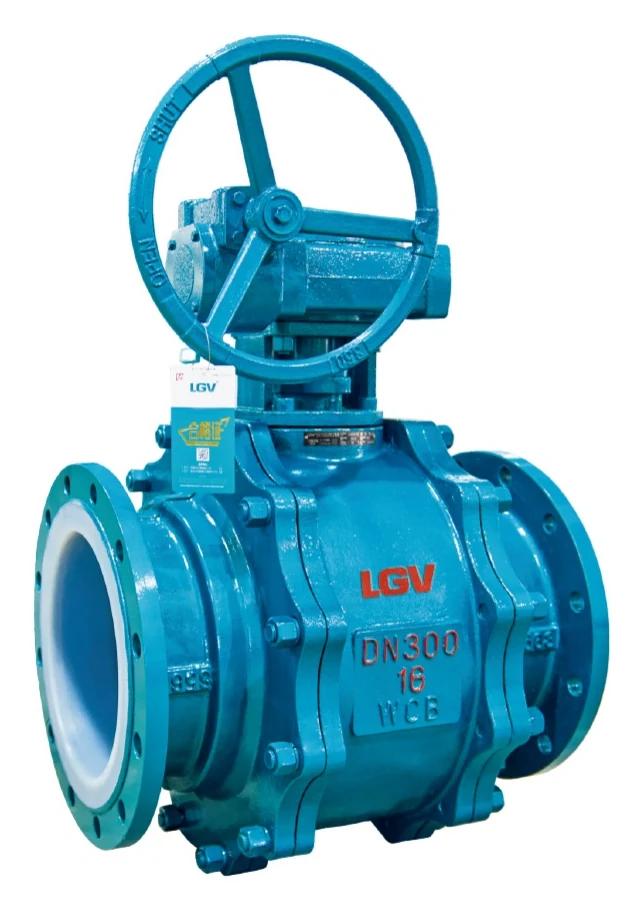
PTFE Lined Flanged Ball Valve
Gear-operated, flanged ball design. For quarter-turn isolation; request the exact wetting and seal arrangement.
SUPPLIER CATALOG · PDF PAGE 110
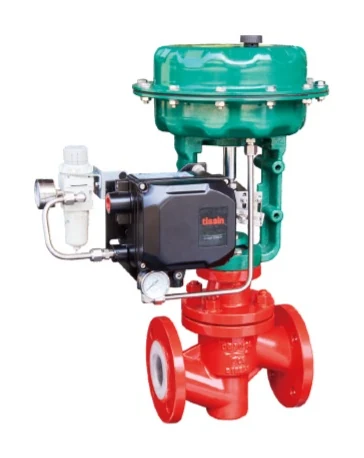
PTFE Lined Globe Valve
Globe design in the catalog; pictured example has pneumatic actuation. Verify trim and pressure loss for the duty.
SUPPLIER CATALOG · PDF PAGE 110
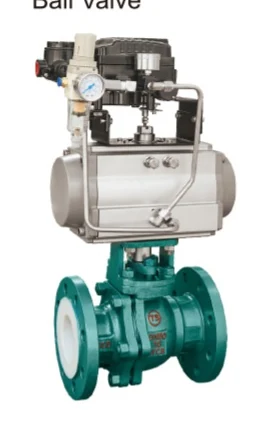
PTFE Lined Pneumatic Ball Valve
Pneumatic ball design. Confirm actuator air supply, fail position, torque and wetted parts.
SUPPLIER CATALOG · PDF PAGE 110
Electric PTFE Lined Flanged Butterfly Valve
Electric flanged butterfly design listed in the catalog. Request its model drawing and exact actuator details. Matching illustration not shown; request the model drawing.
SUPPLIER CATALOG · PDF PAGE 110
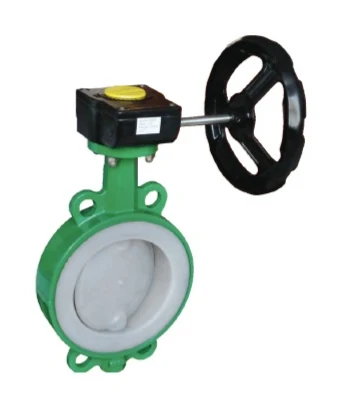
PTFE-Lined Gear-Operated Wafer Butterfly Valve
Gear-operated wafer butterfly design. Check companion flanges, thickness, actuator torque and disc/seat construction.
SUPPLIER CATALOG · PDF PAGE 110
PTFE Lined Angle Globe Valve
Angle-flow globe design listed in the catalog. Request dimensional and flow-path drawings. Matching illustration not shown; request the model drawing.
SUPPLIER CATALOG · PDF PAGE 110
PTFE Lined Gate Valve
Gate design listed in the catalog. Specify isolation duty and request trim, stroke and space requirements. Matching illustration not shown; request the model drawing.
Other pictured PTFE-lined designs in the same catalog
These three images depict other labeled catalog designs. They are not substituted for the electric butterfly, angle globe or gate valve photos above.
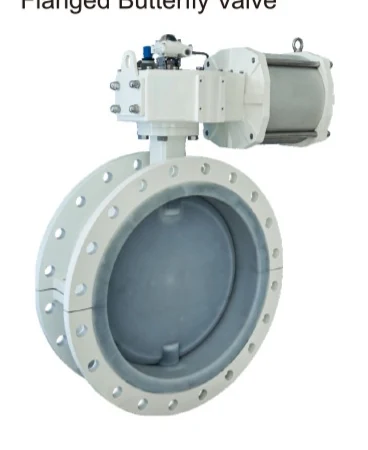
Pneumatic flanged butterfly valve
A pneumatically actuated butterfly construction; not the electric flanged model.
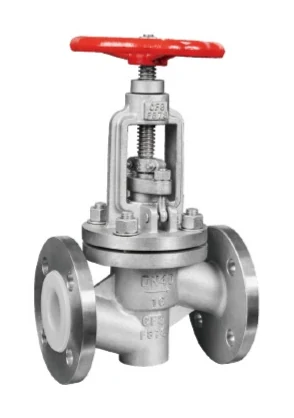
Handwheel globe valve
Manual globe construction shown separately from the catalog angle-flow design.
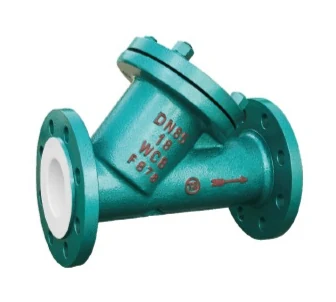
PTFE-lined strainer
Y-type strainer for solids collection, not an isolation gate valve.
Service limits that change selection
Check the complete wetted path and operating envelope
A corrosion-resistant liner works only where its material and the rest of the wetted construction suit the specified service. Confirm the actual lining/encapsulation of the flow path, stem, sealing surfaces, gaskets and joints rather than treating a catalog label as a test report.
Fluid chemistry and cleaning
State every process component, concentration and contaminant; include startup, cleaning and upset exposures. Compatibility of the fluoropolymer alone does not establish suitability of every wetted component.
Vacuum, temperature and cycling
Provide operating and design temperatures, internal/external pressure cases and minimum absolute pressure if vacuum occurs. Ask for the specific construction’s vacuum–temperature and pressure–temperature limits.
Solids, permeation and interfaces
Where solids, abrasion, permeating species or purity matter, specify the exposure and acceptable leakage or contamination criteria. Confirm lining support, flange sealing, inspection access and any required test evidence.
Follow the right product path
Compare valve types and process requirements
This series helps compare lining-related choices across valve mechanisms. For mechanism-specific specifications use All Products or the linked family pages below. The Technical Resources and Industries areas provide additional selection background; neither replaces an order-specific datasheet.
Diaphragm valves
Consider a diaphragm construction when process isolation, solids or cleanliness criteria call for a different wetted path.
Ball valves
Compare ball-valve shutoff, actuation, cavity design and sealing options.
Butterfly valves
Compare wafer/flanged installation and disc/seat design for the differential pressure.
Chemical & petrochemical service
Define corrosion exposures and process-specific requirements before product selection.
Selection questions
Lined valve purchasing questions
Confirm the detailed service conditions before selecting a specific lining and valve mechanism. The catalog does not publish universal pressure, temperature or media guarantees for the whole series.
What project data is needed to specify Lined and Anti-Corrosion Valves?
Provide complete fluid composition and concentration, temperature, pressure, solids, cleaning process, permeation/corrosion concerns, connection and required lining or wetted-material evidence.
Does the Lined and Anti-Corrosion Valves series name define every available size, pressure class and material?
No. A series name identifies a documented lined or anti-corrosion valve selection route, but the orderable size, rating, material, connection, standard and operating limits must be confirmed on the offered datasheet and approved order drawing.
How should buyers compare products within the Lined and Anti-Corrosion Valves series?
Compare lining or wetted-material route, temperature and pressure limits, permeation and corrosion considerations, sealing, connection, inspection and repairability.
Which documents should be requested before order approval?
Request the offered datasheet, general arrangement or dimensional drawing, material and trim schedule, applicable inspection and test plan, required certificates, marking details and the final order-specific document list.
Technical inquiry
Request a lined valve configuration review
Tell us which catalog design you are considering and provide the information you already have. For a meaningful comparison, include worst-case chemical composition, temperatures, minimum/maximum pressures including vacuum, valve duty, size, end connection, actuation, and required drawings or inspection records. Missing values can be identified for follow-up.
- Catalog valve type or application and required isolation/control duty
- Fluid composition, concentration, impurities and cleaning chemicals
- Normal, design and upset temperatures; maximum pressure and minimum absolute pressure
- Nominal size, flange or other end connection, and installation constraints
- Solids, cycling frequency, leakage requirement and actuation/fail position
- Exact lining/seat/wetted-material evidence and required documentation
- Project standard, quantities and timing (where known)
- Unknown conditions flagged for technical review