
PDF-documented catalog entry
Ultra-High Temperature Ball Valve
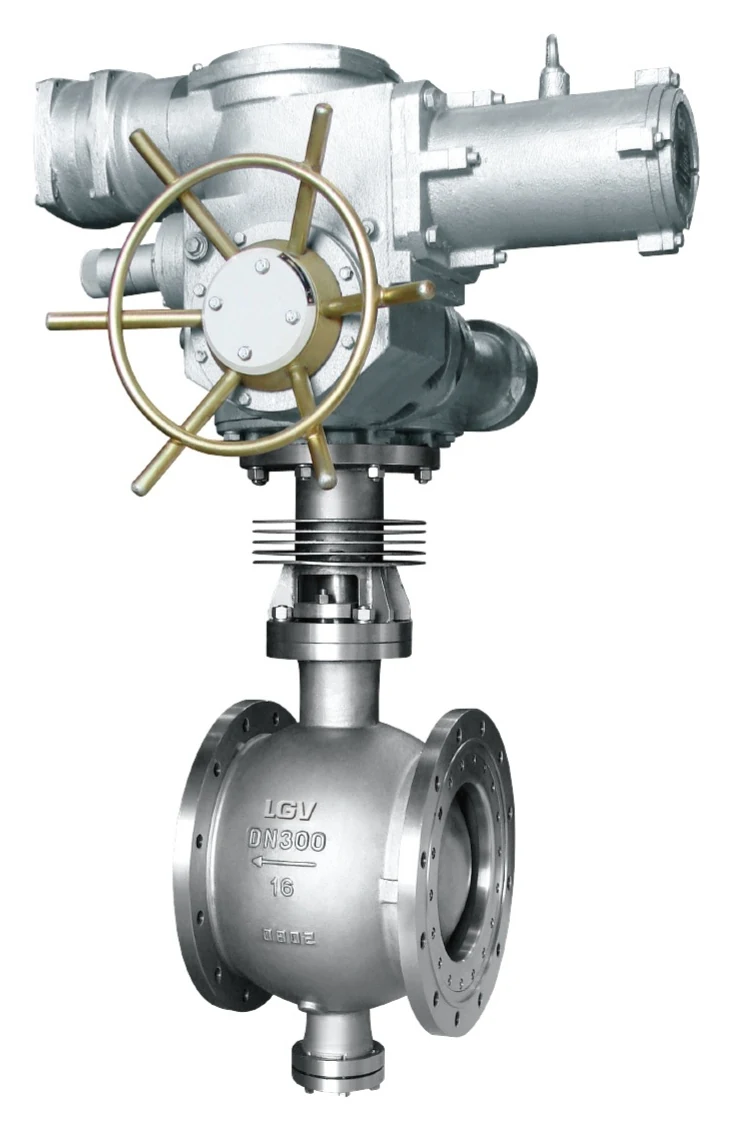
The 2026 Lianggong catalog lists this item as an Ultra-High Temperature Ball Valve on PDF page 93. That label identifies the catalog entry; it does not state a numeric temperature limit, pressure rating, seat design or supplied operator. Use this record to define the service envelope and request the exact configuration for review.
- Valve type: Ball Valve
- Temperature wording: “Ultra-high temperature” — catalog label only; no numeric limit stated
Catalog identity
What the source catalog confirms
The recovered English catalog lists Ultra-High Temperature Ball Valve in the Ball Valve series. Its mapped image is AST-R1-0293 (catalog marker 093_03, PDF page 93). These details establish the catalog identity and appearance—not an approved model, construction or operating envelope. The catalog illustration is for product identity and appearance only; it is not a dimensional or fabrication reference. Use the approved datasheet and order drawing for dimensions, installation and procurement.
Catalog label
Ultra-High Temperature Ball Valve. This is the catalog product name, not a published maximum operating temperature.
Catalog section
Ball Valve. This is the source catalog section; it does not identify a construction subtype or a shared rating range.
Mapped image
AST-R1-0293 · catalog marker 093_03 · recovered English catalog, PDF page 93.
Catalog evidence
Documented data—and the limits of the record
The source page confirms the product label, valve family and mapped image. It does not publish a numeric temperature limit or a complete orderable configuration. Missing values below are not product specifications.
| Field | Catalog record | Procurement meaning |
|---|---|---|
| Product label | Ultra-High Temperature Ball Valve | Catalog wording only; no numeric temperature limit is stated. |
| Valve type | Ball Valve | Family identity only; the ball support and seat construction are not identified. |
| Temperature limit | Not stated | Obtain minimum, normal, maximum, design and transient limits for the offered configuration. |
| Pressure rating and shutoff differential | Not stated | Obtain the body pressure–temperature rating and allowable differential pressure across the closed seat. |
| Seat, packing and materials | Not stated | Obtain the ball/seat pair, sealing arrangement, packing, body-joint seals and material grades. |
| Size, end connection, operator and standards | Not stated | Confirm the exact size, interface, actuation package and applicable standard/edition. |
| Leakage acceptance and testing | Not stated | Define internal seat leakage, external leakage, test basis and acceptance criteria in the project specification. |
Do not convert the adjective “ultra-high” into a temperature value, pressure class, material grade or certification claim. None is stated on catalog page 93; obtain the offered datasheet and approved order drawing before technical approval.
Engineering review
Five checks that define a usable high-temperature valve specification
For high-temperature service, the usable envelope is governed by more than line temperature: the pressure boundary, seat and trim, stem packing, and any operator or actuator each have limits. Ask for one coordinated rating and configuration covering the same operating cases.
Temperature and pressure together
Provide minimum, normal and maximum fluid temperature, design temperature, start-up and shutdown excursions, design and operating pressure, and the maximum differential pressure across the closed valve during shutoff and opening. Request the pressure–temperature rating for the exact body material and pressure class, plus the allowable seat differential pressure. A pressure class or a single temperature figure is not a complete operating envelope.
Seat design and thermal growth
Confirm whether the seat is polymeric, metal-to-metal or graphite-based; how it is supported or loaded; the ball/seat material and coating pair; surface finish; pressure direction; and any cavity-pressure relief. Ask how differential thermal expansion is accommodated and how the design avoids binding, galling or loss of sealing contact across the stated range. The catalog does not identify these details.
Thermal-cycle duty
State the number of heat-up and cool-down cycles, ramp rate, hot and cold dwell times, valve position during each phase, stroke frequency and pressure differential at each condition. Ask for the qualification or representative test profile, including post-cycle operating torque and leakage. An ambient shell or seat test alone does not demonstrate repeated hot-service performance.
Packing, stem and operator temperature
Obtain packing and body-joint seal materials, packing-box temperature limit, gland loading or adjustment method, and any stem or bonnet extension. If a gear operator or actuator is required, confirm temperature at its mounting point, ambient conditions, insulation, orientation, heat shield or remote mounting, and hot breakaway and running torque. Do not infer the drive package from the illustration.
Leakage and acceptance
Specify internal seat leakage separately from external leakage at the stem and body joints. State the required leakage rate or class, test standard and edition, test medium, pressure, direction, duration, and whether acceptance applies at ambient or service temperature. ISO 5208 addresses pressure testing and closure tightness of metallic valves; ISO 15848-1 addresses fugitive emissions at stem seals and body joints. These are different acceptance questions.
Service fit
Confirm the duty before choosing the construction
A high-temperature catalog label does not decide whether the valve should isolate or modulate, or which wetted materials are suitable. These service details determine the configuration that must be reviewed.
Isolation or throttling
For on/off isolation, define shutoff direction, differential pressure and allowable seat leakage. For sustained throttling, provide the flow range, Cv or sizing basis, pressure drop and cycle duty; confirm the proposed ball and seat design is intended for continuous modulation. Do not assume every ball valve is a control valve.
Process medium and contamination
Provide fluid composition and phase, concentration, oxidizing or reducing conditions, solids, corrosion or erosion risk and cleaning requirements. Match the body, ball, seat, coating, packing and gaskets to both the fluid and actual component temperatures; no material grade is established by the catalog image.
Piping and installation
Confirm end connection and dimensional standard, required bore, flow direction, installation orientation, piping loads, insulation, ambient heat and maintenance access. If fluid can be trapped in the body cavity and heated, ask the supplier to state the seat-relief or cavity-pressure-relief provision.
Related ball-valve catalog records
Review separate catalog identities before RFQ
These are separate catalog entries, not substitute ratings. Compare each record’s own datasheet and approved drawing; do not transfer materials, seat designs or operating limits between pages.
Three-Piece Forged Steel High Pressure Ball Valve
Another PDF-documented Ball Valve catalog record. Review its own evidence and configuration boundary.
High Temperature and High Pressure Three-Piece Forged Steel Fixed Ball Valve
Another PDF-documented Ball Valve catalog record. Review its own evidence and configuration boundary.
Three-Piece Forged Steel Hard Sealed Fixed Ball Valve
Another PDF-documented Ball Valve catalog record. Review its own evidence and configuration boundary.
Buyer questions
Ultra-High Temperature Ball Valve: buyer questions
The catalog name is an identifier, not a complete technical specification. These answers show what must be established before quotation or approval.
Does “ultra-high temperature” specify a maximum operating temperature?
No. PDF page 93 provides the catalog label but no numeric temperature limit. Request minimum, normal, maximum, design and transient temperatures, then obtain the pressure–temperature rating for the exact body material and pressure class, together with separate seat and packing limits.
Does the catalog confirm a metal seat or graphite packing?
No. It does not state the seat, ball/seat materials, coatings, packing, body seals or stem extension. Ask for a configuration drawing and trim schedule that identify the sealing pair, packing arrangement and thermal-expansion provisions.
How should leakage acceptance be specified?
Separate closed-valve seat leakage from external leakage at the stem and body joints. Specify the test standard and edition, test medium, pressure, direction, duration and required acceptance. ISO 5208:2015 covers pressure testing and closure tightness of metallic valves; ISO 15848-1:2015 covers fugitive-emission testing of stem seals and body joints. They address different leakage paths.
What should the RFQ include?
Provide the medium and valve duty; minimum, normal, maximum and design temperatures; design pressure and differential pressure at opening and closing; thermal-cycle profile; size and end connection; body, ball, seat and packing requirements; operator and mounting-temperature limits; leakage and test acceptance; quantity; and required drawings, inspection and material records. Do not assume this form accepts attachments; ask the team for the approved document-submission route.
Technical inquiry
Request a configuration review for the Ultra-High Temperature Ball Valve
Reference catalog identity CCE-R2-0107 and provide the operating cases available to you. Missing values can remain open for review; the quotation should identify the exact offered construction, operating limits, documentation scope and commercial terms.
- Catalog identity, service medium and valve duty (isolation or throttling)
- DN/NPS, bore, end connection and required dimensional or product standard
- Design and operating pressure, differential pressure at opening/closing, and minimum/normal/maximum temperature
- Thermal-cycle profile, body/ball/seat/coating/packing requirements, and cavity-relief needs
- Operator or actuator requirements, mounting-temperature limits, leakage acceptance, test basis and required documents