
Seleção de válvula borboleta de alto desempenho
Válvulas borboleta de alto desempenho
Válvulas borboleta de alto desempenho normalmente utilizam dupla excentricidade geometria do disco e do eixo para reduzir o atrito na sede durante a abertura. Podem ser adequadas para serviços com condições de fechamento, ciclagem ou temperatura mais exigentes do que uma válvula concêntrica convencional, mas a sede e a classificação de pressão-temperatura reais — e não a designação do produto — determinam a adequação.
Use esta página de série para definir o serviço e pré-selecionar o projeto correto. Uma construção de tripla excentricidade, tipicamente com assentamento por torque, é uma rota de seleção separada quando o serviço especificado exigir.
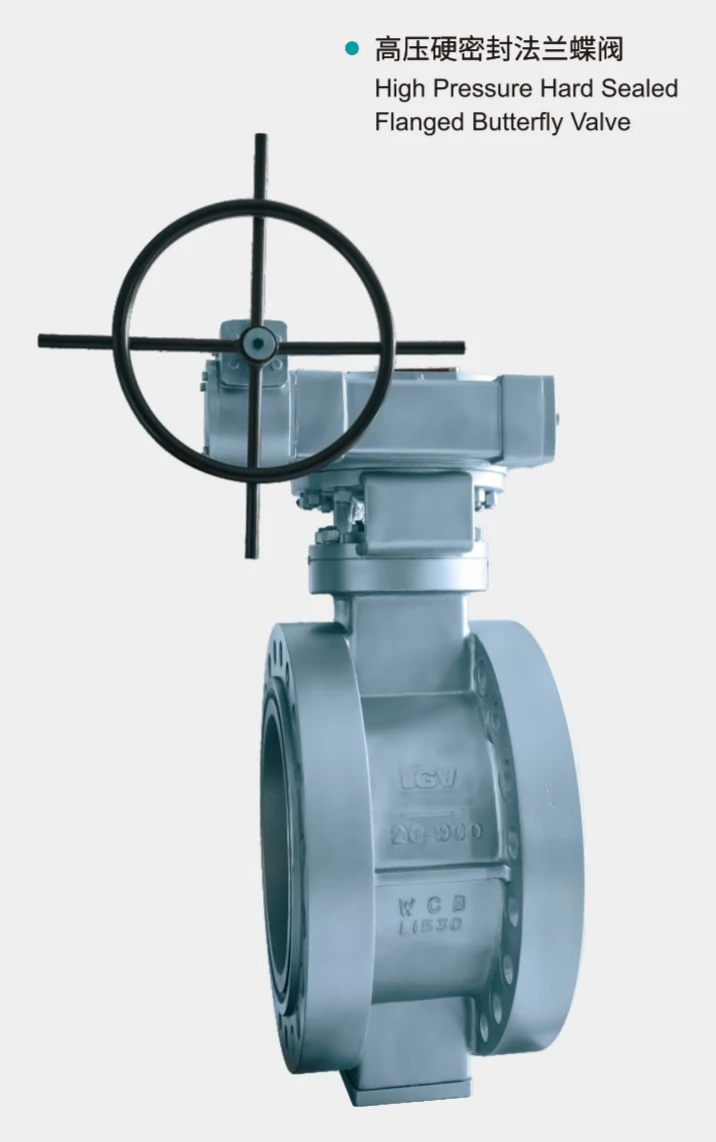
Produto mostrado: Válvula borboleta flangeada de alta pressão com vedação metálica rígida (página 97 do catálogo). A foto identifica este item; a geometria de excentricidade, a classificação de pressão, a construção da sede e o teste de fechamento ainda devem ser confirmados para o modelo proposto.
SELEÇÃO DE PROJETO
Onde se aplicam as válvulas de alto desempenho de dupla excentricidade
A primeira decisão é o dever de fechamento: uma válvula concêntrica convencional pode continuar sendo a opção mais simples quando seus limites documentados de sede, fechamento e pressão-temperatura atendem ao serviço. Um projeto de dupla excentricidade passa a valer a pena ser avaliado quando o contato reduzido com a sede durante o acionamento cíclico ou um envelope de serviço mais exigente for relevante. Se a temperatura especificada ou o requisito de vedação estiverem fora da construção de sede disponível, compare um projeto de tripla excentricidade especificado separadamente em vez de presumir que uma classe de pressão mais alta corrige a vedação.
As páginas de catálogo disponíveis não fornecem uma tabela de classificação de modelo de dupla excentricidade. Obtenha o desenho, a construção da sede e os dados de pressão-temperatura oferecidos antes de fixar a especificação.
| Rota de projeto | Quando incluí-la na lista de opções | Decisão que deve ser verificada |
|---|---|---|
| Concêntrica, sede resiliente | Isolamento geral quando o meio, a pressão, a temperatura e o acionamento cíclico especificados estiverem dentro dos limites publicados dessa válvula. | Compatibilidade com elastômero, envelope de pressão-temperatura, fechamento e ajuste flange/disco. Navegue pela família de válvulas borboleta. |
| Alto desempenho, comumente dupla excentricidade | Acionamento cíclico frequente ou serviço que exija um arranjo diferente de sede/vedação e contato reduzido entre disco e sede durante o curso. | Confirme o real geometria de excentricidade, materiais de sede e gaxeta, classe de pressão na temperatura, sentido de fechamento e ensaio de vazamento exigido. |
| Tripla excentricidade, série separada | Considere onde um arranjo torque-sede devidamente projetado, frequentemente com sede metálica, é necessário para as condições especificadas. | Solicite sua própria documentação de pressão-temperatura, ensaio e trim; não é sinônimo nem upgrade automático para toda aplicação. Consulte as válvulas de tripla excentricidade. |
FOTOS DE CATÁLOGO E ROTAS EXATAS DE PRODUTO
O que o catálogo mostra — e o que não mostra
As fotografias do catálogo ajudam a identificar o corpo, o operador e o tipo de serviço; não podem validar a classe de pressão-temperatura nem o ensaio de vazamento. Compare a válvula flangeada com vedação rígida com a válvula de ventilação claramente diferente abaixo antes de selecionar uma configuração de isolamento de processo.
Página 97 do catálogo. A named flanged, hard-sealed butterfly valve. Its caption does not specify double-offset geometry, exact seat materials, allowable pressure at temperature or shutoff test. Request its product-level information before using it in a high-performance comparison.
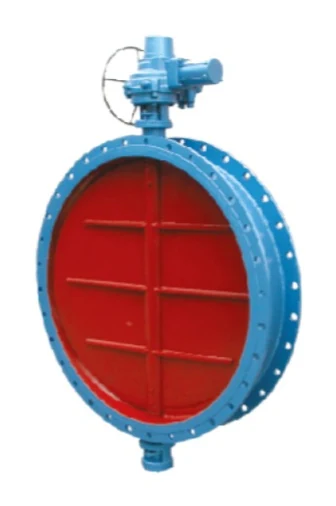
Catalog page 99. This blue-and-red valve is for ventilation service and is not a triple-offset wafer valve. Do not substitute it for a process-isolation valve unless the exact product is demonstrated to meet the specified pressure, temperature and shutoff criteria.
Need a documented triple-offset configuration instead? Review the separate triple-offset series or the individually named electric fully welded e metal-to-metal wafer products. Those links identify other catalog records; their specifications are not transferable to this series.
APPLICATION FIT
Three service conditions that change the choice
High-performance is a design-selection term, not a universal pressure or temperature rating. Each case below changes the question to ask of an actual offered valve.
Repeated operation and tight isolation
When the valve cycles often, reduced seat rubbing may favor a suitable double-offset design. Compare the stated cycle duty, required leakage level and allowable differential pressure; do not assume a catalog photograph proves cycle life.
Hot or thermally cycling service
Check the seat, packing and body rating at both normal and upset temperatures. If the proposed seat system cannot meet the specified temperature, exclude that configuration and evaluate another documented seat design or the triple-offset route.
Automated isolation or modulating duty
For automated on/off duty, size the actuator against the offered valve’s required torque over the full stroke, not only breakaway and seating torque. Check running and dynamic torque at the governing flow and differential-pressure conditions, available actuator output, required fail action, stroke time, and the supplier’s specified sizing allowance. For throttling, request the valve’s control characteristic, allowable operating range, and matching actuator/positioner performance rather than assuming that an on/off butterfly valve is suitable for control.
AVOID WRONG CONFIGURATIONS
Four mistakes to prevent before quotation
These errors change the specified hardware or the acceptance basis, rather than merely changing the wording of the inquiry.
- Using “high performance” instead of a model-specific seat and pressure-temperature rating
- Assuming the gray hard-sealed flanged catalog image proves double-offset construction
- Claiming bidirectional tight shutoff, fire-safe status or a leakage class without an applicable test basis
- Ignoring flange drilling, face-to-face dimension and disc sweep clearance before installation
SPECIFICATION QUESTIONS
Before you approve a high-performance valve quote
Use these answers with the specific offered drawing, seat details and test documents; a series label or a catalog image is not an orderable configuration.
What project data is needed to specify High Performance Butterfly Valves?
State the isolation or throttling duty, line size, pressure and temperature cases, shutoff expectation, disc/seat compatibility, flange interface, flow direction and actuation method.
Does the High Performance Butterfly Valves series name define every available size, pressure class and material?
No. A series name identifies a documented butterfly valve selection route, but the orderable size, rating, material, connection, standard and operating limits must be confirmed on the offered datasheet and approved order drawing.
How should buyers compare products within the High Performance Butterfly Valves series?
Compare body pattern, offset concept, seat and disc materials, face-to-face and flange interfaces, pressure-temperature envelope, operating torque and maintenance access.
Which documents should be requested before order approval?
Request the offered datasheet, general arrangement or dimensional drawing, material and trim schedule, applicable inspection and test plan, required certificates, marking details and the final order-specific document list.
CONFIGURATION REQUEST
Send the service conditions for a valve match
Tell us whether you need on/off isolation or throttling, and whether a high-performance double-offset design is required or only being considered. Attach a valve schedule if available; unknown fields may be left for technical clarification. A review should return a named proposed configuration with its rating, sealing, connection and document basis.
- Preferred design (if any) and whether alternatives are permitted
- Design, normal and upset pressure-temperature cases; maximum shutoff differential
- Medium, composition, phase and solids where relevant
- Nominal size, end connection and installation orientation
- On/off or throttling duty, cycling frequency, actuator/fail-action needs
- Applicable project specification and required standards
- Required shutoff direction, leakage test, drawings and inspection documents
- Unknown fields clearly marked for technical confirmation