
APLICAÇÕES QUÍMICAS E PETROQUÍMICAS
Válvulas para Serviço de Processo em Aplicações Químicas e Petroquímicas
A VALMORA fornece opções de válvulas industriais para serviços de processo químico e petroquímico. Comece pelo que a válvula deve fazer — isolamento on/off, controle de vazão ou contenção adicional na haste — e depois verifique o fluido, a concentração, a temperatura e a pressão reais antes de selecionar materiais e construção.
Para engenheiros e equipes de compras: compare as famílias de válvulas abaixo e envie uma descrição do serviço com as condições de processo para análise da configuração específica. Uma válvula revestida ou um nome de material conhecido, por si só, não estabelece compatibilidade química.
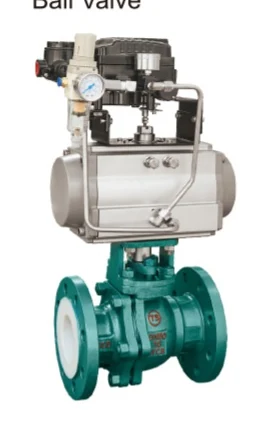
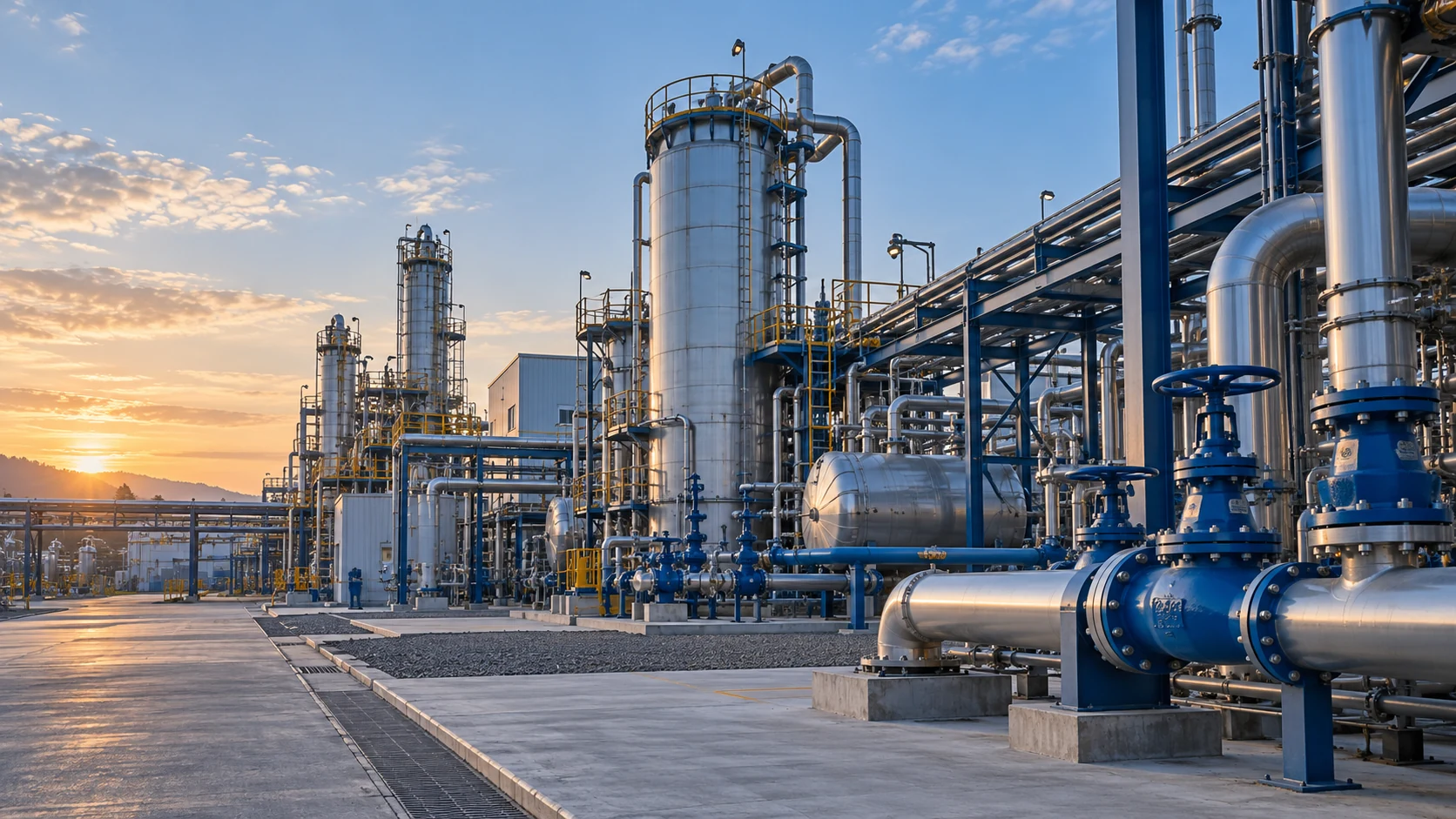
A imagem da planta de processo é uma ilustração gerada por IA, não uma instalação da VALMORA. Imagem do produto: exemplo de catálogo de fornecedor de válvula de esfera revestida com PTFE e acionamento pneumático; as especificações finais dependem da configuração ofertada.
APLICAÇÕES NA LINHA DE PROCESSO
A mesma planta química pode precisar de válvulas muito diferentes
Uma linha de transferência, a saída de um reator e uma estação de carregamento podem lidar com produtos químicos relacionados, mas enfrentam condições diferentes de vazão, ciclagem e contenção. Defina a função em cada tag de válvula em vez de selecionar uma única construção para toda a planta.
Linhas de transferência, mistura e dosagem
Para serviços on/off, estabeleça as mudanças de composição do lote, o líquido retido, os produtos químicos de limpeza e a frequência de ciclagem da válvula. Uma opção de isolamento revestida pode valer a pena ser analisada quando o metal exposto é uma preocupação, mas depósitos ou sólidos abrasivos podem alterar a escolha.
Reatores e equipamentos de separação
As reações podem alterar a temperatura e a concentração; a evaporação e o resfriamento podem expor as válvulas ao vácuo. Para serviços de modulação, são necessários a faixa de vazão, a perda de carga e a pressão de vapor do líquido para avaliar os riscos de flashing ou cavitação.
Armazenamento, carregamento e interligações de unidades
Especifique o isolamento positivo, a direção de fechamento, a frequência de operação e as consequências de vazamento externo. Quando forem exigidos operação remota ou desligamento de emergência, informe a posição de falha e os requisitos aplicáveis do projeto; uma foto do atuador não é uma aprovação para essas funções.
EXPLORE AS FAMÍLIAS DE VÁLVULAS
Comece pela função da válvula e depois restrinja a construção
Estas são rotas existentes de categorias de produtos VALMORA, não configurações pré-aprovadas para serviço químico. A categoria relevante explica a construção; o tamanho, os materiais, as vedações e os limites operacionais selecionados ainda precisam ser compatíveis com a linha.
Válvulas revestidas e anticorrosivas
Um ponto de partida quando o fluido exige um caminho molhado protegido. Verifique exatamente quais superfícies são revestidas e se o revestimento, as sedes e as juntas suportam o ciclo completo de serviço.
Válvulas de esfera
Para isolamento e transferência liga/desliga por quarto de volta. Confirme a função de fechamento, as sedes e vedações da haste expostas ao meio, a pressão diferencial, a ciclagem e a atuação.
Válvulas de controle
Para regulação especificada de vazão ou pressão. Informe a vazão mínima, normal e máxima, além das pressões a montante e a jusante, da temperatura e da fase para o dimensionamento adequado e a análise do trim.
Válvulas Globo com Vedação por Fole
Uma rota de projeto com contenção da haste para quando o vazamento externo é relevante. Verifique o fole oferecido, a vedação de reserva e os requisitos de ensaio do projeto, em vez de presumir desempenho de emissões.
FOTOGRAFIAS REAIS DO PRODUTO
Construções revestidas mostradas no catálogo do fornecedor
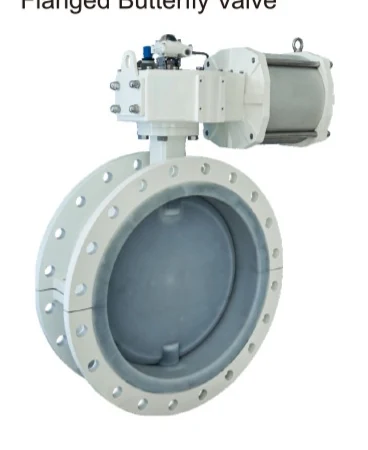
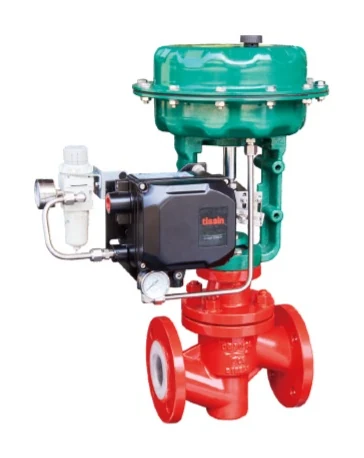
As fotografias mostram exemplos de construção — não referências de projetos instalados nem aprovações universais para serviço químico. A imagem principal acima mostra uma válvula de esfera revestida com PTFE, de acionamento pneumático. Abaixo estão uma válvula borboleta flangeada revestida com PTFE, de acionamento pneumático (à esquerda) e uma válvula globo revestida com PTFE, de acionamento pneumático (à direita). Confirme os materiais e as dimensões exatos oferecidos na ficha técnica e no desenho.
Revestida não é o mesmo que com sede de PTFE
Uma sede de PTFE pode vedar contra um elemento de fechamento enquanto outras superfícies em contato com o processo permanecem metálicas. Se a linha exigir isolamento do metal do corpo em relação ao meio, especifique toda a construção molhada — não apenas o material da sede.
Vácuo e permeação alteram a escolha
Para serviço em alta temperatura, vácuo ou meios penetrantes, solicite os limites de pressão–temperatura–vácuo e a construção do revestimento da válvula oferecida. Dados gerais de resistência da resina não conseguem estabelecer a adequação do conjunto completo.
Atuador e função são verificações separadas
The pictured pneumatic actuation identifies an operating arrangement, not a certified shutdown function or a sized modulating solution. State cycles, available utilities, required failure position and pressure differential.
DECISION GUIDE
Which valve route fits the chemical-service duty?
Use these starting points before requesting a specific model. The limiting condition in the third column is a reason to change the shortlist or request more data—not a blanket statement about all valves of that type.
| Line requirement | First product route | What changes or limits the choice |
|---|---|---|
| Corrosive liquid where wetted metal exposure is a concern | Válvulas revestidas e anticorrosivas | Identify every wetted surface and verify chemical concentration, temperature, liner support and permeation risk. |
| Frequent on/off transfer or batch isolation | Válvulas de esfera | Check seats, stem seals and trapped-cavity behavior; ordinary on/off ball valves are not a substitute for sized control valves. |
| Space- or size-sensitive isolation with a butterfly design | Válvulas borboleta | Check disc/liner exposure, required shutoff direction and flange/disc clearance; a pictured lined disc is not a service rating. |
| Stable modulation across a changing flow rate | Válvulas de controle | Provide flow cases, differential pressure and vapor pressure; size and trim selection must address flashing, cavitation and erosion risks. |
| Isolation duty where a flexible diaphragm may separate parts of the mechanism from the process | Válvulas de diafragma | Check diaphragm and lining compatibility, solids, closure differential and cycling for the actual design. |
| Isolation or diversion where a plug construction is being considered | Válvulas macho | Specify deposits, solids, actuation torque and the full wetted sealing construction. |
| Specified additional stem-containment arrangement | Válvulas Globo com Vedação por Fole | The bellows design is a route to review; ask for the applicable leakage-test basis and documentation for the offered unit. |
Not sure which route fits? Give the stream composition and valve duty in the RFQ rather than specifying a guessed lining, leakage class or actuator.
DATA THAT CHANGES THE SELECTION
Give suppliers the actual chemical-service envelope
A valve that works at normal temperature may face a different condition during startup, cleaning or a shutdown vacuum. For each tag, provide the following combinations where known; leave unknown values open rather than substituting a material limit for a finished-valve rating.
| RFQ input | What to report | Why it changes the selection |
|---|---|---|
| Chemical identity | Constituents and concentration ranges, contaminants, phase, particles, cleaning chemicals and any batch changes. | Narrows body, lining, seat, gasket and packing candidates; chemistry alone does not establish liner life. |
| Pressão e temperatura | Minimum, normal, design and upset values, with simultaneous conditions; minimum absolute pressure if vacuum is possible. | A positive-pressure class does not establish vacuum resistance or allowable pressure at every temperature. |
| Fluid and flow behavior | Isolation vs regulation; for control, flow rates, upstream/downstream pressures, liquid vapor pressure, solids or crystallization. | Separates an on/off valve from a properly sized control valve and reveals potential erosion, flashing or cavitation. |
| Sealing and operation | Internal shutoff requirement, external-leakage criterion if specified, operating frequency, actuator power and required fail position. | Changes seat, stem-sealing, actuation and test scope; confirm each requirement on the offered assembly. |
| Connection and approval | Line size, mating ends, piping class, orientation, space, project standard/edition and required records. | Determines installation fit and which inspections, deviations and documents must be included in the quotation. |
TECHNICAL QUOTATION & SUBMITTALS
Check the offered configuration before placing the order
Ask suppliers to answer against the same tagged datasheet and project specification. If ASME B31.3 is the project piping basis, identify the edition and related valve and flange requirements separately; a piping-code reference does not certify a specific valve. Do not treat the absence of a deviation in a quotation as proof that every requirement was accepted.
| Document or requirement | Engineering check | Ação de compra |
|---|---|---|
| Tagged valve datasheet + arrangement drawing | Identify size, ends, body, trim, lining/diaphragm, seat, stem seal, actuation and the applicable pressure–temperature conditions. | Request with the technical quotation. |
| Material and compatibility basis | Match chemical concentration and service cases to all process-wetted parts; request available material and lining evidence and clarify any conditions excluded. | Agree what evidence is available for the offered item. |
| Inspection and leakage tests | Identify specified body/seat tests, any external-leakage test, inspection scope, acceptance basis and witness requirements. | Agree test and inspection scope before ordering. |
| Project standards and deviations | Specify applicable code, standard, edition, line class, documentation revisions and all commercial/technical exceptions. | Close deviations and approve the document register before release. |
RELATED PROJECT INFORMATION
Continue from the application to supporting records
Use these existing site sections for context. They are navigation to published information; they are not substitutes for a tagged product drawing, test report or written supply confirmation.
Other Industry Applications
See how another service changes the valve duty and shortlist.
Manufacturing Information
Explore published production information; confirm the source and scope of any project-specific manufacturing claim.
Quality Control Information
Review the described inspection processes and specify the actual records needed for this order.
Technical Resources
Find technical background while keeping the final selection tied to the quoted product data.
SUBMIT A CHEMICAL-SERVICE INQUIRY
Send your chemical and petrochemical valve requirements
Share a valve schedule or start with one service tag. Include fluid and concentration, normal and extreme conditions, valve function, connection, actuation and required documents where known. Clearly mark missing data for technical clarification; the form does not require you to invent a specification.
- Unit and valve tag; isolation or modulation duty
- Chemical constituents, concentration range and cleaning media
- Normal / design / upset temperature and pressure
- Vacuum, solids, flashing or crystallization if applicable
- Valve size, connection and actuation needs
- Applicable project code, standard edition and inspection documents
- Quantities, drawings and delivery context if available
- Unknown conditions stated as open questions