
APPLICATIONS CHIMIQUES ET PÉTROCHIMIQUES
Robinets pour service en chimie et pétrochimie
VALMORA propose des options de robinetterie industrielle pour les services de procédé en chimie et pétrochimie. Commencez par définir la fonction du robinet — isolement tout ou rien, régulation de débit ou confinement supplémentaire de la tige — puis vérifiez le fluide réel, la concentration, la température et les cas de pression avant de choisir les matériaux et la construction.
Pour les ingénieurs et les équipes achats : comparez les familles de robinets ci-dessous, puis envoyez une description du service avec les repères (tags) pour un examen de la configuration. Un robinet revêtu ou un nom de matériau familier ne suffit pas à établir la compatibilité chimique.
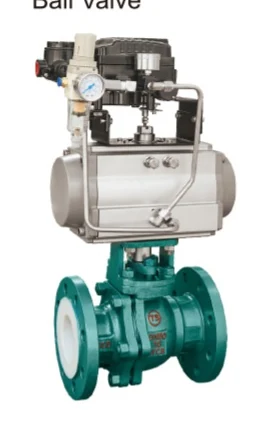
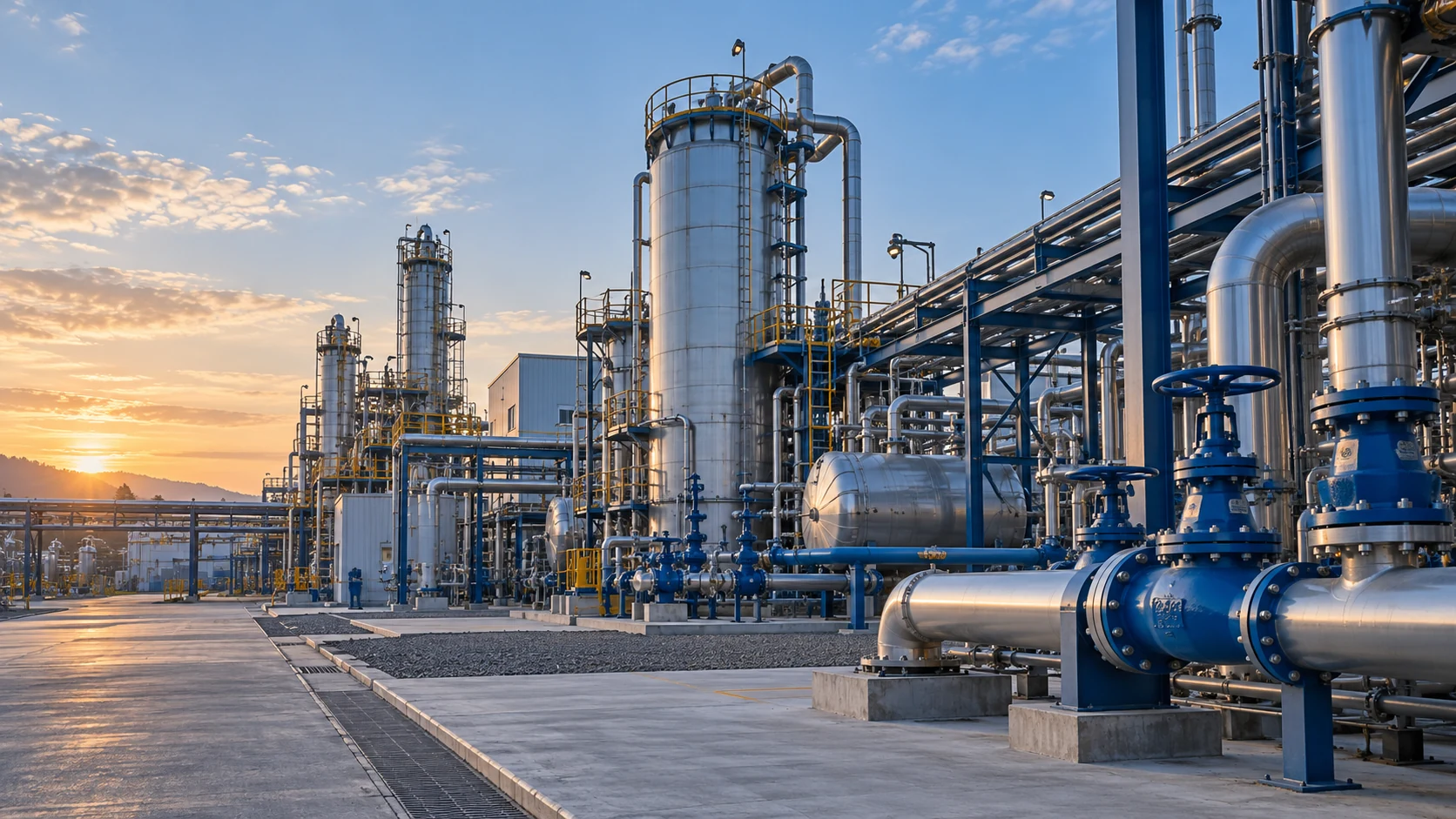
L'image du site de procédé est une illustration générée par IA, et non une installation VALMORA. Image produit : exemple de catalogue fournisseur d'un robinet à tournant sphérique pneumatique revêtu PTFE ; les spécifications finales dépendent de la configuration proposée.
APPLICATIONS DANS LA LIGNE DE PROCÉDÉ
Une même usine chimique peut nécessiter des robinets très différents
Une ligne de transfert, la sortie d'un réacteur et une station de chargement peuvent véhiculer des produits chimiques apparentés mais subir des conditions de débit, de cyclage et de confinement différentes. Définissez la fonction à chaque repère de robinet plutôt que de choisir une seule construction pour toute l'usine.
Lignes de transfert, de mélange et de dosage
Pour les services tout ou rien, établissez les changements de composition des lots, le liquide piégé, les produits de rinçage et la fréquence de cyclage du robinet. Une option d'isolement revêtue peut mériter un examen lorsque le métal exposé est une préoccupation, mais les dépôts ou les solides abrasifs peuvent modifier le choix.
Réacteurs et équipements de séparation
Les réactions peuvent modifier la température et la concentration ; l'évaporation et le refroidissement peuvent exposer les vannes au vide. Pour les services de régulation, le débit, la perte de charge et la pression de vapeur du liquide sont nécessaires pour évaluer les risques de vaporisation instantanée (flashing) ou de cavitation.
Stockage, chargement et raccordements d'unité
Préciser l'isolement positif, le sens de fermeture, la fréquence de manœuvre et les conséquences d'une fuite externe. Lorsqu'un actionnement à distance ou un arrêt d'urgence est exigé, indiquer la position de sécurité et les exigences de projet applicables ; une photo d'actionneur ne vaut pas approbation pour ces services.
EXPLORER LES FAMILLES DE VANNES
Partir de la fonction de la vanne, puis préciser la construction
Il s'agit des gammes de produits VALMORA existantes, et non de configurations préapprouvées pour service chimique. La catégorie concernée décrit la construction ; la taille, les matériaux, les étanchéités et les limites de service retenus doivent encore correspondre à la ligne.
Robinets revêtus et anticorrosion
Un point de départ lorsque le fluide exige un chemin mouillé protégé. Vérifier précisément quelles surfaces sont revêtues et si le revêtement, les sièges et les joints supportent l'intégralité du cycle de service.
Robinets à tournant sphérique
Pour l'isolement et le transfert par quart de tour. Confirmer le service d'étanchéité, les sièges et étanchéités de tige exposés au fluide, la pression différentielle, la fréquence de manœuvre et l'actionnement.
Vannes de régulation
Pour une régulation de débit ou de pression spécifiée. Fournir les débits minimum, normal et maximum ainsi que les pressions amont/aval, la température et la phase pour un dimensionnement et une revue du trim corrects.
Robinets à soupape à soufflet
Une solution de confinement de la tige lorsque les fuites externes sont critiques. Vérifier le soufflet proposé, l'étanchéité de secours et les exigences d'essai du projet plutôt que de présumer des performances d'émission.
PHOTOGRAPHIES DE PRODUITS RÉELS
Constructions revêtues présentées dans le catalogue du fournisseur
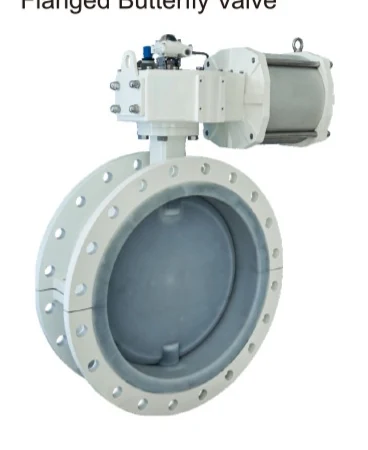
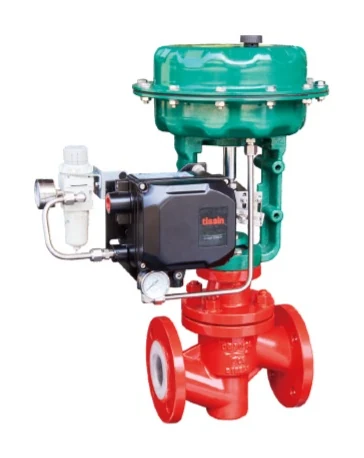
Les photographies présentent des exemples de construction—et non des références de projets installés ni des approbations universelles pour service chimique. L'image principale ci-dessus montre un robinet à tournant sphérique revêtu PTFE pneumatique. Ci-dessous figurent une vanne papillon à brides revêtue PTFE pneumatique (à gauche) et un robinet à soupape revêtu PTFE pneumatique (à droite). Confirmez les matériaux et dimensions exactement proposés à partir de sa fiche technique et de son plan.
Revêtu n'est pas synonyme de PTFE-seated
Un siège PTFE peut assurer l'étanchéité contre un élément d'obturation tandis que les autres surfaces en contact avec le fluide restent métalliques. Si la ligne exige l'isolation du métal du corps vis-à-vis du fluide, spécifiez l'ensemble de la construction mouillée—et non uniquement le matériau du siège.
Le vide et la perméation modifient le choix
Pour un service à chaud, sous vide ou avec des fluides pénétrants, demandez les limites pression–température–vide et la construction du revêtement du robinet proposé. Les données générales de résistance des résines ne permettent pas d'établir l'aptitude de l'ensemble complet.
L'actionneur et la fonction font l'objet de vérifications distinctes
The pictured pneumatic actuation identifies an operating arrangement, not a certified shutdown function or a sized modulating solution. State cycles, available utilities, required failure position and pressure differential.
DECISION GUIDE
Which valve route fits the chemical-service duty?
Use these starting points before requesting a specific model. The limiting condition in the third column is a reason to change the shortlist or request more data—not a blanket statement about all valves of that type.
| Line requirement | First product route | What changes or limits the choice |
|---|---|---|
| Corrosive liquid where wetted metal exposure is a concern | Robinets revêtus et anticorrosion | Identify every wetted surface and verify chemical concentration, temperature, liner support and permeation risk. |
| Frequent on/off transfer or batch isolation | Robinets à tournant sphérique | Check seats, stem seals and trapped-cavity behavior; ordinary on/off ball valves are not a substitute for sized control valves. |
| Space- or size-sensitive isolation with a butterfly design | Vannes papillon | Check disc/liner exposure, required shutoff direction and flange/disc clearance; a pictured lined disc is not a service rating. |
| Stable modulation across a changing flow rate | Vannes de régulation | Provide flow cases, differential pressure and vapor pressure; size and trim selection must address flashing, cavitation and erosion risks. |
| Isolation duty where a flexible diaphragm may separate parts of the mechanism from the process | Robinets à membrane | Check diaphragm and lining compatibility, solids, closure differential and cycling for the actual design. |
| Isolation or diversion where a plug construction is being considered | Robinets à boisseau | Specify deposits, solids, actuation torque and the full wetted sealing construction. |
| Specified additional stem-containment arrangement | Robinets à soupape à soufflet | The bellows design is a route to review; ask for the applicable leakage-test basis and documentation for the offered unit. |
Not sure which route fits? Give the stream composition and valve duty in the RFQ rather than specifying a guessed lining, leakage class or actuator.
DATA THAT CHANGES THE SELECTION
Give suppliers the actual chemical-service envelope
A valve that works at normal temperature may face a different condition during startup, cleaning or a shutdown vacuum. For each tag, provide the following combinations where known; leave unknown values open rather than substituting a material limit for a finished-valve rating.
| RFQ input | What to report | Why it changes the selection |
|---|---|---|
| Chemical identity | Constituents and concentration ranges, contaminants, phase, particles, cleaning chemicals and any batch changes. | Narrows body, lining, seat, gasket and packing candidates; chemistry alone does not establish liner life. |
| Pression et température | Minimum, normal, design and upset values, with simultaneous conditions; minimum absolute pressure if vacuum is possible. | A positive-pressure class does not establish vacuum resistance or allowable pressure at every temperature. |
| Fluid and flow behavior | Isolation vs regulation; for control, flow rates, upstream/downstream pressures, liquid vapor pressure, solids or crystallization. | Separates an on/off valve from a properly sized control valve and reveals potential erosion, flashing or cavitation. |
| Sealing and operation | Internal shutoff requirement, external-leakage criterion if specified, operating frequency, actuator power and required fail position. | Changes seat, stem-sealing, actuation and test scope; confirm each requirement on the offered assembly. |
| Connection and approval | Line size, mating ends, piping class, orientation, space, project standard/edition and required records. | Determines installation fit and which inspections, deviations and documents must be included in the quotation. |
TECHNICAL QUOTATION & SUBMITTALS
Check the offered configuration before placing the order
Ask suppliers to answer against the same tagged datasheet and project specification. If ASME B31.3 is the project piping basis, identify the edition and related valve and flange requirements separately; a piping-code reference does not certify a specific valve. Do not treat the absence of a deviation in a quotation as proof that every requirement was accepted.
| Document or requirement | Engineering check | Action d'achat |
|---|---|---|
| Tagged valve datasheet + arrangement drawing | Identify size, ends, body, trim, lining/diaphragm, seat, stem seal, actuation and the applicable pressure–temperature conditions. | Request with the technical quotation. |
| Material and compatibility basis | Match chemical concentration and service cases to all process-wetted parts; request available material and lining evidence and clarify any conditions excluded. | Agree what evidence is available for the offered item. |
| Inspection and leakage tests | Identify specified body/seat tests, any external-leakage test, inspection scope, acceptance basis and witness requirements. | Agree test and inspection scope before ordering. |
| Project standards and deviations | Specify applicable code, standard, edition, line class, documentation revisions and all commercial/technical exceptions. | Close deviations and approve the document register before release. |
RELATED PROJECT INFORMATION
Continue from the application to supporting records
Use these existing site sections for context. They are navigation to published information; they are not substitutes for a tagged product drawing, test report or written supply confirmation.
Other Industry Applications
See how another service changes the valve duty and shortlist.
Manufacturing Information
Explore published production information; confirm the source and scope of any project-specific manufacturing claim.
Quality Control Information
Review the described inspection processes and specify the actual records needed for this order.
Technical Resources
Find technical background while keeping the final selection tied to the quoted product data.
SUBMIT A CHEMICAL-SERVICE INQUIRY
Send your chemical and petrochemical valve requirements
Share a valve schedule or start with one service tag. Include fluid and concentration, normal and extreme conditions, valve function, connection, actuation and required documents where known. Clearly mark missing data for technical clarification; the form does not require you to invent a specification.
- Unit and valve tag; isolation or modulation duty
- Chemical constituents, concentration range and cleaning media
- Normal / design / upset temperature and pressure
- Vacuum, solids, flashing or crystallization if applicable
- Valve size, connection and actuation needs
- Applicable project code, standard edition and inspection documents
- Quantities, drawings and delivery context if available
- Unknown conditions stated as open questions