
Fabrication
Fabrication des robinets industriels : procédés et approvisionnement
Les robinets industriels ne suivent pas tous la même voie de fabrication : la construction du corps, l'usinage défini par les plans et l'assemblage dépendent de la conception retenue. VALMORA coordonne l'approvisionnement via des partenaires de fabrication.
Consultez les exemples d'atelier ci-dessous, puis transmettez votre liste de robinets ou vos plans pour discuter des exigences de fabrication de la configuration proposée.
Le point de départ
La conception du robinet détermine la voie de fabrication
Un corps de robinet à tournant sphérique, un robinet-vanne à chapeau autoclave et une vanne à membrane revêtue ne passent pas par des opérations de fabrication identiques. Partez du type de robinet approuvé, de la limite de pression, des matériaux et des raccordements d'extrémité requis ; établissez ensuite quelles étapes de production s'appliquent.
Construction de la limite de pression
Les constructions moulées, forgées et fabriquées partent de formes initiales différentes. La conception du produit et la nuance de matériau spécifiées — et non une préférence générale pour un procédé — déterminent la voie acceptable.
Interfaces usinées
Les alésages du corps, les logements de siège, les passages de tige et les détails de brides ou d'extrémités à souder doivent correspondre au plan. Une pièce moulée ou forgée visuellement similaire ne garantit pas l'interchangeabilité dimensionnelle.
Assemblage et fonctionnement
La conception du siège, l'obturateur, les étanchéités de tige et la commande manuelle ou motorisée déterminent les composants et les réglages d'assemblage. L'interface de l'actionneur doit être spécifiée si le robinet est fourni avec tige nue.
Circuit process
Du robinet spécifié à l'unité assemblée
Le tableau regroupe les activités de fabrication par zone de travail, sans ordre de production fixe. Le soudage, le rechargement dur, le traitement thermique et le revêtement peuvent intervenir à différents stades selon la construction du robinet, le matériau et les procédures spécifiées. Le plan approuvé et les exigences de la commande déterminent les activités applicables et leur séquence.
| Zone de travail (hors séquence) | Activité de fabrication type | À définir dans la commande |
|---|---|---|
| Corps et chapeau | Les ébauches moulées, forgées ou fabriquées sont sélectionnées pour la conception spécifiée ; l'identité et l'état du matériau sont établis. | Préciser le matériau du corps, la construction, la norme applicable et les enregistrements matière pertinents. |
| Usinage | Les portées d'étanchéité et les faces de contact désignées sur les plans, les raccordements d'extrémité ainsi que les alésages ou sections de passage spécifiés sont usinés. Les autres surfaces internes de passage peuvent rester brutes de fonderie ou recevoir un revêtement ou une finition spécifiés. | Fournir les exigences de face-à-face/entraxe, les détails d'extrémité et tout ajustement défini par plan. |
| Assemblage du robinet | L'obturateur, les sièges, la garniture, les joints et les pièces de manœuvre sont montés selon la configuration spécifiée. | Identifier les matériaux de l'équipement interne/joints d'étanchéité, le mode de manœuvre et tout périmètre d'actionneur ou d'accessoire. |
| Opérations inter-étapes (si requises) | Le soudage, le rechargement dur, le traitement thermique et le revêtement sont positionnés là où la gamme de fabrication approuvée le prévoit ; les surfaces d'étanchéité rechargées, par exemple, peuvent nécessiter un usinage de finition ultérieur. | Spécifier toute opération spéciale requise, les procédures applicables et les enregistrements projet avant de convenir de la gamme. |
Photographies du catalogue fournisseur
Usinage et assemblage de robinets dans le catalogue Lianggong
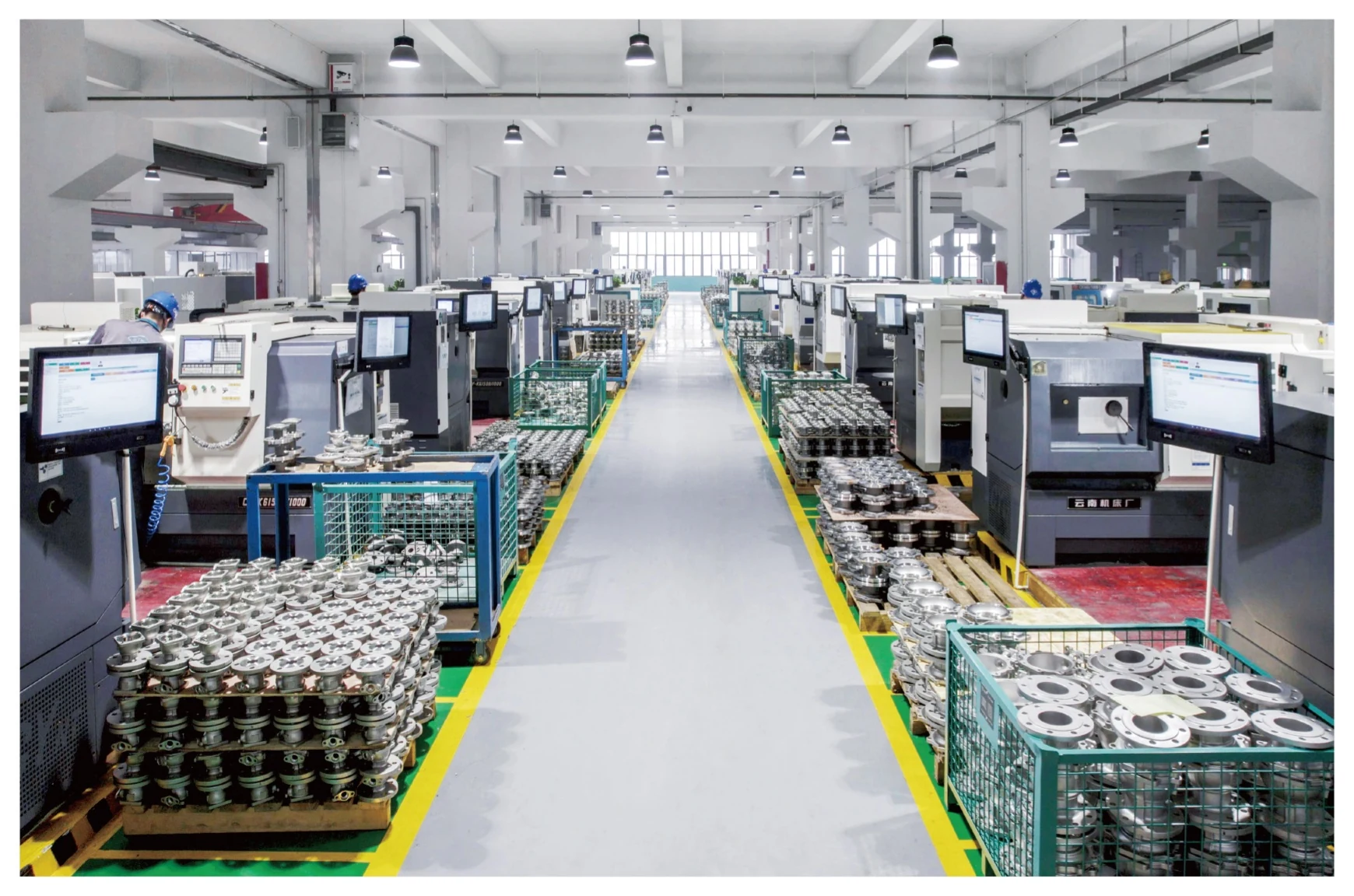
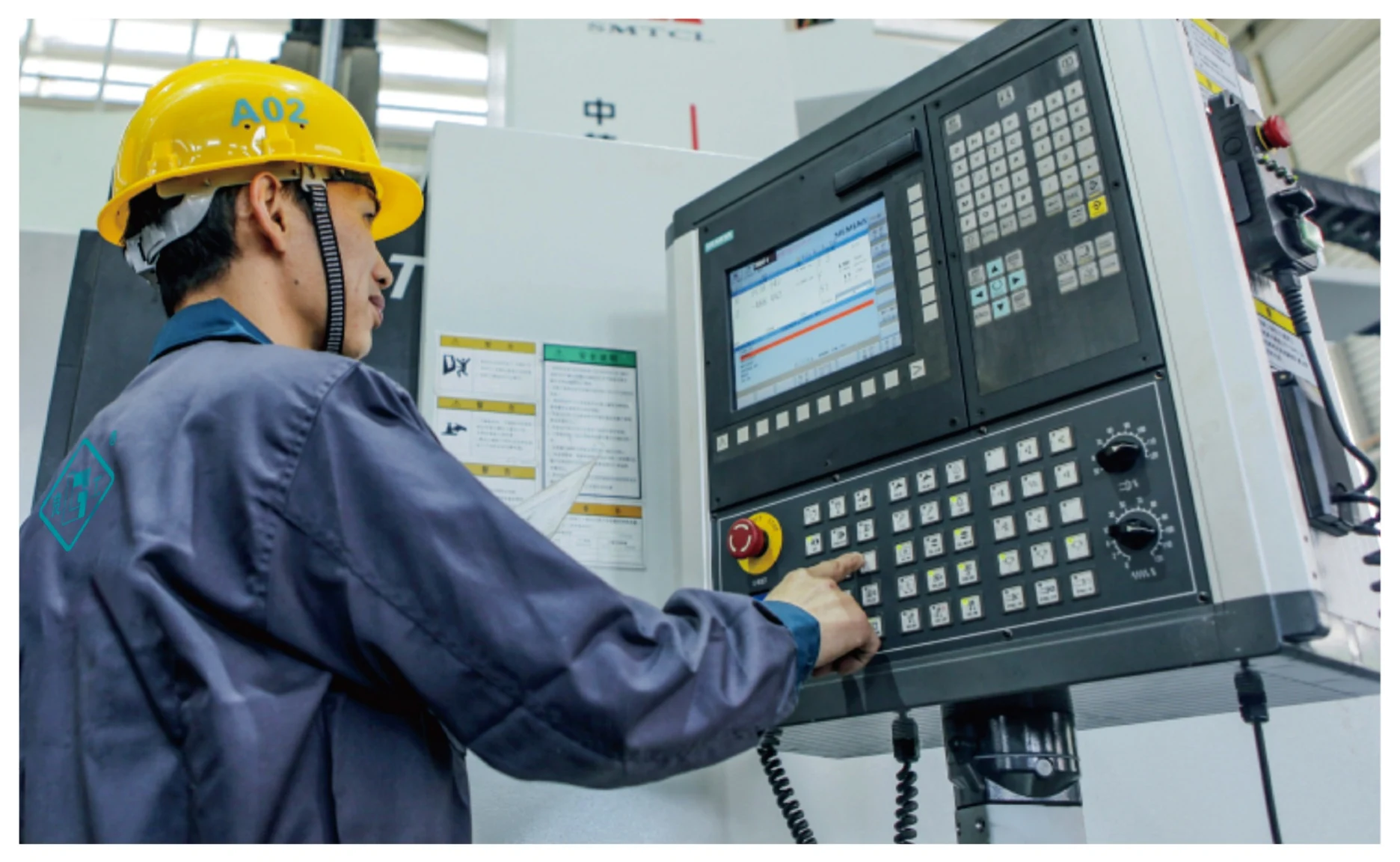
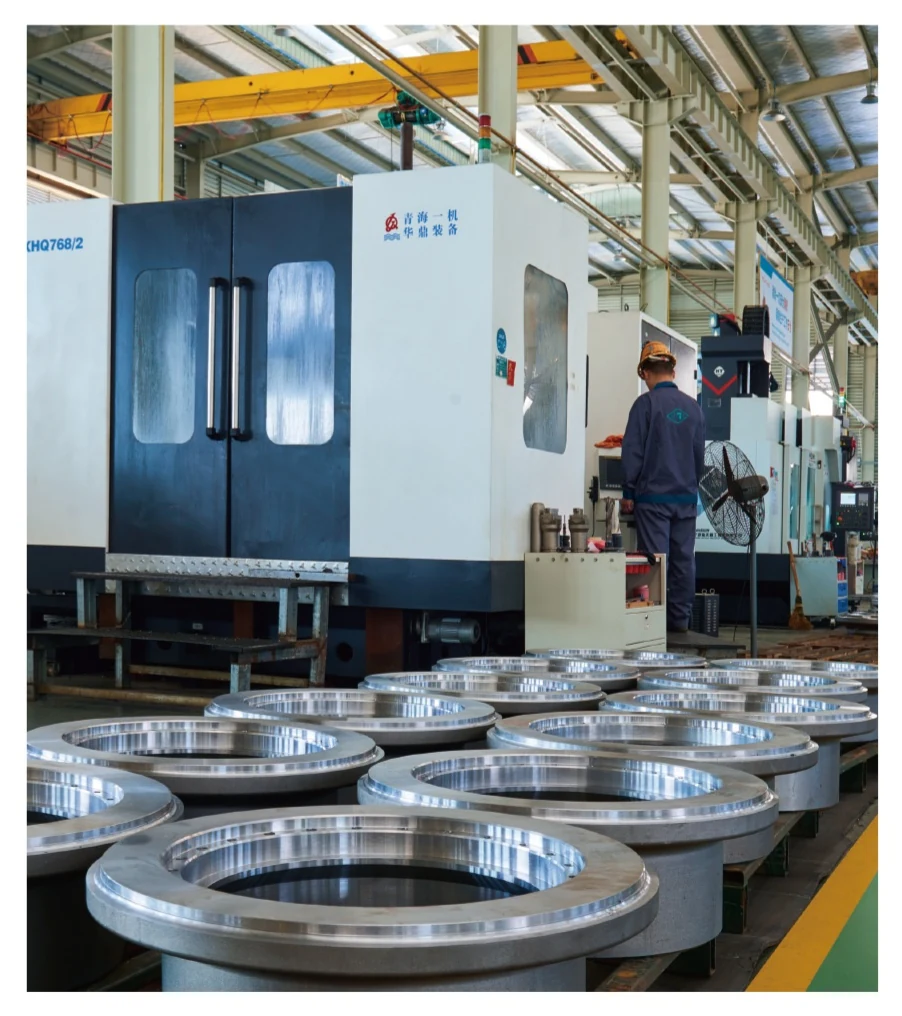
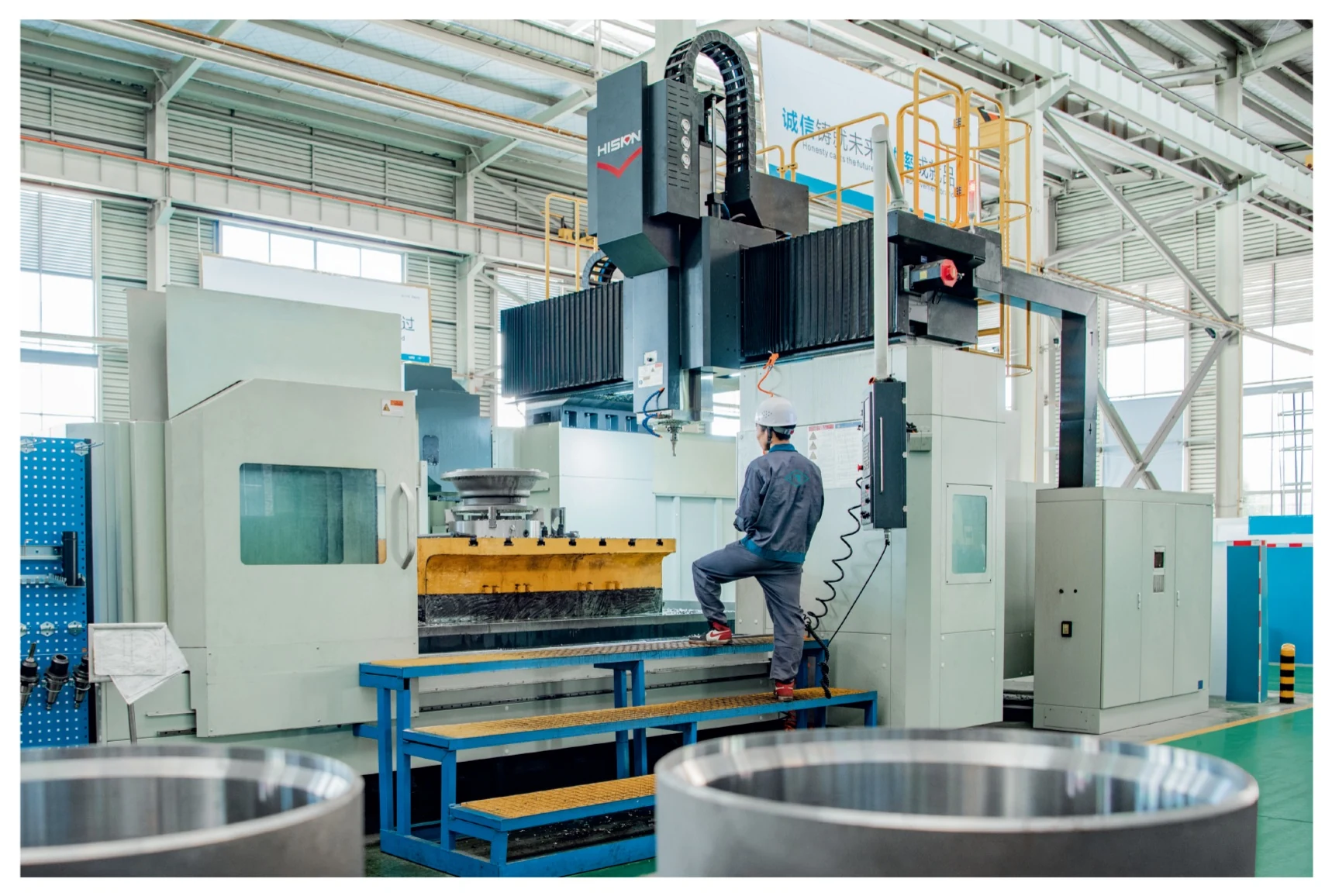
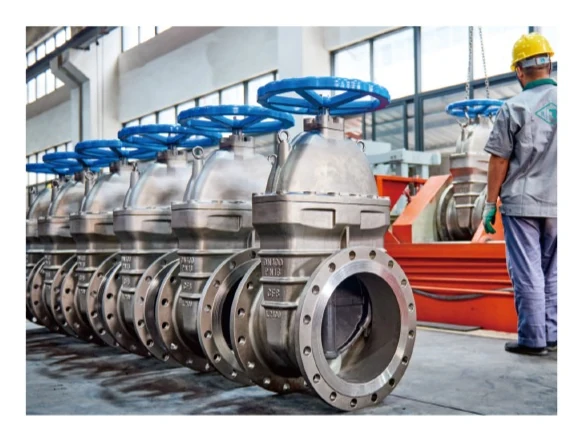
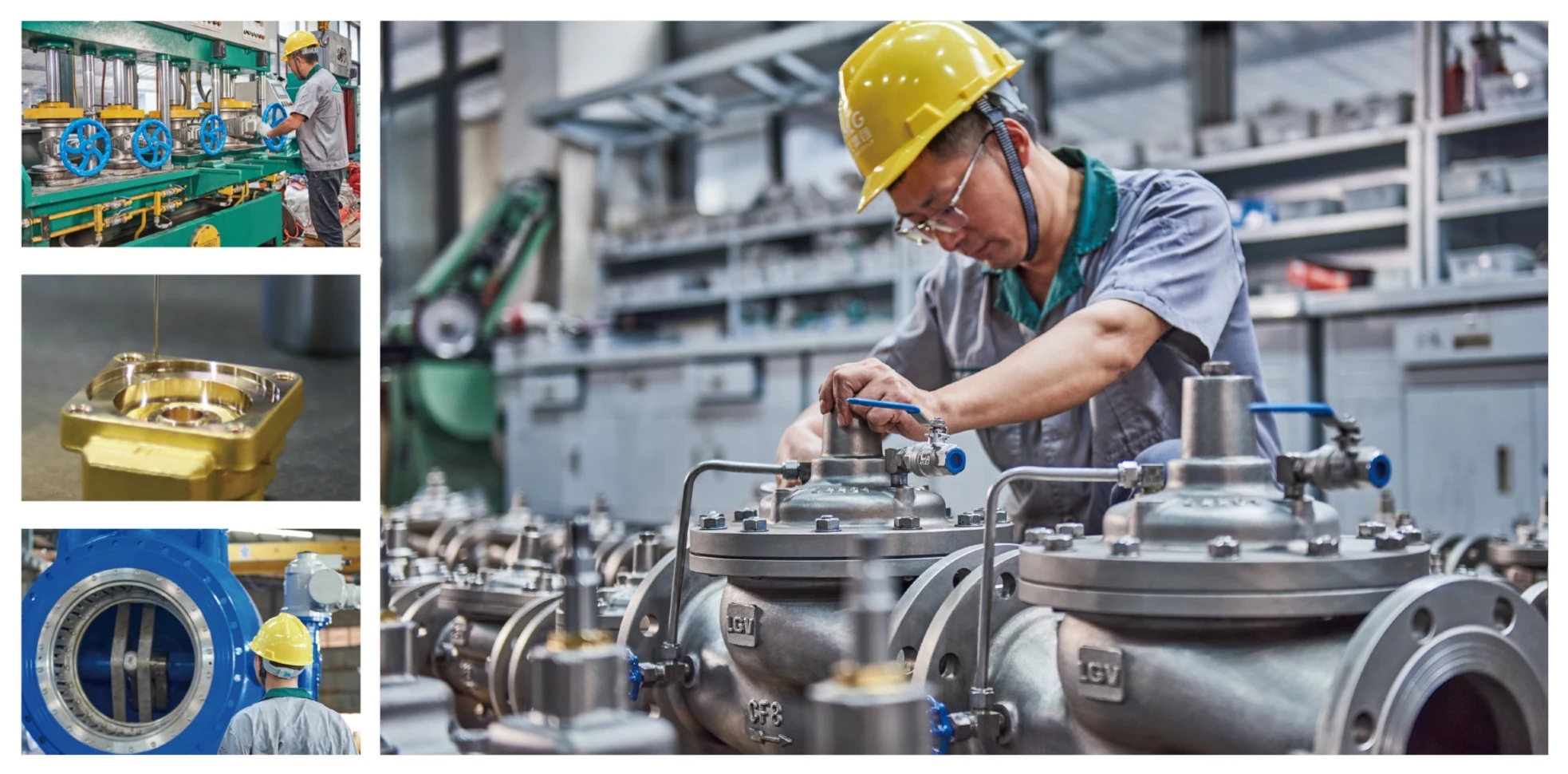
Ces photographies d'atelier proviennent du catalogue du fournisseur Lianggong Valve. Elles montrent l'équipement d'usinage, les composants et l'assemblage de robinets chez le fournisseur, et non une usine appartenant à VALMORA. Les dispositions de production propres à chaque commande sont établies lors de la demande de devis.
Source and manufacturing context
What the supplier catalog actually documents
The photographs put machining and assembly into context. For a particular valve, the useful connection to production is the drawing: it defines the interfaces, seat arrangement and operating features that the workshop needs to build.
CNC production floor
Catalog page 19 shows rows of CNC machines and staged components. For the proposed valve, the important question is which seating, mating and end-connection features are specified for machining on the drawing.
Large-component machining
Pages 17–18 show machining operators, ring-shaped parts and a large machining center. For unusual end geometries or large openings, the part drawing—not nominal valve size alone—defines the machining setup to review.
Valve workshop and assembly
Page 23 shows valves in a workshop and a technician working on an assembled unit. The specified closure, seat, gasket, packing and operator arrangement determine how the components must fit together.
Photo source: Lianggong Valve supplier catalog, production-control and workshop sections, physical pages 17–19 and 23.
Construction choices
Cast, forged and fabricated bodies follow different routes
The starting form affects what must be produced before machining and assembly. These are general manufacturing approaches; the approved valve design determines which is applicable to the offered model.
Cast bodies
Casting can form complex internal flow passages before finish machining. Material specification, casting condition and the subsequent finishing requirements must match the intended pressure-boundary design.
Forged bodies
A forging starts with worked metal stock that is further machined into the valve body or bonnet. Forged construction is not a universal upgrade from casting; select it when the design and applicable specifications call for it.
Fabricated or welded bodies
Where the design uses joined sections, joint preparation and the specified welding and follow-on controls become part of the route. Do not assume that a photographed supplier workshop performs these operations on every valve.
Critical interfaces
Manufacturing details that can change installation or operation
Small-looking differences in the production drawing can make two valves unsuitable as substitutes. Pay particular attention to these interfaces before fabrication or final machining is committed:
- End connections: flange facing, drilling or weld-end preparation must match the piping interface.
- Installation length: face-to-face or end-to-end dimension must match the applicable drawing.
- Seating geometry: the closure member and seat design determine finishing and fit requirements.
- Stem and actuator interface: bare-stem, handwheel and powered configurations need different details.
- Surface treatment: coating or lining selection must follow the medium, temperature and stated scope.
Working with VALMORA
How a manufacturing inquiry becomes an order-specific route
VALMORA can discuss the offered valve construction with the supply partners involved. The commercial review should identify what is fixed by the buyer, what needs supplier engineering review and what documents will be returned—not promise one universal production route.
1. Define the configuration
Share the valve type, size, pressure class or rating basis, material, ends, operating method and any approved drawing or specification. An existing valve list is a useful starting point.
2. Establish the applicable operations
Identify construction and machining interfaces for the proposed valve; clarify whether any specified welding, lining, coating or other special operation is needed and who would carry it out.
3. Resolve changes before production
Record deviations to material grade, connection details, actuator mounting or drawing revision for review. A substitute is not equivalent merely because the nominal size and pressure class match.
4. Agree the deliverable
Confirm which drawings, material documents and process or inspection records are required at the agreed project milestones. Detailed acceptance criteria belong in the project specification and the quality-control review.
Component manufacturing decisions
Four details worth checking before production
The following examples explain why a manufacturing route must be tied to the actual valve configuration. They do not imply a single manufacturing method for every VALMORA product family.
Body-to-bonnet joint
A bolted bonnet, pressure-seal bonnet and welded closure do not have the same joint preparation or assembly sequence. Use the selected valve design to define sealing features and access for maintenance.
Seat and closure surfaces
Machining and finishing depend on whether the design uses a metal seat, a resilient seat or a separate liner. A finish appropriate for one sealing arrangement should not be assumed for another.
Stem, shaft and packing
Straight-travel and quarter-turn valves use different motion interfaces. Confirm stem/shaft dimensions, packing arrangement and the operating or actuator connection against the drawing.
Special processes, when specified
Hardfacing, welding, heat treatment and coating require their own process definition when called for. Their availability, execution location, qualifications and records must be agreed for the proposed item; catalog pictures do not settle those details.
A useful manufacturing brief
Three questions that keep a valve order buildable
The most useful first inquiry identifies the proposed valve and highlights any construction detail that would change production. There is no need to invent a full inspection plan before the valve configuration is known.
Is the construction already defined?
For an established model, give its series, drawing revision and specification. For a new or modified configuration, identify the geometry and interfaces that must remain unchanged.
Which operations are actually required?
Call out hardfacing, welding, lining, coating, heat treatment or special finish only if the project requires it. Ask for the proposed operation and execution responsibility rather than assuming it is standard.
What change would need approval?
State which materials, end details, dimensions or operator interfaces may not be changed without a revised drawing or written agreement.
Manufacturing questions
Questions procurement teams ask before placing the order
These are manufacturing and coordination questions; product performance and acceptance criteria are established for the individual valve.
Is a forged valve body always better than a cast body?
No. Cast and forged construction are both used in industrial valves. The suitable method depends on the specified design, service, material, dimensions and applicable standard; neither method is universally superior.
Does every valve require welding or heat treatment?
No. These are conditional processes. Their need depends on the valve construction, material, manufacturing sequence and project specification. Do not add them to a quotation as assumed standard steps.
How is the manufacturing location agreed for my order?
Ask VALMORA to identify the proposed manufacturing location and the responsible supplier for any order-specific special processes during quotation. If your project restricts the production site or requires advance approval of a subcontracted operation, include that condition in the purchase documents before production.
Continue with the right information
Products, quality records and documents have different jobs
Still choosing a valve type? Start with the product range. Have a drawing or valve list already? Send it with your manufacturing questions through the technical RFQ.
Find the valve configuration
Start at the valve product range to identify the type and relevant series before discussing production details.
Specify acceptance requirements
Use Contrôle qualité for test scope, required inspection documents, witness points and release requirements.
Locate available files
Use Téléchargements for public catalogs and document requests; a general catalog is not an approved order drawing.
Send the build-specific inquiry
Provide the configuration, any drawing and the open manufacturing questions through the technical RFQ.
Discuss a specific valve
Request a manufacturing-route review for your valve list
Send the valve type or model, size, material, ends, operation and drawing/specification if available. Mark any required welding, lining, coating, inspection or special documentation so VALMORA can review the applicable supply route with its partners.