
FORGED STEEL VALVE SERIES · CATALOG SELECTION
Robinets en acier forgé : comparer les types et spécifier la bonne conception
Les robinets en acier forgé ne constituent pas un produit interchangeable unique. Le catalogue regroupe des conceptions à vanne, à soupape, anti-retour, à tournant sphérique et de régulation pneumatique. Commencez par la fonction du robinet—isolement, régulation, prévention du contre-flux ou commande automatisée—puis confirmez la nuance de matériau, les conditions de service, le raccordement et les exigences produit applicables.
La sélection commence ici : comparez cinq produits nommés au catalogue, identifiez l'usage de chaque conception et envoyez une demande ciblée pour la configuration exacte.
Cinq produits au catalogue, cinq fonctions de robinet différentes
Le catalogue nomme ces cinq produits sur sa double page dédiée à la série en acier forgé. Sélectionnez d'abord par fonction ; les pages produit individuelles permettent de consulter les plans et de demander la confirmation des dimensions, matériaux, classes pression-température et documents d'essai. Lorsqu'une illustration produit n'est pas disponible, reportez-vous à la fiche produit liée et au catalogue pour les détails.
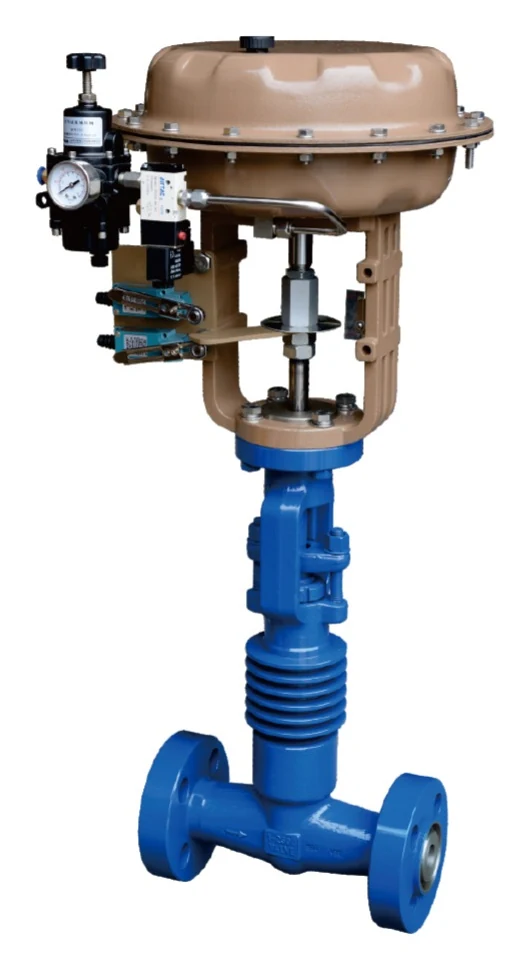
RÉGULATION MODULANTE
Vanne de régulation pneumatique en acier forgé
Pour un service de régulation automatisé, établir la plage de débit, le différentiel de pression, la position de sécurité et les conditions d'air instrument avant de dimensionner la garniture et l'actionneur. Voir les détails de la vanne de régulation pneumatique en acier forgé →
ISOLEMENT QUART DE TOUR
Robinet à tournant sphérique à brides en acier forgé
À envisager pour un fonctionnement tout ou rien ; confirmer le passage réel, la conception du siège et de l'étanchéité, le couple de manœuvre, la spécification de brides et la compatibilité avec le fluide. Voir les détails du robinet à tournant sphérique à brides en acier forgé →
ISOLEMENT BASSE TEMPÉRATURE
Robinet-vanne cryogénique en acier forgé
Une tige prolongée ou un autre détail basse température ne peut être présumé à partir de la seule désignation. Demander la température de conception, la base de ténacité des matériaux et la configuration du chapeau et de la garniture. Voir les détails du robinet-vanne cryogénique en acier forgé →
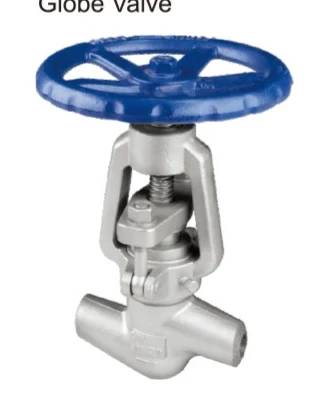
TRAJET D'ÉCOULEMENT À SOUPAPE
Robinet à soupape en acier forgé pour centrale électrique
A globe design can provide an adjustable flow restriction, but pressure drop, flow direction, trim wear and shutoff duty must match the exact power-service configuration. View Forged Steel Power Plant Globe Valve details →
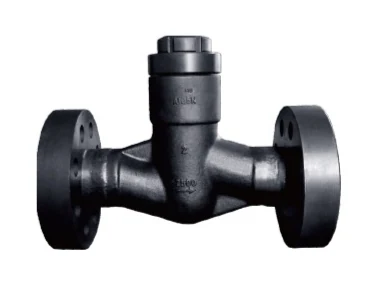
REVERSE-FLOW PREVENTION
Clapet anti-retour en acier forgé à brides
A check valve responds to flow rather than a handwheel command. Check required orientation, minimum stable flow, cracking behavior and pressure drop for the actual design. View Forged Steel Flanged Check Valve details →
CHOOSING THE VALVE MECHANISM
Choose the duty before the material or pressure class
The same forged-construction heading can contain fundamentally different flow mechanisms. A gate is principally an isolation valve; a globe may suit controlled restriction; a check valve prevents reverse flow; a ball offers quarter-turn shutoff; and a pneumatic control valve is specified around a required control duty. These roles are pas interchangeables merely because the bodies are described as forged steel.
| Conception de la soupape | Start with this duty | Limite de sélection |
|---|---|---|
| Gate | Isolation with limited need to throttle | Do not select a standard gate as a modulating control valve; determine flow direction, operating cycles and low-temperature requirements where relevant. |
| Globe | Flow restriction or isolation where the selected design permits | Expect pressure loss through the flow path; verify trim, shutoff class and allowable differential pressure. |
| Vérifier | Automatic non-return duty | Check orientation, flow stability and pressure drop; a check valve is not a positive isolation device. |
| Ball | Quarter-turn on/off shutoff | Confirm seat construction, bore and actuation torque; quarter-turn does not prove modulating suitability. |
| Pneumatic control | Controlled flow or pressure under an automation signal | Provide flow cases, available ΔP, control characteristic, fail action and utility supply; do not infer Cv or rangeability from the photo. |
MATERIAL, RATING & CONNECTION
What a forged-steel designation does—and does not—tell you
Forging describes the way a metal component was formed; it does ne identify a particular ASTM material grade, allowable pressure at temperature, valve construction standard or completed test. Compare two offers against the same agreed technical basis before evaluating price.
Material and service temperature
Specify the required body/bonnet material, trim and bolting. For low-temperature duty, ask for the actual minimum design temperature and the material impact-toughness requirements; for elevated temperature, request the grade-specific pressure–temperature basis and sealing arrangement.
Pressure boundary and end fit
Provide design pressure et operating temperature, line size and piping specification. Check flange drilling/facing or thread form, or welded-end preparation and piping compatibility, against a dimensioned drawing. A Class designation alone is not a universal pressure value.
Standards and inspection scope
ASME B16.34 addresses valve pressure–temperature ratings and related construction requirements; API 602 addresses defined small-size gate, globe and check valves in petroleum and natural-gas service. Neither document number is evidence that every item on this catalog spread has been manufactured, tested or certified to it. State the required edition and request product-specific compliance and inspection records.
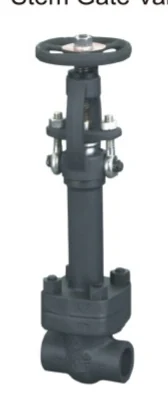
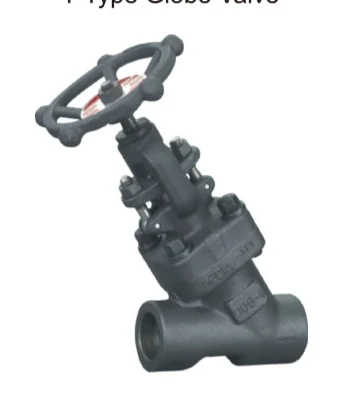
Catalog illustration: socket-weld gate valve. The image indicates valve form, not an approved material, rating or project configuration.
SERVICE-BASED SELECTION
When the service changes, the specification changes
The same forged construction can serve very different applications. Start with the closest duty, then check the exact valve configuration against your service conditions.
Low-temperature isolation
Commencer par l' forged steel cryogenic gate valve entry for a gate-type low-temperature inquiry. Specify the minimum design temperature, required impact tests, bonnet arrangement and shutoff criteria; do not substitute an ordinary gate based on body shape.
Automatic process regulation
For a throttling loop, investigate the forged steel pneumatic control valve rather than a standard isolation gate or ball valve. Provide minimum/normal/maximum flow, inlet and outlet pressures, fluid properties and fail-action requirements for sizing.
Power and utility piping
Le forged steel power plant globe valve is a more relevant catalog starting point for globe-style duty than a cryogenic gate or flanged check. Document pressure loss, throttling frequency, temperature cycling and the actual trim/bonnet requirement.
RELATED VALVE FAMILIES
Need a different mechanism or broader selection?
This page compares the forged-steel catalog selection, not every model in the Products hub. For more options within a mechanism, use the robinet-vanne, globe, clapet anti-retour, ou robinet à tournant sphérique family. Select a named model before requesting its drawing and offer.
All valve families
Browse the full product catalog when forged construction is not the main requirement.
Gate valve configurations
Compare gate-style isolation designs and navigate to individual gate products.
Applications industrielles
Review how media, temperature, duty cycle and installation conditions shape valve selection.
Technical resources
Read additional valve-design guidance; use the individual product pages for the exact offered details.
BUYER FAQ
Common forged steel valve specification questions
The following questions address series-level specification. Datasheets, dimensions and acceptance requirements remain specific to the product and agreed order.
What project data is needed to specify Forged Steel Valves?
State valve function, medium, size, pressure and temperature cases, connection, body/trim/seat materials, operating arrangement and required inspection documents.
Does the Forged Steel Valves series name define every available size, pressure class and material?
No. A series name identifies a documented forged steel valve selection route, but the orderable size, rating, material, connection, standard and operating limits must be confirmed on the offered datasheet and approved order drawing.
How should buyers compare products within the Forged Steel Valves series?
Compare valve function and design, forged material grade, connection, pressure-temperature envelope, trim/sealing route, actuation and document requirements.
Which documents should be requested before order approval?
Request the offered datasheet, general arrangement or dimensional drawing, material and trim schedule, applicable inspection and test plan, required certificates, marking details and the final order-specific document list.
SEND YOUR SERVICE REQUIREMENTS
Request a forged steel valve quotation
Tell us the valve function and any catalog product you have shortlisted. Include medium, size, design pressure, minimum and maximum temperature, end connection and project specifications. For control duty, add flow cases and the available differential pressure; for low-temperature duty, give the minimum design temperature. We can then review the configuration and identify the documents needed for a comparable offer.
- Valve function and catalog product (if selected)
- Medium, size, and minimum / maximum temperature
- Design pressure and operating pressure cases
- Required end connection and mating piping standard
- Flow range / differential pressure for control duty
- Required body / trim material and applicable specifications
- Inspection, testing, drawings and document requirements
- Quantity, delivery destination and unresolved technical items