
APLICACIONES QUÍMICAS Y PETROQUÍMICAS
Válvulas para servicio de procesos químicos y petroquímicos
VALMORA suministra opciones de válvulas industriales para servicios de procesos químicos y petroquímicos. Comience por lo que debe hacer la válvula —aislamiento de apertura/cierre, control de caudal o contención adicional del vástago— y luego verifique los casos reales de fluido, concentración, temperatura y presión antes de seleccionar materiales y construcción.
Para ingenieros y equipos de compras: compare las familias de válvulas a continuación y luego envíe una descripción del servicio etiquetada para una revisión específica de la configuración. Una válvula revestida o un nombre de material conocido por sí solo no establece la compatibilidad química.
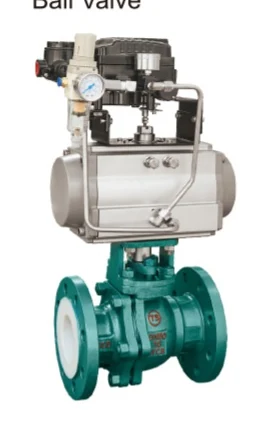
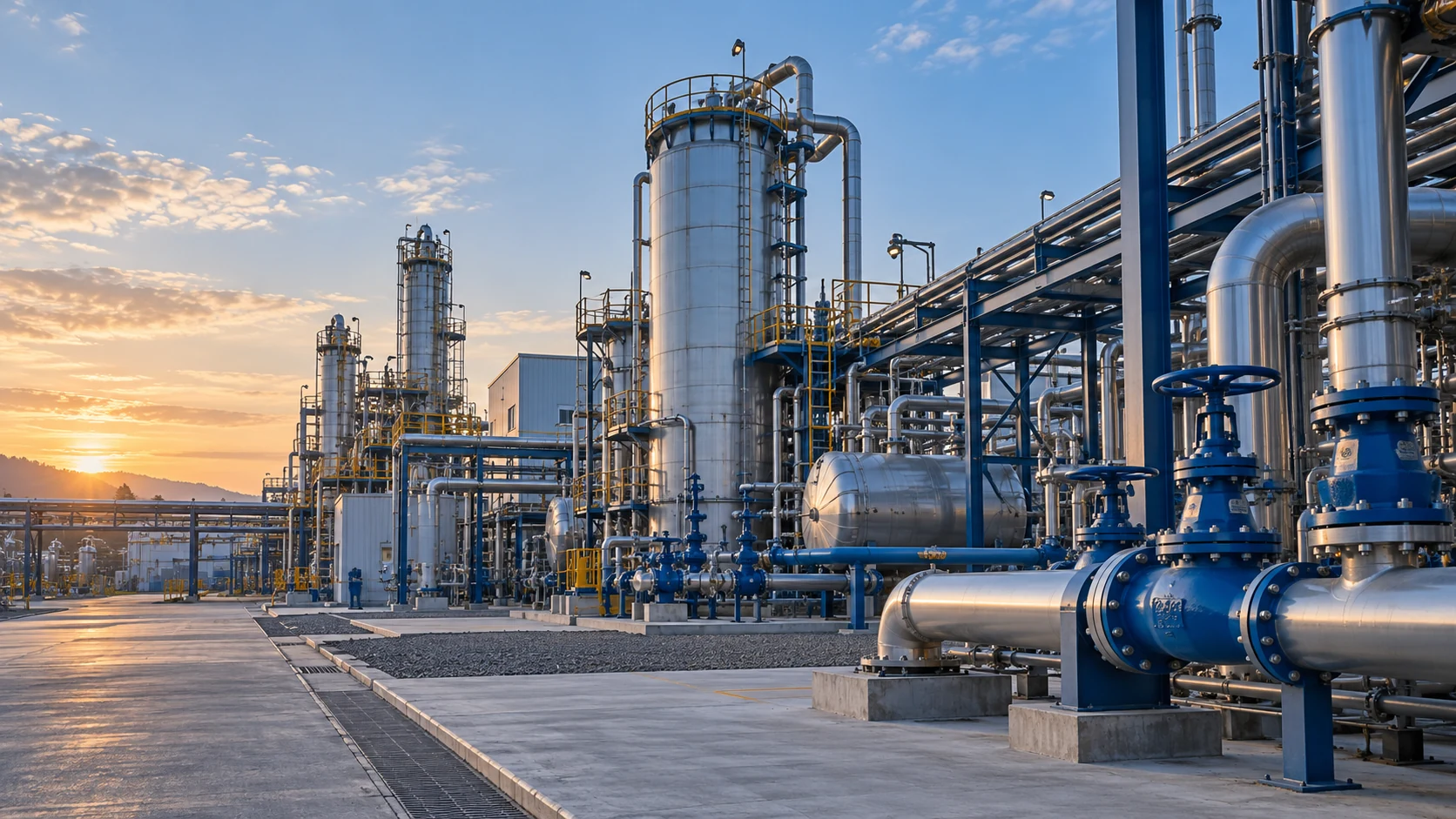
La imagen del sitio de proceso es una ilustración de IA, no una instalación de VALMORA. Imagen del producto: ejemplo de catálogo de proveedor de una válvula de bola revestida de PTFE neumática; las especificaciones finales dependen de la configuración ofrecida.
APPLICATIONS IN THE PROCESS LINE
Una misma planta química puede necesitar válvulas muy diferentes
Una línea de transferencia, la salida de un reactor y una estación de carga pueden manejar productos químicos relacionados pero enfrentar condiciones diferentes de caudal, ciclado y contención. Defina el trabajo en cada etiqueta de válvula en lugar de seleccionar una sola construcción para toda la planta.
Líneas de transferencia, mezcla y dosificación
Para servicios de apertura/cierre, establezca los cambios de composición del lote, el líquido atrapado, los productos químicos de lavado y la frecuencia de ciclado de la válvula. Una opción de aislamiento revestida puede merecer revisión cuando el metal expuesto sea una preocupación, pero los depósitos o sólidos abrasivos pueden cambiar la elección.
Reactores y equipos de separación
Las reacciones pueden modificar la temperatura y la concentración; la evaporación y el enfriamiento pueden exponer las válvulas a vacío. Para servicios de regulación, se necesitan el rango de caudal, la caída de presión y la presión de vapor del líquido para evaluar los riesgos de vaporización instantánea (flashing) o cavitación.
Almacenamiento, carga y conexiones de unidad
Especifique el aislamiento positivo, el sentido de cierre, la frecuencia de operación y las consecuencias de una fuga externa. Cuando se requiera operación remota o parada de emergencia, indique la posición de falla y los requisitos aplicables del proyecto; una foto del actuador no constituye una aprobación para esos servicios.
EXPLORAR FAMILIAS DE VÁLVULAS
Comience por la función de la válvula y luego acote la construcción
Estas son rutas existentes de categorías de productos VALMORA, no configuraciones preaprobadas para servicio químico. La categoría correspondiente explica la construcción; el tamaño, los materiales, los sellos y los límites de operación seleccionados aún deben ser compatibles con la línea.
Válvulas revestidas y anticorrosión
Un punto de partida cuando el fluido exige una trayectoria húmeda protegida. Verifique exactamente qué superficies están revestidas y si el revestimiento, los asientos y las juntas toleran el ciclo de servicio completo.
Válvulas de bola
Para aislamiento y transferencia de cuarto de vuelta (on/off). Confirme el servicio de cierre, los asientos y sellos del vástago expuestos al medio, la presión diferencial, la frecuencia de ciclos y la actuación.
Válvulas de control
Para regulación de caudal o presión especificada. Proporcione el caudal mínimo, normal y máximo, así como las presiones aguas arriba/aguas abajo, la temperatura y la fase para una correcta selección y revisión del trim.
Válvulas de globo con sello de fuelle
Una ruta de diseño con contención del vástago donde la fuga externa es importante. Verifique el fuelle ofrecido, el sellado de respaldo y los requisitos de prueba del proyecto en lugar de suponer un desempeño de emisiones.
REAL PRODUCT PHOTOGRAPHS
Lined constructions shown in the supplier catalog
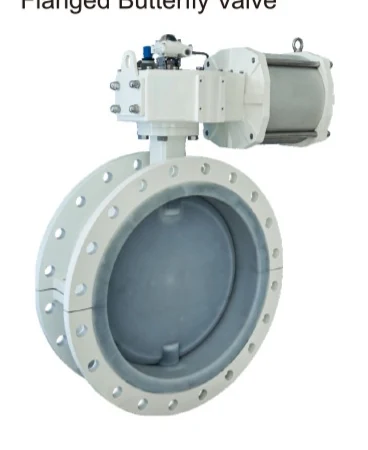
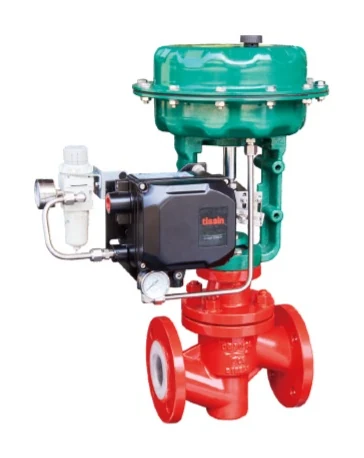
The photographs show construction examples—not installed project references or universal chemical-service approvals. The main image above shows a pneumatic PTFE-lined ball valve. Below are a pneumatic PTFE-lined flanged butterfly valve (left) y una pneumatic PTFE-lined globe valve (right). Confirm the exact offered materials and dimensions from its datasheet and drawing.
Lined is not the same as PTFE-seated
A PTFE seat can seal against a closure element while other process-wetted surfaces remain metal. If the line requires isolation of the body metal from the medium, specify the entire wetted construction—not only the seat material.
Vacuum and permeation change the choice
For hot service, vacuum or penetrating media, ask for the offered valve’s pressure–temperature–vacuum limits and liner construction. General resin resistance data cannot establish the complete assembly’s suitability.
Actuator and function are separate checks
The pictured pneumatic actuation identifies an operating arrangement, not a certified shutdown function or a sized modulating solution. State cycles, available utilities, required failure position and pressure differential.
DECISION GUIDE
Which valve route fits the chemical-service duty?
Use these starting points before requesting a specific model. The limiting condition in the third column is a reason to change the shortlist or request more data—not a blanket statement about all valves of that type.
| Line requirement | First product route | What changes or limits the choice |
|---|---|---|
| Corrosive liquid where wetted metal exposure is a concern | Válvulas revestidas y anticorrosión | Identify every wetted surface and verify chemical concentration, temperature, liner support and permeation risk. |
| Frequent on/off transfer or batch isolation | Válvulas de bola | Check seats, stem seals and trapped-cavity behavior; ordinary on/off ball valves are not a substitute for sized control valves. |
| Space- or size-sensitive isolation with a butterfly design | Válvulas de mariposa | Check disc/liner exposure, required shutoff direction and flange/disc clearance; a pictured lined disc is not a service rating. |
| Stable modulation across a changing flow rate | Válvulas de control | Provide flow cases, differential pressure and vapor pressure; size and trim selection must address flashing, cavitation and erosion risks. |
| Isolation duty where a flexible diaphragm may separate parts of the mechanism from the process | Válvulas de diafragma | Check diaphragm and lining compatibility, solids, closure differential and cycling for the actual design. |
| Isolation or diversion where a plug construction is being considered | Válvulas de macho | Specify deposits, solids, actuation torque and the full wetted sealing construction. |
| Specified additional stem-containment arrangement | Válvulas de globo con sello de fuelle | The bellows design is a route to review; ask for the applicable leakage-test basis and documentation for the offered unit. |
Not sure which route fits? Give the stream composition and valve duty in the RFQ rather than specifying a guessed lining, leakage class or actuator.
DATA THAT CHANGES THE SELECTION
Give suppliers the actual chemical-service envelope
A valve that works at normal temperature may face a different condition during startup, cleaning or a shutdown vacuum. For each tag, provide the following combinations where known; leave unknown values open rather than substituting a material limit for a finished-valve rating.
| RFQ input | What to report | Why it changes the selection |
|---|---|---|
| Chemical identity | Constituents and concentration ranges, contaminants, phase, particles, cleaning chemicals and any batch changes. | Narrows body, lining, seat, gasket and packing candidates; chemistry alone does not establish liner life. |
| Presión y temperatura | Minimum, normal, design and upset values, with simultaneous conditions; minimum absolute pressure if vacuum is possible. | A positive-pressure class does not establish vacuum resistance or allowable pressure at every temperature. |
| Fluid and flow behavior | Isolation vs regulation; for control, flow rates, upstream/downstream pressures, liquid vapor pressure, solids or crystallization. | Separates an on/off valve from a properly sized control valve and reveals potential erosion, flashing or cavitation. |
| Sealing and operation | Internal shutoff requirement, external-leakage criterion if specified, operating frequency, actuator power and required fail position. | Changes seat, stem-sealing, actuation and test scope; confirm each requirement on the offered assembly. |
| Connection and approval | Line size, mating ends, piping class, orientation, space, project standard/edition and required records. | Determines installation fit and which inspections, deviations and documents must be included in the quotation. |
TECHNICAL QUOTATION & SUBMITTALS
Check the offered configuration before placing the order
Ask suppliers to answer against the same tagged datasheet and project specification. If ASME B31.3 is the project piping basis, identify the edition and related valve and flange requirements separately; a piping-code reference does not certify a specific valve. Do not treat the absence of a deviation in a quotation as proof that every requirement was accepted.
| Document or requirement | Engineering check | Acción de compra |
|---|---|---|
| Tagged valve datasheet + arrangement drawing | Identify size, ends, body, trim, lining/diaphragm, seat, stem seal, actuation and the applicable pressure–temperature conditions. | Request with the technical quotation. |
| Material and compatibility basis | Match chemical concentration and service cases to all process-wetted parts; request available material and lining evidence and clarify any conditions excluded. | Agree what evidence is available for the offered item. |
| Inspection and leakage tests | Identify specified body/seat tests, any external-leakage test, inspection scope, acceptance basis and witness requirements. | Agree test and inspection scope before ordering. |
| Project standards and deviations | Specify applicable code, standard, edition, line class, documentation revisions and all commercial/technical exceptions. | Close deviations and approve the document register before release. |
RELATED PROJECT INFORMATION
Continue from the application to supporting records
Use these existing site sections for context. They are navigation to published information; they are not substitutes for a tagged product drawing, test report or written supply confirmation.
Other Industry Applications
See how another service changes the valve duty and shortlist.
Manufacturing Information
Explore published production information; confirm the source and scope of any project-specific manufacturing claim.
Quality Control Information
Review the described inspection processes and specify the actual records needed for this order.
Technical Resources
Find technical background while keeping the final selection tied to the quoted product data.
SUBMIT A CHEMICAL-SERVICE INQUIRY
Send your chemical and petrochemical valve requirements
Share a valve schedule or start with one service tag. Include fluid and concentration, normal and extreme conditions, valve function, connection, actuation and required documents where known. Clearly mark missing data for technical clarification; the form does not require you to invent a specification.
- Unit and valve tag; isolation or modulation duty
- Chemical constituents, concentration range and cleaning media
- Normal / design / upset temperature and pressure
- Vacuum, solids, flashing or crystallization if applicable
- Valve size, connection and actuation needs
- Applicable project code, standard edition and inspection documents
- Quantities, drawings and delivery context if available
- Unknown conditions stated as open questions