
Serie de válvulas de globo con sellado por fuelle
Válvulas de globo con sellado por fuelle para el control de fugas por el vástago
Una válvula de globo con sellado por fuelle utiliza una barrera metálica flexible alrededor del vástago móvil para reducir una posible vía de escape del fluido de proceso. Parta de aquí cuando las fugas externas por el vástago sean relevantes y, a continuación, verifique el recorrido del flujo, los materiales, los ciclos de operación y los requisitos de prueba de la válvula ofertada. El fuelle no define la estanqueidad del asiento ni una clasificación universal de presión-temperatura.
Alcance del catálogo: El catálogo de origen ilustra válvulas de globo con sellado por fuelle de patrón recto y de patrón en Y. La imagen es una referencia de familia de producto, no un tamaño, clase de presión, certificado de emisiones ni rango completo de modelos VALMORA confirmados.
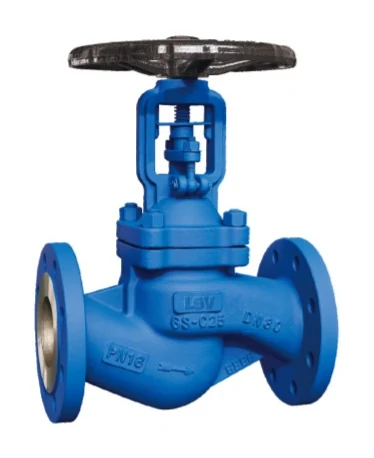
Válvula de globo con sellado por fuelle de patrón recto mostrada en el catálogo de origen; confirme el plano y la configuración ofertados.
Comprender el límite del sellado
Qué sella el fuelle y qué no
El fuelle se expande y contrae con el recorrido del vástago y separa el vástago móvil del fluido de proceso. Esto puede hacer preferible un diseño con sellado por fuelle frente a una empaquetadura de vástago convencional cuando la fuga a la atmósfera es la preocupación decisiva. No sustituye la función de cierre entre disco y asiento ni elimina otras posibles vías de fuga en las uniones.
Fugas del vástago a la atmósfera
Función del fuelle: Una barrera metálica de contención rodea el vástago. Confirme el material del fuelle, la disposición de soldadura, el recorrido y la frecuencia de ciclos previstos, y si el diseño incluye un sellado secundario de empaquetadura.
Fuga interna por el asiento
Requisito independiente: La estanqueidad del asiento depende de la geometría del disco y del asiento, de la presión diferencial y del ensayo de asiento especificado. Un sello de fuelle no garantiza por sí mismo un cierre estanco a burbuja.
Uniones del bonete y de las conexiones
Trayectorias de fuga independientes: Las juntas del bonete, las bridas o las conexiones soldadas requieren su propio diseño y sus propias comprobaciones de aceptación. Una afirmación de “cero emisiones” debe referirse a un alcance de ensayo y a un resultado definidos, no solo al nombre de una construcción.
Elección de configuración
¿Cuándo es una válvula de globo con sello de fuelle la mejor opción?
Elija un diseño con sello de fuelle cuando minimizar la fuga por el vástago justifique el sistema de sellado adicional y el fuelle propuesto pueda cualificarse para su temperatura, medio, recorrido y régimen de ciclos. Si las emisiones por el vástago no son un requisito determinante, compare una válvula de globo convencional con empaquetadura en cuanto a mantenimiento, trim disponible y coste del ciclo de vida. En cualquier caso, especifique por separado el cierre del asiento y la caída de presión admisible.
| Preocupación principal | La válvula de globo con fuelle es conveniente revisarla cuando… | Qué sigue determinando la idoneidad |
|---|---|---|
| Fuga por el vástago | La pérdida de fluido o la emisión externa por el vástago es un riesgo crítico para el proyecto. | Método de cualificación del sellado del vástago; material del fuelle y diseño de la soldadura; empaquetadura de respaldo si está instalada. |
| Operación repetida | La configuración propuesta dispone de una base documentada de fatiga/ciclos para el recorrido del vástago y la frecuencia de operación previstos. | Condiciones de ciclo, carrera completa frente a parcial, variación de temperatura y evidencia del proveedor. |
| Aislamiento o estrangulamiento | El disco/macho ofertado está previsto para el servicio de cierre o estrangulamiento requerido. | Seat leakage requirement; flow coefficient and pressure-drop/cavitation assessment for throttling. |
| Thermal and process duty | Pressure, temperature, fluid chemistry and connection design match the offered valve. | Material compatibility; pressure-temperature rating; dimensions and joint test requirements. |
Catalog identity and specification
Lo que confirma el catálogo—y lo que no
The physical catalog page headed “Bellows Valve Series” depicts Y-pattern and straight-pattern bellows-seal globe valves, then lists bellows-seal compuerta valves as different products. The illustrated body pattern is useful for a first conversation, but that page does not establish one orderable model, a series-wide rating or a certified fugitive-emission class.
Straight-pattern globe
The existing product image shows a straight-through flanged globe body with a handwheel. Confirm face-to-face dimension, nominal size, flange standard, trim and shutoff duty against the selected drawing.
Y-pattern globe
A Y-pattern bellows-seal globe arrangement also appears in the source catalog. Its flow path and installation dimensions can differ from the straight pattern; do not assume a lower pressure drop or an interchangeable body from the illustration alone.
Product-level evidence
For a specific quotation, obtain the offered model or drawing, pressure-temperature limits, body/trim/bellows materials, stem-seal construction, seat test criteria and required inspection records. These values are not verified across the full series by the catalog page.
For the individual catalog entries, see Bellows Seal Globe Valve — catalog product y ASME Bellows Seal Globe Valve — separate catalog product. Compare the offered drawings before treating either as a quoted configuration; “ASME” is a catalog title here, not a verified certification or a confirmed standard edition.
Selection safeguards
Do not confuse three different performance claims
A supplier statement about stem containment is not a seat leakage guarantee or proof that every size meets a specific fugitive-emission standard. Compare offers against the same functional requirement and test basis rather than the same product name.
- External stem leakage: identify the test method, fluid, pressure, temperature and acceptance limit.
- Internal shutoff: state a separate seat leakage criterion and the operating differential pressure.
- Bellows life: request the fatigue/cycle basis for the expected travel and temperature range.
- Design compliance: ask for the applicable model-specific standards, drawing and inspection documents; do not infer certification from the catalog.
Match the valve to the process
Three service conditions that change the specification
The same bellows-sealed construction cannot be selected solely by a medium name. The operating envelope and the consequence of leakage determine which questions should control the supplier’s technical response.
Steam and temperature cycling
If the line repeatedly heats and cools, compare the complete temperature and pressure cases—not just the nominal PN/Class designation. Ask for bellows fatigue and material suitability under the expected stroke and thermal-cycle conditions.
Hazardous or valuable fluids
Where stem leakage has significant consequences, define the fluid composition, target external leakage limit and verification method before asking for a bellows configuration. Chemical compatibility, bonnet joints and the actual test scope remain separate checks.
Frequent operation or throttling
A repeatedly modulated globe valve needs an evaluated cycle duty; a throttling application also needs pressure-drop, flow and trim checks. If the offered product has no documented basis for the required duty, do not treat the bellows seal as sufficient evidence of suitability.
Choose the correct product family
Bellows-seal globe valves versus nearby valve families
A globe pattern provides a disc-and-seat arrangement for shutoff or appropriate throttling trim. Gate valves are principally chosen for on/off isolation and are not a substitute for a throttling configuration. Choose the valve family first, then agree the exact sealing construction and order-specific data.
Explore all Globe Valves
Return to the parent family for other globe patterns and conventional stem-seal arrangements.
Compare Gate Valves
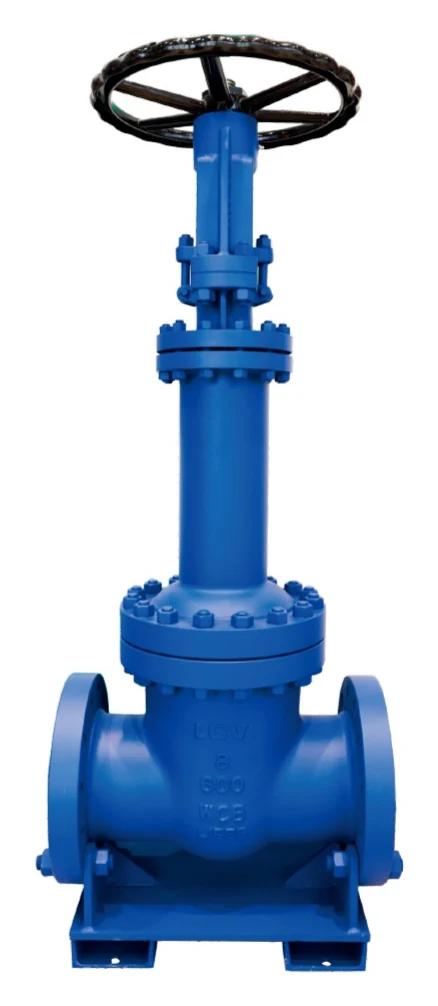
Bellows-seal gate valve images in the source catalog belong to a different valve family; gate valves are generally selected for on/off isolation.
Browse Industry Applications
Start from process conditions when you still need to decide on the overall isolation or throttling approach.
Explore Forged Steel Valves
Use this separate series for forged construction questions; do not assume forged material or ratings from the bellows-globe catalog image.
Key buyer questions
Bellows Seal Globe Valve FAQs
These questions separate the bellows feature from the performance requirements that must be verified for the actual valve being quoted.
What leakage does a bellows seal address?
The flexible metal bellows forms a barrier around the moving stem. Internal seat leakage, bonnet joints and end connections still require separate verification.
Does a bellows seal mean zero leakage or maintenance-free operation?
No. Sealing performance needs a defined test method and operating range. Bellows fatigue, backup packing where fitted, and other joints remain relevant.
Can straight-pattern and Y-pattern catalog illustrations be treated as interchangeable?
No. Both appear in the supplier catalog, but the pictures do not establish matching dimensions, pressure drop or available ratings. Compare the offered drawings and flow data.
What information is needed for an accurate quotation?
Provide fluid composition, pressure and temperature cases, line size and connection standard, isolation or throttling duty, differential pressure, expected cycles, actuation and required tests or documents.
Technical quote request
Request a bellows-seal globe valve configuration
Share the operating cases you know, including the stem-leakage requirement, pressure drop or shutoff duty, cycle frequency and document expectations. An application-matched quotation should identify the proposed valve and which specifications or tests are actually available; unknowns can be clarified during review.
- Service fluid and composition, including any hazardous constituents
- Design and operating pressure, temperature and pressure differential
- Nominal size, end connection standard and flow direction
- Straight-pattern or Y-pattern preference, if required
- Isolation or throttling duty and required seat leakage
- Operating frequency, stem travel and manual/actuated operation
- Stem leakage acceptance method and requested testing/records
- Applicable project standards and documents needed before approval