
Série de válvulas globo com vedação por fole
Válvulas globo com vedação por fole para controle de vazamento pela haste
Uma válvula globo com vedação por fole utiliza uma barreira metálica flexível ao redor da haste móvel para reduzir um possível caminho de escape do fluido de processo. Comece por aqui quando o vazamento externo pela haste for relevante e, em seguida, verifique o trajeto de fluxo, os materiais, os ciclos de operação e os requisitos de teste da válvula oferecida. O fole não define a estanqueidade da sede nem uma classificação universal de pressão-temperatura.
Escopo do catálogo: O catálogo de origem ilustra válvulas globo com vedação por fole de padrão reto e padrão Y. A imagem é uma referência de família de produtos, não um tamanho, classe de pressão, certificado de emissões ou faixa completa de modelos VALMORA confirmados.
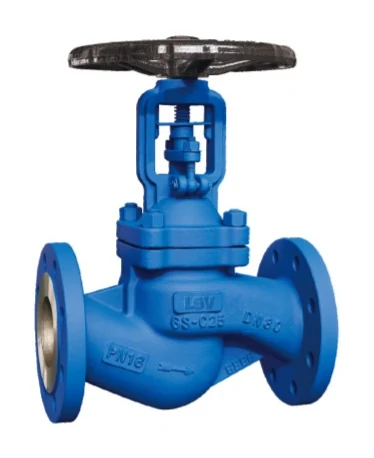
Válvula globo com vedação por fole de padrão reto mostrada no catálogo de origem; confirme o desenho e a configuração oferecidos.
Entender o limite de vedação
O que o fole veda — e o que ele não veda
O fole se expande e se contrai com o curso da haste e separa a haste móvel do fluido de processo. Isso pode tornar um projeto com vedação por fole preferível à gaxeta convencional de haste quando o vazamento para a atmosfera é a preocupação decisiva. Ele não substitui a função de bloqueio entre disco e sede nem elimina outros possíveis caminhos de vazamento em juntas.
Vazamento da haste para a atmosfera
Função do fole: Uma barreira metálica de contenção envolve a haste. Confirme o material do fole, o arranjo de solda, o curso e a ciclagem previstos e se o projeto inclui uma vedação secundária por gaxeta.
Vazamento interno pela sede
Requisito separado: A estanqueidade da sede depende da geometria do disco e da sede, da pressão diferencial e do ensaio de sede especificado. Um fole de vedação não garante, por si só, fechamento estanque a bolhas.
Juntas do castelo e das conexões
Caminhos de vazamento separados: Juntas do castelo, flanges ou conexões soldadas exigem seus próprios critérios de projeto e aceitação. Uma alegação de “zero emissões” deve se referir a um escopo e resultado de ensaio definidos, não apenas ao nome de uma construção.
Escolha da configuração
Quando uma válvula globo com fole de vedação é a melhor escolha?
Escolha um projeto com fole de vedação quando a minimização do vazamento pela haste justificar o sistema de vedação adicional e e o fole proposto puder ser qualificado para sua temperatura, meio, curso e regime de ciclagem. Se as emissões pela haste não forem um requisito determinante, compare uma válvula globo convencional com gaxeta em termos de manutenção, trim disponível e custo de ciclo de vida. Em ambos os casos, especifique separadamente o fechamento da sede e a queda de pressão admissível.
| Preocupação principal | A válvula globo com vedação por fole merece análise quando… | O que ainda determina a adequação |
|---|---|---|
| Vazamento pela haste | Perda de meio ou liberação externa na haste é um risco crítico para o projeto. | Método de qualificação da vedação da haste; material do fole e projeto da solda; gaxeta de segurança quando instalada. |
| Operação repetida | A configuração proposta possui base documentada de fadiga/ciclos para o curso da haste e a frequência operacional previstas. | Condições de ciclo, curso total versus parcial, variação de temperatura e evidências do fornecedor. |
| Isolamento ou controle de vazão | O disco/plugue oferecido é destinado ao serviço de bloqueio ou de controle de vazão requerido. | Seat leakage requirement; flow coefficient and pressure-drop/cavitation assessment for throttling. |
| Thermal and process duty | Pressure, temperature, fluid chemistry and connection design match the offered valve. | Material compatibility; pressure-temperature rating; dimensions and joint test requirements. |
Catalog identity and specification
O que o catálogo confirma — e o que não confirma
The physical catalog page headed “Bellows Valve Series” depicts Y-pattern and straight-pattern bellows-seal globe valves, then lists bellows-seal gaveta valves as different products. The illustrated body pattern is useful for a first conversation, but that page does not establish one orderable model, a series-wide rating or a certified fugitive-emission class.
Straight-pattern globe
The existing product image shows a straight-through flanged globe body with a handwheel. Confirm face-to-face dimension, nominal size, flange standard, trim and shutoff duty against the selected drawing.
Y-pattern globe
A Y-pattern bellows-seal globe arrangement also appears in the source catalog. Its flow path and installation dimensions can differ from the straight pattern; do not assume a lower pressure drop or an interchangeable body from the illustration alone.
Product-level evidence
For a specific quotation, obtain the offered model or drawing, pressure-temperature limits, body/trim/bellows materials, stem-seal construction, seat test criteria and required inspection records. These values are not verified across the full series by the catalog page.
For the individual catalog entries, see Bellows Seal Globe Valve — catalog product e ASME Bellows Seal Globe Valve — separate catalog product. Compare the offered drawings before treating either as a quoted configuration; “ASME” is a catalog title here, not a verified certification or a confirmed standard edition.
Selection safeguards
Do not confuse three different performance claims
A supplier statement about stem containment is not a seat leakage guarantee or proof that every size meets a specific fugitive-emission standard. Compare offers against the same functional requirement and test basis rather than the same product name.
- External stem leakage: identify the test method, fluid, pressure, temperature and acceptance limit.
- Internal shutoff: state a separate seat leakage criterion and the operating differential pressure.
- Bellows life: request the fatigue/cycle basis for the expected travel and temperature range.
- Design compliance: ask for the applicable model-specific standards, drawing and inspection documents; do not infer certification from the catalog.
Match the valve to the process
Three service conditions that change the specification
The same bellows-sealed construction cannot be selected solely by a medium name. The operating envelope and the consequence of leakage determine which questions should control the supplier’s technical response.
Steam and temperature cycling
If the line repeatedly heats and cools, compare the complete temperature and pressure cases—not just the nominal PN/Class designation. Ask for bellows fatigue and material suitability under the expected stroke and thermal-cycle conditions.
Hazardous or valuable fluids
Where stem leakage has significant consequences, define the fluid composition, target external leakage limit and verification method before asking for a bellows configuration. Chemical compatibility, bonnet joints and the actual test scope remain separate checks.
Frequent operation or throttling
A repeatedly modulated globe valve needs an evaluated cycle duty; a throttling application also needs pressure-drop, flow and trim checks. If the offered product has no documented basis for the required duty, do not treat the bellows seal as sufficient evidence of suitability.
Choose the correct product family
Bellows-seal globe valves versus nearby valve families
A globe pattern provides a disc-and-seat arrangement for shutoff or appropriate throttling trim. Gate valves are principally chosen for on/off isolation and are not a substitute for a throttling configuration. Choose the valve family first, then agree the exact sealing construction and order-specific data.
Explore all Globe Valves
Return to the parent family for other globe patterns and conventional stem-seal arrangements.
Compare Gate Valves
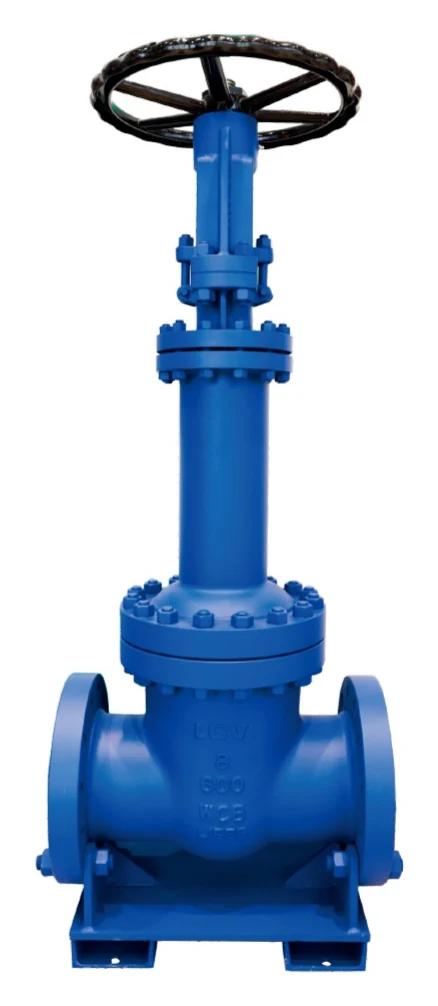
Bellows-seal gate valve images in the source catalog belong to a different valve family; gate valves are generally selected for on/off isolation.
Browse Industry Applications
Start from process conditions when you still need to decide on the overall isolation or throttling approach.
Explore Forged Steel Valves
Use this separate series for forged construction questions; do not assume forged material or ratings from the bellows-globe catalog image.
Key buyer questions
Bellows Seal Globe Valve FAQs
These questions separate the bellows feature from the performance requirements that must be verified for the actual valve being quoted.
What leakage does a bellows seal address?
The flexible metal bellows forms a barrier around the moving stem. Internal seat leakage, bonnet joints and end connections still require separate verification.
Does a bellows seal mean zero leakage or maintenance-free operation?
No. Sealing performance needs a defined test method and operating range. Bellows fatigue, backup packing where fitted, and other joints remain relevant.
Can straight-pattern and Y-pattern catalog illustrations be treated as interchangeable?
No. Both appear in the supplier catalog, but the pictures do not establish matching dimensions, pressure drop or available ratings. Compare the offered drawings and flow data.
What information is needed for an accurate quotation?
Provide fluid composition, pressure and temperature cases, line size and connection standard, isolation or throttling duty, differential pressure, expected cycles, actuation and required tests or documents.
Technical quote request
Request a bellows-seal globe valve configuration
Share the operating cases you know, including the stem-leakage requirement, pressure drop or shutoff duty, cycle frequency and document expectations. An application-matched quotation should identify the proposed valve and which specifications or tests are actually available; unknowns can be clarified during review.
- Service fluid and composition, including any hazardous constituents
- Design and operating pressure, temperature and pressure differential
- Nominal size, end connection standard and flow direction
- Straight-pattern or Y-pattern preference, if required
- Isolation or throttling duty and required seat leakage
- Operating frequency, stem travel and manual/actuated operation
- Stem leakage acceptance method and requested testing/records
- Applicable project standards and documents needed before approval