
Pipeline isolation · fully welded body configurations
Válvulas de esfera totalmente soldadas
Compare documented hydraulic, electric, pneumatic, extended-pipe and direct-buried fully welded ball valve configurations. Start with where the valve will be installed and how it must be operated; then match the exact catalog product to your line conditions and required documentation.
Key distinction: a fully welded body has welded pressure-shell joints rather than a bolted body split. It does not, by itself, specify butt-weld pipe ends, a full-bore passage or suitability for burial.
Compare six documented fully welded configurations
These are distinct supplier-catalog entries, not six interchangeable sizes of one standard model. Choose by operating method or installation layout, then open the matching product record. The photographs identify catalog examples; they do not establish an orderable size range, material or pressure class.
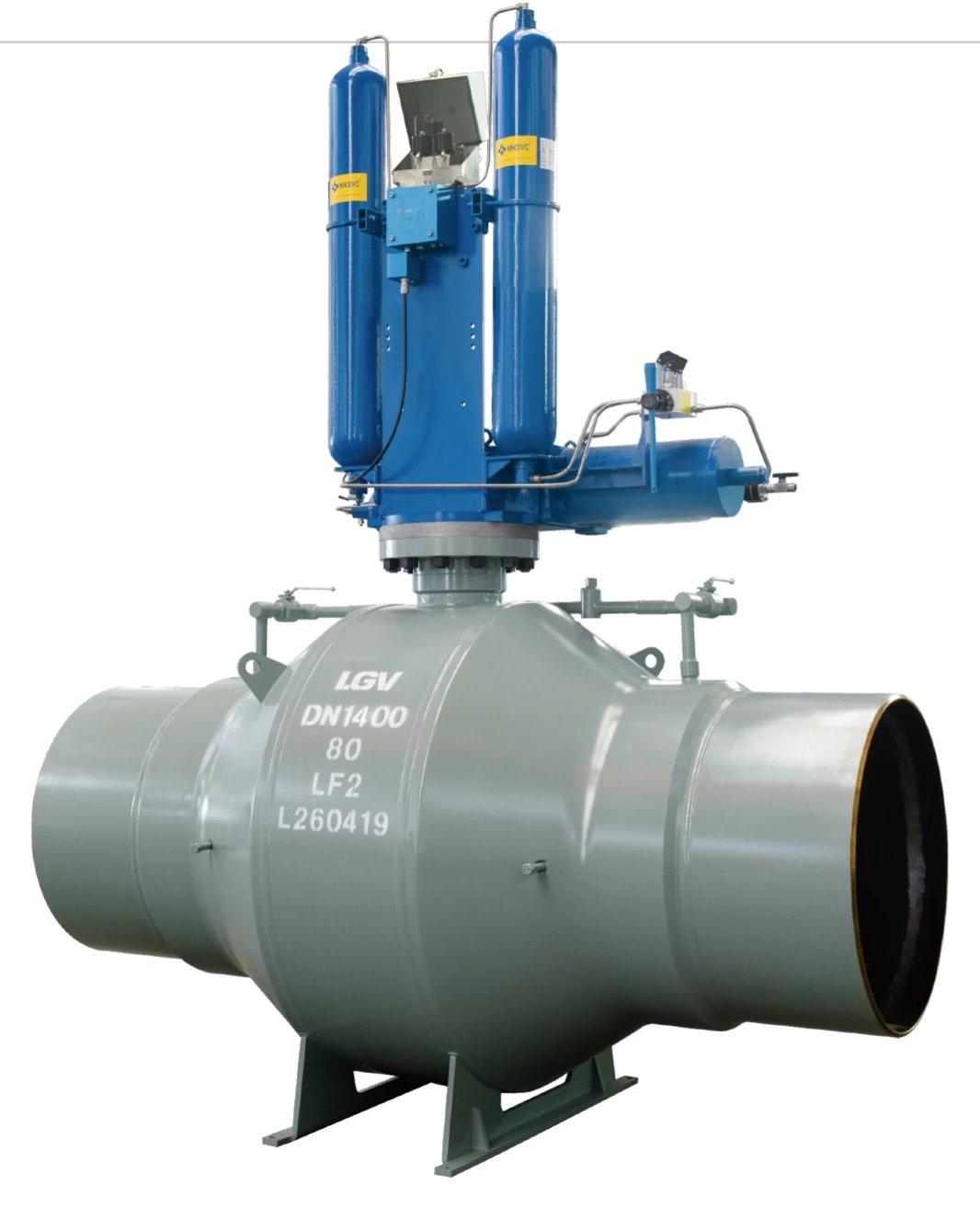
Catalog p. 84 · hydraulic operator
Válvula de esfera totalmente soldada hidráulica
Hydraulic-operated example; request the required operating pressure, torque and control details.
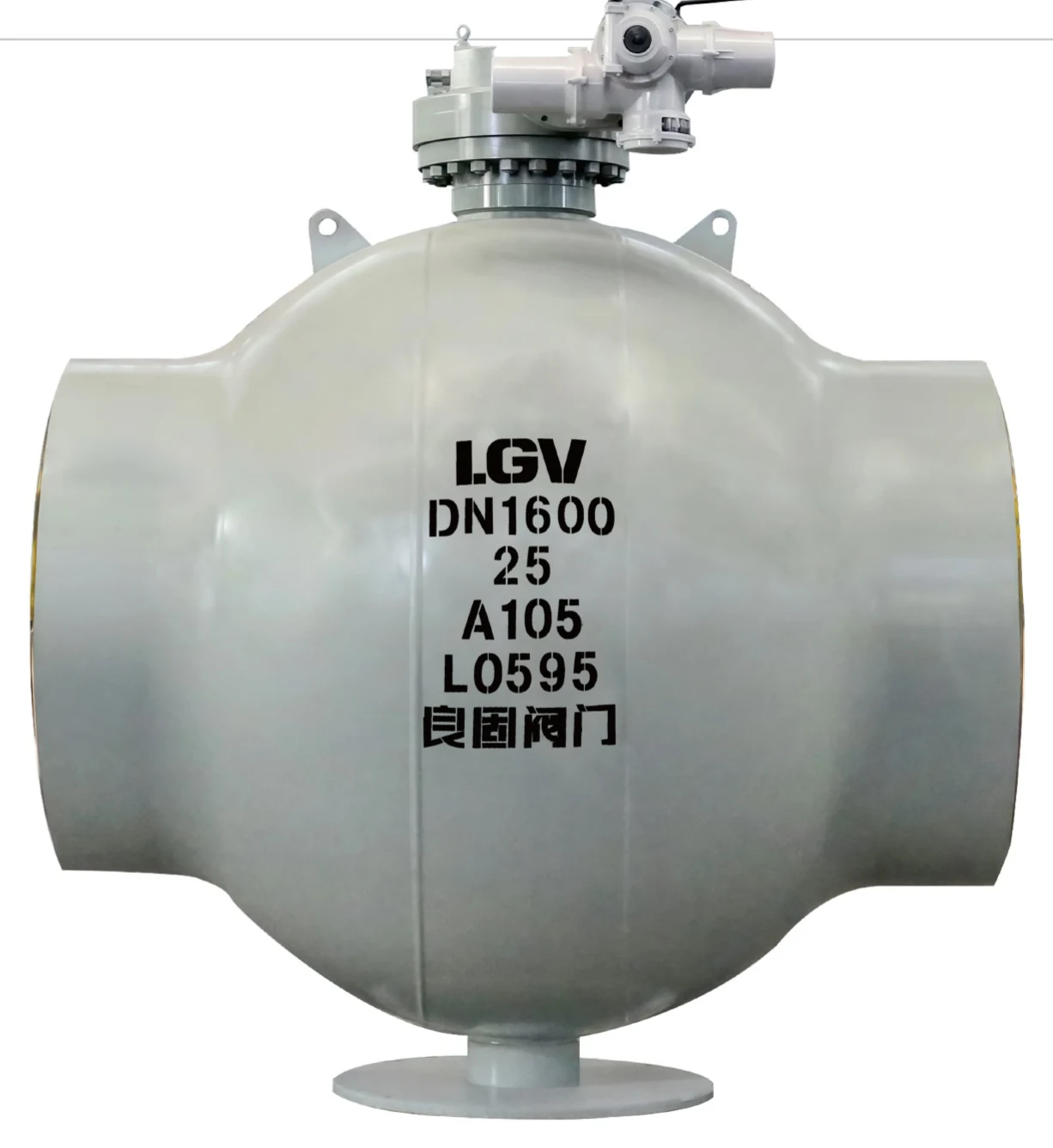
Catalog p. 84 · electric operator
Válvula de esfera totalmente soldada elétrica
Electric-operated example; define the electrical supply, control interface and required fail response.
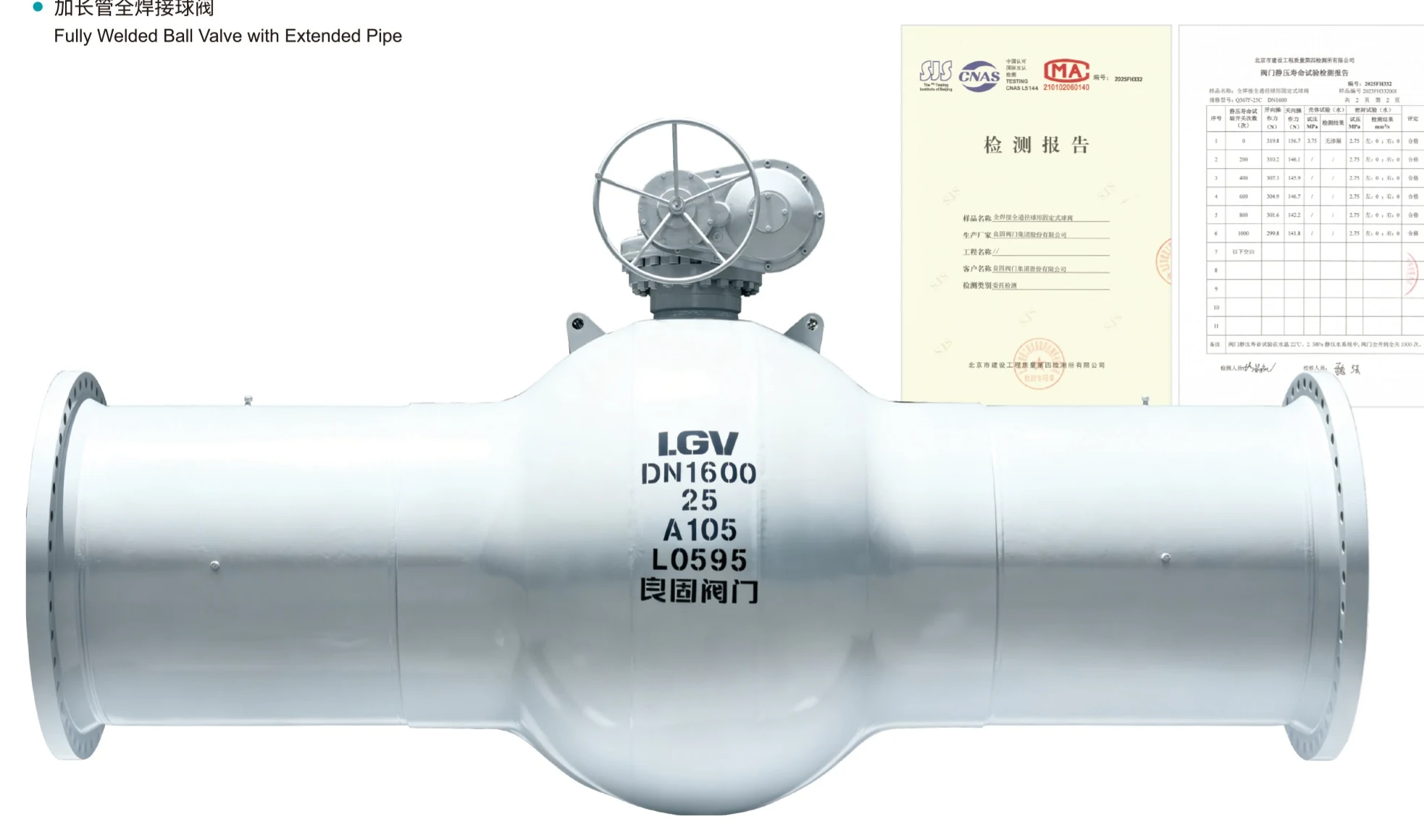
Catalog p. 85 · extended pipe ends
Válvula de esfera totalmente soldada com tubo prolongado
Extended pipe-end example. The catalog label does not specify an extended operating stem.
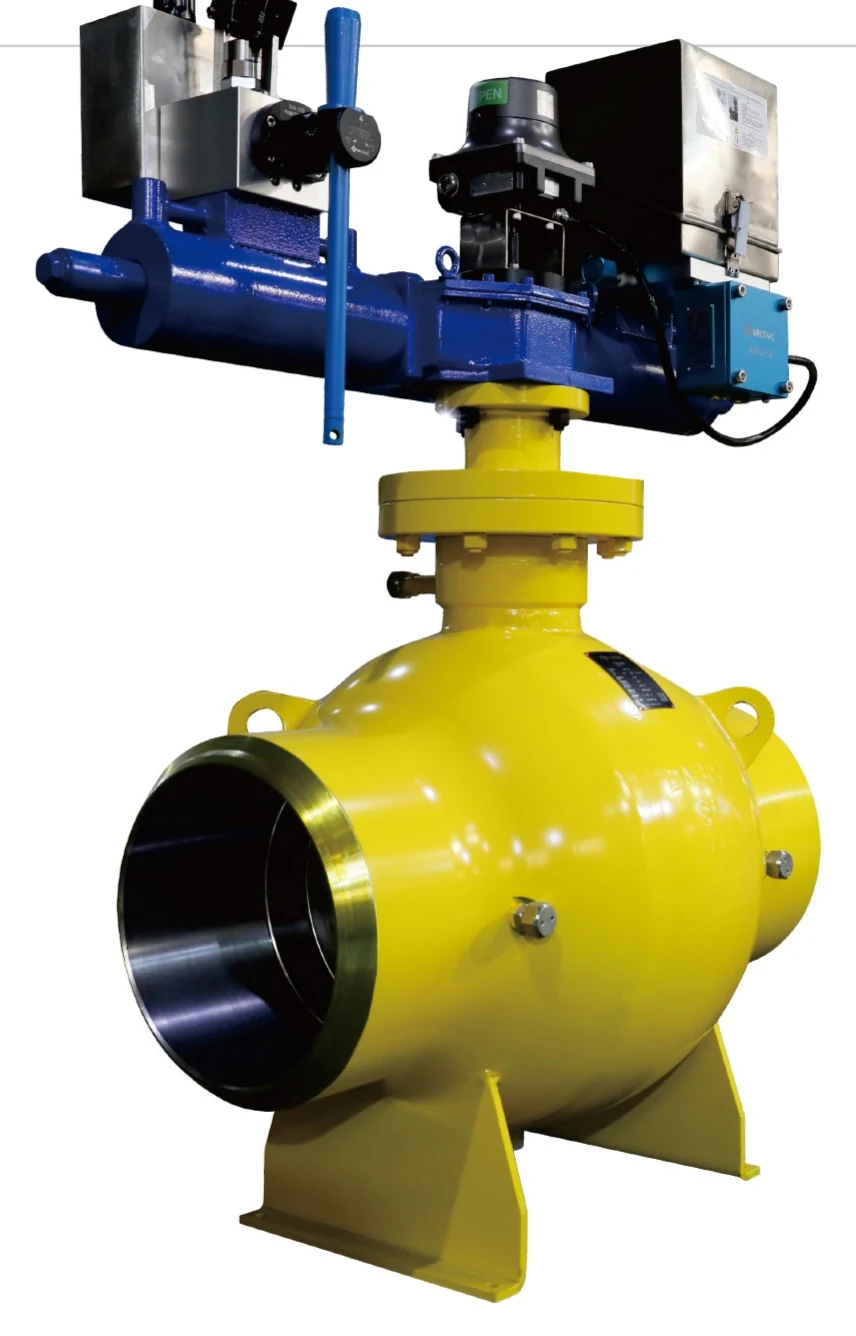
Catalog p. 85 · pneumatic operator
Válvula de esfera totalmente soldada pneumática
Pneumatic-operated example; specify air supply, shutoff time and position feedback.
Catalog p. 87 · named entry; see source PDF for its actual image
Válvula de esfera totalmente soldada com luva e duplo respiro
Sleeve and double-vent entry. Confirm port purposes, connection sizes and access in a product drawing.
Catalog p. 87 · third entry · direct-buried arrangement
Válvula de esfera totalmente soldada para enterramento direto
Buried-installation example; the valve, operator, protection and service-access package must be specified together.
Supplier catalog reference · PDF physical pages 84–87 (printed pages 157–164).
Selection by installation and duty
Which fully welded configuration fits your installation?
Above ground: start with the actuator type and reachable service points. Longer pipe ends: use the extended-pipe catalog entry when connection geometry is the issue, subject to the drawing. Direct burial: choose a specifically engineered buried arrangement when the pressure body sits below grade and operating and service access must remain reachable. A long pipe end is not a substitute for an extended stem.
| Selection | When it makes sense | What must be defined |
|---|---|---|
| Hydraulic / electric / pneumatic | Remote or powered line isolation with a defined control system | Torque at all operating cases, operating time, fail position, energy source, controls and environmental rating |
| Extended pipe ends | Field connection or spool geometry calls for longer factory-provided pipe sections | End preparation, material/pipe compatibility, length and permitted field welding/PWHT procedure |
| Direct buried | Valve body below grade while the operator and necessary service points remain accessible | Burial depth, stem/vent/drain extensions, coating, corrosion protection, soil loads, access and maintenance plan |
| Bore and isolation | Pigging, tight shutoff or two-way differential pressure creates a specific internal-design need | Minimum clear bore, seat arrangement, pressure direction, differential pressure and cavity-relief route |
Engineering review before selecting an orderable member
Three details that change the technical offer
A welded-body layout removes the bolted body split, but it does not remove stem seals, internal seats or the need to design for cavity pressure. The installation specification must address the actual end connection and future access before quotation.
1. Body welds versus pipe-end welds
“Fully welded” describes the pressure-containing body. Check the offered end preparation separately: a butt-weld connection needs matching pipe materials, wall thickness, bevel and an approved field welding procedure. Agree on valve opening position, protection from weld debris and thermal limits with the product-specific installation instructions. Never apply another manufacturer’s welding temperature limit to this catalog item.
2. Seat arrangement and cavity relief
Trapped fluid in the body cavity can expand when heated. Ask for the actual single- or double-piston seat concept, pressure-relief path, seat-leakage criteria and drain/vent arrangement on the offered drawing. A catalog reference to “double vent” does not prove double-block-and-bleed performance or automatic cavity relief.
3. Inspection and future repair access
A welded shell is not normally dismantled on-site like a split body. Plan how stem seals, operators, drains or injection connections can be accessed, and how a damaged seat would be dealt with. For buried service, define accessible terminations before backfill; request the actual IOM and applicable test records rather than assuming “maintenance-free” operation.
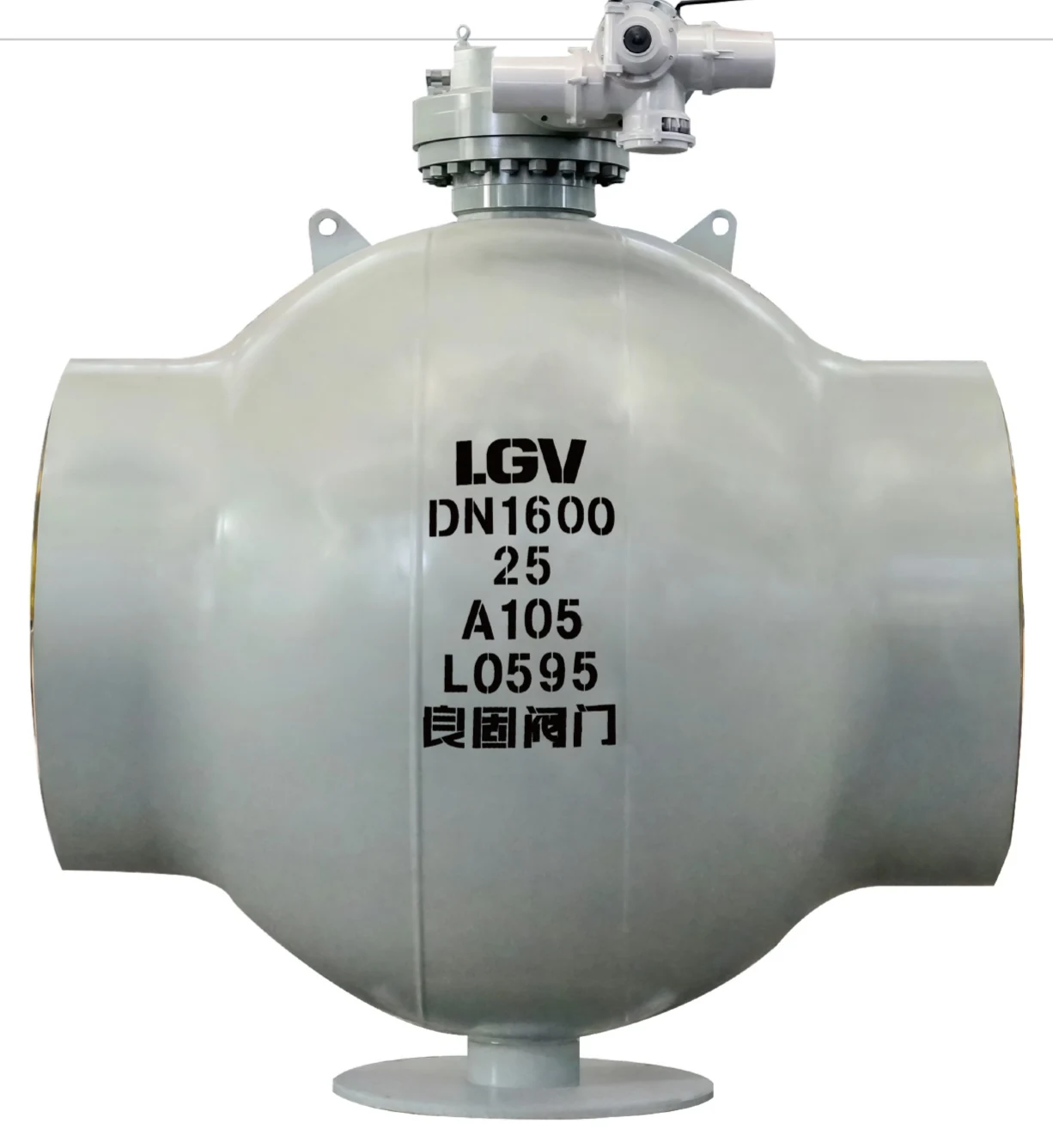
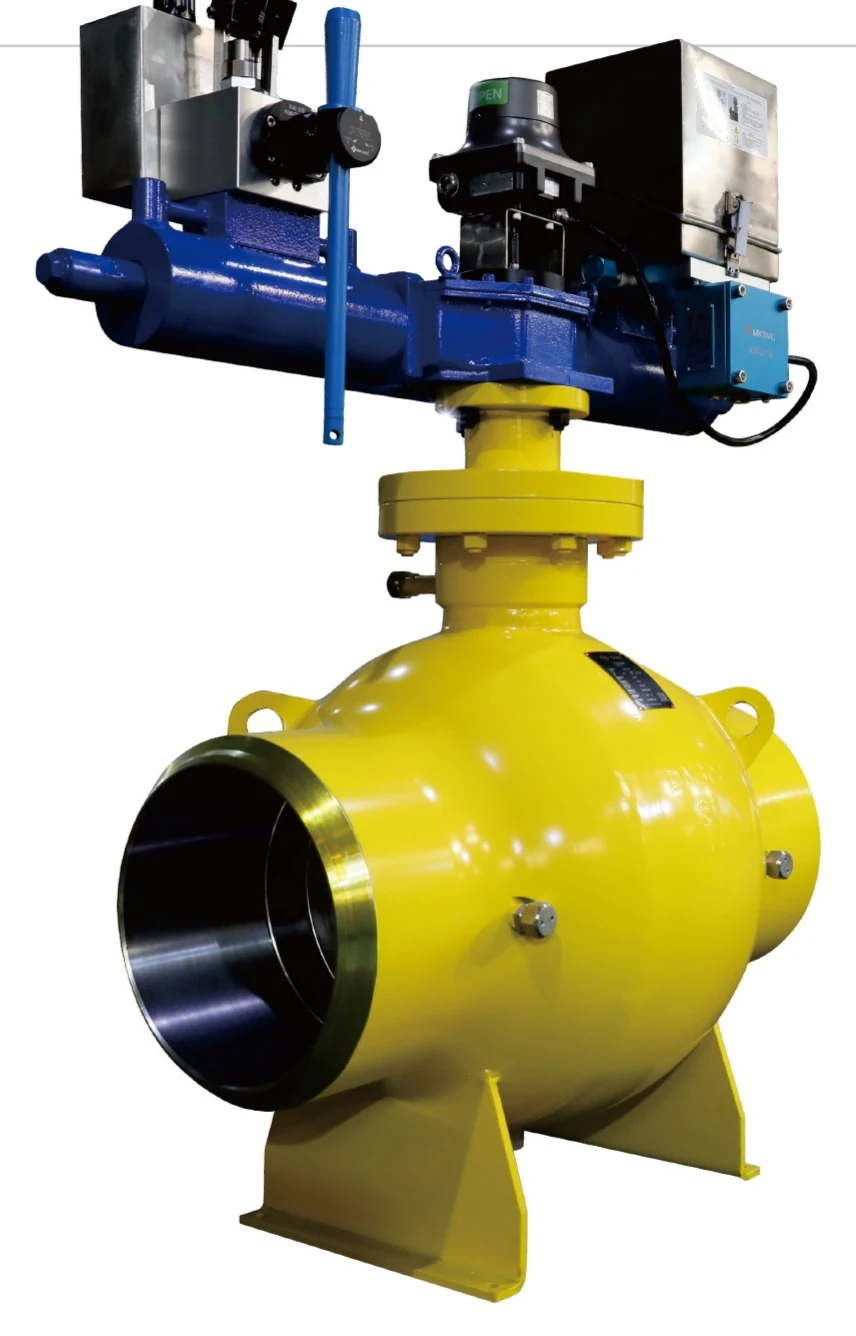
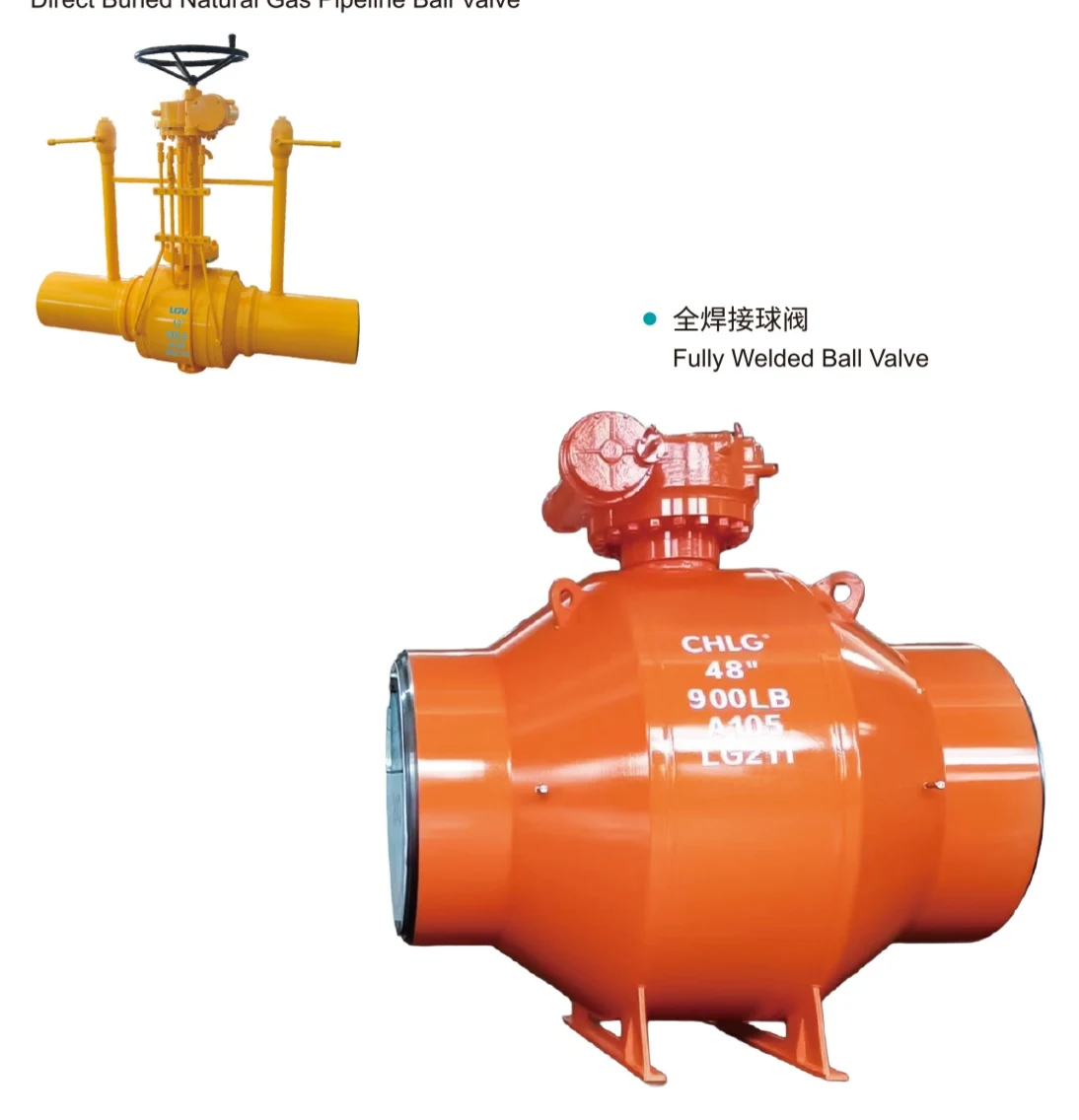
Photo reference: the gray electric unit and yellow pneumatic unit repeat the corresponding catalog examples above; the third image is a two-product montage from catalog p. 87, not the sleeve-and-double-vent product. Product-specific specifications remain to be confirmed.
Pipeline duty and life-cycle planning
When is a fully welded body the right tradeoff?
A fully welded pressure shell can be appropriate where removing a bolted body joint is valuable and routine body opening is not planned. It is não proof that every configuration is buried-service rated, piggable or suitable for a specific medium. If frequent internal seat replacement is expected, compare a service-access design from the Válvulas de esfera family instead of choosing by body joint count alone.
Below-grade pipeline stations
Use the direct-buried route only if the selected unit provides the needed stem length, grade-level access to operator and service fittings, coating and corrosion protection. Determine who will repair field coating and verify access after backfill.
Transmission lines and pigging
For gas or liquid lines, define fluid composition, pressure-temperature extremes, differential pressure, shutoff expectation and whether a cleaning or inspection pig must pass. A “fully welded” label is not a guaranteed full bore: verify minimum clear passage on the offered drawing.
Remote or emergency isolation
Choose hydraulic, electric or pneumatic actuation against available utilities and fail-action requirements. Specify the worst-case differential pressure for torque sizing, required operating time and local/manual override; supplier must verify the actuator and accessories as a package.
Related product decisions
Continue to the right product or project resource
The six linked catalog entries lead to distinct product records, but not every entry has a separately verified matching photo on this page. Choose by installation and operating arrangement; for another body construction, return to the parent ball-valve family.
Compare ball valve constructions
Compare welded-body, floating, trunnion, top-entry and other ball-valve options before choosing a series.
Browse the product portfolio
Return to the product overview when the required valve type is not yet fixed.
Review pipeline application conditions
Match medium, station access and isolation duty to project requirements; application pages are not product certifications.
Read technical selection resources
Review pressure, connection and maintenance principles, then request the exact product drawing.
Purchasing and technical submittals
Compare bids on the same valve and document basis
Two quotations are comparable only if they describe the same installation, service cases and deliverables. Ask each supplier to identify the offered catalog entry, available configuration, exclusions and required inspection records. Published catalog images do not establish certification of the offered valve.
Confirm the physical scope
Obtain the GA/dimensional drawing, end-preparation details, bore size, stem or pipe extensions and actuator/accessory list. State whether site welding transition pieces, coating and extended fittings are included or are separate work.
Confirm the design and test basis
Specify design and operating pressure/temperature, fluid composition, required leakage performance, pressure class, and each applicable project standard by edition, scope, and required addenda or errata. ISO 14313:2025 supplements API 6D, 25th edition (2021): the API requirements apply together with the ISO additions, rather than acting as interchangeable options. Clarify which subsequent API updates the project requires, and request order-specific evidence of the offered valve configuration, applicable requirements, inspection, and testing. A catalog reference alone does not establish compliance or certification.
Agree on the records before production
List the requested ITP, materials/traceability, weld inspection, pressure and seat tests, actuator function checks, coatings and IOM documents as applicable. Confirm what will actually be delivered with this valve; do not treat generic quality-page links or catalog logos as an issued certificate.
Frequently asked technical questions
Fully welded ball valve questions
These answers help define the inquiry; the supplier must still substantiate the selected configuration on its datasheet and drawing.
What project data is needed to specify Fully Welded Ball Valves?
State the isolation or control duty, bore requirement, flow direction, pressure and temperature cases, cycling frequency, seat/shutoff expectation, cavity-relief requirement and actuation method.
Does the Fully Welded Ball Valves series name define every available size, pressure class and material?
No. A series name identifies a documented ball valve selection route, but the orderable size, rating, material, connection, standard and operating limits must be confirmed on the offered datasheet and approved order drawing.
How should buyers compare products within the Fully Welded Ball Valves series?
Compare body construction, entry and maintenance access, bore/port geometry, seat concept, end connection, actuation, cavity-pressure management and required project documents.
Which documents should be requested before order approval?
Request the offered datasheet, general arrangement or dimensional drawing, material and trim schedule, applicable inspection and test plan, required certificates, marking details and the final order-specific document list.
Send an RFQ
Request a fully welded ball valve configuration review
Identify the catalog example that is closest to your need, then provide the pipeline duty and installation data you have. For buried projects, include a sketch showing grade level, operator location and service fittings. If the end connection is to be welded, supply the line-pipe specification and wall thickness. Unknown values can be stated as pending; VALMORA will need the exact product documentation to confirm an offer.
- Exact product or series identity under review
- Design and operating pressure and temperature cases
- Medium, composition, phase and solids where relevant
- Nominal size, end connection and installation orientation
- Valve duty, operating frequency and actuation requirements
- Applicable project specification and required standards
- Drawings, testing, inspection and documentation requirements
- Unknown fields clearly marked for technical confirmation