

Oil & gas valve applications
Oil & Gas Valves: Select by Service and Function
VALMORA supports valve inquiries for oil and gas production, gathering, processing, pipeline transportation and storage. The first decision is what the valve must do—shut off, prevent reverse flow or modulate flow—not simply where it will be installed.
For each tag, define the fluid, pressure-temperature conditions, installation and required documents before selecting a valve configuration. Explore the product families below or send an application-specific inquiry.
Where the valve operates
Production, process and pipeline service need different answers
An oil and gas valve schedule should identify the equipment and duty at each tag. Similar-looking valves may have different allowable service, flow-path, operating and documentation requirements.
Production and gathering
Multiphase fluids, sand, produced water and possible H2S exposure affect sealing and material review. For wellhead or tree equipment, identify that scope separately; a general pipeline valve is not automatically an acceptable replacement.
Processing and terminals
Block isolation, modulating control and backflow protection need different valve designs. If the duty is throttling, supply actual flow and pressure-drop cases rather than selecting an on/off valve by nominal size.
Transmission and storage
For piggable lines, check the actual clear passage through the valve, not just nominal pipe size. Buried access, remote shutdown, seat-leakage criteria and maintenance strategy can change the preferred configuration.
Inputs that change the decision
What the specification needs before a valve is shortlisted
Start with the P&ID tag and functional duty, then provide normal and credible design or upset cases. The items below are buyer-supplied service inputs, not VALMORA performance ratings. Unknown values can remain open in the inquiry.
| Requirement | Dados do comprador | Por que isso altera a escolha |
|---|---|---|
| Location and duty | Facility, tag, on/off, control, reverse-flow or safety function; consequence if it fails | Determines the relevant product family and review owner |
| Pressão e temperatura | Design and operating limits, minimum temperature and differential pressure when operating | Screens the pressure boundary, seals and actuator load; pressure class alone is insufficient |
| Fluid and exposure | Gas, liquid or multiphase; water, H2S, CO2, chlorides, solids and other contaminants. If sour service is specified, provide H2S partial pressure (or a justified service-environment basis), temperature, relevant aqueous-phase chemistry and the purchaser materials specification | Defines material, trim and soft-part assessment; H2S suitability requires an actual environment basis |
| Flow and operation | Required bore or pig passage, cycling, ESD action, operating speed and available utilities | Separates isolation from modulation and informs actuation |
| Physical interface | NPS/DN, end connections, pipe specification, orientation, burial and access | Checks fit, installation and future service access |
| Acceptance and records | Specified standards and editions, leakage criteria, special tests, inspection and documents | Makes the offer and any exceptions comparable before purchase |
Real product routes
Find the valve family that fits the duty
Use these category or series pages for available designs and configuration detail. An oil and gas application alone does not establish a particular valve’s pressure rating, materials or qualification.
Válvulas de esfera totalmente soldadas
A pipeline isolation route when welded-body construction fits the installation strategy. Verify the offered bore, ends, access and operating conditions.
Válvulas de esfera
For on/off isolation, compare bore, seat type, operating differential pressure and manual or actuated operation.
Válvulas gaveta
For isolation duty, verify opening geometry, seat arrangement and stem access. Not every gate valve is through-conduit or piggable.
Válvulas macho
A separate shutoff route where a specified plug design suits the fluid and operating duty. Check the actual trim, torque and maintenance method.
A practical routing example
Piggable pipeline isolation is not a wellhead specification
Illustrative case, not a customer project: A buried liquid pipeline must allow in-line inspection pigs and close remotely in an emergency. Start with an appropriately specified full-opening ball valve or a verified through-conduit gate valve. Do not treat “fully welded,” nominal size or a slab-gate photo as proof of clear pig passage. The offered bore geometry, end connections, actuator, shutdown action and buried-access arrangement must all match the line specification.
If the same request is actually for a wellhead or tree assembly, stop using the pipeline shortlist as the default: identify the exact wellhead equipment and applicable procurement standard before seeking an offer. For modulating plant duty or reverse-flow protection, use the control or check valve categories instead of an isolation-only route.
Next product routes: Válvulas de controle for modulating duty · Válvulas de retenção for reverse-flow protection · Válvulas de esfera · Válvulas gaveta. For emergency shutdown (ESD), specify the required isolation and fail action. Overpressure relief is a separate protective duty: see Válvulas de segurança e alívio. The relieving scenario, set pressure, required relieving capacity and governing code require separate project-engineer review; this page assigns no set point or relief capacity. For wellhead/tree equipment, submit the exact equipment identity and requested standard in the project RFQ; do not substitute a generic “oilfield valve” label.
Standards are application-specific
API 6D and API 6A do not describe the same purchase
Name the equipment first, then specify the edition, project amendments and acceptance criteria. A standard in a specification is not a claim that every product shown on this website complies with it.
| Reference | Where it may apply | What the buyer should verify |
|---|---|---|
| API 6D | Pipeline valve applications where specified by the project | Confirm the offered design, specified edition/addenda and test records. If API Monogram production is required or claimed, independently verify the actual manufacturer/facility, current API license and product scope. |
| ISO 14313:2025 (if specified) | Pipeline valves when the purchaser adopts this supplement to API 6D, 25th edition | Check the required API 6D edition, ISO 14313:2025 additions and purchaser supplements together against the offered valve and records; reference alone does not establish conformity. |
| API 6A | Wellhead and Christmas tree equipment, including covered valve and actuator assemblies | Confirm the wellhead/tree equipment identity, required product specification level (PSL), edition and records; do not substitute a 6D listing. Apply the same independent manufacturer/facility and current license/scope check only if API Monogram production is required or claimed. |
| ASME B16.34 | Construction and pressure-temperature rating context for valves within its scope | Check the actual material, valve class, design temperature and applicable edition, not class alone. |
| ISO 15156 / NACE MR0175 | Materials assessment for defined H2S-containing production environments where applicable | Provide the environment and request material/processing suitability evidence for specified parts; H2S present is not automatic conformity. |
If the project requires fire-test, fugitive-emissions or other special qualification evidence, identify the exact standard, edition and acceptable test documentation for the quoted configuration. A catalog image or a generic valve family cannot establish that evidence.
Catalog photos, used with context
These oilfield valve images show different actuation layouts
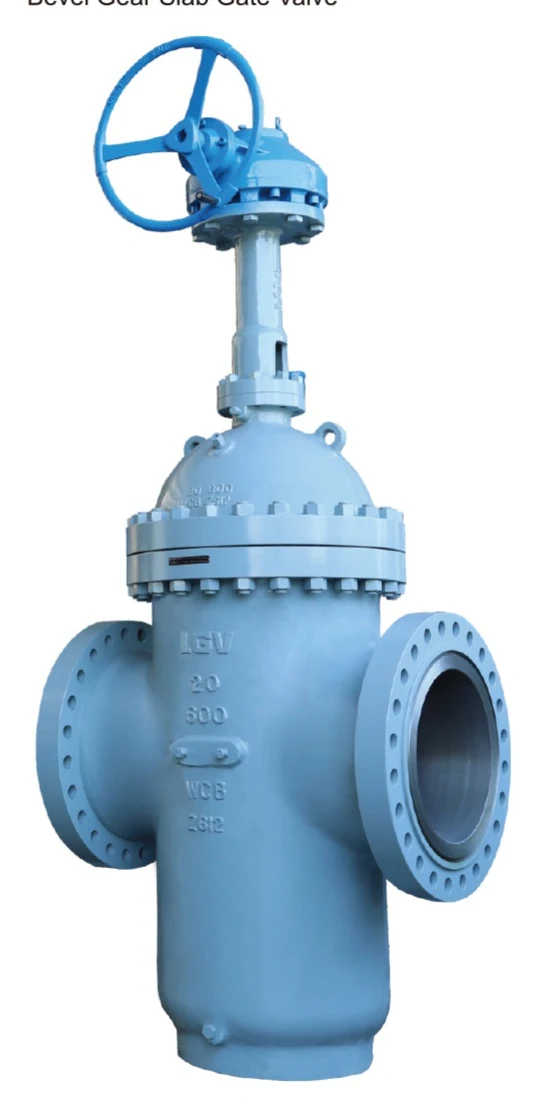
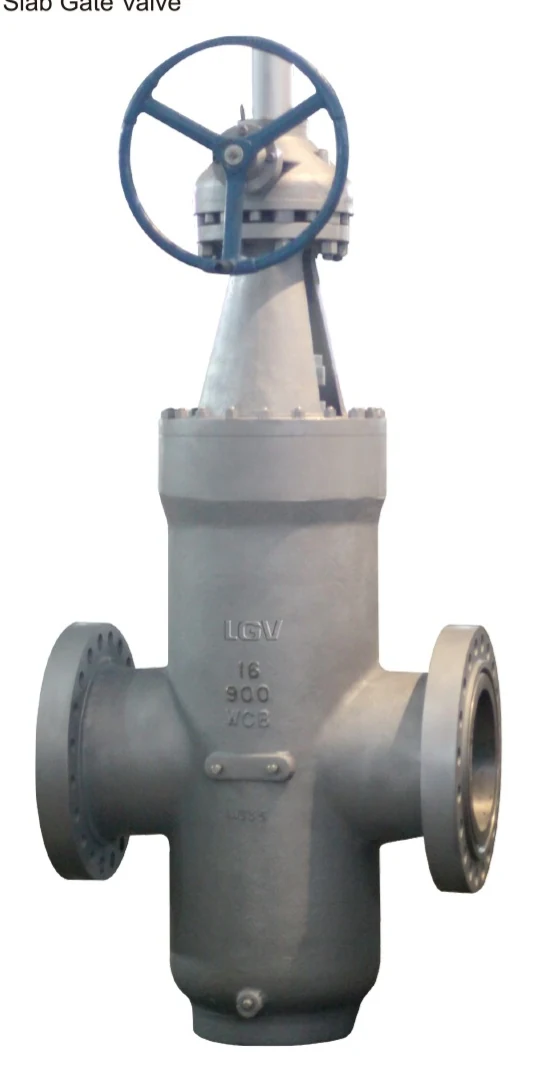
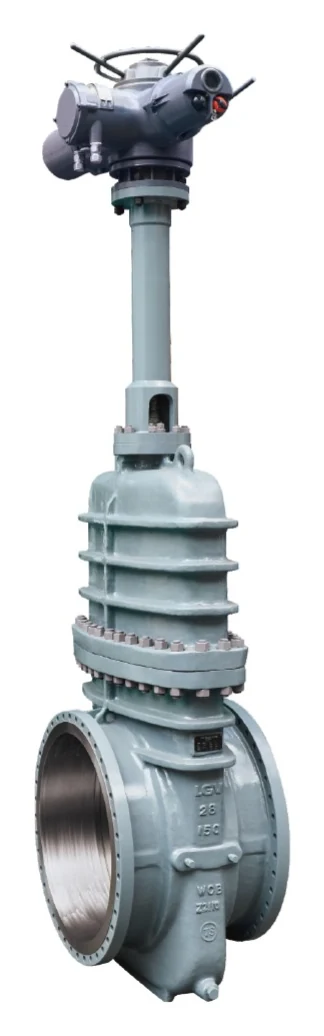
The images below come from a supplier oilfield-valve catalog, not an identified VALMORA installation. The left image shows a gray high-pressure bevel-gear slab gate valve; the right shows an electrically actuated slab gate valve. The blue bevel-gear slab gate valve is pictured in the hero. They illustrate design and actuation differences only—not a confirmed offered size, material, pressure rating, API license or project installation.
What a quote needs to resolve
Compare the offered valve and its documentation—not just a price
For each tag, ask which drawings, material records, inspections and test results are included in the quote, which are conditional and which are unavailable. Agree revisions and purchaser witness points before the purchase order.
| Deliverable | Check against the offered tag | Agree before order |
|---|---|---|
| Tagged datasheet and GA | Valve type, size, ends, bore, materials, actuator and revision match the tag | Included / pending / unavailable |
| Material information | Pressure-retaining and specified wetted parts, heat treatment and traceability where required | Included / pending / unavailable |
| Inspection and tests | Agreed test procedures, leakage criteria, ITP and hold/witness points are plans. Where specified, completed pressure and functional test reports must identify the tested valve by tag or serial number, the test method, results and date; a plan is not a completed test record. | Included / pending / unavailable |
| Special evidence | Only project-required fire, emissions, sour-service or third-party documents with configuration scope | Verified / pending / unavailable |
| Exceptions and final dossier | All technical deviations, document index, responsible parties and final revisions | Accepted / open / unavailable |
For related supplier information, see Fabricação, Controle de qualidade e Downloads. These are information routes, not substitutes for records for an offered valve.
Send a tag-level inquiry
Request an oil & gas valve review
Describe the facility, equipment tag, valve function, service range and required documents in the form. Note available P&IDs or datasheets for follow-up transfer; the form does not accept file uploads. If an operating value is unknown, identify it as open rather than guessing.
- Facility, unit, equipment tag and valve function
- Operating/design pressure and temperature cases
- Fluid, phase and relevant contaminants (including H2S, CO2 or solids)
- Line size, ends, required bore/pigging and installation
- Actuation, fail action, operating frequency and utilities
- Governing standards/editions, tests and submittal requirements
- Known drawings or datasheets available for later transfer
- Outstanding engineering inputs explicitly marked open