
Selección de válvulas de mariposa de alto rendimiento
Válvulas de mariposa de alto rendimiento
Las válvulas de mariposa de alto rendimiento suelen utilizar doble excentricidad la geometría del disco y del eje para reducir el roce del asiento durante la apertura. Pueden ser adecuadas para servicios con condiciones de cierre, ciclado o temperatura más exigentes que una válvula concéntrica convencional, pero la idoneidad la determinan el asiento y la clasificación de presión-temperatura reales, no la etiqueta del producto.
Utilice esta página de serie para definir el servicio y preseleccionar el diseño adecuado. Una construcción de triple excentricidad, normalmente con asiento por par, es una ruta de selección independiente cuando el servicio especificado así lo requiere.
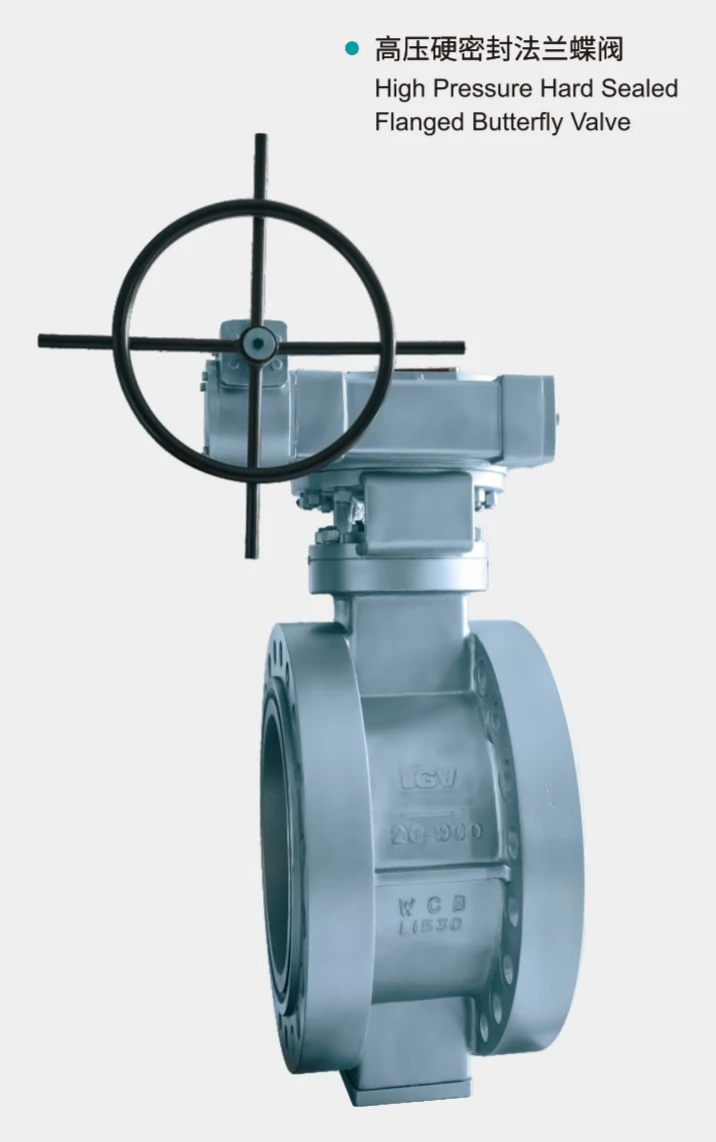
Producto mostrado: Válvula de mariposa con bridas de alta presión y sellado duro (página 97 del catálogo). La foto identifica este artículo; la geometría de excentricidad, la clasificación de presión, la construcción del asiento y la prueba de cierre deben confirmarse aún para el modelo propuesto.
SELECCIÓN DE DISEÑO
Dónde encajan las válvulas de doble excentricidad de alto rendimiento
La primera decisión es el tipo de cierre: una válvula concéntrica convencional puede seguir siendo la opción más sencilla cuando su asiento, su cierre y sus límites de presión-temperatura documentados cumplen con el servicio. Un diseño de doble excentricidad merece evaluarse cuando importa el menor contacto con el asiento durante el ciclo o un régimen de servicio más exigente. Si la temperatura especificada o el requisito de estanqueidad quedan fuera de la construcción de asiento disponible, compare un diseño de triple excentricidad especificado por separado en lugar de suponer que una clase de presión superior corrige el sellado.
Las páginas de catálogo disponibles no incluyen una tabla de ratings para modelos de doble excentricidad. Obtenga el plano, la construcción del asiento y los datos de presión-temperatura ofrecidos antes de fijar la especificación.
| Ruta de diseño | Cuándo incluirla en la preselección | Decisión que debe verificarse |
|---|---|---|
| Concéntrica, con asiento resiliente | Aislamiento general cuando el medio, la presión, la temperatura y el ciclado especificados están dentro de los límites publicados de esa válvula. | Compatibilidad con elastómeros, rango de presión-temperatura, cierre y ajuste de brida/disco. Ver la familia de válvulas de mariposa. |
| De alto rendimiento, habitualmente de doble excentricidad | Ciclado frecuente o un servicio que requiere una disposición de asiento/sellado diferente y un menor contacto disco-asiento durante el recorrido. | Confirme la geometría de excentricidad real, los materiales del asiento y de la empaquetadura, la clasificación a temperatura, el sentido de cierre y el ensayo de fugas requerido. |
| Triple excentricidad, serie separada | Considere dónde se requiere una disposición correctamente diseñada con asiento por par, a menudo con asiento metálico, para las condiciones especificadas. | Solicite su propia documentación de presión-temperatura, ensayos y trim; no es un sinónimo ni una mejora automática para cualquier servicio. Revisar válvulas de triple excentricidad. |
FOTOS DEL CATÁLOGO Y RUTAS EXACTAS DE PRODUCTO
Lo que muestra el catálogo y lo que no
Las fotografías del catálogo ayudan a identificar el cuerpo, el accionamiento y el tipo de servicio; no pueden validar la clasificación de presión-temperatura ni el ensayo de fugas. Compare la válvula con bridas de sellado duro con la válvula de ventilación claramente diferente que aparece a continuación antes de seleccionar una configuración de aislamiento de proceso.
Página 97 del catálogo. A named flanged, hard-sealed butterfly valve. Its caption does not specify double-offset geometry, exact seat materials, allowable pressure at temperature or shutoff test. Request its product-level information before using it in a high-performance comparison.
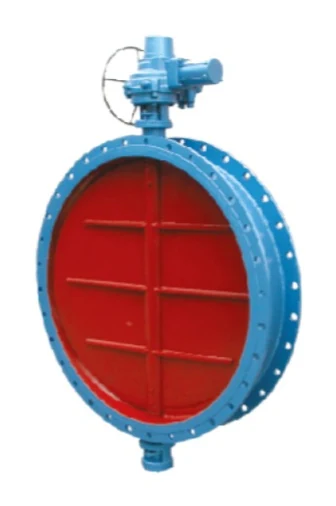
Catalog page 99. This blue-and-red valve is for ventilation service and is not a triple-offset wafer valve. Do not substitute it for a process-isolation valve unless the exact product is demonstrated to meet the specified pressure, temperature and shutoff criteria.
Need a documented triple-offset configuration instead? Review the separate triple-offset series or the individually named electric fully welded y metal-to-metal wafer products. Those links identify other catalog records; their specifications are not transferable to this series.
APPLICATION FIT
Three service conditions that change the choice
High-performance is a design-selection term, not a universal pressure or temperature rating. Each case below changes the question to ask of an actual offered valve.
Repeated operation and tight isolation
When the valve cycles often, reduced seat rubbing may favor a suitable double-offset design. Compare the stated cycle duty, required leakage level and allowable differential pressure; do not assume a catalog photograph proves cycle life.
Hot or thermally cycling service
Check the seat, packing and body rating at both normal and upset temperatures. If the proposed seat system cannot meet the specified temperature, exclude that configuration and evaluate another documented seat design or the triple-offset route.
Automated isolation or modulating duty
For automated on/off duty, size the actuator against the offered valve’s required torque over the full stroke, not only breakaway and seating torque. Check running and dynamic torque at the governing flow and differential-pressure conditions, available actuator output, required fail action, stroke time, and the supplier’s specified sizing allowance. For throttling, request the valve’s control characteristic, allowable operating range, and matching actuator/positioner performance rather than assuming that an on/off butterfly valve is suitable for control.
AVOID WRONG CONFIGURATIONS
Four mistakes to prevent before quotation
These errors change the specified hardware or the acceptance basis, rather than merely changing the wording of the inquiry.
- Using “high performance” instead of a model-specific seat and pressure-temperature rating
- Assuming the gray hard-sealed flanged catalog image proves double-offset construction
- Claiming bidirectional tight shutoff, fire-safe status or a leakage class without an applicable test basis
- Ignoring flange drilling, face-to-face dimension and disc sweep clearance before installation
SPECIFICATION QUESTIONS
Before you approve a high-performance valve quote
Use these answers with the specific offered drawing, seat details and test documents; a series label or a catalog image is not an orderable configuration.
What project data is needed to specify High Performance Butterfly Valves?
State the isolation or throttling duty, line size, pressure and temperature cases, shutoff expectation, disc/seat compatibility, flange interface, flow direction and actuation method.
Does the High Performance Butterfly Valves series name define every available size, pressure class and material?
No. A series name identifies a documented butterfly valve selection route, but the orderable size, rating, material, connection, standard and operating limits must be confirmed on the offered datasheet and approved order drawing.
How should buyers compare products within the High Performance Butterfly Valves series?
Compare body pattern, offset concept, seat and disc materials, face-to-face and flange interfaces, pressure-temperature envelope, operating torque and maintenance access.
Which documents should be requested before order approval?
Request the offered datasheet, general arrangement or dimensional drawing, material and trim schedule, applicable inspection and test plan, required certificates, marking details and the final order-specific document list.
CONFIGURATION REQUEST
Send the service conditions for a valve match
Tell us whether you need on/off isolation or throttling, and whether a high-performance double-offset design is required or only being considered. Attach a valve schedule if available; unknown fields may be left for technical clarification. A review should return a named proposed configuration with its rating, sealing, connection and document basis.
- Preferred design (if any) and whether alternatives are permitted
- Design, normal and upset pressure-temperature cases; maximum shutoff differential
- Medium, composition, phase and solids where relevant
- Nominal size, end connection and installation orientation
- On/off or throttling duty, cycling frequency, actuator/fail-action needs
- Applicable project specification and required standards
- Required shutoff direction, leakage test, drawings and inspection documents
- Unknown fields clearly marked for technical confirmation