
Catalog-documented product
Ammonia Angle Globe Valve
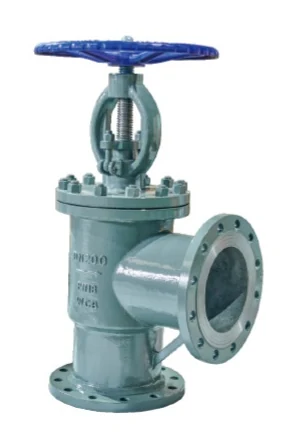
An angle-pattern globe valve identified in the supplier catalog for ammonia service. The selection question is whether its body layout, flow capacity, sealing arrangement and materials fit the actual duty. The catalog confirms product identity and angle construction—not a pressure rating, size range, material grade or approved operating envelope.
- Valve type: Globe Valve
- Design / construction: Angle
- Service / medium: Ammonia
Product identity
Catalog identity and scope
This page represents one documented catalog identity. It does not replace the parent product category and it does not claim an unverified model, rating or project history.
Product family
Globe Valve. This is the parent commercial route for category-level selection.
Catalog section
Integrated Product Series. This is the section heading printed above the product entries on PDF page 113.
Evidence source
Lianggong supplier catalog, English PDF, page 113. The page identifies two illustrations under the Ammonia Angle Globe Valve label.
Catalog evidence
Catalog-documented product data
Only properties stated in the supplier catalog are listed as confirmed. The catalog heading and product label do not establish an orderable model, pressure class, dimensional range or certification.
| Field | Catalog-documented value | Evidence status |
|---|---|---|
| Valve type | Globe Valve | Verified — PDF catalog label |
| Design / construction | Angle | Verified — PDF catalog label |
| Service / medium | Ammonia | Verified — PDF catalog label |
| Catalog section | Integrated Product Series | Verified — PDF page heading |
| Catalog source page | PDF page 113 | Verified — recovered catalog page |
Values not shown here remain unconfirmed. Before purchase, use a configuration-specific datasheet and approved order drawing—not the product title or catalog illustration—to verify the offered valve.
Selection decision
When an angle-pattern globe valve fits the duty
Angle construction is a piping-layout choice, not a complete performance specification. Compare the actual valve’s flow data and installation drawing with the line duty before selecting it.
When the angle pattern is worth evaluating
- The piping route changes direction at the valve and the body pattern may simplify the run; verify end dimensions and maintenance clearance on the drawing.
- For R-717 wet-suction return piping, ASHRAE discusses angle valves or horizontally stemmed globe valves to reduce liquid pockets and pressure loss; apply this only to the relevant refrigeration arrangement.
- The manufacturer's flow arrow and permitted installation orientation can be followed in the actual piping layout.
When another design or sizing review is needed
- The pressure-drop budget is tight and the offered valve has no verified Cv/Kv or pressure-drop data at the required opening and flow.
- The duty requires continuous automatic modulation, low-noise operation or cavitation/flashing assessment; provide operating cases for a control-valve sizing review.
- The verified pressure-temperature envelope, materials, sealing arrangement, end connections or installation orientation do not match the project.
Engineering review
What to specify before ordering
To turn the catalog identity into a quote-ready valve, provide the conditions that determine capacity, pressure boundary, materials and installation.
Valve duty
Define isolation, occasional manual regulation, bypass or continuous modulating control. State required shutoff performance, operating frequency and expected differential pressure. If continuous modulation is required, request a control-valve sizing review rather than treating a general globe-valve catalog label as a selected control assembly.
Operating envelope
Provide DN/NPS, minimum/normal/maximum flow, inlet and outlet pressure for each case, design pressure, minimum/normal/maximum temperature, fluid phase, transients or vacuum, and allowable pressure drop. A nominal pressure designation alone does not establish the pressure-temperature rating.
Materials and connection
Identify exact body, trim, disc/seat, stem, packing, gasket and other wetted-part material grades. State ammonia form and concentration, moisture, oil, solids or contaminants, plus end connection, dimensional standard, pipe OD/schedule and mating details.
Actuation requirement
Specify manual, gear, electric, pneumatic or hydraulic operation; travel frequency; available utilities and control signal; required fail position; flow direction; permitted stem orientation; insulation clearance; and maintenance access. Confirm these details from the offered manufacturer’s drawing.
Inspection and documents
Request the model-specific datasheet, GA/order drawing, bill of materials, material traceability, pressure and seat-leakage test criteria/results, product marking, applicable code and edition, and any inspection or witness scope. Confirm which records are included with the quotation.
Application boundary
Match the catalog identity to the real service
Ammonia is a service label, not a complete fluid specification. Material and sealing review changes with refrigerant versus process service, phase, concentration and contaminants.
Identify the ammonia service
State whether the medium is R-717 refrigeration refrigerant, anhydrous ammonia process service or aqueous ammonia. Identify liquid, vapor or two-phase duty, concentration, oil carryover, moisture, solids and other contaminants. Do not select wetted materials from the word “Ammonia” alone.
Apply refrigeration guidance only where relevant
For R-717 refrigeration, ASHRAE identifies soft seating for positive shutoff (no copper or copper alloy), back-seating, an arrangement for easy packing tightening, and preferably all-steel construction. Treat these as project checks, not proof that this product has those features. Request the exact bill of materials and seat/packing details. Read the ASHRAE ammonia refrigeration guidance.
Check flow direction and trapped liquid
Use the manufacturer’s flow arrow and permitted installation orientation; do not infer direction from a photograph. In refrigeration piping, review low points and any section that can trap liquid between closed valves. Warming trapped liquid can create damaging hydraulic pressure, so the piping design must address the required pressure-relief protection.
Visual evidence
Catalog image evidence
The supplier catalog shows this product in two illustrated appearances. The images support catalog identity and visible form only; they do not prove dimensions, material grades, pressure rating, internal trim, flow direction, certification or the final supplied configuration. Use the approved datasheet and order drawing for design and installation.

These links lead to separate globe-valve product identities, not confirmed substitutes for ammonia service. Compare each product’s own materials, pressure-temperature limits, flow data and documentation before considering it for the same duty.
Other globe-valve catalog records
Use the parent category for commercial selection and these related catalog records for identity-level comparison. No page inherits specifications from another product.
ASME High Pressure Self-Sealing Globe Valve
A separate ASME/high-pressure-named catalog record. Verify its actual standard, edition, pressure-temperature basis, materials and service scope independently.
High Temperature and High Pressure Self-Sealing T-Type Globe Valve
A separate T-type, high-temperature/high-pressure catalog identity. Do not transfer its construction or operating limits to this ammonia angle model.
High Pressure Self-Sealing Power Plant Globe Valve
A separate power-plant globe-valve identity. Review its own drawing and duty; the product name does not establish ammonia compatibility.
Buyer questions
Ammonia Angle Globe Valve FAQ
These answers distinguish the supplier-catalog identity from the engineering data needed to select and approve a specific configuration.
What does the supplier catalog confirm about this valve?
The supplier catalog identifies the product as Ammonia Angle Globe Valve, lists it as a Globe Valve with Angle construction and Ammonia service, and places it under the Integrated Product Series heading on PDF page 113. The reviewed catalog evidence does not provide an order-ready specification.
Does the catalog specify size, pressure rating or materials?
No. The reviewed page does not confirm a size range, pressure class, pressure-temperature limit, material grade, end connection, actuation or certification. Request the datasheet and approved drawing for the exact configuration offered.
Is an angle globe valve automatically the right choice for ammonia refrigeration?
No. An angle body may suit the piping route, and ASHRAE discusses angle valves for certain wet-suction return arrangements and pressure-loss considerations. Final selection still depends on flow, pressure drop, liquid trapping, flow direction, orientation and the specific valve’s data.
What should be included in the RFQ?
Identify R-717 versus other ammonia service, phase and concentration, valve duty, minimum/normal/maximum flow, inlet/outlet and design pressure, temperature range, allowable pressure drop, size, connection, materials and seals, actuation, drawing and inspection requirements.
Technical inquiry
Request a configuration review for Ammonia Angle Globe Valve
Reference this catalog identity and send the actual duty. If an input is not fixed, mark it as open so the offered configuration and remaining questions can be identified before quotation. For model-specific drawings or datasheets, use the technical document request page.
- Ammonia service: R-717 or another ammonia stream; phase, concentration and contaminants
- Duty and flow: isolation, manual regulation or continuous control; minimum/normal/maximum flow; inlet/outlet pressure
- Pressure and temperature: design pressure, operating range, transients and allowable pressure drop
- Mechanical fit: DN/NPS, end connection, pipe schedule, flow direction and installation orientation
- Materials and operation: body/trim/seat/packing/gasket grades; actuation and utilities
- Acceptance: quantity, drawings, applicable standards/editions, tests, traceability and witness points