
Catalog-identified gate valve · ASME descriptor
ASME Bevel Gear Gate Valve
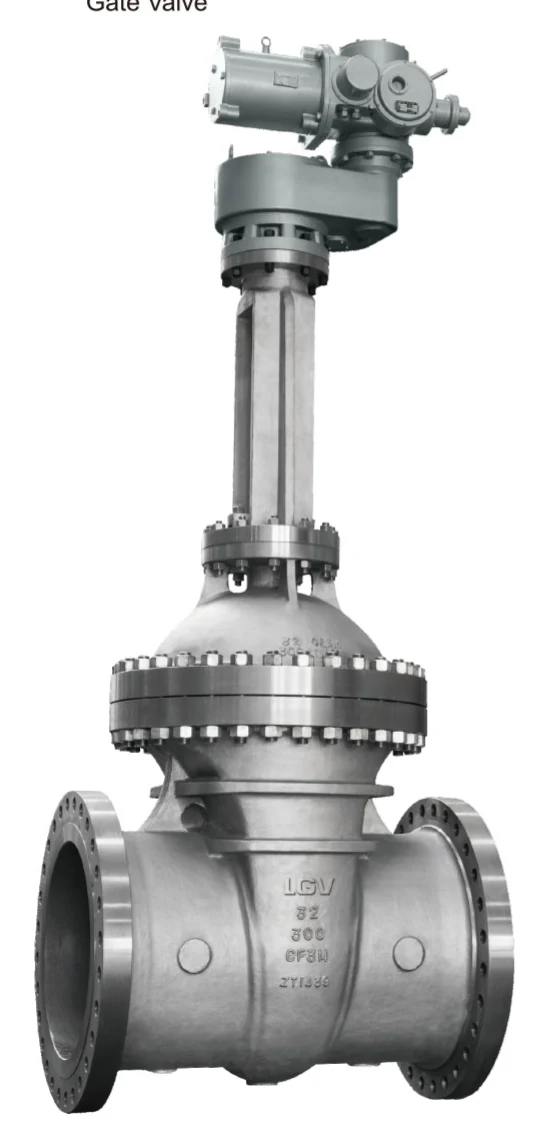
The ASME Bevel Gear Gate Valve is a catalog-listed gate valve with a bevel-gear operating arrangement. The catalog shows four illustrations under this exact name on physical pages 72, 75 and 76 (printed pages 133, 139 and 142). For an isolation application, first check the operating differential pressure, specified ASME documents and available space for the full valve stroke and operator—not just the nominal valve size.
- Gate valve: on/off isolation selection
- Operator descriptor: bevel gear
- ASME: catalog naming, not a verified code claim
Product identity
ASME label, actual standard and operator are different checks
The catalog proves the product name and bevel-gear descriptor. It does not identify a design-code number or edition, pressure class, flange standard, tested shutoff performance, material grade or certification for the offered unit. Those belong on the project specification and supplier documents.
Documented product identity
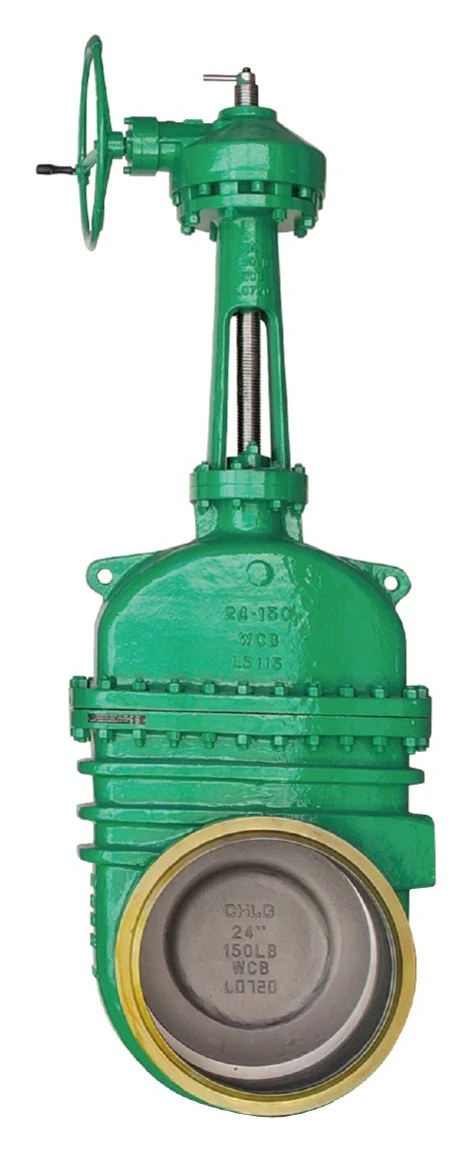
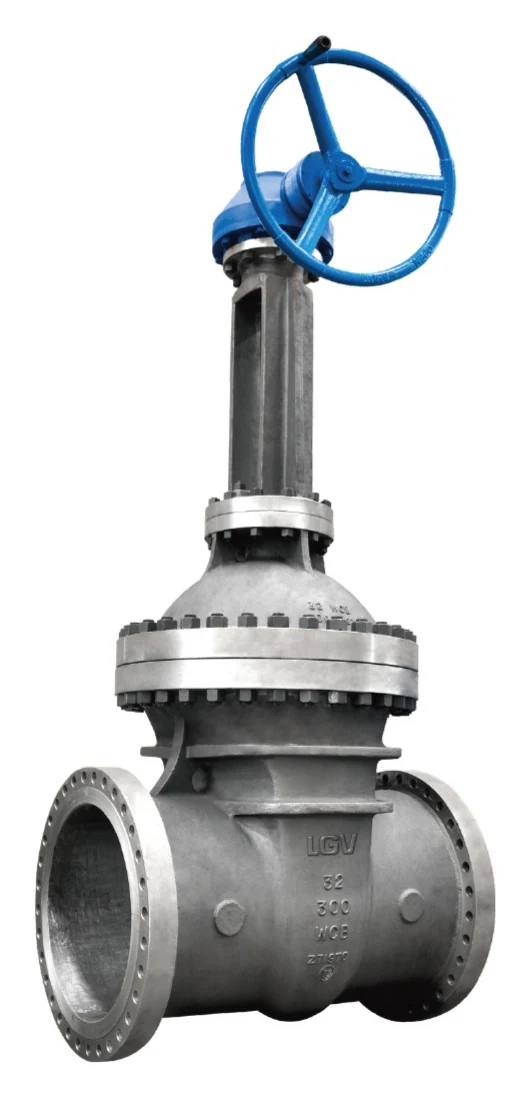
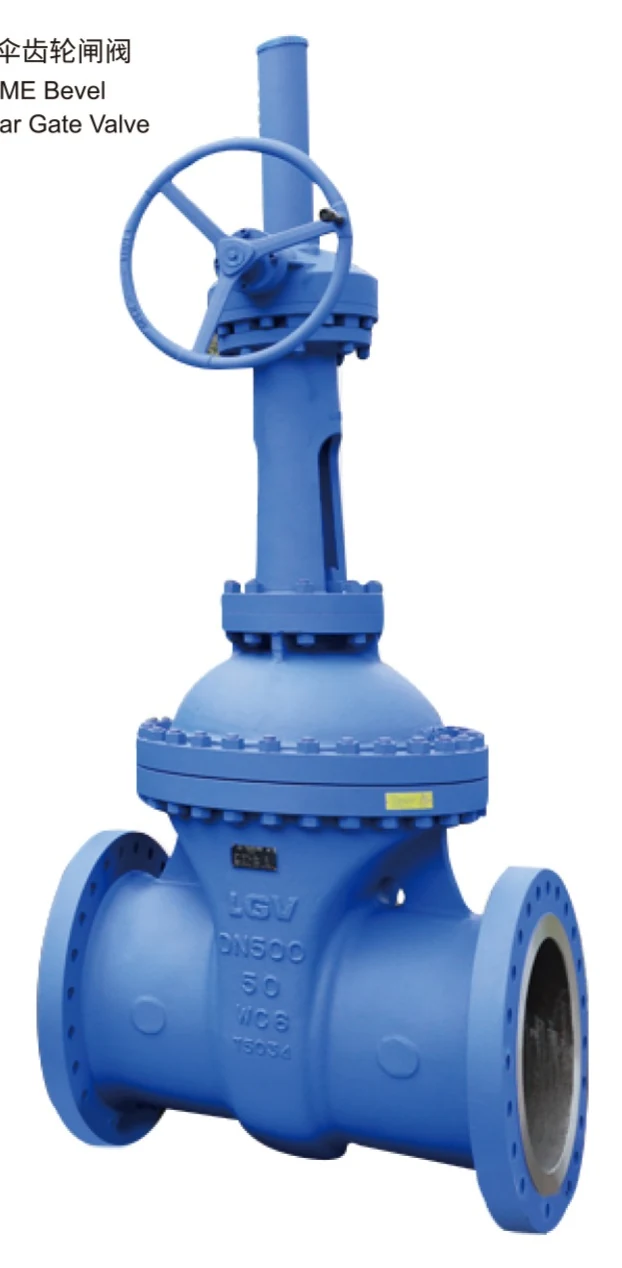
Gate valve in the source catalog. Four matching illustrations appear under the exact ASME Bevel Gear Gate Valve label; they may show different appearances, not confirmed options or performance tiers.
ASME is not a complete specification
For example, ASME B16.34 concerns valve pressure-temperature and construction requirements, while ASME B16.10 concerns face-to-face/end-to-end dimensions. Naming this product “ASME” does not establish compliance with either. Specify the applicable number, edition and acceptance basis in the RFQ.
Gear train and operating input
A bevel gearbox changes the direction and mechanical advantage of the operating input; it does not establish a guaranteed handwheel force, output torque, number of turns or ability to open against full differential pressure. Request a configured gear and valve operating calculation.
Catalog evidence
What the catalog actually confirms
These entries come from the printed product labels and matching images, not measured specifications. Values required to select or replace the valve must be supported by the offered datasheet and drawing.
| Attribute | Catalog evidence | Selection status |
|---|---|---|
| Catalog product | ASME Bevel Gear Gate Valve | Verified as a printed catalog label |
| Valve family | Gate valve | Catalog series and label |
| Operator | Bevel gear | Catalog descriptor; torque and input arrangement unconfirmed |
| ASME | Appears in product name | Design code, edition and conformity unconfirmed |
| Product illustrations | Physical pages 72, 75, 76; printed pages 133, 139, 142 | Four exact-label images; not dimensional or material proof |
Not established by these images: NPS/DN, Class/PN, pressure-temperature rating, material or trim grade, flange/end dimensions, rising/non-rising stem configuration, test results, gearbox torque or delivered accessories.
Engineering review
Select the valve and gearbox as one operating assembly
Start with the isolation duty and maximum differential pressure across the closed gate. A pressure class addresses pressure-temperature limits for the specified design and material; it does not tell you how much torque is needed to unseat this particular valve.
On/off service versus throttling
For an ordinary gate-valve isolation duty, specify full-open/full-closed operation and the required seat leakage acceptance. If the process needs frequent partial opening or flow regulation, do not presume this catalog entry is suitable for throttling; request an explicitly qualified design or a control-valve selection.
Pressure, temperature and differential
Provide fluid, NPS/DN, required Class or design rating, maximum/minimum design and operating temperatures, and maximum opening and closing differential pressure. Verify allowable pressure-temperature ratings for the offered material and code edition. Class designation alone is not a fixed pressure in bar.
End interface and actual materials
Specify whether flanged, butt-weld or another end is needed; include mating dimensions and any existing-valve face-to-face length. Verify the applicable dimensional specification and drawing before claiming interchangeability. Body/bonnet, wedge, stem, seat and packing materials must be resolved for the fluid and temperature—not inferred from the gray, blue or green catalog finishes.
Bevel gear operating capacity
Request the calculated valve breakaway/unseating torque at the maximum specified differential, the gear unit ratio and rated output, and the resulting input handwheel torque or rim force, with operating margin and number of turns. Gear reduction can reduce effort but increases turns; it cannot overcome an unverified torque limit.
Acceptance documents
Ask for the offer-specific datasheet, general arrangement drawing with the fully open envelope, material and trim schedule, pressure-temperature basis, operator sizing data, shell and seat test criteria/results, marking, and any required material certificates or witness records. Request records by purchase order; the catalog itself is not a test certificate.
Application boundary
Opening against differential pressure and checking clearance
The largest operational risk is buying a gearbox that is comfortable under low differential pressure but cannot safely release the seated gate under the required closed-valve pressure difference. The installation envelope is the second check: the handwheel, gearbox and moving stem may need space beyond the pipe bore and valve body.
High differential at first opening
Pressure acting on a closed gate can increase unseating load, and wedging or thermal effects may also matter. If the offered gearbox cannot be documented for the maximum differential, do not approve full-differential opening. Ask the piping engineer whether an engineered pressure-equalizing or bypass arrangement is required and whether the supplier can provide it; a bypass is not confirmed as included.
Handwheel access and input
Check whether the operator will be reached from a platform, grade or gear-extension station. Compare the drawing’s handwheel location, shaft orientation, diameter, sweep and maintenance access with obstructions. Require the allowable input force and turn count; do not use an extension bar to compensate for insufficient gear capacity.
Stem travel and full-open envelope
Obtain both closed and fully open dimensions, including stem extension if the selected design is rising-stem, side clearance for the bevel gearbox, lifting space, packing access and removal access. Photos do not prove which stem arrangement or final envelope will be supplied.
Visual evidence
Catalog illustrations linked to this exact product name
The main image comes from printed page 133. The three additional illustrations below are separately captioned ASME Bevel Gear Gate Valve on printed pages 133, 139 and 142. They are identity references, not an approved dimensional drawing or an offer of specific material or pressure configurations.
Related product routes
Compare the adjacent catalog entries before specifying ends
The GB-labeled, welded-labeled and electrically operated gate valves are separate catalog entries, not alternative images or guaranteed interchangeable configurations of this ASME bevel-gear product. Select by the required governing specification, actual end arrangement and operating method.
GB Bevel Gear Gate Valve
The neighboring GB-labeled entry is a separate standards-designation route. Compare the agreed design code, dimensions and end interfaces rather than treating ASME and GB as interchangeable.
Bevel Gear Welded Gate Valve
The neighboring catalog name explicitly includes “Welded.” Confirm the intended welded interface, welding procedure and end preparation against its own drawing; do not assign those details to this ASME entry.
ASME Electric Gate Valve
The electric-operation entry is a separate selection route when remote or powered operation is required. Its actuator and controls must not be assumed part of this bevel-gear assembly.
Buyer questions
Catalog questions
What does the catalog confirm? The ASME Bevel Gear Gate Valve name and four matching catalog illustrations are documented; a specific design-code edition, pressure rating or material grade is not. See the catalog evidence and product images.
What must be checked before selection? Verify the end connections, pressure-temperature basis, maximum opening differential pressure, gearbox input and full-open clearance against the offered datasheet and drawing. Catalog photos cannot serve as dimensional drawings. See the selection guidance.
What belongs in the RFQ? Provide the service, required codes and editions, NPS/DN, pressure and temperature conditions, mating interfaces, operator access and inspection documents. Use the inquiry form below.
Specification-based quotation
Request an ASME Bevel Gear Gate Valve quotation
Reference the ASME Bevel Gear Gate Valve catalog entry and provide the line duty and operating differential. Ask for an offer-specific dimensional drawing, operator capacity and inspection document list before technical approval. The listed illustrations are not an approval drawing.
- Isolation duty, process fluid and opening/closing differential pressure
- NPS/DN, required Class, temperature range and governing codes/editions
- Flanged/welded end details, mating line and material/trim requirements
- Gearbox input access, maximum torque/force, turns and full-open dimensions
- Quantity, GA/datasheet, test records and any required material certificates