Documented product series
Three-Way Control Valves for Mixing and Diverting Circuit Review
Define whether a three-way control valve must mix two streams or divert one stream, then provide flow, pressure, temperature and actuator requirements for every port condition. The catalog confirms an Electric Three-Way Ball Valve as related evidence; control performance and mixing/diverting suitability require product confirmation.
Series scope: three way control valve identity, configuration decisions, evidence boundaries and product-level handoff.
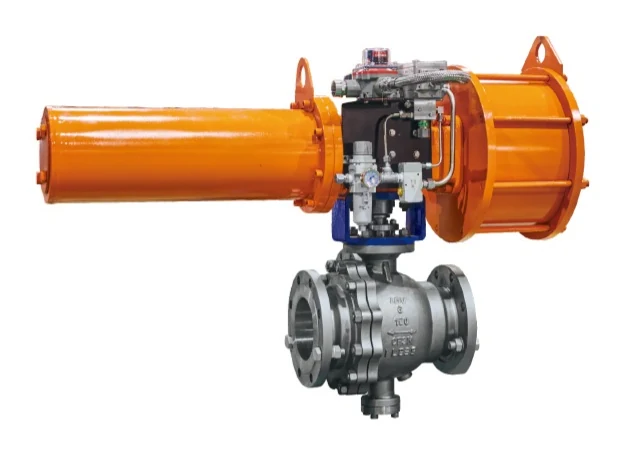
Series sovereignty
What this three-way control valves page owns
The page helps a buyer decide whether this documented series is the correct route. It does not absorb the parent category, sibling series, industry owner or exact catalog-product identity.
Commercial owner
This page owns industrial three-way control valve selection intent and its mixing/diverting decision.
Related product evidence
Catalog page 91 confirms an Electric Three-Way Ball Valve identity and mapped image.
Control boundary
Three-way geometry alone does not prove modulating control, port arrangement, flow characteristic, Cv, leakage or actuator performance.
Series decision framework
Define the port function before sizing the control package
Mixing and diverting circuits impose different port conditions. Every flow path and operating case should be included in the sizing basis.
| Decision area | Buyer inputs | Why it matters |
|---|---|---|
| Circuit function | Mixing, diverting or changeover and the piping arrangement | Defines the port duty |
| Operating cases | Flow, pressure and temperature for each port and load condition | Supports sizing and pressure-balance review |
| Control objective | Controlled variable, range, response and fail behavior | Defines trim and actuator requirements |
| Installation | Port labeling, orientation, ends, access and controls | Prevents routing and commissioning errors |
Application and service intent
Use the three way control valve series only where the documented route fits
Application language explains the decision context. It does not prove a past project or extend product capability beyond the current evidence.
Heating and cooling circuits
Provide load cases, supply/return conditions, bypass behavior and control objective.
Process mixing
State both inlet compositions, temperatures, pressures and required outlet condition.
Flow diversion
Define each outlet path, back pressure, sequence and fail destination.
Buyer and engineering pain points
Avoid the shortcuts that create the wrong three way control valve quote
A low-friction inquiry is specific about the operating problem and honest about unknowns. That gives engineering and procurement teams a shared comparison basis.
- Ordering before defining mixing or diverting duty
- Using one Cv for every port path
- Assuming the catalog three-way ball valve is a modulating control valve
- Ignoring fail position and downstream consequence
Evidence-led specification
Known, product-specific and still to confirm for three-way control valves
This evidence matrix prevents catalog imagery or keyword wording from becoming an unsupported technical claim. Unknown values remain explicit RFQ questions.
Verified on this page
The frozen Three-Way Control Valves owner, its route, catalog relationship and mapped company images are documented.
Requires product match
Materials, size, pressure, temperature, ends, dimensions, testing and standards are shown only when the selected catalog identity supports them.
Requires buyer input
Operating cases, medium, installation, acceptance criteria and required records must come from the project team.
PDF-documented catalog identities
Documented products within the three-way control valves route
These product names and images come from the recovered Lianggong English catalog. They prove catalog identity only; unlisted numeric specifications remain technical-confirmation fields.
Electric Three-Way Ball Valve - related catalog record
Evidence: Catalog page 91 confirms three-way ball-valve identity and electric actuation; modulating control duty is not inferred.
Page and product relationships
Keep three-way control valves connected without blurring ownership
The series is a decision layer between a broader category and exact catalog products. Internal links should preserve that hierarchy.
Return to Control Valves
Use the parent owner when the series or design route has not yet been chosen.
Compare all product families
Move across product families without forcing this series to own broader valve demand.
Connect to industry context
Review service challenges while keeping application claims evidence-bound.
Use technical resources
Continue to educational content without shifting commercial ownership from this series.
Commercial procurement intent
Evaluate a three way control valve manufacturer or supplier by response quality
Manufacturer, supplier, factory and exporter modifiers belong to the same commercial series owner. They do not justify thin duplicate pages.
Compare the offered identity
The proposal should name the exact series member or catalog identity and separate included options from alternatives.
Compare one technical basis
Pressure, temperature, medium, duty, ends, actuation and standards must be aligned before price or delivery is compared.
Compare the evidence package
Ask which drawings, datasheets, material records, tests and certificates apply to the offered product and purchase order.
Buyer questions
Questions to settle before specifying three-way control valves
Answers remain at series level. Product-specific values should come from a verified datasheet, drawing, calculation or quotation.
What is the first three-way valve decision?
Define whether the circuit mixes two streams, diverts one stream or performs changeover.
Does the catalog electric three-way ball valve prove control suitability?
No. It is related product evidence; modulation, port characteristic and sizing require confirmation.
Which data is required?
Provide every port condition, load case, control objective, fail behavior, ends and documentation requirements.
Series selection FAQ
Three Way Control Valves buyer questions
Use these questions to turn the series name into a reviewable project inquiry without assuming unverified sizes, ratings, materials or standards.
What project data is needed to specify Three Way Control Valves?
Provide minimum, normal and maximum flow, upstream/downstream pressure, temperature, fluid properties, control objective, allowable noise or cavitation risk, leakage requirement and fail position.
Does the Three Way Control Valves series name define every available size, pressure class and material?
No. A series name identifies a documented control valve selection route, but the orderable size, rating, material, connection, standard and operating limits must be confirmed on the offered datasheet and approved order drawing.
How should buyers compare products within the Three Way Control Valves series?
Compare control characteristic, rangeability requirement, pressure-drop cases, cavitation/noise conditions, leakage class, trim/material route, actuator sizing and control accessories.
Which documents should be requested before order approval?
Request the offered datasheet, general arrangement or dimensional drawing, material and trim schedule, applicable inspection and test plan, required certificates, marking details and the final order-specific document list.
Technical handoff
Prepare a reviewable three way control valve inquiry
Share the information already available and mark unknowns for technical confirmation. The objective is a traceable product match—not a prematurely complete-looking specification.
- Exact product or series identity under review
- Design and operating pressure and temperature cases
- Medium, composition, phase and solids where relevant
- Nominal size, end connection and installation orientation
- Valve duty, operating frequency and actuation requirements
- Applicable project specification and required standards
- Drawings, testing, inspection and documentation requirements
- Unknown fields clearly marked for technical confirmation