
PDF-documented product
Electric Bidirectional Hard Sealed Flanged Butterfly Valve
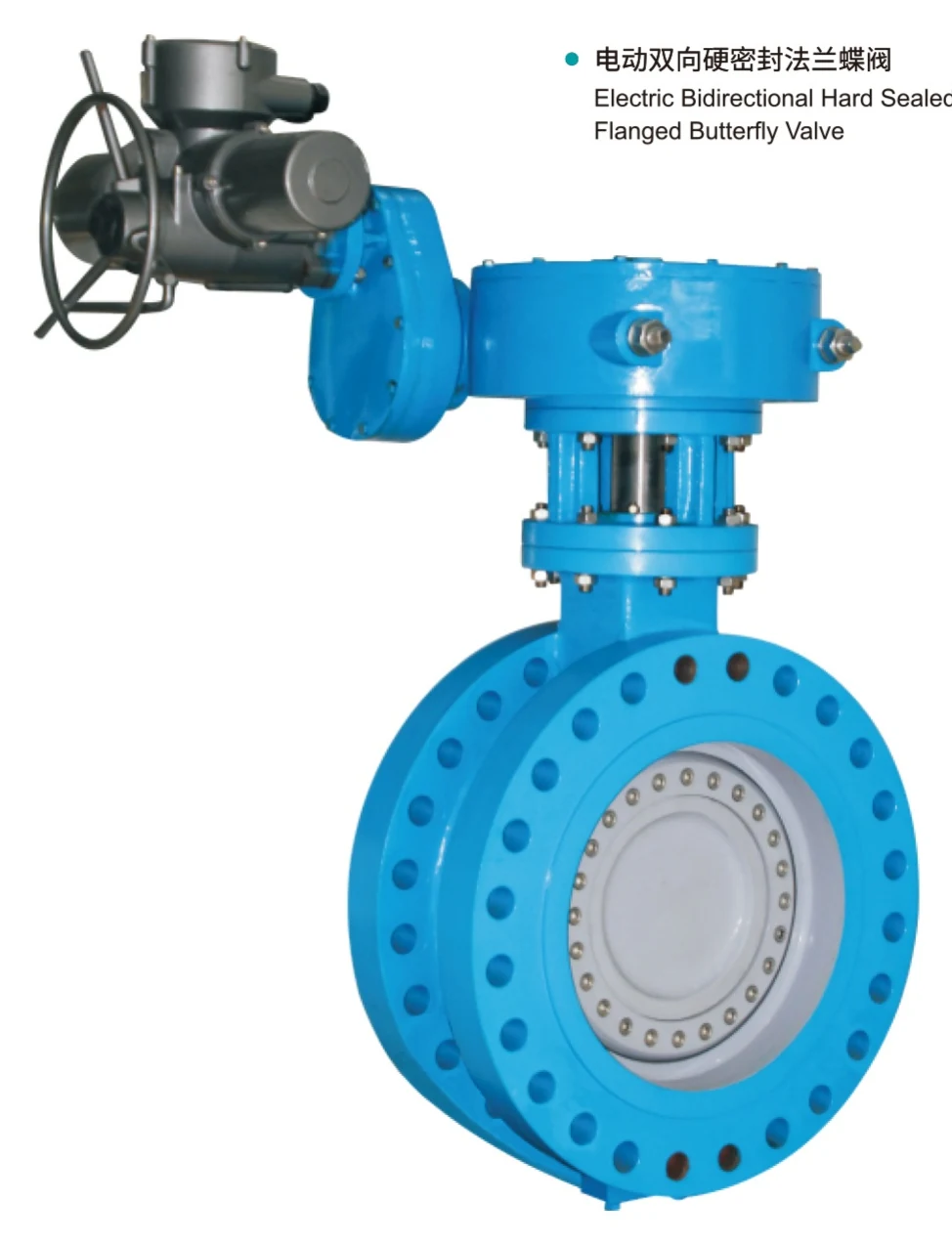
This catalog entry identifies an electric, flanged butterfly valve; the product name also uses the descriptors “bidirectional” and “hard sealed.” Those words do not state the allowable pressure in each direction, the leakage acceptance, the sealing-pair materials or the actuator torque. Use the checks below to define the actual duty and request an order-specific datasheet and drawing.
- Valve type: Butterfly Valve
- Actuation: Electric
- Connection: Flanged
Product identity
What this catalog record identifies
This is a single product-level catalog record. Use the parent Butterfly Valves page for category selection; use this page to specify the shutoff, sealing, flange and electric-actuation requirements for this exact listing.
Product family
Butterfly Valve — the parent category for comparing valve families and product routes.
Catalog series
Butterfly Valve — the source catalog section heading. It does not identify an offset design or a particular seat construction.
Evidence source
Recovered English product catalog, physical PDF page 96 (printed page 182); the matching item is the center image, second from the left. Product image asset: AST-R1-0306.
Catalog evidence
Catalog-confirmed identity and descriptors
The catalog confirms the product name and the attributes explicitly named below. “Bidirectional” and “Hard Sealed” are reproduced as catalog descriptors; the source does not quantify their performance or define the detailed construction.
| Field | Catalog-documented value | Evidence status |
|---|---|---|
| Catalog product name | Electric Bidirectional Hard Sealed Flanged Butterfly Valve | VERIFIED — exact catalog label |
| Valve type | Butterfly Valve | VERIFIED — catalog label |
| Actuation | Electric | VERIFIED — catalog label |
| Connection | Flanged | VERIFIED — catalog label |
| Product-name descriptors | Bidirectional; Hard Sealed | VERIFIED — wording in product name; detailed limits not stated |
| Catalog source series | Butterfly Valve | VERIFIED — catalog section heading |
| Catalog location | PDF page 96; printed page 182 | VERIFIED — recovered PDF mapping |
For procurement: use the approved datasheet and order drawing for the offered configuration. The catalog page and product image are identity evidence, not dimensional drawings or test records.
Selection-critical wording
What “bidirectional” and “hard sealed” must specify
Neither descriptor is a complete purchase specification. Define the required performance in measurable terms and obtain a written response for the exact valve configuration being offered.
Bidirectional shutoff
- Specify shutoff from either pressure side; flow in both directions while open is a different requirement.
- State the maximum differential pressure from each side, including any reversal or transient case.
- Define the test medium, test pressure, duration and acceptable leakage for each direction.
- Ask whether the offered design has a preferred pressure direction and whether it meets the required duty in both directions.
Hard-seal construction
- Do not assume “hard sealed” means metal-to-metal; request the actual disc-to-seat contact arrangement.
- Obtain the exact body, disc, stem and sealing-pair material grades, plus any coating or hardfacing.
- State the allowable leakage at the specified medium, temperature and differential pressure.
- Request the relevant section drawing and test record for the offered construction.
Buyer specification
Information needed to quote a valve-and-actuator assembly
Start with the operating case. The valve supplier must establish the valve operating torque and match the actuator output to the actual differential pressure, temperature and required operating time; “electric” alone is not an actuator-sizing specification.
Process duty and pressure
State the medium and phase, composition and concentration, solids, and cleaning or flushing requirements where applicable. Provide operating and design pressure, including any vacuum condition where applicable, temperature range, normal flow and maximum differential pressure across the closed valve. Identify isolation, throttling, bypass or other defined duty, cycle frequency, and any pressure reversal or transient.
Flanged piping interface
Provide DN/NPS and the required valve pressure rating/class or PN separately from the mating pipe-flange standard and class/PN, including facing, drilling, face-to-face requirement, pipe bore and gasket details. Require a general-arrangement drawing to verify the actual body dimensions and disc sweep/clearance before release.
Sealing pair and materials
Request the disc/seat contact arrangement, body, disc, stem and sealing-pair material grades, and any coating or hardfacing. Match them to fluid chemistry, temperature, corrosion, erosion and solids; no material grade is confirmed by the catalog label.
Electric actuator sizing and controls
Obtain the valve maker’s required torque over the full travel at the specified differential pressure and temperature, together with actuator rated output torque and operating time. Specify supply voltage/phase/frequency, on/off or modulating duty, control signals, position feedback, local controls, enclosure/environmental rating and the required response on loss of power.
Documents and inspection
List the GA/order drawing, datasheet, valve/actuator torque schedule, material records, pressure and seat-leakage test reports, inspection or witness points, marking and required certificates. Name the project standard and edition where applicable; do not infer one from the product name.
Configuration review
Checks before approving the offered assembly
Use the supplier’s written data to decide whether the proposed valve and actuator meet the project duty. A catalog label or a generic product-family statement is not a substitute for these checks.
Pressure reversal and leakage
Compare the supplier’s stated shutoff limits and test evidence for both pressure directions with the project’s maximum differential pressure and leakage acceptance. If a preferred pressure direction is specified, confirm that the non-preferred direction still satisfies the duty.
Valve and actuator torque compatibility
Check that actuator output covers the valve’s required operating torque for the stated conditions, while the valve shaft/stem and drive components can withstand the actuator’s maximum or stall torque. Ask the supplier to confirm both sides of this interface in the assembly documentation.
Line fit and maintenance access
Check the approved drawing against flange drilling/facing, face-to-face, pipe bore, disc clearance, actuator envelope, orientation, support, ambient conditions and maintenance access. Resolve any interference before the order drawing is approved.
Dimensional documentation
Use the approved GA drawing for fit-up
The verified catalog crop shown in the hero identifies this product but is not a dimensional drawing. The supplied evidence does not include a model-specific GA drawing. Before release, request an approved drawing for the exact valve/actuator assembly showing face-to-face, flange drilling and facing, overall dimensions, disc clearance, mounting interface and actuator envelope.
Related product routes
Related butterfly-valve catalog records
These links lead to separate catalog identities, not interchangeable configurations. Use each record’s own evidence; do not transfer construction, pressure, size, material or actuator data between products.
Electric Butterfly Valve
A separate electric-actuated butterfly valve listing. Review its own construction, ratings and actuator package independently.
Large Diameter Flanged Butterfly Valve
A separate flanged butterfly valve record. Its product identity does not establish a size range or pressure rating for this listing.
Pipe Network Butterfly Valve
A separate pipe-network butterfly valve record. Its application wording does not define this valve’s sealing, pressure or actuator limits.
Technical inquiry
Request a project-specific configuration review
Reference catalog entity CCE-R2-0117 and include the operating data below. The quotation should identify the exact valve construction, pressure-direction limits, leakage acceptance and matched electric actuator—not simply repeat the catalog name.
- Valve function, medium/phase, flow direction, pressure reversal and maximum differential pressure in each direction
- DN/NPS, mating flange standard/class, operating and design pressure, and temperature range
- Sealing pair, material grades and required leakage acceptance/test basis
- Actuator power supply, control mode/signals, operating time, cycle frequency and required response on power loss
- Quantity, installation conditions, approved drawings, inspection/witness and document requirements