
Catalog-documented product
Cryogenic Butterfly Valve with Maintenance Port
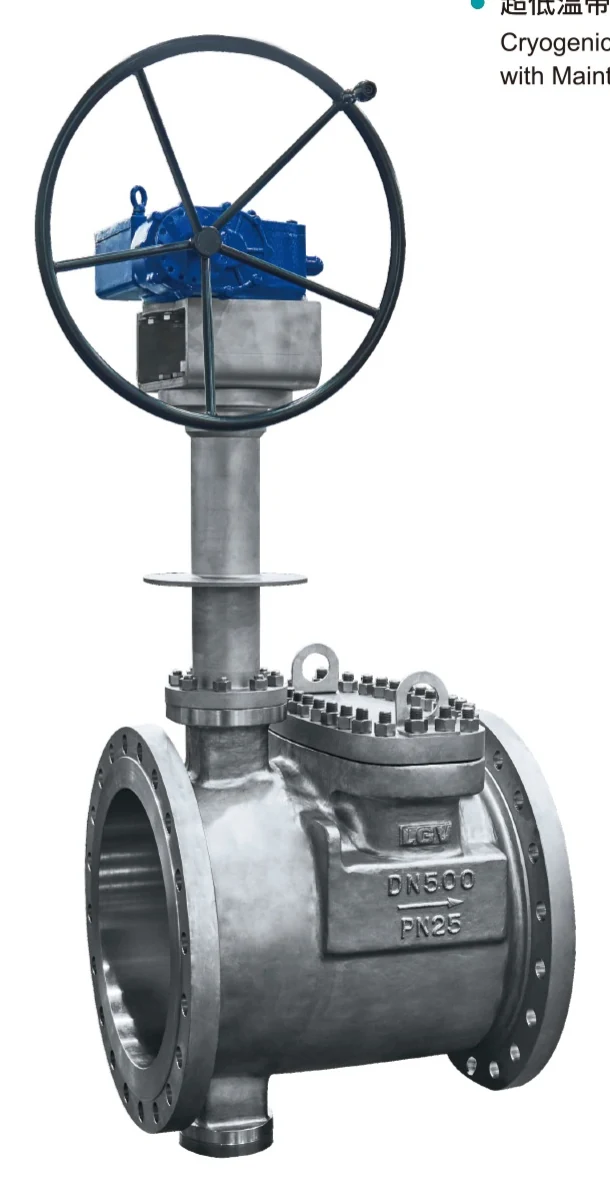
The recovered catalog identifies this item as a Butterfly Valve for cryogenic / low-temperature service and names a maintenance port. It does not define the port function, valve geometry, pressure rating, size, materials or end connection. Treat those as configuration items—not established specifications—until the offered drawing and datasheet confirm them.
- Valve type: Butterfly Valve
- Service / medium: Cryogenic / low-temperature
Catalog evidence
Catalog-documented product data
Only fields explicitly stated in the recovered catalog are listed below; this is not a complete product datasheet.
| Field | Catalog-documented value | Evidence status |
|---|---|---|
| Valve type | Butterfly Valve | VERIFIED — PDF catalog label |
| Service / medium | Cryogenic / low-temperature | VERIFIED — PDF catalog label |
| Catalog source series | Butterfly Valve | VERIFIED — PDF catalog section |
| Catalog source page | PDF page 96 | VERIFIED — recovered PDF mapping |
Use the approved dimensional drawing and datasheet for installation, fabrication and procurement. The catalog image supports product identification only; it does not establish dimensions, material grade, pressure rating, certification or the final supplied configuration.
Cryogenic application review
How to qualify this valve for your operating conditions
For this catalog item, the maintenance-port arrangement and the valve’s actual cryogenic duty must be reviewed together. Confirm the points below against a dimensioned drawing and datasheet for the exact offered configuration.
Maintenance port and service boundary
Ask for a sectional drawing that shows the port passage, closure device, pressure boundary and the parts it accesses. The catalog does not state whether the port is intended for inspection, venting, injection or component service. Require a written procedure identifying the isolation, depressurization and temperature conditions before the port is opened; do not assume it permits maintenance on a pressurized or operating line.
End connection and disc clearance
Confirm the actual end type, flange standard and facing, drilling, bolt pattern, face-to-face length and gasket. Compare the exact valve drawing with the pipe’s actual inside diameter, schedule, internal lining, weld intrusion, reducers and adjacent fittings. Check the disc’s full sweep through travel, including fully open; a butterfly disc can project into the pipe bore. Also confirm installation orientation, piping loads, available space and maintenance access. Do not infer the connection or clearance from the catalog image.
Differential pressure and seat shutoff
State the valve’s intended duty—on/off isolation, throttling, bypass or another defined function—and the expected operating frequency / cycle count. State the normal flow direction(s) required by the project. Do not assume bidirectional service: if bidirectional operation is required, specify the differential pressure and seat-leakage criterion for each required direction. State the maximum differential pressure across the closed valve separately from line design pressure, including applicable start-up, shutdown and upset cases. Specify the required leakage rate or class, test medium and acceptance conditions. If throttling is required, provide operating flow points and request the control characteristic and allowable pressure-drop and velocity limits; the catalog label does not establish modulating duty or bidirectional shutoff.
Cryogenic seat and material selection
Provide the medium’s composition / concentration and phase, contaminants, minimum / normal / maximum process temperature, ambient conditions and thermal-cycle profile. Describe the service’s corrosion and erosion conditions and any project-specified corrosion allowance, where applicable. Confirm the body, disc, shaft, seat and stem-packing materials, the actual sealing principle, pressure–temperature limits and low-temperature seat-leakage test criteria for the offered configuration. The word “cryogenic” does not establish a minimum design temperature, material grade, seat type, corrosion allowance or leakage class.
Actuator sizing and operating limits
Request valve torque data at the specified minimum temperature and maximum differential pressure: breakaway, running, seating and unseating values, with the required flow direction(s) stated. Check actuator output at the minimum available air pressure, supply voltage or hydraulic pressure against the valve’s allowable shaft torque. Define the actuator control-signal type and interface, available utility connection(s), feedback requirements, cycle frequency, travel time, fail action and local / remote operation. Do not equate supply power with the control signal or size the actuator from nominal line pressure or valve size alone.
Related product routes
Compare documented alternatives before RFQ
Use the parent category for commercial selection and these related catalog records for identity-level comparison. No page inherits specifications from another product.
Electric Butterfly Valve
Another PDF-documented Butterfly Valve catalog record. Review its own evidence and configuration boundary.
Large Diameter Flanged Butterfly Valve
Another PDF-documented Butterfly Valve catalog record. Review its own evidence and configuration boundary.
Pipe Network Butterfly Valve
Another PDF-documented Butterfly Valve catalog record. Review its own evidence and configuration boundary.
Buyer questions
Cryogenic Butterfly Valve with Maintenance Port: Buyer FAQs
The catalog leaves several selection-critical details open. These answers identify the evidence to request before specification or order.
Does the catalog define the pressure rating, size or eccentric design?
No. It confirms the product designation, Butterfly Valve family and cryogenic / low-temperature wording. It does not specify nominal size, pressure class, pressure–temperature limits, disc offset, materials, end connection or operator. Request the exact datasheet and drawing; do not infer these details from the product name or image.
What is the maintenance port used for?
The recovered catalog names a maintenance port but does not show its internal passage, closure arrangement, pressure boundary or service procedure. Ask for a sectional drawing and written instructions stating what the port accesses and whether the valve or line must be isolated, depressurized and brought to a safe temperature. Do not assume online maintenance is permitted.
How do I check disc clearance and connection fit?
Compare the exact valve drawing with the mating end connection, flange standard and facing, drilling, face-to-face dimension, gasket, pipe schedule and actual inside diameter, lining, welds, reducers and adjacent fittings. Check the full disc sweep through travel. The catalog image is not a dimensional reference.
What should a project RFQ include?
State the plant / equipment and piping duty; valve function (isolation, throttling, bypass or other), cycle frequency, shutoff requirement and expected flow direction(s), identifying bidirectional service only when required. Provide medium composition / phase and temperature range; DN / NPS, end connection and mating flange; project-required PN / Class, operating / design pressure, maximum closed-valve differential pressure, applicable pressure transients or vacuum; corrosion / erosion conditions and any project-specified corrosion allowance. Identify actuator type, control-signal type and interface, utilities, fail action and maintenance-port purpose. Request the offered material certificates, pressure / shell and seat-leakage test records, drawings / datasheet, project standard / edition, marking, traceability, inspection plan, quantity and any third-party witness / hold points. These are project inputs and requested records, not confirmed product ratings or included capabilities.
Technical inquiry
Request a configuration review for Cryogenic Butterfly Valve with Maintenance Port
Name the plant / equipment and piping function, define the required valve duty (isolation, throttling, bypass or other) and cycle frequency, and identify the maintenance-port purpose. Provide the project operating, pressure, connection, control and documentation inputs in the RFQ list below, together with drawing references / revisions and applicable project standards / editions. The offered configuration and document scope should be confirmed against those inputs before order; unknown catalog fields are not established product ratings or commitments.
- Plant / equipment and piping function; required valve duty (isolation, throttling, bypass or other); cycle frequency / expected cycles; required shutoff behavior
- Medium composition / phase, contaminants and temperature range; expected flow direction(s), identifying bidirectional duty only if the project requires it
- DN / NPS, actual end connection, mating flange details and pipe inside diameter; required PN / Class or project pressure class; operating / design pressure; maximum differential pressure; applicable pressure transients and vacuum conditions
- Corrosion / erosion conditions and any project-specified corrosion allowance; required body / disc / shaft / seat / packing materials and material-certificate requirements
- Actuator type, fail position, utilities, control-signal type and interface, feedback, travel time and ambient conditions
- Maintenance-port purpose and approved procedure; drawing / datasheet revisions and project standard / edition; material certificates, pressure / shell and seat-leakage test records, inspection plan, marking, traceability, third-party witness / hold points, quantity and requested delivery date