Industrial application planning
Valves for Food and Pharmaceutical Process Requirements
Define food and pharmaceutical valve requirements around product contact, cleanability, contamination control, batch changeover, utility service and documentation. Capability confirmation does not prove hygienic certification, surface finish or sterilization limits for an unverified product.
Application support: Lianggong can review Food & Pharmaceutical valve inquiries. Product proof: final specifications, certificates and project references must be checked for the offered item.
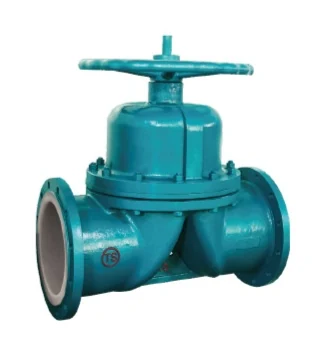
Catalog valve illustration only. Product-contact suitability, cleanability and hygienic approval require exact product evidence.
System and application map
Where food & pharmaceutical valve decisions begin
Before shortlisting valves for Food & Pharmaceutical, a single industry name contains different process systems and failure consequences. Start with the system location and function before selecting a valve family.
Product-contact process lines
Media characteristics, cleanability and contamination consequences define the review.
CIP/SIP and utility circuits
Temperature cycles, cleaning chemistry and drainage create a different duty from normal production.
Batch and transfer skids
Hold-up, changeover, automation and documentation influence the valve package.
Selection framework
Translate food & pharmaceutical conditions into a comparable valve requirement
For project teams working in Food & Pharmaceutical, use the same decision fields across vendor responses so engineering differences remain visible and procurement does not compare unlike scopes.
| Decision area | Buyer inputs | Why it matters |
|---|---|---|
| Product and cleaning media | Composition, allergens, solvents and cleaning chemicals | Supports compatibility and contamination review |
| Hygiene objective | Cleanability, drainability, dead-leg and surface expectations | Defines construction questions |
| Thermal cycle | Production, cleaning and sterilization temperatures and durations | Reveals seal and cycling requirements |
| Evidence | Material, finish, elastomer, test and traceability documents | Prevents unsupported hygienic claims |
Selection input / service envelope
Define the food & pharmaceutical service envelope before choosing a valve
Start with product-contact, cleanability and batch-changeover requirements. Record normal, design and credible upset cases, and leave unknown values open. These are project inputs, not published Lianggong product ratings.
| Input | What the project team should provide | Decision affected |
|---|---|---|
| Contact boundary | Separate product-contact lines from utilities and identify the fluid, ingredients and contamination consequence. | An industrial utility valve cannot be represented as hygienic by industry label alone. |
| Cleaning and sterilization | Provide CIP/SIP media, concentration, temperature, duration, frequency and drainage expectations. | Seal and construction review must include cleaning, not only production. |
| Batch operation | State changeover frequency, hold-up limit, flow direction, automation and validation responsibilities. | Dead space and operating practice may control the selection. |
| Surface and materials | Specify required finish, elastomer, wetted metals, extractables and traceability where applicable. | Only documented product construction can answer these requirements. |
| Installation | Identify orientation, connection, access, disassembly and maintenance/inspection method. | Cleanability depends on the installed arrangement as well as the valve. |
Commercial product routing
Match the food & pharmaceutical duty to the correct product owner
When defining Food & Pharmaceutical service, these links connect the industry duty to the relevant product category or series for detailed selection.
Diaphragm Valves
Review documented diaphragm valve routes without assuming sanitary construction.
Control Valves
Handle temperature, flow and pressure regulation with process data.
Ball Valves
Review transfer or utility isolation where a documented product fits.
Strainers
Evaluate equipment-protection intent separately from product-contact qualification.
Buyer decision tool
Match food & pharmaceutical duties to valve families
Use the product-contact, cleanability and batch-changeover requirements to choose which valve family needs the first technical review. This routing table does not size a valve or confirm material suitability; send unresolved cases with the inquiry.
| If the requirement is… | First route | Do not assume |
|---|---|---|
| Defined diaphragm-valve duty | Diaphragm Valves | Do not assume a sanitary or aseptic configuration. |
| Controlled flow or pressure in a process/utility circuit | Control Valves | Cleanability and validation need separate proof. |
| Transfer or utility isolation | Ball Valves | Product-contact qualification is not inherited from the category. |
| Equipment protection on a utility or process stream | Strainers | Confirm cleanout and contamination boundary. |
Explore relevant valve families: Diaphragm Valves · Control Valves · Ball Valves · Strainers.
Standards and project requirements
Identify the applicable food & pharmaceutical standards and evidence
For Food & Pharmaceutical duties, establish the project specification, governing standard and edition, jurisdiction and purchaser supplements. Conformity is checked against the exact offered configuration and its documents.
| Reference to check | Possible project context | Buyer evidence request |
|---|---|---|
| Project hygienic specification | Identify the actual product-contact standard and required edition, if any. | A food/pharma page does not grant hygienic approval to every valve. |
| 3-A Sanitary Standard | Check only if the purchaser specifies an applicable equipment standard and product scope. | A current product-specific authorization or inspection record is required before claiming conformance. |
| ASME B31.3 process piping | Check the plant piping-class basis and whether the valve duty is product-contact or utility service. | Piping-code context is separate from cleanability evidence. |
| Material and cleaning acceptance | Ask for the purchaser's contact-material and cleaning-validation criteria. | Do not state FDA, 3-A or pharma approval without matching records. |
Before specification approval: No 3-A, FDA, aseptic, surface-finish or sterilization claim is made without a named product and current supporting record. A listed standard is a selection reference, not a certification claim.
Local buyer and project pain points
Remove the recurring risks in food & pharmaceutical valve sourcing
Within a Food & Pharmaceutical specification, US project teams commonly need traceable specifications, clear exceptions and verifiable submittals. Early scope discipline reduces clarification cycles and unsupported assumptions.
- Calling an industrial valve hygienic without evidence
- Ignoring cleaning chemistry and thermal cycling
- Publishing surface-finish or certification values not in the product file
- Using food and pharmaceutical as interchangeable process conditions
Evidence and claim controls
What Lianggong can state for food & pharmaceutical—and what still needs proof
Within a Food & Pharmaceutical specification, public claims follow a simple rule: business capability may be confirmed by the owner, while product performance, certifications and historical projects require their own evidence.
Confirmed capability
For project teams working in Food & Pharmaceutical, Lianggong may legitimately support and supply within this industry scope. This is a current business statement, not project history.
Configuration-specific proof
Hygienic design, surface finish, elastomer suitability, cleanability and certification require exact product evidence. The page does not imply an FDA, 3-A or pharmaceutical approval.
Buyer and EPC inputs
In Food & Pharmaceutical applications, the project team supplies process cases, governing specifications, acceptance criteria and any required third-party approval basis.
Source and review transparency
How this Food & Pharmaceutical guidance is reviewed
Lianggong Valve reviewed this Food & Pharmaceutical guide on 22 September 2026. It combines catalog-backed product routing and confirmed supply scope with application context. Exact product claims still require the corresponding current documents.
Verified now: the site routes to documented product owners and the owner has confirmed current Food & Pharmaceutical supply capability. Still requiring product-level proof: No 3-A, FDA, aseptic, surface-finish or sterilization claim is made without a named product and current supporting record. Ask for the exact offered product and the relevant report or certificate.
Public standard-scope sources: 3-A standards · ASME B31.3. Project specifications govern the actual purchase.
Procurement workflow
Build a defensible Food & Pharmaceutical valve package from inquiry to submittal
A structured handoff improves technical comparison while keeping unknown facts visible.
1. Define the duty
Identify system, tag function, consequence and all operating cases.
2. Route the product
Select the appropriate category or documented series without inventing a model.
3. Confirm evidence
For project teams working in Food & Pharmaceutical, align drawings, datasheets, materials, tests, standards and exceptions to the offered configuration.
4. Close the RFQ
Record open points, responsibilities, inspection stages and final document deliverables.
US project delivery context
Make the Food & Pharmaceutical submittal reviewable by engineering and procurement
For a valve inquiry covering Food & Pharmaceutical, a commercially responsive offer should also be easy to audit. State the offered configuration, governing document revisions, deviations and unresolved items in one controlled package.
Document register
In Food & Pharmaceutical applications, list each drawing, datasheet, material record, test record and certificate that is included, conditional or not available.
Exceptions schedule
Before shortlisting valves for Food & Pharmaceutical, identify deviations from the inquiry and project specification explicitly; silence must not be interpreted as compliance.
Revision control
Within a Food & Pharmaceutical specification, keep tags, line items, product identities and document revisions aligned through clarification, approval and purchase-order stages.
Procurement / inspection handoff
Agree the food & pharmaceutical delivery-document register before ordering
For Food & Pharmaceutical procurement, agree the drawing revision, inspection plan, test records and open exceptions before placing an order. Confirm which documents can accompany the exact quoted valve.
| Document or record | Minimum buyer check | Status to agree |
|---|---|---|
| Product-contact drawing | Show wetted geometry, drainability and disassembly boundary for the offered configuration. | Request before technical approval |
| Material, finish and elastomer records | Identify traceability, finish measurement and seal specification where required. | Verify per offered part |
| Cleaning/sterilization limits | Document supported CIP/SIP conditions and exclusions rather than a generic hygienic label. | Confirm from product evidence |
| Inspection and exception register | List tests, required inspection, open validation work and deviations. | Close before release |
Buyer questions
Questions project teams ask about food & pharmaceutical valves
Within a Food & Pharmaceutical specification, the answers clarify industry-level decision making. Exact performance and compliance remain tied to the selected product and project basis.
Are all valves on this page sanitary valves?
No. The page routes industry requirements; hygienic construction must be proven for the selected product.
What cleaning data matters?
Provide chemicals, concentration, temperature, duration, flow regime and cycle frequency.
Which records should procurement request?
Specify material and elastomer traceability, finish evidence, drawings, inspection, cleaning and test records where required.
Site navigation
Continue the food & pharmaceutical project review
Within a Food & Pharmaceutical specification, use the dedicated industry, product, manufacturing and resource pages for the detail needed at each stage of the buyer journey.
All industries
Compare adjacent industry contexts without combining their evidence.
Manufacturing
Review company manufacturing information separately from product claims.
Quality Control
Define inspection and documentation expectations for the purchase order.
Technical Resources
Use guides and comparisons without moving buying intent out of product pages.
Project handoff
Send a Food & Pharmaceutical valve requirement for technical review
For a valve inquiry covering Food & Pharmaceutical, attach the available valve schedule, datasheets and project specifications. Unknown fields can remain open for engineering review; they should not be filled with assumed values.
- Plant, unit, system and equipment tag
- Valve function and consequence of failure
- Minimum, normal, maximum and upset operating cases
- Medium composition, phase, contaminants and solids
- Line size, ends, orientation, access and actuation
- Project standards, editions and owner specifications
- Testing, inspection, records and witness requirements
- Unknown fields marked for engineering confirmation