
Catalog-identified gate valve
Stainless Steel Welded Gate Valve
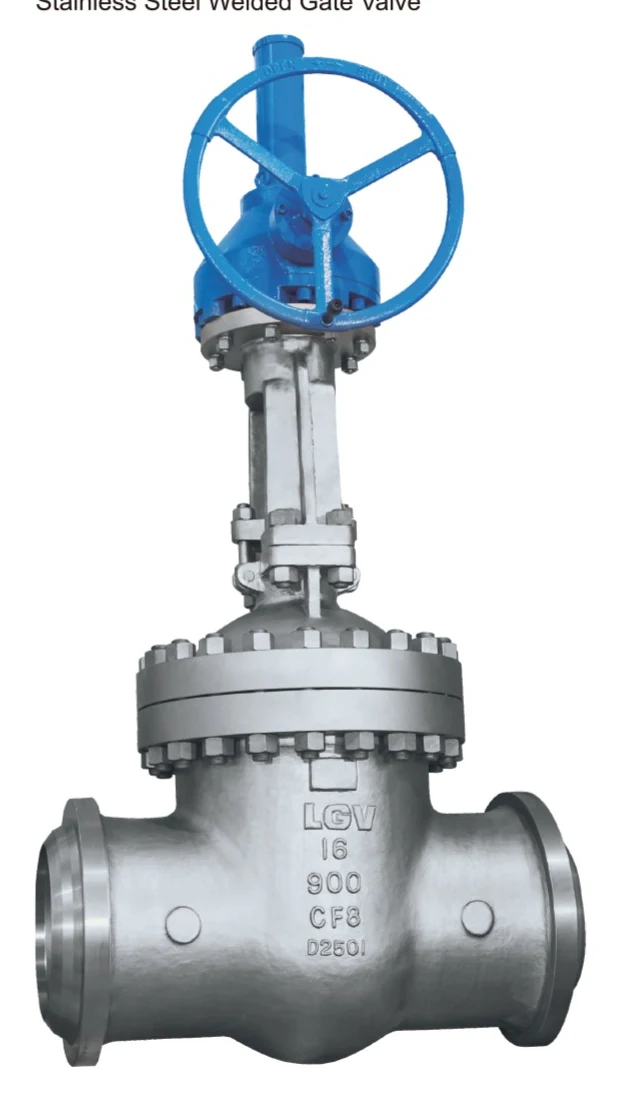
The catalog lists this product as Stainless Steel Welded Gate Valve. The word “Welded” is part of the printed name; it does not establish the actual pipe-end connection or valve construction. Before approving a configuration, obtain an offered drawing showing the connection, check the service and material requirements, and agree on inspection documents. If welded pipe ends are proposed, verify their compatibility with the mating pipe and the required field-welding scope.
- Product type: gate valve (catalog label)
- Material description: stainless steel; component grades unconfirmed
- Catalog title includes “Welded”; actual pipe-end connection unconfirmed
Product identity
Catalog identity and quotation boundary
This is the catalog record for a stainless steel welded gate valve, not a released fabrication drawing. The offer should identify the exact valve construction, service conditions and pipe interface before the buyer approves a configuration.
Product family
Gate Valve is the parent product category for isolation-valve selection. Use the category route to compare other gate-valve configurations.
Catalog series
The product appears in the Gate Valve catalog series. “Welded” is printed in its product name, but the catalog does not identify whether it describes the pipe ends, a construction joint or another feature. The actual end connection must be established by the offered valve drawing.
Evidence source
Catalog source: Gate Valve series, PDF page 75 (printed page 140). The photograph is identified in the catalog as Stainless Steel Welded Gate Valve; use an approved offer drawing for dimensions.
Catalog evidence
What the catalog actually confirms
The catalog supports the product name, gate-valve family and “stainless steel” material descriptor. Its use of “Welded” does not independently confirm welded pipe ends. Actual end connection, end preparation, dimensions, component grades, pressure-temperature limits and applicable design requirements must be established from the offered configuration.
| Field | Catalog wording / required verification | Evidence status |
|---|---|---|
| Valve type | Gate Valve | VERIFIED — PDF catalog label |
| Material descriptor | Stainless steel | VERIFIED — PDF catalog label |
| Catalog title descriptor | Welded | VERIFIED — printed product name only |
| Actual pipe-end connection and preparation | Not established by the catalog | UNCONFIRMED — offered valve-end drawing required |
| Catalog source series | Gate Valve | VERIFIED — PDF catalog section |
| Catalog source page | PDF page 75 | VERIFIED — recovered PDF mapping |
Before fabrication: obtain a drawing that identifies the actual offered pipe-end type. If welded ends are proposed, verify the end profile and the mating pipe dimensions and material. If another connection is proposed, review its relevant interface details instead. The catalog photograph is not a dimensional acceptance document.
Evidence boundary
Separate the catalog label from the ordered configuration
The verified source establishes the printed product identity and its matching catalog photograph—not a released valve-end design. “Stainless steel” and “Welded” are title descriptors, not a complete material schedule or a confirmed pipe connection. The offer still requires a connection drawing, duty limits, material traceability and an agreed inspection scope.
Confirmed by the catalog
- Gate valve: identified by the catalog title; shutoff performance is not specified
- Stainless steel: title descriptor, not a verified body, trim or seat material schedule
- “Welded”: appears in the printed product name; it does not verify the actual valve-end type or construction
Confirm before quotation
- Exact valve size, pressure-temperature rating and design code/edition
- Actual valve pipe-end type and a dimensioned connection drawing
- If welded ends are proposed: pipe OD, wall thickness, materials, end preparation and transition details
- Body, wedge, stem, seating/packing and proposed end-connection materials
- Isolation/leakage duty, operating differential pressure and actuation arrangement
- Installation responsibility; qualified welding procedures only if field welding is required
- Material certificates, valve tests, inspection and final acceptance records
Engineering review
Confirm the actual valve ends before pipe matching
Do not select a field joining method from the product name. First obtain the supplier’s proposed pipe-end design and check it against the line specification. If welded ends are offered, confirm the mating pipe size, outside diameter, wall thickness, material and approved end preparation; an incompatible joint may require costly field rework. If these details remain unresolved, request a conditional quote and hold fabrication approval until the interface is agreed. No flanged or welded end configuration is established by the photograph alone.
Define the isolation duty
Specify whether the line needs on/off isolation, the shutoff and operating differential-pressure requirements, and expected operating frequency. A gate valve should not be selected for routine throttling merely because it can be held partly open; that duty needs a separate assessment.
Establish the pressure-temperature envelope
Provide pipe size, design/operating pressures, design temperature range and any pressure or thermal transients. Ask for the offered valve pressure-temperature rating and relevant design code. A catalog name is not evidence of a pressure class.
Check the offered pipe-end interface
Provide the line specification, pipe material, nominal size, actual outside diameter and wall thickness or schedule. Ask the supplier for a dimensioned drawing identifying the actual proposed valve-end connection and end-to-end length. Only if welded ends are proposed, compare the valve-end bore, OD, bevel or other preparation and any transition against the mating pipe and the project welding requirements. For a different proposed end type, review the appropriate matching interface instead. Resolve any incompatibility before fabrication approval; this catalog does not establish an end standard or joining method.
Select the operating arrangement
State the required manual or powered operation, available clearance around the handwheel/stem, and the expected differential pressure during opening. The photograph shows one catalog appearance; actuation and stem travel for the ordered valve must be verified on its drawing.
Agree on valve inspection and installation documents
Identify who must supply the offered connection drawing, material certificates, valve shell/seat test reports and inspection records. If field welding is part of the approved installation, separately assign responsibility for WPS/PQR, welder qualifications, joint examination, any required heat treatment and post-installation tests. Specify project acceptance criteria, NDE and witness points where required; none of these procedures or deliverables is established by the catalog name.
Application boundary
Material compatibility and joining requirements
“Stainless steel” is not sufficient to approve a corrosive medium or match the piping material. Verify the offered component grades against the actual fluid, operating temperatures and line metallurgy. The actual end connection must be confirmed first; where field welding is required, welding procedure approval and contractor weld acceptance are distinct from supplier valve testing unless the contract explicitly assigns them otherwise.
Medium and wetted materials
State fluid composition, concentration, temperature and any chlorides or cleaning exposure relevant to corrosion. Request the offered body, wedge, stem, seating and packing materials separately. A stainless body designation does not prove that every wetted component has the same grade or corrosion resistance.
Dissimilar-metal joints
If welded pipe ends are proposed and the mating pipe has a different material or wall thickness, involve the piping and welding teams before approving the joint. For a dissimilar-metal weld, consumables, dilution, corrosion behavior and any necessary heat treatment must be addressed by the project-specific qualified procedure. If a nonwelded connection is proposed, these weld-joint steps do not apply to that interface.
Installation and final acceptance
Confirm installation orientation, pipe loads, supports and maintenance clearance against the offered drawing. If the approved connection requires site welding, agree on protection of heat-sensitive valve components and the applicable installation instructions. Regardless of connection type, define the project-required joining inspection, cleaning and post-installation pressure/leak testing, with a named owner for each record.
Visual evidence
Catalog photograph of the matching valve
This photograph is tied to the Stainless Steel Welded Gate Valve title on printed page 140. It establishes catalog identity and appearance only—not the actual pipe-end connection, material grades, end dimensions, welding procedure, test results or pressure-temperature rating.
Related product routes
Other gate-valve catalog configurations
The following links lead to other gate-valve records, not interchangeable substitutes. Compare their actuation, size and end-connection details against the same line specification before making a selection.
Large Diameter Electric Gate Valve
A separate electrically operated, large-diameter catalog entry. Do not transfer its pipe-end design, material schedule or duty limits to this product without its own documentation.
ASME Large Diameter Electric Gate Valve
A separate ASME-labeled large-diameter electric gate-valve entry. Its title does not establish applicability, connection design or dimensions for this catalog product.
ASME Large Diameter Gate Valve
A separate ASME-labeled large-diameter gate valve. Check its own documented connection and duty rather than transferring data between pages.
Buyer questions
Stainless Steel Welded Gate Valve: buyer questions
These answers address the interface and document decisions that can delay fabrication or acceptance.
Does “Welded” in the catalog title confirm welded pipe ends?
No. “Welded” appears in the printed product name, but the catalog does not identify the actual valve-end connection or what part of the construction is welded. Obtain the offered drawing first. If welded ends are proposed, then check the valve-end dimensions and preparation against the mating pipe and installation requirements.
Which material grades are confirmed?
The catalog uses “stainless steel” without a component-by-component material schedule. Request the specified body, wedge, stem, seat, packing and end-connection materials plus the applicable material certificates for the offered valve.
What if the connecting pipe has a different material or wall thickness?
First establish the actual proposed connection. If welding ends are offered, the piping and welding teams must review the material combination and any joint transition, then approve the joint drawing and applicable qualified welding procedure. For another end type, verify the corresponding mating components and dimensions instead.
Which documents should the RFQ identify?
Request the offered datasheet, dimensioned drawing showing actual pipe-end type, material certificates and required valve test/inspection records. If field welding is included, also agree on WPS/PQR, welder qualifications, NDE and post-installation acceptance responsibilities. Specific deliverables depend on the contract and project requirements.
Technical inquiry
Request a valve-end and material configuration review
Reference the exact catalog product name, service conditions and line specification in your inquiry. Ask for a dimensioned drawing showing the offered connection type before selecting any joining method. If welded ends are proposed, request the weld-preparation details and agree on field-welding and acceptance responsibilities before approving the order.
- Isolation duty, medium, operating/design pressures and temperatures
- Pipe nominal size, actual OD, wall thickness/schedule and material
- Offered valve-end type and drawing; weld-end profile/transition only if welding ends are proposed
- Offered body, wedge, stem, seating/packing and end-connection materials; actuation
- Quantity, material certificates, valve tests, installation responsibility and inspection requirements