
Válvula de bola incluida en catálogo
Válvula de bola fija de acero forjado de tres piezas con cierre metálico
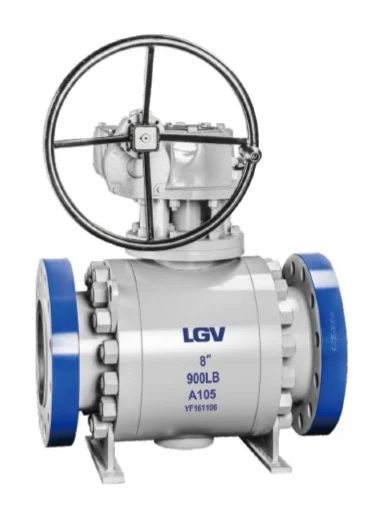
El catálogo del fabricante la incluye Válvula de bola fija de acero forjado de tres piezas con cierre metálico y muestra un ejemplo correspondiente en la página 89 del PDF. Es un punto de partida para una revisión de la configuración de la válvula de aislamiento, no una tabla publicada de tamaños, clases de presión o prestaciones.
Si el servicio implica un elevado diferencial de cierre, sólidos o temperatura elevada, la construcción de asiento propuesta, los límites de presión-temperatura y la aceptación de fugas deben verificarse frente a la oferta real.
- Construcción de acero forjado en tres piezas — descripción de catálogo
- Diseño de bola fija con sellado duro — descripción de catálogo
- Tamaño, grado del cuerpo, servicio nominal y prestaciones de cierre — específico de la oferta
Interpretación del diseño
Qué significan los términos de construcción para la selección
El catálogo identifica una construcción forjada de tres piezas, sellado duro y un montaje de bola fija. Estos términos ayudan a especificar la familia de diseño; el dibujo de sección y la ficha técnica específica de servicio deben establecer los detalles internos reales.
Cuerpo forjado de tres piezas
La construcción de tres piezas y el acero forjado se indican en el nombre del producto. No identifican la disposición de la junta del cuerpo, la tornillería, el grado de forja ni las cargas admisibles de la tubería. Revise los dibujos de sección y de disposición general antes de aprobar las interfaces o el acceso de mantenimiento.
Asiento de sellado duro
“Sellado duro” describe el concepto de asiento, pero no un recubrimiento, una aleación de asiento ni una clase de fuga. Cuando los sólidos, la temperatura o el ciclado determinan la selección, solicite los materiales de contacto bola/asiento, el tratamiento superficial y el criterio de cierre estanco ensayado para el diseño ofertado.
Montaje de bola fija
Una bola fija está soportada en lugar de ser empujada aguas abajo como una bola flotante. La carga del asiento y el comportamiento de la presión en la cavidad del cuerpo dependen del diseño interno. Solicite un dibujo de sección y una descripción del alivio de asiento/cavidad; no deduzca DBB ni DIB de la etiqueta del catálogo.
Registro de catálogo
Qué confirma realmente la página 89 del PDF
The page-89 caption identifies the product; its photograph documents one illustrated example. Visible cast or stamped markings belong to that example and are establecen un tamaño pedible verificado, una clase de presión o un grado de material para WP361.
| Campo | Valor documentado | Límite de evidencia |
|---|---|---|
| Nombre del producto | Válvula de bola fija de acero forjado de tres piezas con cierre metálico | Pie de figura del catálogo |
| Familia de producto | Válvula de bola | Sección del catálogo |
| Descriptor de la construcción del cuerpo | Tres piezas | Catalog caption; geometry not detailed |
| Descriptor de material | Acero forjado | Catalog caption; forging grade unspecified |
| Seating descriptor | Hard sealed | Catalog caption; seat materials/test unknown |
| Ball arrangement descriptor | Fixed ball | Catalog caption; internal support details unknown |
| Source image / location | AST-R1-0263; PDF page 89, upper row | Verified catalog pixels and source WebP |
No especificado en esta entrada del catálogo: NPS/DN, Class/PN, pressure–temperature ratings, bore, connection dimensions, body grade, seat leakage acceptance, fire testing or certification. Obtain an offered datasheet and approved drawing before purchase approval.
Engineering acceptance
Two checks that can change the valve selection
A hard-sealed fixed-ball name is not an acceptance criterion. Shutoff performance and trapped-cavity behavior must be defined for the intended duty, particularly where liquid can be blocked between closed seats.
Seat integrity and shutoff
- Define differential pressure across the closed valve, fluid temperature, solids and cycle frequency.
- Request ball/seat contact materials, any hard-facing, and the proposed service limits.
- Specify the leakage test method, direction(s), test pressure/medium and allowable rate; do not assume zero leakage.
Body cavity and isolation philosophy
- Identify trapped-liquid or thermal-expansion conditions that could pressurize the body cavity.
- Request the actual seat arrangement and the cavity-pressure relief/venting method on a drawing.
- If DBB or DIB is required, state the isolation function and acceptance procedure; neither follows automatically from “fixed ball.”
Project specification
Qué debe establecer la cotización
Comparable quotations need the same operating case, sealing acceptance and connection requirements. Provide the duty first, then request drawings and test documentation against that duty rather than selecting from the catalog photo.
Isolation duty or modulating duty?
For on/off isolation, state shutoff direction(s), leakage criterion, maximum differential pressure and cycle frequency. For continuous throttling or frequent partly-open operation, do not assume this ball valve is a control valve. Ask for explicit partial-open service qualification or select a control-valve design intended for regulation.
Pressure, temperature and cavity conditions
Provide design and normal pressures, maximum shutoff differential pressure, minimum/maximum fluid temperatures, transients and vacuum conditions. State whether liquid can become trapped. Request pressure–temperature limits for the offered body and seat configuration at the relevant operating points; a Class/PN designation alone does not establish allowable pressure at all temperatures.
Bore, connections and wetted materials
Specify NPS/DN, required bore, mating flange facing/drilling or weld-end geometry, face-to-face constraints and pipe details. Include fluid composition, particles, cleaning requirements, corrosion conditions and any specified corrosion allowance. Request the proposed forging grade, ball/seat hard-facing, stem, secondary seals and packing on the bill of materials; no grade follows from the word “forged.”
Operator sizing and installation
State manual, gear or actuator requirements, cycle time, available air/power, fail position if applicable, required flow direction, orientation, piping loads, maintenance clearance and ambient conditions. Request the valve operating torque across the specified differential-pressure and temperature envelope before selecting a gearbox or actuator.
Inspection, leakage tests and traceable records
Agree the applicable design and inspection standard editions, shell/seat test conditions, allowable leakage, test direction(s) and witness points. Request the approved GA/section drawings, datasheet and material records. Fire-safe, fugitive-emission, NDE or PMI evidence should be included only where required by the contract and supported for the actual configuration.
Purchase decision
When this listing fits the inquiry—and when it does not
Use this catalog identity to request a three-piece, forged-steel, hard-sealed fixed-ball design. Whether an offered valve is suitable must be determined from its duty-specific datasheet, drawings and required tests—not its product name.
Defined on/off isolation
Continue to technical quotation when the buyer can state the isolation direction(s), shutoff differential pressure, leakage allowance and service envelope. Compare only offers that document those same conditions.
Abrasive, hot or cycling service
Keep approval conditional where solids, high temperature or frequent operation may affect the sealing faces. Request the proposed hard-facing and validated service limits; “hard sealed” is not proof of abrasion resistance or a temperature rating.
Continuous control or special integrity duty
Change or qualify the specification if throttling, DBB/DIB, fire-safe performance or low fugitive emissions is mandatory. Ask for the specific tested valve configuration and records; otherwise seek a valve expressly designed for that requirement.
Verified catalog image
The example shown in the original catalog
This image matches the upper-row Válvula de bola fija de acero forjado de tres piezas con cierre metálico caption on PDF page 89. The photographed valve’s markings describe that example only; use the offered GA drawing for final dimensions and the proposed datasheet for grades and ratings. Click the image to enlarge it.
Other ball valve records
Compare other catalog identities by duty
These links lead to separately labeled products, not interchangeable specifications. Compare each offered datasheet and construction drawing before switching the requested model.
Válvula de bola de acero forjado de alta presión de tres piezas
A separate catalog listing emphasizes high pressure. Its allowable pressure, seat arrangement and exact connection must be established independently; the yellow image from PDF page 89 belongs with that listing, not WP361.
Válvula de bola fija de acero forjado de tres piezas para alta temperatura y alta presión
Review this distinct catalog identity if both temperature and pressure drive the request. Its descriptive name alone does not establish an operating range for this page or that model.
Válvula de bola fija de acero forjado en tres piezas con accionamiento eléctrico
Review this route when electric operation is a primary requirement. Confirm actuator torque, power, cycle duty and any specified failure behavior for its own valve configuration.
Consulta técnica
Request the offered configuration and quotation
Reference catalog identity CCE-R2-0083 with the information below. Request a quotation supported by a proposed datasheet, GA/section drawing, leakage-test basis and any contract-required records. Ask the supplier to confirm the quoted price and estimated lead time in writing for the offered configuration. The catalog picture is not a substitute for these documents.
- Duty: on/off or other; medium/composition, solids, operating cycles and required isolation function.
- NPS/DN, bore, connection details, normal/design pressure and maximum shutoff differential pressure.
- Minimum/maximum temperature, transients and possible trapped-liquid/cavity pressure.
- Required materials, hard-facing/seat performance, operator/actuator utilities and fail position where relevant.
- Quantity, destination, and required drawings, material records, tests, standard editions and witness points.