
GENERACIÓN DE ENERGÍA / SELECCIÓN DE APLICACIÓN
Válvulas para generación de energía: vapor, agua de alimentación y refrigeración
La selección de válvulas para generación de energía comienza por el circuito, no por la etiqueta de la planta. El aislamiento de vapor, el control de agua de alimentación, el manejo de condensado y el servicio de agua de refrigeración tienen exigencias hidráulicas y operativas diferentes. VALMORA atiende consultas de válvulas para estas aplicaciones y dirige cada requisito a la familia de productos correspondiente para la revisión de su configuración.
Comience por el servicio: aislamiento todo/nada, control modulante, servicio de retención o drenaje. Incluya la puesta en marcha, la operación normal, los disparos y la parada cuando corresponda; un mismo listado de válvulas puede contener condiciones de diseño muy diferentes.
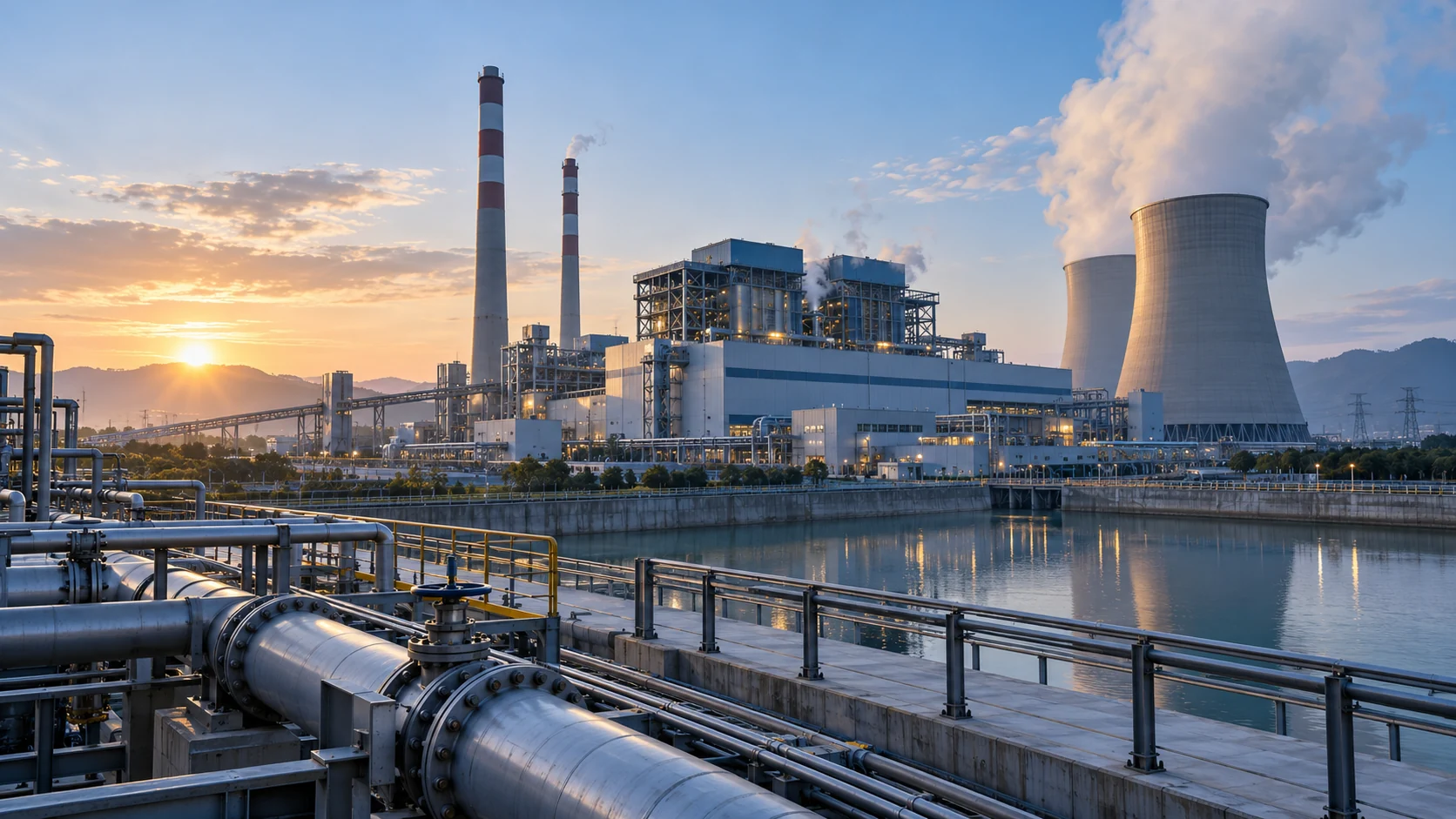
Escena ilustrativa de una central eléctrica (generada por IA; no es una instalación de VALMORA).
APLICACIONES / DIFERENCIAS DE SERVICIO
Los distintos circuitos de una central eléctrica exigen decisiones diferentes en materia de válvulas
Una línea de vapor, un bypass de bomba de agua de alimentación y un colector de agua de refrigeración no pueden especificarse a partir de una única clasificación de “válvula para central eléctrica”. Primero identifique el fluido, la función de caudal y las condiciones transitorias relevantes.
Vapor principal y aislamiento en caliente
Las válvulas de compuerta son un punto de partida para el aislamiento todo abierto/todo cerrado. El calentamiento repetido, la presión diferencial durante la operación y la demanda del actuador modifican la revisión; no utilice una válvula de compuerta convencional como solución de estrangulamiento.
Agua de alimentación y recirculación de bomba
La regulación del agua de alimentación o el mantenimiento del caudal mínimo de la bomba exige una evaluación del servicio de control, incluidos los casos de bajo caudal y alta caída de presión. Las válvulas de retención abordan el flujo inverso por separado; la cavitación puede requerir un trim diseñado.
Agua de refrigeración y auxiliar
Las válvulas de mariposa pueden ser adecuadas para algunas líneas de aislamiento de mayor tamaño cuando la presión, la temperatura, el medio y los materiales del asiento lo permitan. La parada de la bomba, el cierre de la válvula de retención y el golpe de ariete requieren su propio análisis; no son automáticamente servicios de vapor a alta temperatura.
Drenajes de condensado y vapor
Los arreglos de drenaje y las trampas de vapor gestionan el condensado durante el arranque y la operación; las válvulas de cierre manual no sustituyen a las trampas. Verifique la contrapresión de la línea de retorno y el riesgo de golpe de ariete antes de seleccionar las válvulas de drenaje y de retención.
SELECCIÓN DE VÁLVULA SEGÚN EL SERVICIO
¿Qué familia de válvulas debe revisarse primero?
Utilice esto como una ruta de ingeniería inicial, no como una aprobación de producto ni un dimensionamiento de válvula completado. El servicio, las combinaciones de presión y temperatura, la presión diferencial y el cierre requerido determinan si una opción de catálogo es adecuada.
| Servicio de operación | Ruta inicial de producto | Qué puede descartarla |
|---|---|---|
| Aislamiento de apertura/cierre en línea caliente | Válvulas de compuerta; revise el catálogo de generación de energía para diseños relevantes. | La apertura con alta presión diferencial, el agarrotamiento térmico, el diseño del bonete y el par del actuador requieren revisión. Las válvulas de compuerta no son la opción por defecto para regulación. |
| Regulación de agua de alimentación o recirculación de caudal mínimo de bomba | Válvulas de control; manual opciones de globo solo cuando el servicio especificado lo permita. | Las grandes caídas de presión, la cavitación y la controlabilidad a bajo caudal pueden requerir obturadores especializados y dimensionamiento, no una válvula de control genérica de catálogo. |
| Bypass de turbina o acondicionamiento de vapor | Comenzar en control-valve review; treat it as a separately engineered severe-service inquiry. | Pressure and temperature reduction, noise, actuator response and any spray-water interface can be system-critical. No ordinary catalog valve is presumed qualified. |
| Drains, condensate or pump discharge | Válvulas de globo for appropriate isolation/drain duties; check valves for non-return functions. | Condensate removal still needs a suitable trap/drain arrangement; return backpressure, waterhammer and check-valve dynamics must be addressed. |
| Cooling and auxiliary-water isolation | Válvulas de mariposa for potentially suitable water-line isolation; check valves if reverse-flow protection is required. | Do not carry hot-steam assumptions into a water system. Check fluid compatibility, surge, seat limits and installation conditions. |
| Overpressure protection or pressure-relief duty | Comience con Válvulas de seguridad y alivio for initial product-family identification only; the protective device needs engineered sizing and code-applicability review. | Isolation, check and ordinary control valves do not substitute for a properly sized, code-applicable protective device. Define the relieving basis, set pressure, required relieving capacity, backpressure, protected-equipment boundary and applicable approvals. A catalog listing does not establish boiler, nuclear or project certification. |
Decision boundary: a valve type is the beginning of selection. A line with a severe pressure drop, required safety action, or unclear failure consequence should be reviewed against the full operating cases before a configuration is offered.
PRODUCT LINKS / NEXT LEVEL OF DETAIL
Explore the relevant VALMORA product families
Browse the catalog for documented designs, then use the valve-type pages to compare options. Confirm the quoted configuration from its product documents rather than applying a single power-plant rating to every model.
Válvulas para generación de energía
Supplier catalog examples for power-station duties; inspect each offered item and document set.
Válvulas de globo
Isolation and suitable throttling or drain duties; verify pressure drop and trim.
Válvulas de control
Modulating service; submit full flow, pressure drop and transient cases.
Válvulas de retención
Pump and return-line non-return duties; verify closure behavior and surge.
Válvulas de compuerta
On/off steam or feedwater isolation; evaluate cycling and operating differential pressure.
Válvulas de mariposa
Potential cooling/auxiliary-water isolation where body, seat and system limits fit.
RFQ INPUTS / DESIGN ENVELOPE
Specify the operating cases, not just one pressure class
A maximum pressure and a maximum temperature listed separately may not describe the same operating event. Supply the paired pressure-temperature conditions for startup, normal load, shutdown and credible transients, together with how often those transitions occur. This is especially important for thermal cycling and actuator checks.
| Engineering input | What the project defines | Qué modifica |
|---|---|---|
| Pressure and temperature together | Normal, design, startup and trip conditions as applicable; note whether extremes coincide. | Body/bonnet, packing, trim and pressure-temperature rating assessment—not a class number alone. |
| Process hydraulics | Flow range, upstream/downstream pressure, fluid phase and expected pressure drop in each control case. | Control sizing, cavitation or flashing risk, erosion, noise and required actuator response. |
| Cycle and failure behavior | Starts/stops or load-following frequency, isolation consequence, required close/open time and fail position. | Thermal-stress and seat/actuation review, including valve-opening differential pressure. |
| Interfaces and required records | Line size, end connection, orientation, access, piping code and requested inspection/test records. | Installation fit, procurement exceptions and what the exact offered configuration must document. |
PROJECT SPECIFICATION / DOCUMENT SCOPE
Which codes and approvals apply to this line?
Specify the applicable jurisdiction, code edition and owner requirements by line or package. A code named on an inquiry is not evidence that a particular VALMORA valve or its supplier carries a certification.
| Reference | Use when relevant | Evidencia a solicitar |
|---|---|---|
| ASME B31.1 | Power piping and applicable boiler-external piping where the project and jurisdiction specify B31.1. | Line-class requirements, design basis, edition and any purchaser supplements; not blanket valve certification. |
| ASME B16.34 | Applicable valve pressure-temperature ratings, construction and related requirements for covered valve designs. | Exact material, class, temperature rating, end connection, applicable edition and product documentation. |
| Boiler, protective or nuclear-specific requirements | Requirements depend on equipment boundary, safety function, jurisdiction and specified code. | Named approval/certificate holder, valid scope and exact product documentation. Industry supply scope alone is not approval. |
Rating check: pressure class is not one allowable pressure at every temperature. Compare the proposed body and trim materials with the specified pressure-temperature combinations for the exact valve.
CATALOG EVIDENCE / LIMITS
What the product images and industry scope actually establish
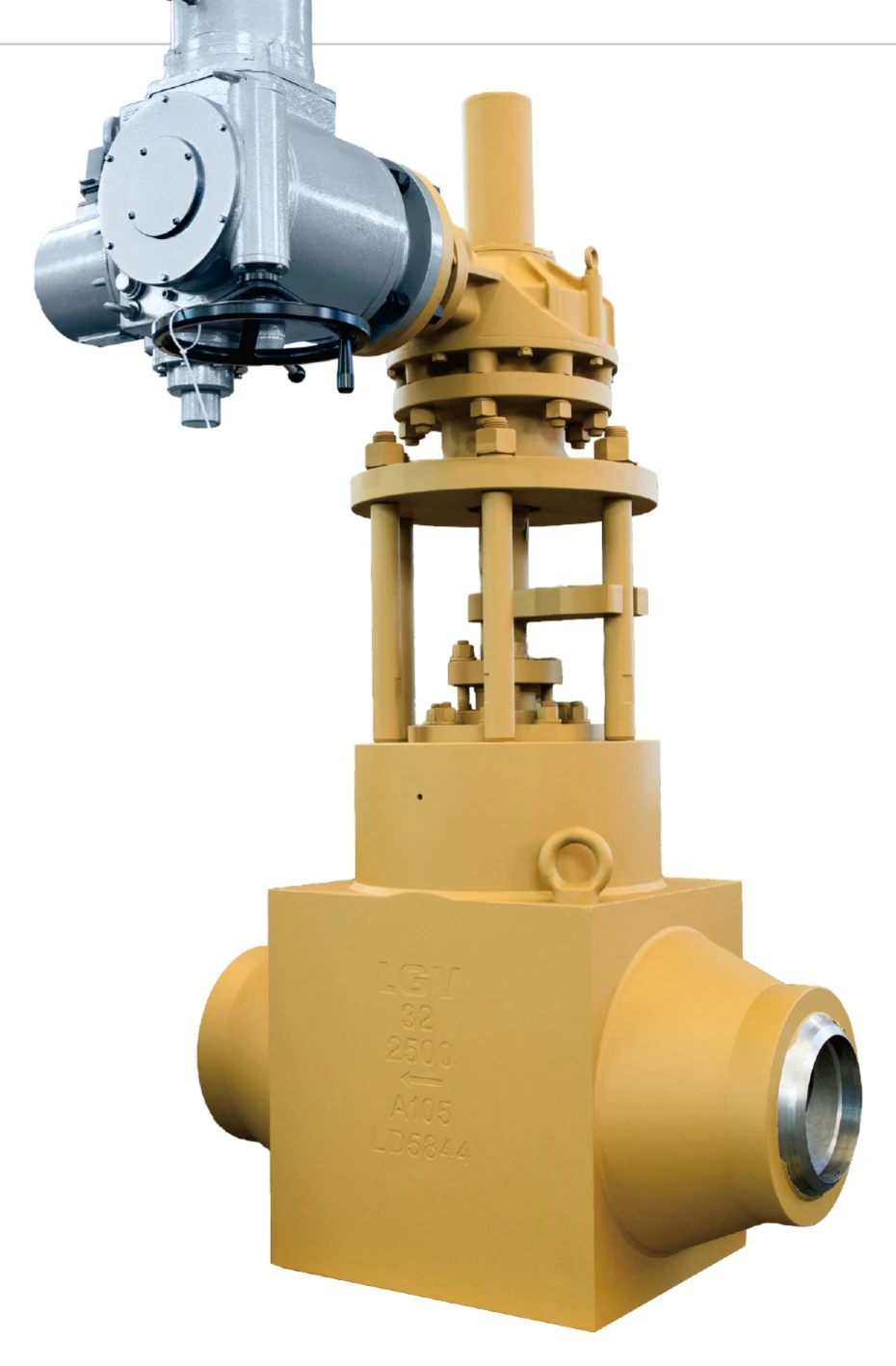
VALMORA accepts inquiries for power-generation applications. The two product photographs on this page are existing supplier catalog images, useful for identifying illustrated valve designs—not verification of an offered valve’s material, temperature limit, cycle life or project installation.
Illustrated gate-valve design
The electric-actuated gate-valve photograph originates from a supplier power-station catalog. It is not proof of VALMORA ownership of the manufacturing facility, a particular class rating or suitability for a specified steam line.
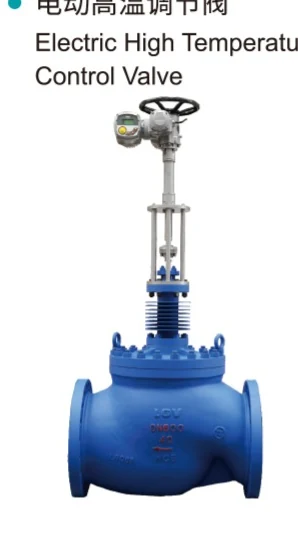
Illustrated control-valve design
The catalog also depicts an electric high-temperature control-valve design. High differential-pressure or bypass duty still needs its own operating cases, sizing, trim and approval review.
What an offer must establish
For the actual item, request a configuration datasheet, material and rating basis, available inspection or test records and any project-required third-party evidence. A supplier catalog image cannot replace the submittal.
ENGINEERING-TO-PROCUREMENT HANDOFF
Make the valve inquiry auditable before an order
A comparable quotation identifies what is offered and what is still open. Ask for a tag-by-tag exception list rather than interpreting an unqualified “complies” statement as evidence.
| Submittal item | Buyer supplies or checks | Supplier response to obtain |
|---|---|---|
| Tagged line / valve schedule | System, duty, quantity, normal and transient cases, applicable project code and revision. | Exact offered design, model identity if available, and unconfirmed conditions. |
| GA and configuration | Size, ends, operator, access, installation orientation and interfacing dimensions. | Current drawing/GA, material and actuator details for the proposed configuration. |
| Inspection and test scope | Applicable test/inspection requirements, witness points and documentation format. | Records available for that item, proposed inspection plan and named deviations. |
| Compliance and revisions | Requested approvals, governing documents, submission dates and revision controls. | Valid certificate scope where required, document register, exclusions and open clarifications. |
RELATED VALMORA PAGES
Continue to products, documentation and enquiry
These pages supply related context; they are not substitutes for a product-specific datasheet or plant approval record.
PROJECT RFQ
Describe your power-generation valve requirements
Use the existing technical-requirements field to describe or paste essential valve tags, line conditions and operating cases. State whether each duty is isolation, modulating control, non-return, drainage or overpressure protection, and identify required approvals where known; mark missing values as unknown rather than guessing. If drawings or datasheets are needed, ask how to exchange them during follow-up. VALMORA can review the inquiry and identify the additional configuration evidence required.
- Plant, unit, system and equipment tag
- Valve function and consequence of failure
- Minimum, normal, maximum and upset operating cases
- Medium composition, phase, contaminants and solids
- Line size, ends, orientation, access and actuation
- Project standards, editions and owner specifications
- Testing, inspection, records and witness requirements
- Unknown fields marked for engineering confirmation