
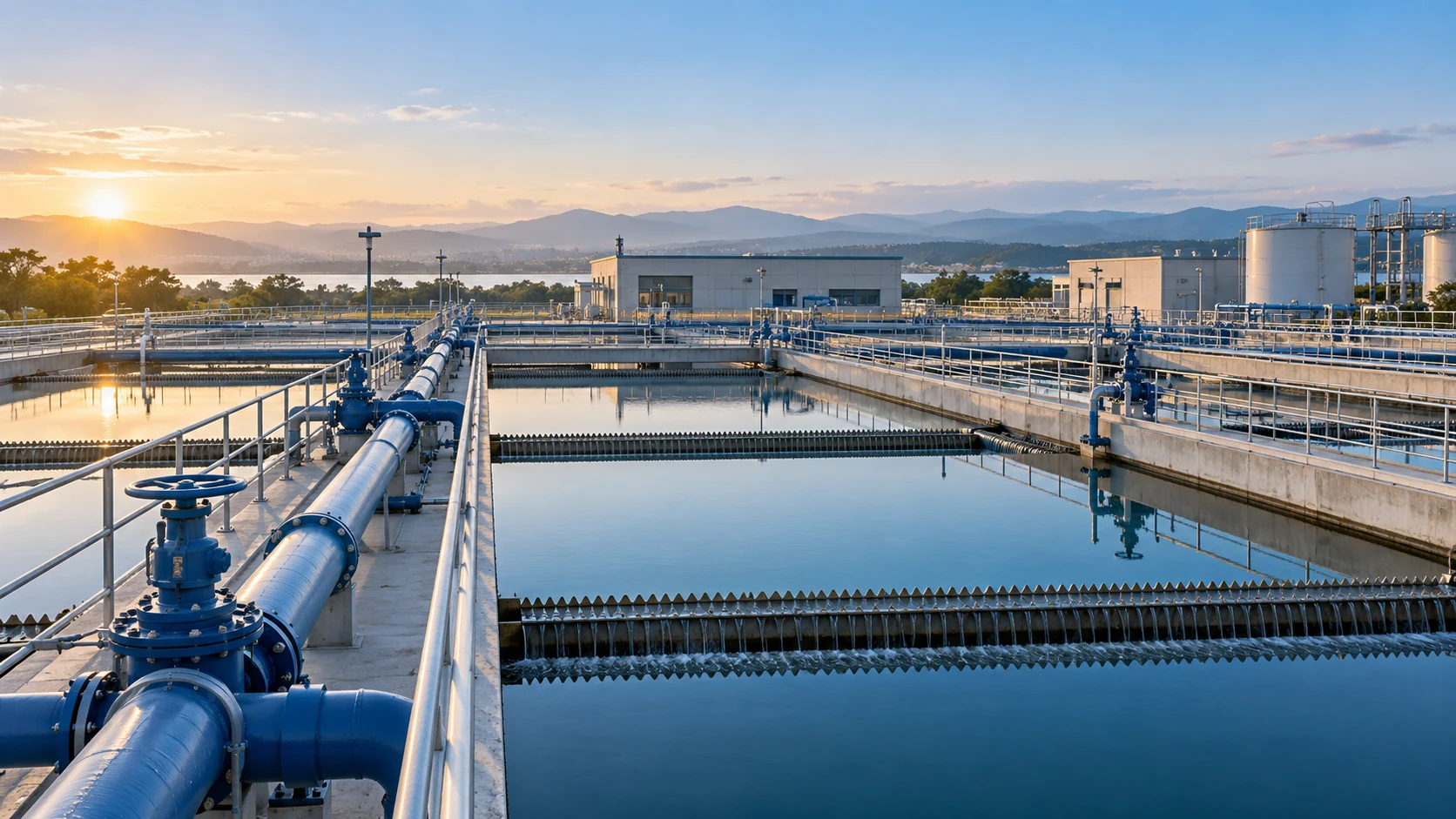
Infraestructura de agua municipal
Válvulas para agua municipal para aislamiento y control de presión
Para redes de transmisión y distribución municipales, estaciones de bombeo e instalaciones de tratamiento, comience por el servicio, no solo por el diámetro nominal de la tubería. El aislamiento, la regulación de presión, el control de flujo inverso y la protección contra transitorios resuelven problemas distintos. VALMORA atiende consultas sobre válvulas para infraestructura de agua y dirige el requisito a la familia de productos adecuada para la revisión de la configuración.
Comience aquí: Identifique la etiqueta de línea o de equipo, las presiones y el caudal de operación, los requisitos de contacto con el agua, el acceso para la instalación y los eventos operativos que debe manejar la válvula. Después, revise la categoría de producto correspondiente o envíe el listado de válvulas del proyecto para una cotización técnica.
Datos del proyecto que modifican la selección
Defina el servicio de la red antes de seleccionar una válvula
Una válvula que cumple el servicio en flujo estable puede no ser adecuada cuando se detiene una bomba, una zona aislada pierde presión o el acceso para mantenimiento es limitado. Utilice los siguientes campos para comparar ofertas técnicamente equivalentes, indicando por separado el caudal mínimo y las condiciones anómalas respecto a la operación normal.
| Datos de entrada del proyecto | Indicar o especificar | Por qué cambia la selección |
|---|---|---|
| Función y ubicación | Impulsión principal, zona de distribución, descarga de bomba, skid de tratamiento o cámara; tag y límites de aislamiento. | Separa las funciones de aislamiento, control de presión y retención antes de elegir el tipo de válvula. |
| Caudal y presión | Caudal mínimo/nocturno, punta y caso de caudal de incendio según aplique; rangos de presión aguas arriba/aguas abajo, perfil de elevación y límites de diseño. | La estabilidad del control de presión, la pérdida hidráulica y la presión diferencial de la válvula pueden condicionar el dimensionamiento. |
| Eventos y transitorios | Comportamiento en arranque/parada de bomba y pérdida de energía, posible inversión del flujo, movimiento previsto de la válvula y estudio de transitorios disponible. | El cierre por flujo inverso y el control de ondas de presión requieren verificaciones distintas; la presión en régimen permanente por sí sola no es suficiente. |
| Agua e instalación | Uso potable o no potable; desinfectantes, sólidos, temperatura, requisitos de revestimiento/contacto, profundidad de enterramiento, orientación de la válvula, acceso y alimentación del actuador. | La exposición de los materiales, la limpieza, la operación en campo y el mantenimiento modifican la configuración viable. |
| Aprobación y entrega | Especificación y edición de la compañía de servicios, ensayos de aceptación, listados de certificación requeridos, planos de válvulas y registros de inspección. | La válvula ofertada debe corresponder al contrato exacto y a los requisitos de contacto con el agua. |
Tres servicios municipales diferentes
Comenzar por la función hidráulica que debe cumplir la válvula
El servicio de agua municipal no se define con una única especificación de válvula. Una misma conducción puede requerir cierre para trabajos programados, control de presión durante variaciones de demanda y protección independiente contra flujo inverso o transitorios.
Transporte y distribución
Para un cierre en conducción principal, comparar las soluciones con válvula de compuerta y válvula de mariposa según el diámetro de tubería, la pérdida de carga admisible, la frecuencia de operación, el acceso enterrado/en cámara y la actuación requerida. Una válvula de mariposa compacta sigue necesitando holgura para el disco y un plan de cierre.
Zonas de presión y variaciones de demanda
A pressure-reducing function targets downstream pressure; a pressure-sustaining function protects an upstream minimum. Neither is interchangeable with simple throttling or a surge-relief device. Check minimum and peak flow, inlet pressure margin and pilot response.
Pumping and treatment facilities
Pump discharge check valves address flow reversal, but their closing behavior must be reviewed with the hydraulic transient study. Upstream strainers may protect sensitive components from solids, subject to pressure loss and cleaning access; they do not certify potable-water quality.
Explore the corresponding products
Select a product family for the actual duty
Use these category pages to examine construction and configuration. An application match does not establish that every listed model meets a utility specification or has drinking-water approval.
Válvulas de control hidráulicas
For pilot-operated pressure, level or flow functions; distinguish reducing, sustaining and control logic before model selection.
Válvulas de mariposa
For compact line isolation where bore clearance, shutoff, operating torque and actuation suit the installation.
Válvulas de compuerta
For on/off isolation; check the required waterworks design, underground operation and seat/coating conditions.
Válvulas de retención
For pump or pipeline reverse-flow control; verify opening loss, installed orientation and dynamic closure.
Avoid the wrong protection function
Four specifications that should not be treated as interchangeable
The following distinctions prevent common substitution errors during municipal valve procurement. A valve family is only a starting point: the network study and purchaser specification govern the actual arrangement.
| Required outcome | Relevant equipment route | Important distinction |
|---|---|---|
| Shut off an isolated main | Gate o válvulas de mariposa. | An isolation valve is not a pressure regulator; actuation and shutoff sequencing can still affect a surge event. |
| Hold a lower zone pressure | Pressure reducing o hydraulic control valve route. | A reducing valve needs sufficient inlet pressure and a stable low-flow/peak-flow operating envelope; its setpoint does not guarantee fire-flow capacity. |
| Stop reverse flow at a pump | Check valve selected for the pump/line dynamics. | Non-return operation alone does not make it an approved cross-connection backflow prevention assembly. |
| Limit damaging transients | System surge analysis first; assess pump controls, air/vacuum equipment, valve motion and appropriate protective devices. | A slow-closing or pilot valve is not a stand-alone guarantee against both high- and low-pressure waves. |
Additional product routes: Pipeline Strainers for solids management ahead of sensitive equipment, and Válvulas reductoras de presión for detailed regulator configurations. The industry page does not replace those product specifications.
Project specifications and water-contact evidence
Specify the applicable waterworks standard—and its exact scope
The project owner sets the required edition, utility supplements, tests and approvals. AWWA documents address different equipment types; they do not certify an entire supplier catalog. Where the valve contacts drinking water, verify the required health-effects and lead-content evidence for the exact offered configuration.
| Reference or requirement | Where it can apply | What purchasing must verify |
|---|---|---|
| AWWA waterworks valve standards | Examples include C504 (rubber-seated butterfly), C509 (resilient-seated gate), C508 (swing-check) and C530 (pilot-operated control). | Specify the standard and edition for the valve type, then check the offered design and required tests. A standard title is not a product approval. |
| Cross-connection protection | An approved double-check or reduced-pressure backflow assembly may be required at a defined cross-connection; AWWA C510 and C511 cover assembly types. | Determine the hazard category and local authority requirement; a normal pipeline check valve cannot automatically replace a tested assembly. |
| NSF/ANSI/CAN 61 and 372 | Where specified for potable-water contact, 61 addresses health effects from materials; 372 addresses lead content. | Request current listings or acceptable evidence for the product/material, contact temperature and jurisdiction. One standard does not cover every other requirement. |
| Owner hydraulics and installation | Pressure zones, surge model, air management, valve closure, buried operation and coating system. | Match the arrangement, design envelopes, drawings, material/lining scope and acceptance tests to the utility documents. |
Reference: See AWWA’s standards list y NSF’s explanation of Standard 61. These describe standard scopes; they are not VALMORA product certificates.
Existing catalog product examples
Illustrated valve and strainer routes—not installed project references
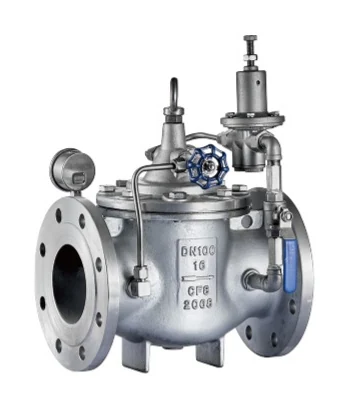
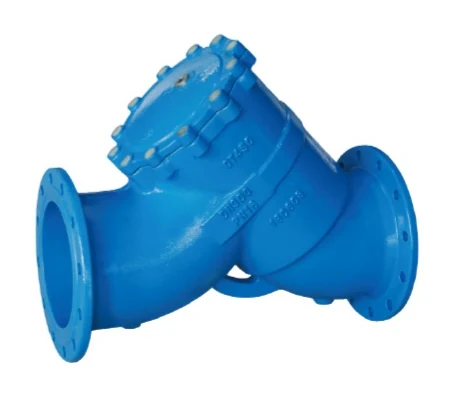
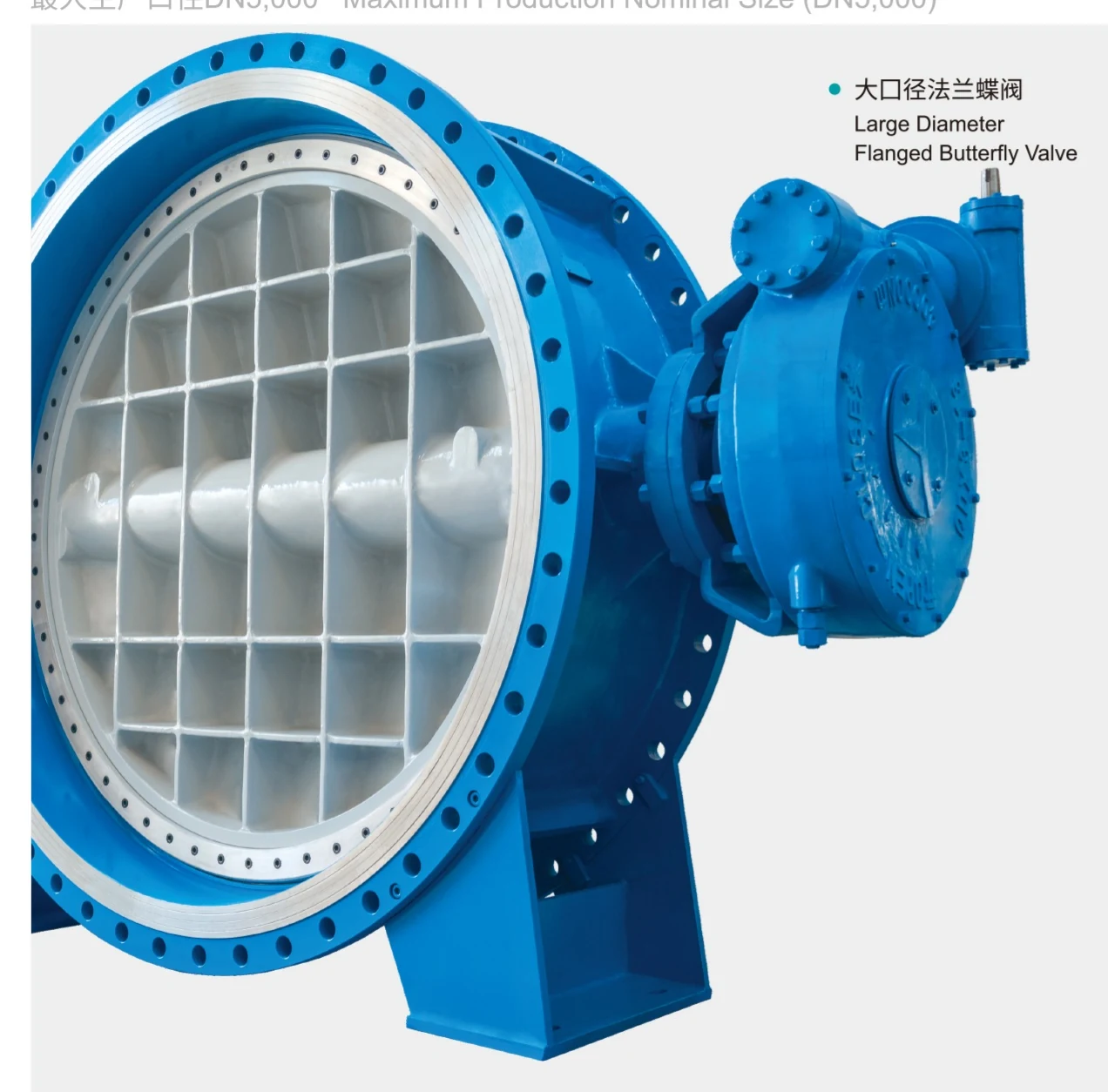
The images on this page include a supplier-catalog 200X stainless steel pressure reducing valve (shown above), a blue water pipeline strainer and a large-diameter flanged butterfly valve (shown below). They illustrate different equipment functions. The generic municipal hero illustration is AI-generated, not a photograph of a VALMORA site or utility project.
200X pressure reducing valve
The catalog image identifies a pressure-reducing product family, not an assured setpoint range or automatic suitability for a particular water district. See the pressure reducing category for configuration discussion.
Water pipeline strainer
The cataloged blue Y-pattern unit is an equipment-protection route where solids are relevant. Ask for screen opening, differential pressure at duty flow, blowdown access and lining/contact documentation. Explore strainers.
Large-diameter flanged butterfly valve
The supplier catalog image depicts a large-diameter flanged butterfly valve. Confirm the proposed operating arrangement, actual actuator (if any), required shutoff, closing behavior, disc clearance and water-contact materials from the drawings of the offered model. Explore butterfly valves.
Before requesting an approved submittal
Agree the valve data and document package for each tag
For a municipal tender or equipment package, compare offers by valve tag and configuration—not by catalog picture or nominal pressure designation alone. Request deviations, available documents and any outstanding approval items in the same register.
| Submittal item | Check against the inquiry | Who must provide or verify |
|---|---|---|
| Valve schedule / general arrangement | Tag, function, size, end connections, lay length, installation direction, operator access and actuation. | Buyer supplies line and chamber conditions; supplier returns exact offered drawings and exceptions. |
| Hydraulic and controls basis | Minimum/maximum flow, inlet/outlet pressure, available differential, pilot settings, power-loss state, closure and transient cases as relevant. | Owner/EPC provides system cases; vendor confirms equipment data, not whole-network surge adequacy by assumption. |
| Water-contact materials and listing | Body, trim, elastomers, coating/lining, applicable contact temperatures, required standard editions and jurisdiction. | Buyer names approval basis; supplier provides available product-specific records; authority decides acceptance. |
| Inspection and handover | Hydrostatic/seat tests, coating records, inspection hold points, witnesses and document revision. | Agree which test reports and certificate copies are deliverable before award. |
Related project resources
Continue to product selection or project documentation
For specific valve sizing or a bill of materials, use the relevant product page above. For general project requirements, the resources below help organize the company-level discussion without replacing an offered product datasheet.
Aplicaciones industriales
Review other process and utility duties separately.
Manufacturing information
Review published supply-chain and manufacturing information; request evidence relevant to your contract.
Control de calidad
Discuss required inspection stages, test methods and records.
Technical Resources
Read selection guidance alongside the product-specific information requested in your RFQ.
Send a municipal valve inquiry
Share your water-network valve schedule for review
Attach the utility specification, line profile or valve list if available. Identify each tag as isolation, pressure control, pump non-return or other system protection, and distinguish routine operation from pump-trip or fire-flow cases. Missing data can remain open rather than being assumed.
- Location and valve tag: transmission, distribution, pump or treatment
- Function: isolation, pressure reduction/sustaining, non-return or surge duty
- Minimum, normal and peak flow; upstream/downstream pressure and elevation
- Pump-trip, closure and any available transient analysis
- Potable status, water chemistry, coatings and required approvals
- Pipe size, ends, access, controls and available power
- Utility standard editions, test records, documents and quantity
- Mark uncertain values as open for engineering review