
Шаровой кран, представленный в каталоге
Трёхсоставной шаровой кран с неподвижным шаром из кованой стали с металлическим седлом
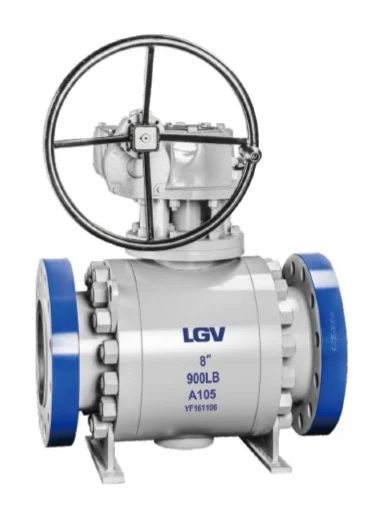
В каталоге производителя указан данный кран Трёхсоставной шаровой кран с неподвижным шаром из кованой стали с металлическим седлом и приведён соответствующий пример на странице 89 PDF. Это отправная точка для анализа конфигурации отсечной арматуры, а не опубликованная таблица размеров, классов или характеристик.
Если рабочие условия включают высокий перепад давления при закрытии, твёрдые включения или повышенную температуру, предложенную конструкцию седла, пределы давления и температуры, а также допустимую утечку необходимо проверить по фактическому предложению.
- Трёхсоставная конструкция из кованой стали — описание в каталоге
- Конструкция с твёрдым уплотнением и неподвижным шаром — описание в каталоге
- Размер, марка корпуса, номинальный режим и характеристики отсечки — уточняются в предложении
Трактовка конструкции
Что означают конструктивные термины при выборе
В каталоге указаны кованая конструкция из трёх частей, твёрдое уплотнение и неподвижное крепление шара. Эти термины помогают определить конструктивное семейство; фактические внутренние детали должны устанавливаться по разрезу и паспорту для конкретных условий эксплуатации.
Кованый корпус из трёх частей
Конструкция из трёх частей и кованая сталь указаны в наименовании изделия. Они не определяют схему соединения корпуса, крепёж, марку кованой стали или допустимые нагрузки от трубопровода. Перед согласованием присоединительных размеров или доступа для обслуживания изучите чертёж разреза и общий вид.
Твёрдое уплотнение седла
“Твёрдое уплотнение” описывает концепцию седла, но не покрытие, сплав седла или класс герметичности. Если выбор обусловлен твёрдыми частицами, температурой или циклическим режимом, запросите материалы контакта шара и седла, обработку поверхности и испытанный критерий герметичности для предлагаемой конструкции.
Неподвижное крепление шара
Неподвижный шар воспринимает нагрузку опорами, а не прижимается потоком вниз по течению, как плавающий шар. Нагрузка на седло и поведение давления в полости корпуса зависят от внутренней конструкции. Запросите чертёж разреза и описание разгрузки седла и полости; не делайте вывод о DBB или DIB по обозначению в каталоге.
Запись каталога
Что фактически подтверждает страница 89 PDF
The page-89 caption identifies the product; its photograph documents one illustrated example. Visible cast or stamped markings belong to that example and are не проверенным заказным типоразмером, классом давления или маркой материала для WP361.
| Поле | Задокументированное значение | Граница подтверждаемых данных |
|---|---|---|
| Наименование изделия | Трёхсоставной шаровой кран с неподвижным шаром из кованой стали с металлическим седлом | Подпись в каталоге |
| Семейство изделий | Шаровой кран | Раздел каталога |
| Описание конструкции корпуса | Трёхсоставная | Catalog caption; geometry not detailed |
| Материал | Кованая сталь | Catalog caption; forging grade unspecified |
| Seating descriptor | Hard sealed | Catalog caption; seat materials/test unknown |
| Ball arrangement descriptor | Fixed ball | Catalog caption; internal support details unknown |
| Source image / location | AST-R1-0263; PDF page 89, upper row | Verified catalog pixels and source WebP |
В данной позиции каталога не указаны: NPS/DN, Class/PN, pressure–temperature ratings, bore, connection dimensions, body grade, seat leakage acceptance, fire testing or certification. Obtain an offered datasheet and approved drawing before purchase approval.
Engineering acceptance
Two checks that can change the valve selection
A hard-sealed fixed-ball name is not an acceptance criterion. Shutoff performance and trapped-cavity behavior must be defined for the intended duty, particularly where liquid can be blocked between closed seats.
Seat integrity and shutoff
- Define differential pressure across the closed valve, fluid temperature, solids and cycle frequency.
- Request ball/seat contact materials, any hard-facing, and the proposed service limits.
- Specify the leakage test method, direction(s), test pressure/medium and allowable rate; do not assume zero leakage.
Body cavity and isolation philosophy
- Identify trapped-liquid or thermal-expansion conditions that could pressurize the body cavity.
- Request the actual seat arrangement and the cavity-pressure relief/venting method on a drawing.
- If DBB or DIB is required, state the isolation function and acceptance procedure; neither follows automatically from “fixed ball.”
Project specification
Что должно быть установлено в коммерческом предложении
Comparable quotations need the same operating case, sealing acceptance and connection requirements. Provide the duty first, then request drawings and test documentation against that duty rather than selecting from the catalog photo.
Isolation duty or modulating duty?
For on/off isolation, state shutoff direction(s), leakage criterion, maximum differential pressure and cycle frequency. For continuous throttling or frequent partly-open operation, do not assume this ball valve is a control valve. Ask for explicit partial-open service qualification or select a control-valve design intended for regulation.
Pressure, temperature and cavity conditions
Provide design and normal pressures, maximum shutoff differential pressure, minimum/maximum fluid temperatures, transients and vacuum conditions. State whether liquid can become trapped. Request pressure–temperature limits for the offered body and seat configuration at the relevant operating points; a Class/PN designation alone does not establish allowable pressure at all temperatures.
Bore, connections and wetted materials
Specify NPS/DN, required bore, mating flange facing/drilling or weld-end geometry, face-to-face constraints and pipe details. Include fluid composition, particles, cleaning requirements, corrosion conditions and any specified corrosion allowance. Request the proposed forging grade, ball/seat hard-facing, stem, secondary seals and packing on the bill of materials; no grade follows from the word “forged.”
Operator sizing and installation
State manual, gear or actuator requirements, cycle time, available air/power, fail position if applicable, required flow direction, orientation, piping loads, maintenance clearance and ambient conditions. Request the valve operating torque across the specified differential-pressure and temperature envelope before selecting a gearbox or actuator.
Inspection, leakage tests and traceable records
Agree the applicable design and inspection standard editions, shell/seat test conditions, allowable leakage, test direction(s) and witness points. Request the approved GA/section drawings, datasheet and material records. Fire-safe, fugitive-emission, NDE or PMI evidence should be included only where required by the contract and supported for the actual configuration.
Purchase decision
When this listing fits the inquiry—and when it does not
Use this catalog identity to request a three-piece, forged-steel, hard-sealed fixed-ball design. Whether an offered valve is suitable must be determined from its duty-specific datasheet, drawings and required tests—not its product name.
Defined on/off isolation
Continue to technical quotation when the buyer can state the isolation direction(s), shutoff differential pressure, leakage allowance and service envelope. Compare only offers that document those same conditions.
Abrasive, hot or cycling service
Keep approval conditional where solids, high temperature or frequent operation may affect the sealing faces. Request the proposed hard-facing and validated service limits; “hard sealed” is not proof of abrasion resistance or a temperature rating.
Continuous control or special integrity duty
Change or qualify the specification if throttling, DBB/DIB, fire-safe performance or low fugitive emissions is mandatory. Ask for the specific tested valve configuration and records; otherwise seek a valve expressly designed for that requirement.
Verified catalog image
The example shown in the original catalog
This image matches the upper-row Трёхсоставной шаровой кран с неподвижным шаром из кованой стали с металлическим седлом caption on PDF page 89. The photographed valve’s markings describe that example only; use the offered GA drawing for final dimensions and the proposed datasheet for grades and ratings. Click the image to enlarge it.
Other ball valve records
Compare other catalog identities by duty
These links lead to separately labeled products, not interchangeable specifications. Compare each offered datasheet and construction drawing before switching the requested model.
Трёхсоставной шаровой кран высокого давления из кованой стали
A separate catalog listing emphasizes high pressure. Its allowable pressure, seat arrangement and exact connection must be established independently; the yellow image from PDF page 89 belongs with that listing, not WP361.
Трёхсоставной шаровой кран с неподвижным шаром из кованой стали для высоких температур и давлений
Review this distinct catalog identity if both temperature and pressure drive the request. Its descriptive name alone does not establish an operating range for this page or that model.
Трёхсоставной кованый шаровой кран с фиксированным шаром с электроприводом
Review this route when electric operation is a primary requirement. Confirm actuator torque, power, cycle duty and any specified failure behavior for its own valve configuration.
Технический запрос
Request the offered configuration and quotation
Reference catalog identity CCE-R2-0083 with the information below. Request a quotation supported by a proposed datasheet, GA/section drawing, leakage-test basis and any contract-required records. Ask the supplier to confirm the quoted price and estimated lead time in writing for the offered configuration. The catalog picture is not a substitute for these documents.
- Duty: on/off or other; medium/composition, solids, operating cycles and required isolation function.
- NPS/DN, bore, connection details, normal/design pressure and maximum shutoff differential pressure.
- Minimum/maximum temperature, transients and possible trapped-liquid/cavity pressure.
- Required materials, hard-facing/seat performance, operator/actuator utilities and fail position where relevant.
- Quantity, destination, and required drawings, material records, tests, standard editions and witness points.