
Producto documentado en PDF
Válvula de bola fija de acero forjado en tres piezas con accionamiento eléctrico
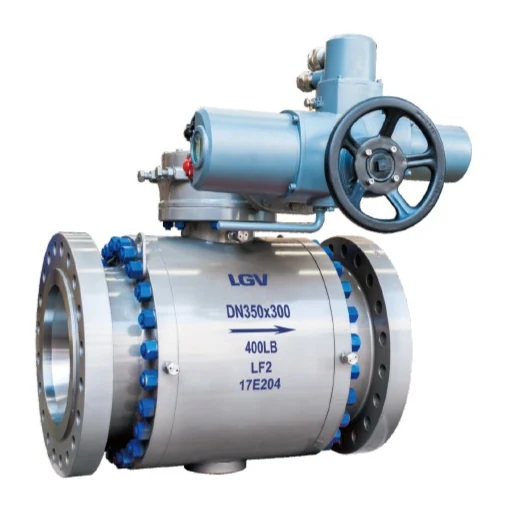
El catálogo de productos en inglés recuperado incluye este artículo como Válvula de bola fija de acero forjado en tres piezas con accionamiento eléctrico en la página 89 del PDF. La etiqueta del catálogo confirma el tipo de válvula, el descriptor de construcción en tres piezas, el descriptor de material de acero forjado y la actuación eléctrica. No publica un modelo pedible, una clasificación de presión o temperatura, un tamaño, una conexión de extremo, una marca de actuador ni una especificación eléctrica. Utilice la imagen del catálogo para identificar la entrada, no como referencia dimensional o de rendimiento.
- Tipo de válvula: válvula de bola
- Diseño / construcción: Tres piezas
- Descriptor de material: acero forjado
- Accionamiento: eléctrico
Identidad del producto
Identidad del producto y alcance del catálogo
Esta página representa una entrada de producto con nombre en el catálogo de origen. Su título es una etiqueta de identidad, no una especificación de compra completa; utilice la categoría de válvulas de bola para la familia de productos más amplia y esta página para la revisión específica de la configuración.
Familia de producto
Válvula de bola. Esta es la ruta comercial principal para la selección a nivel de categoría.
Serie de catálogo
Válvula de bola. Este es el contexto de la serie de origen impreso en el catálogo de productos recuperado.
Fuente de evidencia
Catálogo de productos en inglés recuperado, página 89 del PDF; la imagen de la válvula eléctrica está asignada a esta entrada del catálogo.
Evidencia del catálogo
Datos de producto documentados en catálogo
La tabla registra únicamente lo que identifica el catálogo. “Tres piezas”, “acero forjado”, “bola fija” y “eléctrica” son descriptores del catálogo; por sí solos no establecen la geometría seccional, los grados exactos de material, el envelope de presión-temperatura, la interfaz de montaje ni el rendimiento del actuador de la válvula a cotizar.
| Campo | Valor documentado en catálogo | Estado de la evidencia |
|---|---|---|
| Tipo de válvula | Válvula de bola | VERIFICADO — etiqueta del catálogo PDF |
| Diseño / construcción | Tres piezas | VERIFICADO — etiqueta del catálogo PDF |
| Descriptor de material | Acero forjado | VERIFICADO — etiqueta del catálogo PDF |
| Accionamiento | Eléctrico | VERIFICADO — etiqueta del catálogo PDF |
| Serie de origen del catálogo | Válvula de bola | VERIFICADO — sección del catálogo PDF |
| Página de origen del catálogo | Página 89 del PDF | VERIFICADO — asignación de PDF recuperada |
Para compras: trate la entrada del catálogo como una referencia de identidad. La ficha técnica específica de la configuración del proveedor, el plano seccional, el programa de actuadores y el plano de pedido aprobado deben definir el conjunto real.
Límite de evidencia
Datos conocidos y campos de configuración abiertos
El catálogo confirma el nombre del producto y sus atributos etiquetados. La decisión de compra sigue dependiendo de la construcción detallada de la válvula, el par de operación real y el paquete de actuador eléctrico ofrecido para este proyecto.
Confirmado por el catálogo
- Tipo de válvula: Válvula de bola — identificada en la etiqueta del catálogo.
- Descriptor de construcción: Tres piezas — la disposición exacta de la junta del cuerpo y de servicio debe mostrarse en el dibujo de sección.
- Descriptor de material: Acero forjado — esta etiqueta no especifica los materiales exactos del cuerpo, el trim, el vástago, la bola y el asiento.
- Descriptor de actuación: Eléctrica — no se indican el modelo del actuador, la salida, la alimentación, los controles ni la respuesta ante fallo.
Confirmar antes de cotizar
- Construcción del cuerpo: sección central, piezas de extremo, diseño de junta, atornillado y límite de presión
- Disposición de bola fija: apoyo de la bola, recorrido de carga del vástago y cojinete, asientos y disposición de sellado
- Materiales y extremos de línea: grados exactos, trim, sellos, tipo de extremo, dimensiones y norma de acoplamiento
- Envolvente de operación: tamaño, clase de presión, presión de diseño/operación, temperatura y presión diferencial
- Actuador: interfaz de montaje, par nominal/de bloqueo, rango de ajuste de par, alimentación, control, realimentación, servicio y tiempo de carrera
- Respuesta ante fallo: pérdida de alimentación principal, pérdida de señal de mando, energía de respaldo y posición final requerida
- Documentos y aceptación: planos aprobados, hoja de datos, cableado, registros de materiales y ensayos especificados
Revisión de ingeniería
Comprobaciones de ingeniería antes de especificar la válvula eléctrica
Especifique la válvula y el actuador como un conjunto de ingeniería. Un nombre de catálogo o un tamaño nominal de tubería no basta para seleccionar el accionamiento: el proveedor necesita las condiciones del proceso, los datos de par de la válvula, la interfaz mecánica y los requisitos eléctricos/de control para la configuración exacta ofrecida.
Servicio y envolvente operativa de la válvula
State whether the valve is for on/off isolation, emergency isolation or modulating service, and give the required cycle frequency and travel time. Provide the medium, normal and design pressure, maximum differential pressure across the closed ball, minimum/maximum temperature, flow conditions and any transient, vacuum or long-standstill cases. These conditions affect seat loading, breakaway torque and the required actuator duty.
Valve torque data and actuator sizing
Request the valve manufacturer’s opening and closing torque profile for the stated size, pressure differential, temperature and seat configuration—not an estimate based only on NPS. Ask the supplier to identify the valve-side break-to-open (BTO), run-to-open (RTO), end-to-open (ETO), break-to-close (BTC), run-to-close (RTC) and end-to-close (ETC) torque values, where those terms apply to the supplied design, and state the test or calculation basis. Keep these valve torque values separate from the actuator’s rated torque, stall torque and minimum/maximum torque-setting range. Where output varies with position, obtain torque-versus-travel data. Also request the valve stem/drive train maximum allowable stem torque (MAST) and the actuator/adapter limits. Compare available actuator output across the full travel and at the specified supply limits. Agree the sizing margin with the project specification and the supplier’s documented method; a generic safety factor cannot replace the actual torque profile, and excessive actuator output can damage the stem or drive components.
Three-piece body and fixed-ball construction
Ask for a sectional assembly drawing that identifies the center body, end pieces, body joints, fasteners, gaskets or seals, ball support, stem, bearings and seat arrangement. “Three-piece” does not prove that the center section can be removed without separating the pipeline; confirm the maintenance method, required isolation and working clearance. “Fixed ball” is a catalog descriptor, not enough to establish the support geometry or load path. The drawing should show how the ball is supported and how operating torque is transmitted to it. Separately confirm the exact forged body grade, trim, stem, ball, seat and seal materials, end connection, dimensional standard and pressure-temperature data for the offered valve.
Mechanical actuator mounting and drive interface
Confirm the valve mounting flange, bolt pattern, drive dimensions, stem height, key or coupling, bracket and alignment. Where the project specifies ISO 5211, state the required edition and verify the actual valve-to-actuator interface dimensions; the standard addresses attachment geometry and interface torque references, not the complete valve’s pressure rating or suitability. Check that the actuator’s rated output is sufficient for the required valve torque while its maximum or stall output remains within the allowable torque of the valve stem, coupling and mounting components.
Electrical supply, controls and failure response
Before quotation, identify whether the proposed actuator supply is AC or DC and obtain the manufacturer’s stated rated voltage and allowable variation. For an AC supply, request the rated supply frequency and its permitted tolerance separately from the actuator’s operating duty. Obtain the actuator’s rated input current and its starting or inrush current; if the manufacturer specifies the maximum input demand in another form, request that value and its basis so the supply capacity, cable and protective devices can be assessed. Specify phase where applicable. Define the control input electrically, not only by its function: state whether the command is discrete open/close or modulating, and provide the project-specified signal type and rated voltage/current where applicable. Request the actuator’s applicable duty class or duty rating, the manufacturer’s permitted number of starts or operating cycles over the stated time basis, and rated travel time under the stated supply conditions. Do not use operating cycles or starts as a substitute for AC supply frequency. Obtain the terminal/wiring diagram, cable-entry thread or interface, feedback contact or signal ratings, and the separation and connection requirements for power and control circuits. Also define local/remote selection, interlocks, grounding, environmental protection and required feedback (open/closed indication, position, fault and torque-trip signals). Separately specify the required response to loss of main power and loss of command signal. Do not assume a standard electric actuator moves to open or closed on power loss: stay-put, stored-energy return or another response depends on the selected actuator design and accessories. If fail-open or fail-closed action is required, ask the supplier to identify the offered mechanism, available stored-energy strokes, final-position capability and supporting wiring/functional documentation. All electrical values, duty limits and actions must be defined by the project and confirmed against the offered actuator datasheet; this page does not state a model-specific electrical rating.
Límite de aplicación
Check the valve against the piping and maintenance plan
The catalog image and title identify a product entry, not a complete service specification. Confirm the process, materials, piping interface and maintenance constraints against the supplier’s drawing and the project data sheet.
Process medium and wetted materials
Provide fluid composition, phase, concentration, solids, contamination, corrosion/erosion risks and cleaning requirements. Ask the supplier to map the body, ball, stem, seats, seals and other wetted parts to the stated service. The catalog’s “forged steel” wording does not identify a grade or establish chemical compatibility.
End connections and installation envelope
Specify the required flange, threaded or welded end arrangement, face-to-face or end-to-end dimensions, bore, mating piping standard and any project-specific interface. Confirm orientation, flow direction where relevant, pipe loads, actuator clearance, cable access, ambient conditions and maintenance access from the approved general arrangement drawing.
Three-piece maintenance access
Ask whether the proposed maintenance procedure requires the valve to be removed from the line, whether the center section can be accessed only after pipeline isolation, and what clearance is needed to withdraw the body or internal parts. Confirm the body-joint fasteners, replacement seals and reassembly/pressure-test requirements in the supplier’s maintenance instructions. Do not assume “three-piece” means online serviceability.
Evidencia visual
Imágenes de producto asignadas del catálogo
The catalog image identifies the electric entry on PDF page 89. It is not a dimensional drawing and does not verify pressure rating, material grade, actuator specification, certification or the final project configuration.
Rutas de productos relacionados
Compare las alternativas documentadas antes de la solicitud de cotización
These are separate catalog identities, not interchangeable specifications. Compare their own construction and evidence records; do not transfer ratings, materials or actuator details between entries.
Válvula de bola de acero forjado de alta presión de tres piezas
A separate three-piece forged-steel ball-valve entry with a high-pressure descriptor in its catalog name. The numeric rating, size range, materials and end connections still require its own product documents.
Válvula de bola fija de acero forjado de tres piezas para alta temperatura y alta presión
A separate fixed-ball entry carrying a high-temperature and high-pressure descriptor. Do not apply that wording or any assumed temperature/pressure limit to this electric-actuated product.
Válvula de bola fija de acero forjado de tres piezas con cierre metálico
A separate hard-sealed fixed-ball catalog entry. Confirm its seat and sealing construction from its own drawing; the title does not establish this product’s seat design.
Preguntas del comprador
Electric Three-Piece Forged Steel Fixed Ball Valve FAQ
These answers focus on the decisions that cannot be made from the catalog title or photograph alone.
¿Qué confirma realmente el catálogo?
It identifies an Electric Three-Piece Forged Steel Fixed Ball Valve in the Ball Valve series on PDF page 89. The catalog label supports the valve type, three-piece construction descriptor, forged-steel material descriptor and electric actuation. It does not provide a complete dimensional, pressure-temperature, material-grade or actuator specification.
Does a three-piece body mean the valve can be serviced in line?
Not necessarily. The catalog descriptor does not establish whether the center section can be removed with the valve ends still connected to the pipeline. Check the sectional drawing and maintenance instructions for the body-joint arrangement, required line isolation, removal direction and working clearance.
Will the electric actuator move the valve to a safe position if power fails?
Not by default. The required response must be specified separately for loss of main power and loss of the command signal. A stay-put actuator, a stored-energy return package and other configurations behave differently. If fail-open or fail-closed is required, confirm the actuator design, stored-energy capacity, final-position torque and functional test evidence.
How should the actuator be matched to the valve?
Use the valve manufacturer’s torque profile for the actual pressure, temperature and seat configuration, including break, running and end torque in both directions. Compare it with actuator output over the full travel and at the specified electrical supply limits, and verify that maximum actuator torque does not exceed the valve’s MAST or the limits of the coupling and mounting components. Request the supplier’s calculation or selection sheet.
Consulta técnica
Request a configuration review for Electric Three-Piece Forged Steel Fixed Ball Valve
Reference this catalog identity and provide the service and actuator data needed for a configuration review. Include drawing or specification reference numbers in the Message field. This inquiry form has no file-upload control; if drawings or other files are required, arrange a separate transfer through the agreed contact channel.
- Valve duty, medium, operating cases and required fail response
- DN/NPS, pressure/temperature conditions and end connection
- Body, ball, stem, seat and seal material requirements
- Valve torque data, actuator interface, supply, command and feedback
- Quantity, drawing/specification references, tests and inspection documents