
Produto documentado em PDF
Válvula de Esfera Fixa Forjada em Aço, Três Peças, com Acionamento Elétrico
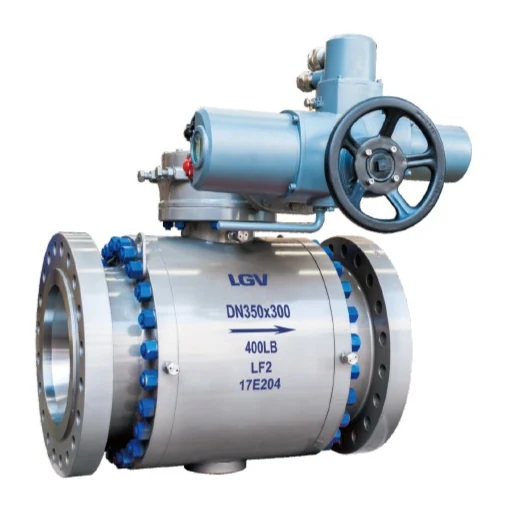
O catálogo de produtos em inglês recuperado lista este item como Válvula de Esfera Fixa Forjada em Aço, Três Peças, com Acionamento Elétrico na página 89 do PDF. O rótulo do catálogo confirma o tipo de válvula, o descritor de construção em três peças, o descritor de material em aço forjado e a atuação elétrica. Ele não publica modelo solicitável, classe de pressão ou temperatura, tamanho, conexão de extremidade, fabricante do atuador ou especificação elétrica. Use a imagem do catálogo para identificar o item — não como referência dimensional ou de desempenho.
- Tipo de válvula: Válvula de esfera
- Projeto / construção: Três peças
- Descritor de material: Aço forjado
- Atuação: Elétrica
Identidade do produto
Identidade do produto e escopo do catálogo
Esta página representa um item de produto nomeado no catálogo de origem. Seu título é um rótulo de identidade, não uma especificação completa de compra; use a categoria de válvula de esfera para a família de produtos mais ampla e esta página para análise específica da configuração.
Família de produtos
Válvula de esfera. Esta é a rota comercial principal para seleção no nível de categoria.
Série de catálogo
Válvula de esfera. Este é o contexto da série de origem impresso no catálogo de produtos recuperado.
Fonte de evidência
Catálogo de produtos em inglês recuperado, página 89 do PDF; a imagem da válvula elétrica está mapeada para este item do catálogo.
Evidência do catálogo
Dados de produto documentados no catálogo
A tabela registra apenas o que o catálogo identifica. “Três peças”, “aço forjado”, “esfera fixa” e “elétrica” são descritores do catálogo; eles não estabelecem, por si só, a geometria seccional, os graus exatos de material, o envelope de pressão-temperatura, a interface de montagem ou o desempenho do atuador da válvula a ser cotada.
| Campo | Valor documentado no catálogo | Status da evidência |
|---|---|---|
| Tipo de válvula | Válvula de esfera | VERIFICADO — rótulo do catálogo em PDF |
| Projeto / construção | Três peças | VERIFICADO — rótulo do catálogo em PDF |
| Descritor de material | Aço forjado | VERIFICADO — rótulo do catálogo em PDF |
| Acionamento | Elétrico | VERIFICADO — rótulo do catálogo em PDF |
| Série de origem no catálogo | Válvula de esfera | VERIFICADO — seção do catálogo em PDF |
| Página de origem no catálogo | Página 89 do PDF | VERIFICADO — mapeamento de PDF recuperado |
Para compras: trate o item do catálogo como referência de identidade. A folha de dados específica da configuração do fornecedor, o desenho seccional, o cronograma do atuador e o desenho de pedido aprovado devem definir o conjunto real.
Limite de evidência
Dados confirmados e campos de configuração em aberto
O catálogo confirma o nome do produto e seus atributos rotulados. A decisão de compra ainda depende da construção detalhada da válvula, do torque operacional real e do pacote de atuador elétrico oferecido para este projeto.
Confirmado pelo catálogo
- Tipo de válvula: Válvula de esfera — identificada no rótulo do catálogo.
- Descritor de construção: Três peças — o arranjo exato da junta do corpo e de serviço deve ser mostrado no desenho de corte.
- Descritor de material: Aço forjado — os materiais exatos do corpo, trim, haste, esfera e sede não são indicados por este rótulo.
- Descritor de acionamento: Elétrico — modelo do atuador, saída, alimentação, controles e resposta a falha não são indicados.
Confirmar antes da cotação
- Construção do corpo: seção central, peças de extremidade, projeto da junta, fixação por parafusos e limite de pressão
- Arranjo de esfera fixa: suporte da esfera, caminho de carga da haste e do mancal, sedes e arranjo de vedação
- Materiais e extremidades de linha: graus exatos, trim, vedações, tipo de extremidade, dimensões e norma de acoplamento
- Envelope operacional: tamanho, classe de pressão, pressão de projeto/operação, temperatura e pressão diferencial
- Atuador: interface de montagem, torque nominal/de bloqueio, faixa de ajuste de torque, alimentação, controle, realimentação, regime de trabalho e tempo de curso
- Resposta a falha: perda de alimentação principal, perda do sinal de comando, energia de reserva e posição final requerida
- Documentos e aceitação: desenhos aprovados, datasheet, fiação, registros de materiais e ensaios especificados
Análise de engenharia
Verificações de engenharia antes de especificar a válvula elétrica
Especifique a válvula e o atuador como um conjunto projetado. Um nome de catálogo ou diâmetro nominal de tubulação não é suficiente para selecionar o acionamento: o fornecedor precisa dos dados de serviço do processo, dos dados de torque da válvula, da interface mecânica e dos requisitos elétricos/de controle para a configuração exata ofertada.
Aplicação da válvula e envelope operacional
State whether the valve is for on/off isolation, emergency isolation or modulating service, and give the required cycle frequency and travel time. Provide the medium, normal and design pressure, maximum differential pressure across the closed ball, minimum/maximum temperature, flow conditions and any transient, vacuum or long-standstill cases. These conditions affect seat loading, breakaway torque and the required actuator duty.
Valve torque data and actuator sizing
Request the valve manufacturer’s opening and closing torque profile for the stated size, pressure differential, temperature and seat configuration—not an estimate based only on NPS. Ask the supplier to identify the valve-side break-to-open (BTO), run-to-open (RTO), end-to-open (ETO), break-to-close (BTC), run-to-close (RTC) and end-to-close (ETC) torque values, where those terms apply to the supplied design, and state the test or calculation basis. Keep these valve torque values separate from the actuator’s rated torque, stall torque and minimum/maximum torque-setting range. Where output varies with position, obtain torque-versus-travel data. Also request the valve stem/drive train maximum allowable stem torque (MAST) and the actuator/adapter limits. Compare available actuator output across the full travel and at the specified supply limits. Agree the sizing margin with the project specification and the supplier’s documented method; a generic safety factor cannot replace the actual torque profile, and excessive actuator output can damage the stem or drive components.
Three-piece body and fixed-ball construction
Ask for a sectional assembly drawing that identifies the center body, end pieces, body joints, fasteners, gaskets or seals, ball support, stem, bearings and seat arrangement. “Three-piece” does not prove that the center section can be removed without separating the pipeline; confirm the maintenance method, required isolation and working clearance. “Fixed ball” is a catalog descriptor, not enough to establish the support geometry or load path. The drawing should show how the ball is supported and how operating torque is transmitted to it. Separately confirm the exact forged body grade, trim, stem, ball, seat and seal materials, end connection, dimensional standard and pressure-temperature data for the offered valve.
Mechanical actuator mounting and drive interface
Confirm the valve mounting flange, bolt pattern, drive dimensions, stem height, key or coupling, bracket and alignment. Where the project specifies ISO 5211, state the required edition and verify the actual valve-to-actuator interface dimensions; the standard addresses attachment geometry and interface torque references, not the complete valve’s pressure rating or suitability. Check that the actuator’s rated output is sufficient for the required valve torque while its maximum or stall output remains within the allowable torque of the valve stem, coupling and mounting components.
Electrical supply, controls and failure response
Before quotation, identify whether the proposed actuator supply is AC or DC and obtain the manufacturer’s stated rated voltage and allowable variation. For an AC supply, request the rated supply frequency and its permitted tolerance separately from the actuator’s operating duty. Obtain the actuator’s rated input current and its starting or inrush current; if the manufacturer specifies the maximum input demand in another form, request that value and its basis so the supply capacity, cable and protective devices can be assessed. Specify phase where applicable. Define the control input electrically, not only by its function: state whether the command is discrete open/close or modulating, and provide the project-specified signal type and rated voltage/current where applicable. Request the actuator’s applicable duty class or duty rating, the manufacturer’s permitted number of starts or operating cycles over the stated time basis, and rated travel time under the stated supply conditions. Do not use operating cycles or starts as a substitute for AC supply frequency. Obtain the terminal/wiring diagram, cable-entry thread or interface, feedback contact or signal ratings, and the separation and connection requirements for power and control circuits. Also define local/remote selection, interlocks, grounding, environmental protection and required feedback (open/closed indication, position, fault and torque-trip signals). Separately specify the required response to loss of main power and loss of command signal. Do not assume a standard electric actuator moves to open or closed on power loss: stay-put, stored-energy return or another response depends on the selected actuator design and accessories. If fail-open or fail-closed action is required, ask the supplier to identify the offered mechanism, available stored-energy strokes, final-position capability and supporting wiring/functional documentation. All electrical values, duty limits and actions must be defined by the project and confirmed against the offered actuator datasheet; this page does not state a model-specific electrical rating.
Limite de aplicação
Check the valve against the piping and maintenance plan
The catalog image and title identify a product entry, not a complete service specification. Confirm the process, materials, piping interface and maintenance constraints against the supplier’s drawing and the project data sheet.
Process medium and wetted materials
Provide fluid composition, phase, concentration, solids, contamination, corrosion/erosion risks and cleaning requirements. Ask the supplier to map the body, ball, stem, seats, seals and other wetted parts to the stated service. The catalog’s “forged steel” wording does not identify a grade or establish chemical compatibility.
End connections and installation envelope
Specify the required flange, threaded or welded end arrangement, face-to-face or end-to-end dimensions, bore, mating piping standard and any project-specific interface. Confirm orientation, flow direction where relevant, pipe loads, actuator clearance, cable access, ambient conditions and maintenance access from the approved general arrangement drawing.
Three-piece maintenance access
Ask whether the proposed maintenance procedure requires the valve to be removed from the line, whether the center section can be accessed only after pipeline isolation, and what clearance is needed to withdraw the body or internal parts. Confirm the body-joint fasteners, replacement seals and reassembly/pressure-test requirements in the supplier’s maintenance instructions. Do not assume “three-piece” means online serviceability.
Evidência visual
Imagens de produto mapeadas do catálogo
The catalog image identifies the electric entry on PDF page 89. It is not a dimensional drawing and does not verify pressure rating, material grade, actuator specification, certification or the final project configuration.
Rotas de produtos relacionados
Compare alternativas documentadas antes da RFQ
These are separate catalog identities, not interchangeable specifications. Compare their own construction and evidence records; do not transfer ratings, materials or actuator details between entries.
Válvula de esfera de aço forjado de alta pressão em três peças
A separate three-piece forged-steel ball-valve entry with a high-pressure descriptor in its catalog name. The numeric rating, size range, materials and end connections still require its own product documents.
Válvula de esfera fixa de aço forjado em três peças para alta temperatura e alta pressão
A separate fixed-ball entry carrying a high-temperature and high-pressure descriptor. Do not apply that wording or any assumed temperature/pressure limit to this electric-actuated product.
Válvula de esfera fixa com vedação dura, em aço forjado, de três peças
A separate hard-sealed fixed-ball catalog entry. Confirm its seat and sealing construction from its own drawing; the title does not establish this product’s seat design.
Perguntas do comprador
Electric Three-Piece Forged Steel Fixed Ball Valve FAQ
These answers focus on the decisions that cannot be made from the catalog title or photograph alone.
What does the catalog actually confirm?
It identifies an Electric Three-Piece Forged Steel Fixed Ball Valve in the Ball Valve series on PDF page 89. The catalog label supports the valve type, three-piece construction descriptor, forged-steel material descriptor and electric actuation. It does not provide a complete dimensional, pressure-temperature, material-grade or actuator specification.
Does a three-piece body mean the valve can be serviced in line?
Not necessarily. The catalog descriptor does not establish whether the center section can be removed with the valve ends still connected to the pipeline. Check the sectional drawing and maintenance instructions for the body-joint arrangement, required line isolation, removal direction and working clearance.
Will the electric actuator move the valve to a safe position if power fails?
Not by default. The required response must be specified separately for loss of main power and loss of the command signal. A stay-put actuator, a stored-energy return package and other configurations behave differently. If fail-open or fail-closed is required, confirm the actuator design, stored-energy capacity, final-position torque and functional test evidence.
How should the actuator be matched to the valve?
Use the valve manufacturer’s torque profile for the actual pressure, temperature and seat configuration, including break, running and end torque in both directions. Compare it with actuator output over the full travel and at the specified electrical supply limits, and verify that maximum actuator torque does not exceed the valve’s MAST or the limits of the coupling and mounting components. Request the supplier’s calculation or selection sheet.
Consulta técnica
Request a configuration review for Electric Three-Piece Forged Steel Fixed Ball Valve
Reference this catalog identity and provide the service and actuator data needed for a configuration review. Include drawing or specification reference numbers in the Message field. This inquiry form has no file-upload control; if drawings or other files are required, arrange a separate transfer through the agreed contact channel.
- Valve duty, medium, operating cases and required fail response
- DN/NPS, pressure/temperature conditions and end connection
- Body, ball, stem, seat and seal material requirements
- Valve torque data, actuator interface, supply, command and feedback
- Quantity, drawing/specification references, tests and inspection documents