
Aislamiento a baja temperatura | Referencia de catálogo
Válvula de compuerta criogénica de acero inoxidable ASME
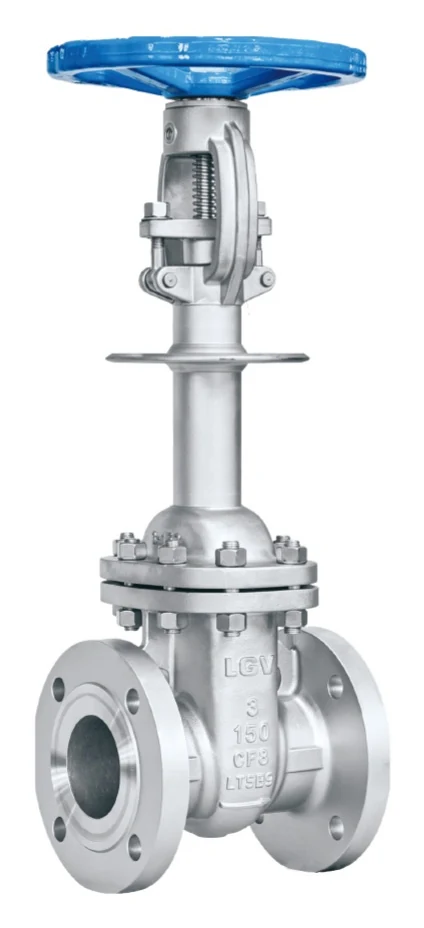
Esta Válvula de compuerta criogénica de acero inoxidable ASME se identifica en el catálogo de válvulas de compuerta suministrado para consultas de servicio criogénico. Para el aislamiento todo/nada, la selección parte del fluido especificado, la temperatura mínima de diseño, el rango de presión y el rendimiento de cierre requerido. Solicite la construcción exacta de la válvula, el alcance de las pruebas para servicio en frío y el plano de instalación antes de aprobar una configuración de suministro.
- Categoría de producto: Válvula de compuerta para aislamiento todo/nada
- Denominación de material del catálogo: Acero inoxidable; grados a verificar
- ASME en el nombre del producto; norma y edición aplicables a especificar
- Identidad para servicio criogénico; la capacidad de temperatura no queda establecida por el catálogo
Identificación del producto
Identifique la válvula antes de especificar servicio a baja temperatura
La foto y la etiqueta del catálogo establecen qué entrada de válvula de compuerta se está tratando. No identifican una clase de presión pedible, un grado específico de acero inoxidable, las dimensiones de extremo ni las pruebas realizadas en una válvula individual. Utilice este registro para iniciar una consulta específica de configuración, no para aprobar un diseño para servicio en frío.
Función de aislamiento
Se considera una válvula de compuerta para servicio totalmente abierta o totalmente cerrada. Si el servicio requiere estrangulamiento sostenido, no la seleccione únicamente por la denominación criogénica; solicite una evaluación de estrangulamiento y una revisión del tipo de válvula por separado.
Límite de normas
“ASME” forma parte de la identidad del catálogo. Especifique los documentos requeridos de diseño de válvula, presión-temperatura, conexión de extremo y ensayos con sus ediciones; el nombre no es evidencia de certificación ni de conformidad con una norma concreta.
Procedencia del catálogo y de la imagen
La válvula está identificada Válvula de compuerta criogénica de acero inoxidable ASME en la página 77 del catálogo de productos de válvulas en PDF (página impresa 143), tercera desde la izquierda. La ilustración identifica la entrada del catálogo; confirme la configuración ofrecida con los planos aprobados y la documentación.
Identidad respaldada por el catálogo
Lo que confirma el catálogo—y lo que no
Los valores siguientes describen la etiqueta del catálogo, no una hoja de datos de válvula aprobada. En particular, ASME no establece de forma independiente una edición de código ni una clasificación de presión-temperatura, y “acero inoxidable” no identifica todos los componentes que retienen presión ni los componentes en contacto con el fluido.
| Campo | Valor documentado en catálogo | Estado de la evidencia |
|---|---|---|
| Tipo de válvula | Válvula de compuerta | VERIFICADO — etiqueta del catálogo PDF |
| Descriptor de material | Acero inoxidable | VERIFICADO — etiqueta del catálogo PDF |
| Descriptor estándar | ASME | VERIFICADO — etiqueta del catálogo PDF |
| Descriptor de servicio del catálogo | Criogénico | VERIFICADO — término en el nombre del producto del catálogo; no es un fluido real ni una temperatura certificada |
| Fluido del proceso | No especificado en el catálogo; confirmar para la solicitud de cotización | NOT STATED — project-specific fluid and phase required |
| Serie de origen del catálogo | Válvula de compuerta | VERIFICADO — sección del catálogo PDF |
| Página de origen del catálogo | Página 77 del PDF | VERIFICADO — asignación de PDF recuperada |
Para compras: obtener una hoja de datos de configuración y un plano de aprobación que indiquen tamaño, conexiones de extremo, lista completa de materiales, límites de presión-temperatura y los requisitos de inspección para baja temperatura. No interprete la ilustración como un plano dimensional.
Evidencia y documentación
Three different records must not be confused
A catalog identity, material records and whole-valve low-temperature performance documents answer different questions. For an acceptance package, identify which records are required for this exact valve and which are only representative qualification evidence.
What is visible in the catalog
- Gate valve: product type is identified by the catalog label; shutoff class is not.
- Stainless steel: a general material descriptor, not a complete bill of materials.
- ASME: a label descriptor, not a specific design, dimensional or test edition.
- Cryogenic: intended service context; no certified minimum temperature is shown.
Documents to request separately
- Material certificates with heat traceability for specified pressure-retaining and wetted parts
- Whole-valve low-temperature test procedure and actual results, if required for each supplied unit
- Type-test/qualification evidence where specified; identify the represented design and size scope
- Minimum design temperature and material pressure-temperature rating for the offered assembly
- Extension/bonnet geometry, stem travel, overall height and maintenance envelope on an approved drawing
- Applicable ASME design, end-connection and inspection standards with exact editions
- End connections, mating dimensions and pressure-boundary details
- Packing, gasket, seat and trim materials suitable for the specified service
- Inspection release, marking, cleaning and document traceability requirements
Cryogenic specification decisions
What decides whether this cryogenic gate valve fits the duty?
For low-temperature isolation, start with the real minimum design temperature and the fluid. Then approve the pressure boundary, cold-service sealing evidence, packing location and installation envelope as one configuration. A material certificate alone cannot close the whole-valve performance question.
On/off duty and operating envelope
Use a gate valve when the required function is isolation rather than continuous flow control. Give the normal and upset pressures, minimum and maximum temperatures, fluid phase, shutoff criterion and differential pressure during operation. If partial-open operation is required, request a different service review instead of assuming this gate design can throttle.
Bonnet extension and packing location
An extended upper assembly can help separate stem packing from the cold process zone. Its presence in the photo does not establish extension length or thermal performance. Specify the insulation or cold-box boundary, mounting orientation, required packing access and operating clearance; accept the extension only against the supplier’s dimensioned drawing and service conditions.
Material certificates are not cold-valve tests
Request the body, bonnet, stem, gate, seat, gasket and packing materials for the offered configuration, with the required material certificates and any project-specified low-temperature toughness evidence. These verify materials and traceability within their stated scope. They do establecen demonstrate that the assembled valve seals, cycles or maintains packing integrity at the specified cold temperature.
Standard and edition alignment
“ASME” in the product title does not identify an applicable clause or revision. The purchase specification should state the actual design/pressure-temperature standard, end-connection dimensions and cold-service requirements with editions. ASME B16.34, MSS SP-134 or ISO 28921 may be relevant references only when expressly selected for the project; none is claimed here as verified product compliance.
Test the correct assembly and identify the scope
Agree whether the order needs individual-valve low-temperature production testing, a representative type test, ambient shell/seat testing, or a specified combination. For any cryogenic test request, define test temperature, fluid or test medium, test pressure, seat and external leakage acceptance, operating cycles if applicable, witness points and traceable reports. Do not accept a materials certificate as a substitute for these assembly-level results.
Installation and interface
Approve the extended geometry before releasing the piping layout
Cold insulation and a long bonnet can change the installed height and maintenance envelope. The catalog rendering is not to scale. A project drawing must resolve interfaces and access before the piping layout, cold-box penetrations or actuator arrangement are frozen.
Cold zone and bonnet interface
Provide the process fluid, insulation thickness or cold-box geometry where relevant, and the required stem/packing location outside the cold zone. Ask the supplier to show the extension height, insulation termination and permitted installation orientation on the approved drawing. Do not infer these details from the photograph.
Piping connections and operation
Match the specified size, end type, facing, mating flange or weld-end geometry, pressure class and applicable dimensional edition. Define opening differential pressure, manual operating access or actuator arrangement, and where the valve can safely be operated or isolated for maintenance.
Travel and service clearance
Check overall valve height, any rising-stem travel, handwheel or actuator swing space, access above the bonnet and packing replacement room. For an enclosed cold-box installation, identify the maintenance method and any removable components before accepting the layout. Use the drawing—not photo proportions—to reserve space.
Evidencia visual
What the catalog image can verify
The original catalog shows a valve with an extended upper assembly and blue handwheel. Its purpose here is visual identification of the right product entry. It does not verify bonnet extension length, valve stroke, body material grade, cryogenic temperature limit, pressure class or any completed inspection.
Rutas de productos relacionados
Other gate-valve configurations—not cryogenic substitutes
The following existing links lead to other gate-valve catalog entries with different selection priorities. They are useful if the project changes toward large bore or electric actuation. Their cryogenic suitability is not established by this page; do not transfer this product’s cold-service requirements to those entries.
Válvula de compuerta eléctrica de gran diámetro
Follow this link for a large-diameter, electrically operated gate-valve inquiry. It is not evidence that the same valve meets cryogenic duty.
Válvula de compuerta eléctrica de gran diámetro según ASME
Compare this entry if an ASME-labeled electric large-bore configuration is needed; verify its own pressure and temperature boundary separately.
Válvula de compuerta de gran diámetro según ASME
Compare an ASME-labeled large-diameter gate-valve listing if bore size dominates the selection. A cryogenic qualification must still be independently specified.
Preguntas del comprador
Low-temperature gate valve purchasing questions
Use these distinctions when requesting documents for the exact offered assembly.
Does the ASME name prove a particular code or pressure class?
No. ASME appears in the catalog product name. The offer must identify applicable design and dimensional standards, their editions, the actual pressure class and the material-specific pressure-temperature limits.
Is a stainless steel material certificate enough for cryogenic acceptance?
No. A material certificate supports grade and traceability for the parts it covers. It does not establish whole-valve low-temperature seat leakage, external tightness or operability. Specify which cryogenic assembly tests and reports the purchase requires.
Can the extended bonnet length be taken from the photograph?
No. The image identifies the catalog entry but is not a scaled engineering drawing. Confirm extension length, insulation or cold-box interface, orientation, stem travel and maintenance clearance on the approved drawing.
What evidence should accompany the quotation?
Request a configuration datasheet and drawing, full material schedule and certificates, named standards and editions, a clearly differentiated type-test and production-test scope, acceptance criteria and the required inspection records.
Configuration-specific RFQ
Request a cryogenic gate-valve configuration review
Reference Válvula de compuerta criogénica de acero inoxidable ASME (catalog page 77) and state whether the inquiry is for cold-service isolation. Submit the operating conditions and document requirements so the proposed valve, bonnet arrangement, testing and commercial terms can be reviewed together.
- Fluid and phase, minimum design temperature, pressure envelope and shutoff duty
- Size, pressure class, end connection and requested standards with editions
- Body/trim/packing material schedule and necessary material certificates
- Bonnet extension, cold-box or insulation interface, stem travel and access drawing
- Quantity, test scope (type vs unit), leakage criteria, inspection and delivery records