
عزل منخفض الحرارة | مرجع الكتالوج
صمام بوابة ASME من الفولاذ المقاوم للصدأ للخدمة المبردة
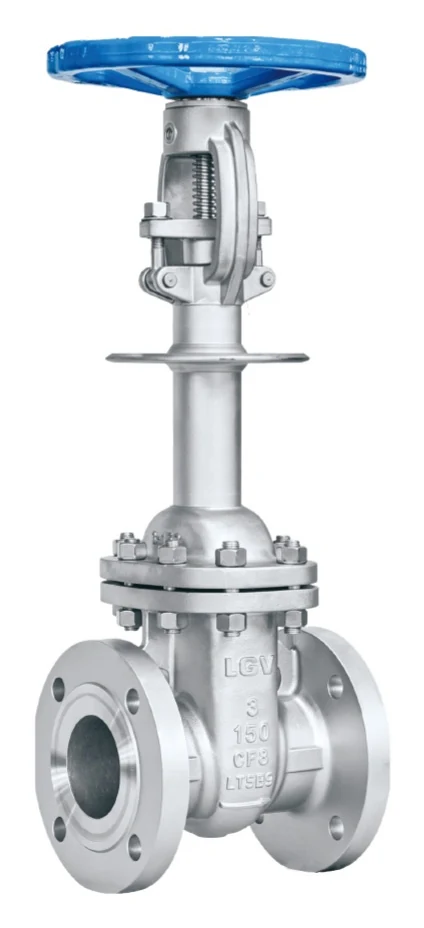
هذا صمام بوابة ASME من الفولاذ المقاوم للصدأ للخدمة المبردة مُحدَّد في كتالوج صمامات البوابة المُتاح لاستفسارات الخدمة المبردة. للعزل الكامل (فتح/إغلاق)، يبدأ الاختيار بالسائل المحدد، وأدنى درجة حرارة تصميمية، ونطاق الضغط، وأداء الإغلاق المطلوب. اطلب بنية الصمام الدقيقة، ونطاق اختبار الخدمة الباردة، ورسم التركيب قبل اعتماد تكوين التوريد.
- فئة المنتج: صمام بوابة للعزل الكامل (فتح/إغلاق)
- صياغة مادة الكتالوج: فولاذ مقاوم للصدأ؛ الدرجات تخضع للتحقق
- ASME في اسم المنتج؛ المعيار والإصدار المعمول بهما يُحدَّدان لاحقًا
- هوية الخدمة المبردة؛ القدرة الحرارية غير مثبتة بالكتالوج
تعريف المنتج
حدِّد الصمام قبل تحديد واجب درجات الحرارة المنخفضة
تُبيِّن صورة الكتالوج والملصق أي مُدخل لصمام البوابة هو محل النقاش. وهي لا تحدد فئة ضغط قابلة للطلب، ولا درجة فولاذ مقاوم للصدأ محددة، ولا أبعاد الأطراف، ولا الاختبارات المنجزة على صمام فردي. استخدم هذا السجل لبدء استفسار خاص بتكوين محدد، لا للموافقة على تصميم خدمة باردة.
وظيفة العزل
يُؤخذ صمام البوابة في الاعتبار للخدمة المفتوحة كليًا أو المغلقة كليًا. إذا كان الواجب يتطلب خنقًا مستمرًا، فلا تختره بناءً على اسم الخدمة المبردة وحده؛ اطلب تقييمًا منفصلًا للخنق ومراجعة لنوع الصمام.
حدود المعايير
“ASME” جزء من هوية الكتالوج. حدِّد مستندات تصميم الصمام، ودرجة الحرارة والضغط، ووصلة الأطراف، والاختبار المطلوبة مع إصداراتها؛ فالاسم ليس دليلًا على الاعتماد أو المطابقة لمعيار بعينه.
مصدر الكتالوج والصورة
الصمام مُعلَّم صمام بوابة ASME من الفولاذ المقاوم للصدأ للخدمة المبردة على صفحة 77 من كتالوج منتجات الصمامات بصيغة PDF (الصفحة المطبوعة 143)، الثالث من اليسار. تُحدِّد الرسمة مُدخل الكتالوج؛ تحقَّق من التكوين المعروض مقابل الرسومات المعتمدة والوثائق.
هوية مدعومة بالكتالوج
ما يؤكده الكتالوج — وما لا يؤكده
تصف القيم أدناه تسمية الكتالوج، وليس ورقة بيانات صمام معتمدة. وعلى وجه الخصوص، لا تُثبت ASME بشكل مستقل إصدار كود أو تصنيف ضغط-حرارة، ولا تُحدِّد عبارة “الفولاذ المقاوم للصدأ” كل مكوِّن حامل للضغط أو ملامس للسائل.
| الحقل | قيمة موثقة في الكتالوج | حالة الإثبات |
|---|---|---|
| نوع الصمام | صمام بوابة | مُتحقق منه — تسمية كتالوج PDF |
| وصف المادة | فولاذ مقاوم للصدأ | مُتحقق منه — تسمية كتالوج PDF |
| وصف المعيار | ASME | مُتحقق منه — تسمية كتالوج PDF |
| وصف خدمة الكتالوج | تبريد عميق | مُتحقَّق منه — المصطلح في اسم منتج الكتالوج؛ ليس سائلًا فعليًا أو درجة حرارة معتمدة |
| مائع العملية | غير محدد في الكتالوج؛ يُرجى التأكيد لطلب عرض السعر | غير مذكور — مطلوب السائل والطور الخاص بالمشروع |
| سلسلة مصدر الكتالوج | صمام بوابة | مُتحقق منه — قسم كتالوج PDF |
| صفحة مصدر الكتالوج | صفحة PDF 77 | مُتحقَّق منه — تم استرداد تعيين PDF |
للمشتريات: الحصول على ورقة بيانات التكوين ورسم اعتماد يُظهران المقاس ونهايات التوصيل وجدول المواد الكامل وحدود الضغط-الحرارة ومتطلبات الفحص عند درجات الحرارة المنخفضة. لا تُفسِّر الرسمة على أنها رسم أبعاد.
الأدلة والوثائق
يجب عدم الخلط بين ثلاثة سجلات مختلفة
هوية الكتالوج وسجلات المواد ووثائق أداء الصمام الكامل عند درجات الحرارة المنخفضة تجيب على أسئلة مختلفة. بالنسبة لحزمة القبول، حدد السجلات المطلوبة لـ هذا الصمام تحديدًا وأيها مجرد دليل تأهيل تمثيلي.
ما هو ظاهر في الكتالوج
- صمام البوابة: يُحدَّد نوع المنتج من خلال تسمية الكتالوج؛ أما فئة الإغلاق فلا تُحدَّد.
- الفولاذ المقاوم للصدأ: وصف عام للمادة، وليس قائمة مواد كاملة.
- ASME: وصف تسمية، وليس إصدارًا محددًا للتصميم أو الأبعاد أو الاختبار.
- درجات الحرارة المنخفضة جدًا: سياق الخدمة المقصود؛ ولا تظهر أي درجة حرارة دنيا معتمدة.
وثائق يجب طلبها بشكل منفصل
- شهادات المواد مع إمكانية تتبع رقم الصهر للأجزاء المحددة الحافظة للضغط والأجزاء الملامسة للسائل
- إجراء اختبار الصمام الكامل عند درجات الحرارة المنخفضة ونتائجه الفعلية، إذا كان مطلوبًا لكل وحدة موردة
- Type-test/qualification evidence where specified; identify the represented design and size scope
- Minimum design temperature and material pressure-temperature rating for the offered assembly
- Extension/bonnet geometry, stem travel, overall height and maintenance envelope on an approved drawing
- Applicable ASME design, end-connection and inspection standards with exact editions
- End connections, mating dimensions and pressure-boundary details
- Packing, gasket, seat and trim materials suitable for the specified service
- Inspection release, marking, cleaning and document traceability requirements
Cryogenic specification decisions
What decides whether this cryogenic gate valve fits the duty?
For low-temperature isolation, start with the real minimum design temperature and the fluid. Then approve the pressure boundary, cold-service sealing evidence, packing location and installation envelope as one configuration. A material certificate alone cannot close the whole-valve performance question.
On/off duty and operating envelope
Use a gate valve when the required function is isolation rather than continuous flow control. Give the normal and upset pressures, minimum and maximum temperatures, fluid phase, shutoff criterion and differential pressure during operation. If partial-open operation is required, request a different service review instead of assuming this gate design can throttle.
Bonnet extension and packing location
An extended upper assembly can help separate stem packing from the cold process zone. Its presence in the photo does not establish extension length or thermal performance. Specify the insulation or cold-box boundary, mounting orientation, required packing access and operating clearance; accept the extension only against the supplier’s dimensioned drawing and service conditions.
Material certificates are not cold-valve tests
Request the body, bonnet, stem, gate, seat, gasket and packing materials for the offered configuration, with the required material certificates and any project-specified low-temperature toughness evidence. These verify materials and traceability within their stated scope. They do لا demonstrate that the assembled valve seals, cycles or maintains packing integrity at the specified cold temperature.
Standard and edition alignment
“ASME” in the product title does not identify an applicable clause or revision. The purchase specification should state the actual design/pressure-temperature standard, end-connection dimensions and cold-service requirements with editions. ASME B16.34, MSS SP-134 or ISO 28921 may be relevant references only when expressly selected for the project; none is claimed here as verified product compliance.
Test the correct assembly and identify the scope
Agree whether the order needs individual-valve low-temperature production testing, a representative type test, ambient shell/seat testing, or a specified combination. For any cryogenic test request, define test temperature, fluid or test medium, test pressure, seat and external leakage acceptance, operating cycles if applicable, witness points and traceable reports. Do not accept a materials certificate as a substitute for these assembly-level results.
Installation and interface
Approve the extended geometry before releasing the piping layout
Cold insulation and a long bonnet can change the installed height and maintenance envelope. The catalog rendering is not to scale. A project drawing must resolve interfaces and access before the piping layout, cold-box penetrations or actuator arrangement are frozen.
Cold zone and bonnet interface
Provide the process fluid, insulation thickness or cold-box geometry where relevant, and the required stem/packing location outside the cold zone. Ask the supplier to show the extension height, insulation termination and permitted installation orientation on the approved drawing. Do not infer these details from the photograph.
Piping connections and operation
Match the specified size, end type, facing, mating flange or weld-end geometry, pressure class and applicable dimensional edition. Define opening differential pressure, manual operating access or actuator arrangement, and where the valve can safely be operated or isolated for maintenance.
Travel and service clearance
Check overall valve height, any rising-stem travel, handwheel or actuator swing space, access above the bonnet and packing replacement room. For an enclosed cold-box installation, identify the maintenance method and any removable components before accepting the layout. Use the drawing—not photo proportions—to reserve space.
الأدلة المرئية
What the catalog image can verify
The original catalog shows a valve with an extended upper assembly and blue handwheel. Its purpose here is visual identification of the right product entry. It does not verify bonnet extension length, valve stroke, body material grade, cryogenic temperature limit, pressure class or any completed inspection.
مسارات المنتجات ذات الصلة
Other gate-valve configurations—not cryogenic substitutes
The following existing links lead to other gate-valve catalog entries with different selection priorities. They are useful if the project changes toward large bore or electric actuation. Their cryogenic suitability is not established by this page; do not transfer this product’s cold-service requirements to those entries.
صمام بوابة كهربائي كبير القطر
Follow this link for a large-diameter, electrically operated gate-valve inquiry. It is not evidence that the same valve meets cryogenic duty.
صمام بوابة كهربائي ASME كبير القطر
Compare this entry if an ASME-labeled electric large-bore configuration is needed; verify its own pressure and temperature boundary separately.
صمام بوابة ASME كبير القطر
Compare an ASME-labeled large-diameter gate-valve listing if bore size dominates the selection. A cryogenic qualification must still be independently specified.
أسئلة المشترين
Low-temperature gate valve purchasing questions
Use these distinctions when requesting documents for the exact offered assembly.
Does the ASME name prove a particular code or pressure class?
No. ASME appears in the catalog product name. The offer must identify applicable design and dimensional standards, their editions, the actual pressure class and the material-specific pressure-temperature limits.
Is a stainless steel material certificate enough for cryogenic acceptance?
No. A material certificate supports grade and traceability for the parts it covers. It does not establish whole-valve low-temperature seat leakage, external tightness or operability. Specify which cryogenic assembly tests and reports the purchase requires.
Can the extended bonnet length be taken from the photograph?
No. The image identifies the catalog entry but is not a scaled engineering drawing. Confirm extension length, insulation or cold-box interface, orientation, stem travel and maintenance clearance on the approved drawing.
What evidence should accompany the quotation?
Request a configuration datasheet and drawing, full material schedule and certificates, named standards and editions, a clearly differentiated type-test and production-test scope, acceptance criteria and the required inspection records.
Configuration-specific RFQ
Request a cryogenic gate-valve configuration review
Reference صمام بوابة ASME من الفولاذ المقاوم للصدأ للخدمة المبردة (catalog page 77) and state whether the inquiry is for cold-service isolation. Submit the operating conditions and document requirements so the proposed valve, bonnet arrangement, testing and commercial terms can be reviewed together.
- Fluid and phase, minimum design temperature, pressure envelope and shutoff duty
- Size, pressure class, end connection and requested standards with editions
- Body/trim/packing material schedule and necessary material certificates
- Bonnet extension, cold-box or insulation interface, stem travel and access drawing
- Quantity, test scope (type vs unit), leakage criteria, inspection and delivery records