
Isolamento de baixa temperatura | Referência de catálogo
Válvula gaveta criogênica em aço inoxidável ASME
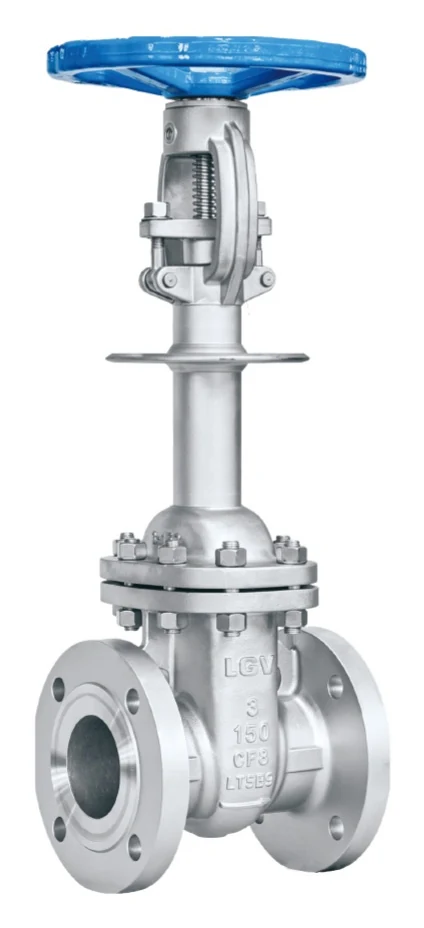
Este Válvula gaveta criogênica em aço inoxidável ASME é identificada no catálogo de válvulas gaveta fornecido para consultas de serviço criogênico. Para isolamento on/off, a seleção começa com o fluido especificado, a temperatura mínima de projeto, o envelope de pressão e o desempenho de fechamento requerido. Solicite a construção exata da válvula, o escopo de ensaios para serviço a frio e o desenho de instalação antes de aprovar uma configuração de fornecimento.
- Categoria de produto: Válvula gaveta para isolamento on/off
- Material no catálogo: Aço inoxidável; graus a verificar
- ASME no nome do produto; norma e edição aplicáveis a especificar
- Identidade de serviço criogênico; capacidade de temperatura não estabelecida pelo catálogo
Identificação do produto
Identifique a válvula antes de especificar serviço de baixa temperatura
A foto e a etiqueta do catálogo estabelecem qual entrada de válvula gaveta está em discussão. Elas não identificam uma classe de pressão pedível, um grau específico de aço inoxidável, dimensões de extremidade ou os ensaios realizados em uma válvula individual. Use este registro para iniciar uma consulta específica de configuração, não para aprovar um projeto de serviço a frio.
Função de isolamento
Uma válvula gaveta é considerada para serviço totalmente aberta ou totalmente fechada. Se o serviço exigir estrangulamento contínuo, não a selecione apenas com base na designação criogênica; solicite uma avaliação separada de estrangulamento e uma revisão do tipo de válvula.
Limite de normas
“ASME” faz parte da identidade do catálogo. Especifique os documentos exigidos de projeto da válvula, pressão-temperatura, conexão de extremidade e ensaios com suas edições; o nome não é evidência de certificação ou conformidade com uma norma específica.
Procedência do catálogo e das imagens
A válvula está identificada Válvula gaveta criogênica em aço inoxidável ASME na página 77 do PDF do catálogo de produtos de válvulas (página impressa 143), terceira a partir da esquerda. A ilustração identifica o item do catálogo; confirme a configuração ofertada em relação aos desenhos e à documentação aprovados.
Identidade com base no catálogo
O que o catálogo confirma — e o que não confirma
Os valores abaixo descrevem o rótulo do catálogo, não uma folha de dados de válvula aprovada. Em particular, a ASME não estabelece de forma independente uma edição de código ou classificação de pressão-temperatura, e “aço inoxidável” não identifica todos os componentes retentores de pressão ou molhados.
| Campo | Valor documentado no catálogo | Status da evidência |
|---|---|---|
| Tipo de válvula | Válvula gaveta | VERIFICADO — rótulo do catálogo em PDF |
| Descritor de material | Aço inoxidável | VERIFICADO — rótulo do catálogo em PDF |
| Descritor padrão | ASME | VERIFICADO — rótulo do catálogo em PDF |
| Descritor de serviço do catálogo | Criogênico | VERIFICADO — termo no nome do produto do catálogo; não é um fluido real nem uma temperatura certificada |
| Fluido do processo | Não especificado no catálogo; confirmar para a RFQ | NÃO INFORMADO — fluido e fase específicos do projeto necessários |
| Série de origem no catálogo | Válvula gaveta | VERIFICADO — seção do catálogo em PDF |
| Página de origem no catálogo | Página 77 do PDF | VERIFICADO — mapeamento de PDF recuperado |
Para compras: obtenha uma folha de dados de configuração e um desenho de aprovação mostrando tamanho, conexões de extremidade, lista completa de materiais, limites de pressão-temperatura e os requisitos de inspeção para baixa temperatura. Não interprete a ilustração como desenho dimensional.
Evidências e documentação
Três registros diferentes não devem ser confundidos
Uma identidade de catálogo, registros de materiais e documentos de desempenho de baixa temperatura da válvula completa respondem a perguntas diferentes. Para um pacote de aceitação, identifique quais registros são exigidos para esta válvula específica e quais são apenas evidências de qualificação representativas.
O que está visível no catálogo
- Válvula gaveta: o tipo de produto é identificado pelo rótulo do catálogo; a classe de fechamento não é.
- Aço inoxidável: um descritor geral de material, não uma lista completa de materiais.
- ASME: um descritor de rótulo, não uma edição específica de projeto, dimensional ou de teste.
- Criogênico: contexto de serviço pretendido; nenhuma temperatura mínima certificada é mostrada.
Documentos a solicitar separadamente
- Certificados de material com rastreabilidade de corrida para peças especificadas de retenção de pressão e em contato com o fluido
- Procedimento de teste de baixa temperatura da válvula completa e resultados reais, se exigido para cada unidade fornecida
- Type-test/qualification evidence where specified; identify the represented design and size scope
- Minimum design temperature and material pressure-temperature rating for the offered assembly
- Extension/bonnet geometry, stem travel, overall height and maintenance envelope on an approved drawing
- Applicable ASME design, end-connection and inspection standards with exact editions
- End connections, mating dimensions and pressure-boundary details
- Packing, gasket, seat and trim materials suitable for the specified service
- Inspection release, marking, cleaning and document traceability requirements
Cryogenic specification decisions
What decides whether this cryogenic gate valve fits the duty?
For low-temperature isolation, start with the real minimum design temperature and the fluid. Then approve the pressure boundary, cold-service sealing evidence, packing location and installation envelope as one configuration. A material certificate alone cannot close the whole-valve performance question.
On/off duty and operating envelope
Use a gate valve when the required function is isolation rather than continuous flow control. Give the normal and upset pressures, minimum and maximum temperatures, fluid phase, shutoff criterion and differential pressure during operation. If partial-open operation is required, request a different service review instead of assuming this gate design can throttle.
Bonnet extension and packing location
An extended upper assembly can help separate stem packing from the cold process zone. Its presence in the photo does not establish extension length or thermal performance. Specify the insulation or cold-box boundary, mounting orientation, required packing access and operating clearance; accept the extension only against the supplier’s dimensioned drawing and service conditions.
Material certificates are not cold-valve tests
Request the body, bonnet, stem, gate, seat, gasket and packing materials for the offered configuration, with the required material certificates and any project-specified low-temperature toughness evidence. These verify materials and traceability within their stated scope. They do não demonstrate that the assembled valve seals, cycles or maintains packing integrity at the specified cold temperature.
Standard and edition alignment
“ASME” in the product title does not identify an applicable clause or revision. The purchase specification should state the actual design/pressure-temperature standard, end-connection dimensions and cold-service requirements with editions. ASME B16.34, MSS SP-134 or ISO 28921 may be relevant references only when expressly selected for the project; none is claimed here as verified product compliance.
Test the correct assembly and identify the scope
Agree whether the order needs individual-valve low-temperature production testing, a representative type test, ambient shell/seat testing, or a specified combination. For any cryogenic test request, define test temperature, fluid or test medium, test pressure, seat and external leakage acceptance, operating cycles if applicable, witness points and traceable reports. Do not accept a materials certificate as a substitute for these assembly-level results.
Installation and interface
Approve the extended geometry before releasing the piping layout
Cold insulation and a long bonnet can change the installed height and maintenance envelope. The catalog rendering is not to scale. A project drawing must resolve interfaces and access before the piping layout, cold-box penetrations or actuator arrangement are frozen.
Cold zone and bonnet interface
Provide the process fluid, insulation thickness or cold-box geometry where relevant, and the required stem/packing location outside the cold zone. Ask the supplier to show the extension height, insulation termination and permitted installation orientation on the approved drawing. Do not infer these details from the photograph.
Piping connections and operation
Match the specified size, end type, facing, mating flange or weld-end geometry, pressure class and applicable dimensional edition. Define opening differential pressure, manual operating access or actuator arrangement, and where the valve can safely be operated or isolated for maintenance.
Travel and service clearance
Check overall valve height, any rising-stem travel, handwheel or actuator swing space, access above the bonnet and packing replacement room. For an enclosed cold-box installation, identify the maintenance method and any removable components before accepting the layout. Use the drawing—not photo proportions—to reserve space.
Evidência visual
What the catalog image can verify
The original catalog shows a valve with an extended upper assembly and blue handwheel. Its purpose here is visual identification of the right product entry. It does not verify bonnet extension length, valve stroke, body material grade, cryogenic temperature limit, pressure class or any completed inspection.
Rotas de produtos relacionados
Other gate-valve configurations—not cryogenic substitutes
The following existing links lead to other gate-valve catalog entries with different selection priorities. They are useful if the project changes toward large bore or electric actuation. Their cryogenic suitability is not established by this page; do not transfer this product’s cold-service requirements to those entries.
Válvula gaveta elétrica de grande diâmetro
Follow this link for a large-diameter, electrically operated gate-valve inquiry. It is not evidence that the same valve meets cryogenic duty.
Válvula gaveta elétrica ASME de grande diâmetro
Compare this entry if an ASME-labeled electric large-bore configuration is needed; verify its own pressure and temperature boundary separately.
Válvula gaveta ASME de grande diâmetro
Compare an ASME-labeled large-diameter gate-valve listing if bore size dominates the selection. A cryogenic qualification must still be independently specified.
Perguntas do comprador
Low-temperature gate valve purchasing questions
Use these distinctions when requesting documents for the exact offered assembly.
Does the ASME name prove a particular code or pressure class?
No. ASME appears in the catalog product name. The offer must identify applicable design and dimensional standards, their editions, the actual pressure class and the material-specific pressure-temperature limits.
Is a stainless steel material certificate enough for cryogenic acceptance?
No. A material certificate supports grade and traceability for the parts it covers. It does not establish whole-valve low-temperature seat leakage, external tightness or operability. Specify which cryogenic assembly tests and reports the purchase requires.
Can the extended bonnet length be taken from the photograph?
No. The image identifies the catalog entry but is not a scaled engineering drawing. Confirm extension length, insulation or cold-box interface, orientation, stem travel and maintenance clearance on the approved drawing.
What evidence should accompany the quotation?
Request a configuration datasheet and drawing, full material schedule and certificates, named standards and editions, a clearly differentiated type-test and production-test scope, acceptance criteria and the required inspection records.
Configuration-specific RFQ
Request a cryogenic gate-valve configuration review
Reference Válvula gaveta criogênica em aço inoxidável ASME (catalog page 77) and state whether the inquiry is for cold-service isolation. Submit the operating conditions and document requirements so the proposed valve, bonnet arrangement, testing and commercial terms can be reviewed together.
- Fluid and phase, minimum design temperature, pressure envelope and shutoff duty
- Size, pressure class, end connection and requested standards with editions
- Body/trim/packing material schedule and necessary material certificates
- Bonnet extension, cold-box or insulation interface, stem travel and access drawing
- Quantity, test scope (type vs unit), leakage criteria, inspection and delivery records