
Referencia del catálogo del proveedor · Válvula de retención
Válvula de retención de cierre rápido con contrapeso
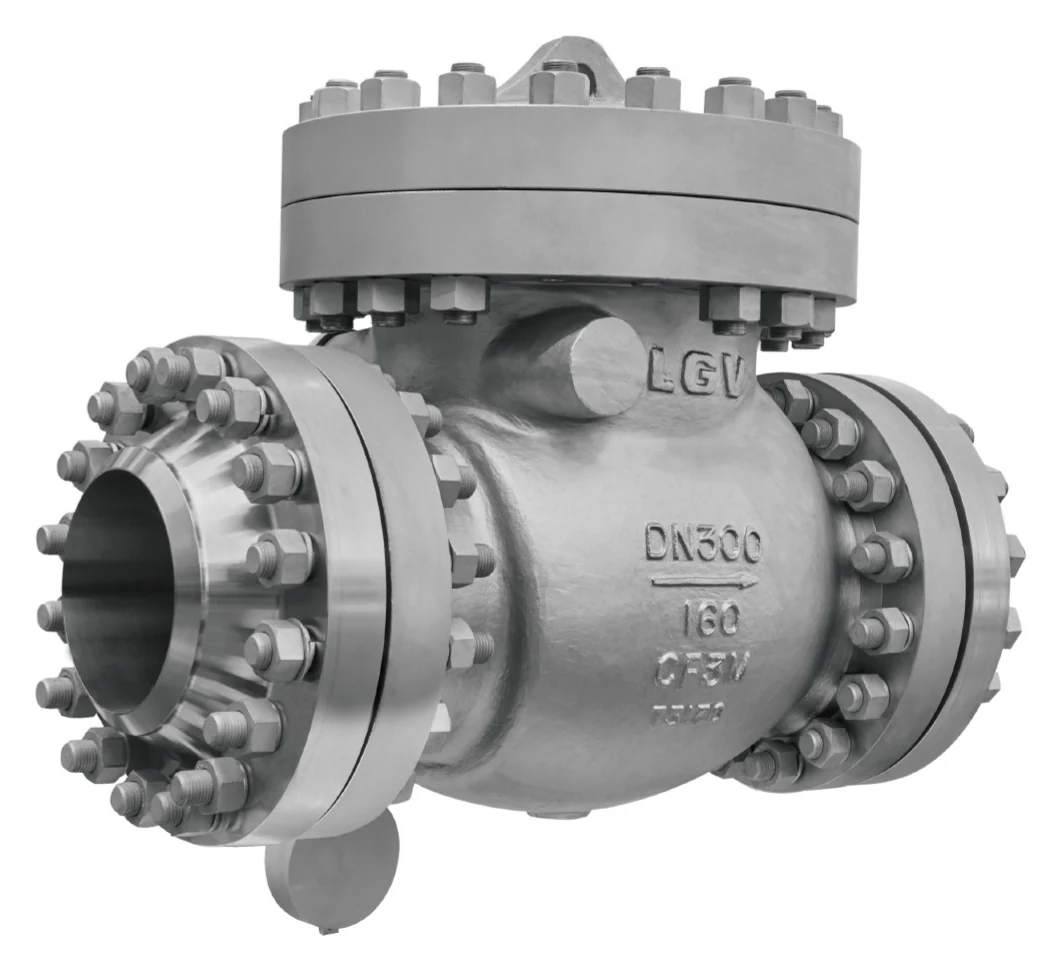
El catálogo del proveedor denomina una Válvula de retención de cierre rápido con contrapeso en su Serie de válvulas de retención de cierre rápido (página 107 del PDF, páginas impresas 203–204). Para una línea de bomba o de proceso, su idoneidad depende de un flujo estable durante la operación y de la respuesta de la válvula cuando el flujo directo desacelera. La entrada del catálogo no establecen incluye curva de cierre, clasificación de presión, plano del contrapeso interno ni rendimiento garantizado frente a transitorios.
- Identidad del catálogo: Válvula de retención de cierre rápido con contrapeso
- Criterio de selección: flujo normal/mínimo y reversión en el paro
- A verificar con el proveedor: mecanismo, respuesta dinámica y clasificación
Identidad del producto
Qué identifica realmente el catálogo
El catálogo sitúa esta válvula junto a otros productos de cierre rápido y de retención con purga. Sus nombres e imágenes son no son intercambiables. El objetivo es la ilustración del extremo derecho, de cuerpo gris con bridas; aquí no se incluye vista en sección, descripción del mecanismo ni dimensión certificada.
Función del producto
Figura como válvula de retención. Su función de no retorno prevista debe corresponder con la dirección del flujo, la posición de instalación y las posibles condiciones de flujo inverso; la etiqueta del catálogo por sí sola no determina el rendimiento.
Familia del catálogo
Serie de válvulas de retención de cierre rápido, págs. impresas 203–204 (página 107 del PDF físico). Para una selección de tipos más amplia, consulte la serie de cierre rápido o Categoría Válvulas de retención.
Ilustración y documentos
La figura correspondiente es la ilustración del extremo derecho en página 107 del PDF del proveedor. Se observan dos extremos con bridas, pero la ilustración no define el taladrado de bridas, las dimensiones, la clase de presión ni el mecanismo de contrapeso.
Evidencia del catálogo
Datos de catálogo frente a especificaciones de pedido
La entrada del catálogo del fabricante establece un nombre de producto y una serie, no una ficha técnica configurable. La tabla siguiente solo recoge las indicaciones visibles en dicha entrada. Solicite el plano, la ficha de especificaciones y los datos de operación de la válvula ofertada antes de aprobar una compra.
| Campo | Valor documentado | Límite de evidencia |
|---|---|---|
| Nombre del producto | Válvula de retención de cierre rápido con contrapeso | Etiqueta de origen exacta |
| Tipo de producto | Válvula de retención | Etiqueta de origen / familia listada |
| Serie de catálogo | Serie de válvulas de retención de cierre rápido | Encabezado de serie en la página |
| Ilustración | Elemento del extremo derecho de la página 107 del PDF físico | Identificación visual de la página de origen |
| Prestaciones numéricas | No indicado en esta entrada de catálogo | Se requiere ficha técnica del proveedor |
No incluido en esta entrada: rango de tamaños, grado de material, clasificación de presión–temperatura, diferencial de apertura o de apertura total, curva de pérdida de carga, caudal mínimo estable, respuesta de cierre, orientación de montaje permitida, norma de conexión de extremos o certificación. Una marca de fundición representada en la imagen no debe considerarse una clasificación de pedido.
Límite de evidencia
What does “counterweight” prove about the mechanism?
The name suggests a counterweight-related closing arrangement, but the supplier entry does not show the internal load path or specify whether the weight is external, internal or adjustable. Different manufacturers use counterweights, springs, dampers and controlled closure in different ways. Do not transfer those mechanisms or settings to this product.
Engineering principle (not model proof)
- Forward-flow differential pressure must overcome the offered closing resistance for opening to begin.
- Minimum sustained flow must be high enough for a stable opening position; cracking pressure by itself does not establish full opening.
- During a pump trip, valve closing dynamics and system flow deceleration together determine the reverse velocity at seating.
Product-specific documents required
- Sectional/assembly drawing showing disc or piston, counterweight location, travel and any spring or damper.
- Allowed flow direction, horizontal/vertical mounting and required line support/clearance.
- Cracking differential and minimum flow for stable full opening at the actual valve size.
- Pressure-loss or Cv/Kv curve, plus dynamic closure/reverse-velocity evidence if surge duty is critical.
- Size, material and seat options; pressure–temperature rating; exact flanges and face-to-face dimensions.
- Pressure/leakage tests, material certificates, traceability, third-party witness scope and maintenance documents.
Revisión de ingeniería
Select against both running flow and pump-trip behavior
A valve may start to open at a small pressure difference yet chatter if normal low-flow operation cannot hold its closing member steady. Conversely, a valve that passes normal-flow checks may still seat after substantial reverse flow during shutdown. Review these two different operating cases before agreeing that “quick-closing” is the right design.
Minimum and normal flow
If minimum continuous flow is below the supplier’s stable-opening requirement, the valve may remain partly open and suffer flutter or wear. Provide minimum, normal and maximum flow; request full-opening and pressure-drop data for the actual size. Pipe diameter alone is not an adequate sizing check.
Pump stop and flow reversal
If a power-loss or emergency stop can reverse flow rapidly, ask for a valve response curve or project-specific closing assessment. Provide pump rundown/inertia, downstream head, pipe route, parallel-pump operation and the predicted deceleration or transient model. A catalog name is not a slam-free guarantee.
Surge and low-pressure events
If the transient study shows high positive pressure, vacuum or column separation, do not treat a fast-check valve as the complete protection system. Confirm maximum/minimum design pressures and coordinate check-valve behavior with any air/vacuum, bypass or surge-control equipment as separately engineered.
Operating envelope and medium
Compare the fluid, solids and corrosion/erosion exposure with documented body, trim and seat materials. Use operating and design pressure/temperature together with the supplier’s pressure–temperature rating; neither the product title nor a flange-looking image establishes a class, leakage rating or media suitability.
Interfaces and supporting documents
Match size, end standard, facing, bolt pattern, face-to-face, flow arrow, mounting position, piping support and maintenance access. Obtain the dimensional and sectional drawings, testing scope and inspection/traceability package for the actual quoted configuration.
Límite de aplicación
Installation, commissioning and maintenance boundaries
Selection is not finished when the body size matches the line. A proposed installation must allow the closing element to work in the specified direction and provide a safe method to check performance and service the valve. Obtain the supplier’s instructions for the offered design rather than using adjustment procedures written for another brand.
Before installation
Confirm the permitted orientation and direction arrow on the approved drawing. Check mating flanges, support loads, neighboring elbows or pumps, clearance and access. The source image cannot establish vertical-flow suitability or required straight-run lengths.
During controlled commissioning
Arrange safe start/stop observations under the plant’s approved procedure, including upstream/downstream pressure, reverse-flow indications and abnormal vibration or chatter. Any counterweight or damping adjustment must follow the actual supplier manual and the system transient assessment—not generic settings from an unrelated valve.
Maintenance and records
Request access requirements, inspection intervals, seat and moving-part wear checks, spare-parts identification and an exploded drawing. Specify whether material certificates, heat/serial traceability, leakage-test records, witness inspection and a maintenance manual must accompany delivery.
Rutas de productos relacionados
When a different check-valve route may fit
These are separate catalog identities, not interchangeable specifications. The parent Categoría Válvulas de retención y Quick-Closing Series cover broader comparison; request each model’s own duty data before substituting.
Válvula de retención de apertura y cierre lentos específica para minas de carbón
A separate catalog listing explicitly named for slow opening and slow closing in coal-mine service. Its closure concept is not evidence of this valve’s response.
Válvula de retención de alta presión de acero forjado
Review this separately named forged/high-pressure product if materials and rated pressure drive selection; obtain its own actual pressure–temperature limits.
Válvula de retención para central eléctrica de alta temperatura y alta presión
Review this separately named power-plant product if elevated-temperature service is involved; no rating transfers automatically between listings.
Preguntas del comprador
Questions that change the purchase decision
For this catalog entry, verify behavior and approved design information before treating a named valve as a specified solution.
Does “quick-closing” mean the valve eliminates water hammer?
No. Surge severity depends on the system and the reverse velocity when the valve seats. Some fast-response designs reduce reverse-flow slam in appropriate systems, but abrupt closure can also be associated with pressure transients. Check the proposed valve’s dynamic data against the plant’s pump-trip study.
Is an adjustable external counterweight or damper included?
The name does not prove either feature. The photographed source entry supplies no sectional drawing or accessory list. Request the internal mechanism, counterweight details and any separately offered spring, dashpot or actuator in writing.
Can it be used in a vertical line or at low flow?
Neither condition is established by the catalog. Require written permitted mounting direction, cracking/full-opening differential, minimum stable flow and pressure-loss information for the offered size and fluid.
What should the supplier return with a technical quote?
At minimum: an offered configuration and bill of materials, approved GA/section drawing, pressure–temperature and flow data, applicable product standard and testing records. For critical shutdown duty, request the available dynamic closure evidence and specify the transient acceptance basis.
Consulta técnica
Request a duty-based valve configuration and drawings
Consulte la Válvula de retención de cierre rápido con contrapeso catalog listing, then send the conditions that make an offer technically comparable. Ask VALMORA to identify the offered valve and separate confirmed specifications from options or documents requiring supplier review.
- Service fluid, solids/corrosion exposure, DN/NPS and minimum/normal/maximum flow.
- Pump and line duty: normal/design pressure and temperature, downstream head, pump-trip/rundown conditions, parallel pumps.
- Transient criteria: allowable positive/negative pressure, vacuum/column-separation risk and acceptable backflow.
- Install orientation and flow direction; flange/face-to-face requirements, clearances, pipe-support constraints.
- Request cracking/full-opening differential, stable-flow and pressure-loss data; closure behavior evidence where needed.
- Material/seat/trim requirements; tests, certificates, heat/serial traceability, third-party witness and spares.
- Quantity, destination, packaging, required delivery schedule; clarify power/control/fail-state only if an actuated option is specifically proposed.