
مرجع كتالوج المورد · صمام عدم رجوع
صمام عدم رجوع سريع الإغلاق بثقل موازن
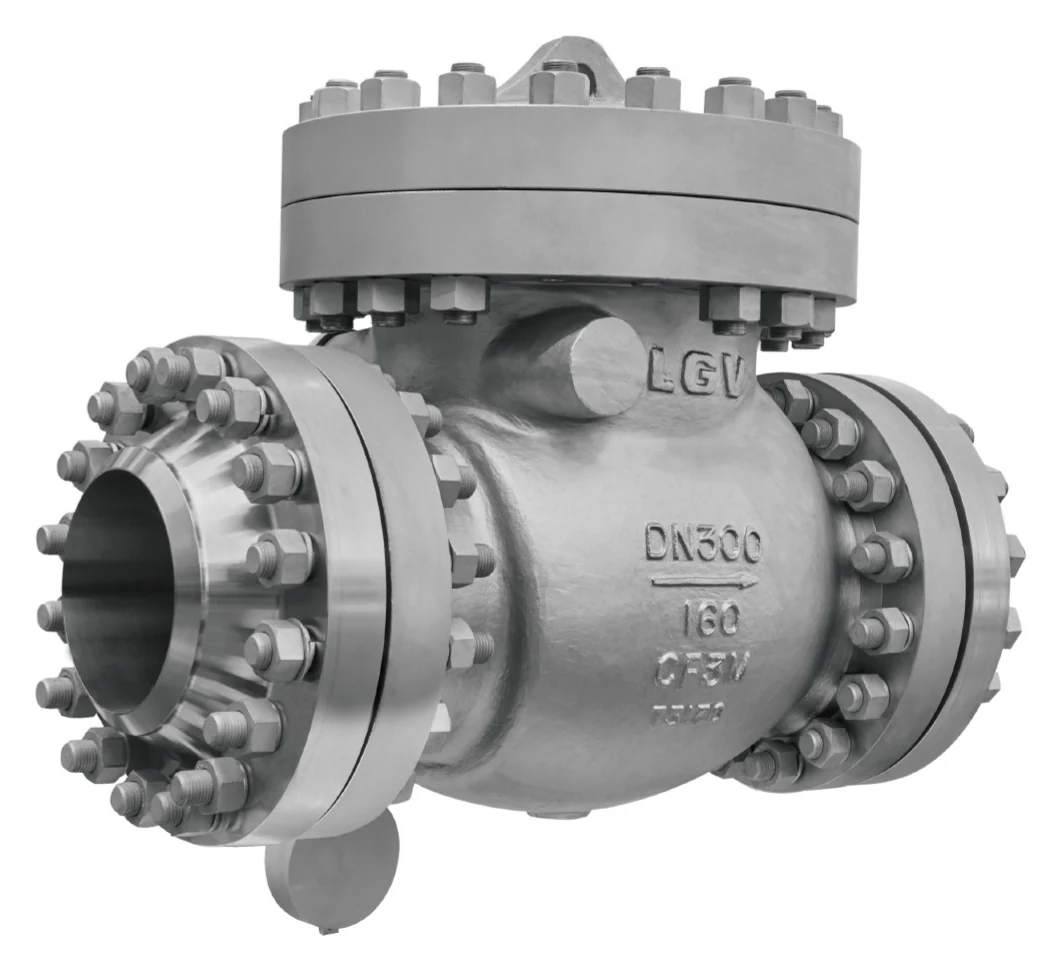
يسمّي كتالوج المورّد صمام عدم رجوع سريع الإغلاق بثقل موازن في سلسلة صمامات عدم الرجوع سريعة الإغلاق (PDF صفحة 107، الصفحتان المطبوعتان 203–204). بالنسبة لخط مضخة أو خط عمليات، تعتمد ملاءمته على استقرار التدفق أثناء التشغيل واستجابة الصمام عند تباطؤ التدفق الأمامي. لا يقدم مدخل الكتالوج لا منحنى إغلاق أو تصنيف ضغط أو رسم ثقل موازن داخلي أو أداء مضمونًا ضد الطرق المائي.
- هوية الكتالوج: صمام عدم رجوع سريع الإغلاق بثقل موازن
- محور الاختيار: التدفق الطبيعي/الأدنى وعكس الاتجاه عند الإيقاف
- ما يجب على المورد التحقق منه: الآلية والاستجابة الديناميكية والتصنيف
هوية المنتج
ما يحدده الكتالوج فعليًا
يضع الكتالوج هذا الصمام المسمى إلى جانب منتجات أخرى سريعة الإغلاق وصمامات عدم رجوع بنزف. أسماؤها وصورها غير قابلة للتبادل. الهدف هو الرسم التوضيحي ذو الجسم الفلنجي الرمادي في أقصى اليمين؛ لا يتوفر هنا أي مقطع عرضي أو وصف للآلية أو أبعاد معتمدة.
وظيفة المنتج
مُدرج كصمام عدم رجوع. يجب مطابقة وظيفة منع الرجوع المقصودة مع اتجاه التدفق ووضع التركيب وظروف التدفق العكسي المحتملة؛ لا يثبت تصنيف الكتالوج وحده الأداء.
عائلة الكتالوج
سلسلة صمامات عدم الرجوع سريعة الإغلاق، الصفحتان المطبوعتان 203–204 (صفحة PDF الفعلية 107). لاختيار أوسع للنوع، راجع سلسلة الإغلاق السريع أو فئة صمامات عدم الرجوع.
الرسم التوضيحي والمستندات
الشكل المطابق هو الرسم التوضيحي في أقصى اليمين على صفحة 107 من ملف PDF الخاص بالمورد. يظهر طرفان بفلنجات، لكن ثقوب الفلنجات والأبعاد وفئة الضغط وآلية الثقل الموازن غير محددة في الرسم التوضيحي.
أدلة الكتالوج
حقائق الكتالوج مقابل مواصفات الطلب
يحدد مدخل كتالوج الشركة المصنعة اسم المنتج والسلسلة، وليس ورقة بيانات قابلة للتكوين. يسرد الجدول أدناه فقط الادعاءات الظاهرة في ذلك المدخل. اطلب رسم الصمام المعروض وورقة المواصفات وبيانات التشغيل قبل الموافقة على الشراء.
| الحقل | قيمة موثقة | حدود الأدلة |
|---|---|---|
| اسم المنتج | صمام عدم رجوع سريع الإغلاق بثقل موازن | التسمية المصدرية الدقيقة |
| نوع المنتج | صمام عدم رجوع | تسمية المصدر / العائلة المدرجة |
| سلسلة الكتالوج | سلسلة صمامات عدم الرجوع سريعة الإغلاق | عنوان السلسلة في الصفحة |
| رسم توضيحي | العنصر الأقصى يمينًا في صفحة PDF الفعلية 107 | التعرف البصري على صفحة المصدر |
| الأداء الرقمي | غير مذكور في هذا الإدخال من الكتالوج | مطلوب نشرة بيانات من المورّد |
غير مرفق في هذا الإدخال: نطاق المقاسات، درجة المادة، تصنيف الضغط–درجة الحرارة، فرق الضغط عند الفتح الأولي أو الفتح الكامل، منحنى فقدان الضغط، الحد الأدنى للتدفق المستقر، استجابة الإغلاق، اتجاه التركيب المسموح به، معيار توصيل الطرف أو الشهادة. لا يجوز اعتبار علامة الصب الظاهرة في الصورة تصنيفًا للطلب.
حدود الأدلة
What does “counterweight” prove about the mechanism?
The name suggests a counterweight-related closing arrangement, but the supplier entry does not show the internal load path or specify whether the weight is external, internal or adjustable. Different manufacturers use counterweights, springs, dampers and controlled closure in different ways. Do not transfer those mechanisms or settings to this product.
Engineering principle (not model proof)
- Forward-flow differential pressure must overcome the offered closing resistance for opening to begin.
- Minimum sustained flow must be high enough for a stable opening position; cracking pressure by itself does not establish full opening.
- During a pump trip, valve closing dynamics and system flow deceleration together determine the reverse velocity at seating.
Product-specific documents required
- Sectional/assembly drawing showing disc or piston, counterweight location, travel and any spring or damper.
- Allowed flow direction, horizontal/vertical mounting and required line support/clearance.
- Cracking differential and minimum flow for stable full opening at the actual valve size.
- Pressure-loss or Cv/Kv curve, plus dynamic closure/reverse-velocity evidence if surge duty is critical.
- Size, material and seat options; pressure–temperature rating; exact flanges and face-to-face dimensions.
- Pressure/leakage tests, material certificates, traceability, third-party witness scope and maintenance documents.
مراجعة هندسية
Select against both running flow and pump-trip behavior
A valve may start to open at a small pressure difference yet chatter if normal low-flow operation cannot hold its closing member steady. Conversely, a valve that passes normal-flow checks may still seat after substantial reverse flow during shutdown. Review these two different operating cases before agreeing that “quick-closing” is the right design.
Minimum and normal flow
If minimum continuous flow is below the supplier’s stable-opening requirement, the valve may remain partly open and suffer flutter or wear. Provide minimum, normal and maximum flow; request full-opening and pressure-drop data for the actual size. Pipe diameter alone is not an adequate sizing check.
Pump stop and flow reversal
If a power-loss or emergency stop can reverse flow rapidly, ask for a valve response curve or project-specific closing assessment. Provide pump rundown/inertia, downstream head, pipe route, parallel-pump operation and the predicted deceleration or transient model. A catalog name is not a slam-free guarantee.
Surge and low-pressure events
If the transient study shows high positive pressure, vacuum or column separation, do not treat a fast-check valve as the complete protection system. Confirm maximum/minimum design pressures and coordinate check-valve behavior with any air/vacuum, bypass or surge-control equipment as separately engineered.
Operating envelope and medium
Compare the fluid, solids and corrosion/erosion exposure with documented body, trim and seat materials. Use operating and design pressure/temperature together with the supplier’s pressure–temperature rating; neither the product title nor a flange-looking image establishes a class, leakage rating or media suitability.
Interfaces and supporting documents
Match size, end standard, facing, bolt pattern, face-to-face, flow arrow, mounting position, piping support and maintenance access. Obtain the dimensional and sectional drawings, testing scope and inspection/traceability package for the actual quoted configuration.
حدود التطبيق
Installation, commissioning and maintenance boundaries
Selection is not finished when the body size matches the line. A proposed installation must allow the closing element to work in the specified direction and provide a safe method to check performance and service the valve. Obtain the supplier’s instructions for the offered design rather than using adjustment procedures written for another brand.
Before installation
Confirm the permitted orientation and direction arrow on the approved drawing. Check mating flanges, support loads, neighboring elbows or pumps, clearance and access. The source image cannot establish vertical-flow suitability or required straight-run lengths.
During controlled commissioning
Arrange safe start/stop observations under the plant’s approved procedure, including upstream/downstream pressure, reverse-flow indications and abnormal vibration or chatter. Any counterweight or damping adjustment must follow the actual supplier manual and the system transient assessment—not generic settings from an unrelated valve.
Maintenance and records
Request access requirements, inspection intervals, seat and moving-part wear checks, spare-parts identification and an exploded drawing. Specify whether material certificates, heat/serial traceability, leakage-test records, witness inspection and a maintenance manual must accompany delivery.
مسارات المنتجات ذات الصلة
When a different check-valve route may fit
These are separate catalog identities, not interchangeable specifications. The parent فئة صمامات عدم الرجوع و Quick-Closing Series cover broader comparison; request each model’s own duty data before substituting.
صمام عدم رجوع بطيء الفتح والإغلاق مخصص لمناجم الفحم
A separate catalog listing explicitly named for slow opening and slow closing in coal-mine service. Its closure concept is not evidence of this valve’s response.
صمام عدم رجوع عالي الضغط من الفولاذ المطروق
Review this separately named forged/high-pressure product if materials and rated pressure drive selection; obtain its own actual pressure–temperature limits.
صمام عدم رجوع لمحطات الطاقة عالي الحرارة والضغط
Review this separately named power-plant product if elevated-temperature service is involved; no rating transfers automatically between listings.
أسئلة المشترين
Questions that change the purchase decision
For this catalog entry, verify behavior and approved design information before treating a named valve as a specified solution.
Does “quick-closing” mean the valve eliminates water hammer?
No. Surge severity depends on the system and the reverse velocity when the valve seats. Some fast-response designs reduce reverse-flow slam in appropriate systems, but abrupt closure can also be associated with pressure transients. Check the proposed valve’s dynamic data against the plant’s pump-trip study.
Is an adjustable external counterweight or damper included?
The name does not prove either feature. The photographed source entry supplies no sectional drawing or accessory list. Request the internal mechanism, counterweight details and any separately offered spring, dashpot or actuator in writing.
Can it be used in a vertical line or at low flow?
Neither condition is established by the catalog. Require written permitted mounting direction, cracking/full-opening differential, minimum stable flow and pressure-loss information for the offered size and fluid.
What should the supplier return with a technical quote?
At minimum: an offered configuration and bill of materials, approved GA/section drawing, pressure–temperature and flow data, applicable product standard and testing records. For critical shutdown duty, request the available dynamic closure evidence and specify the transient acceptance basis.
استفسار فني
Request a duty-based valve configuration and drawings
Reference the صمام عدم رجوع سريع الإغلاق بثقل موازن catalog listing, then send the conditions that make an offer technically comparable. Ask VALMORA to identify the offered valve and separate confirmed specifications from options or documents requiring supplier review.
- Service fluid, solids/corrosion exposure, DN/NPS and minimum/normal/maximum flow.
- Pump and line duty: normal/design pressure and temperature, downstream head, pump-trip/rundown conditions, parallel pumps.
- Transient criteria: allowable positive/negative pressure, vacuum/column-separation risk and acceptable backflow.
- Install orientation and flow direction; flange/face-to-face requirements, clearances, pipe-support constraints.
- Request cracking/full-opening differential, stable-flow and pressure-loss data; closure behavior evidence where needed.
- Material/seat/trim requirements; tests, certificates, heat/serial traceability, third-party witness and spares.
- Quantity, destination, packaging, required delivery schedule; clarify power/control/fail-state only if an actuated option is specifically proposed.