
CATALOG-IDENTIFIED CHECK VALVE · APPLICATION REVIEW REQUIRED
Válvula de retención de elevación vertical GB

El catálogo del proveedor identifica una Válvula de retención de elevación vertical GB en la página 82 del PDF físico. Para un montante vertical, comience verificando la dirección del flujo ascendente, la disposición de retorno del disco y el rango de caudal de operación. Esta entrada de catálogo por sí sola no confirma la construcción exacta, las posiciones de instalación permitidas, la clasificación de presión ni la conformidad con una norma GB/T designada.
Envíe la orientación de la tubería, el caudal mínimo/normal/máximo, el medio y los requisitos de conexión para una revisión de configuración ofrecida.
- Identidad de catálogo: válvula de retención vertical de elevación GB
- Función de la válvula de retención: respuesta automática a cambios de caudal; sin actuador externo especificado
DECISIÓN DE INSTALACIÓN
Comience con la orientación de la tubería y la dirección del flujo
“Vertical lift” describe un patrón de producto del catálogo, no una aprobación general para cualquier línea vertical u horizontal. El croquis de instalación y la flecha de flujo deben coincidir con el mecanismo interno de guiado del disco y de retorno de la válvula ofrecida.
Tubería vertical, flujo ascendente
Una columna vertical con flujo ascendente es la primera disposición que debe evaluarse. Solicite un plano o una instrucción de instalación que confirme que el diseño ofrecido abre y vuelve a asentar correctamente en esa posición.
Flujo horizontal o descendente
No deduzca la idoneidad a partir del cuerpo con bridas ni de la palabra “vertical”. Si el flujo es descendente o la línea es horizontal, solicite una aprobación explícita de orientación o compare otro diseño de válvula de retención.
Retorno del disco y resorte
Las distintas construcciones de válvulas de retención de elevación utilizan la gravedad, la fuerza del resorte o ambas para devolver el elemento de cierre. La imagen del catálogo no establece la disposición del resorte, la presión de apertura ni la dinámica de cierre de esta configuración.
REGISTRO DEL CATÁLOGO DE ORIGEN
Qué identifica realmente el catálogo
La etiqueta del catálogo establece el nombre y el contexto de la familia de producto. Se trata de establecen una ficha técnica específica del modelo y no establece el cumplimiento del diseño, las dimensiones, la inspección ni los ensayos según GB/T.
| Campo | Información documentada | Limits of evidence |
|---|---|---|
| Etiqueta de producto del catálogo | Válvula de retención de elevación vertical GB | Documented label, physical PDF page 82 |
| Familia del catálogo | Serie de válvulas de retención | Documented section heading |
| “GB” descriptor | Appears in the product name | Standard number, edition, and compliance not established |
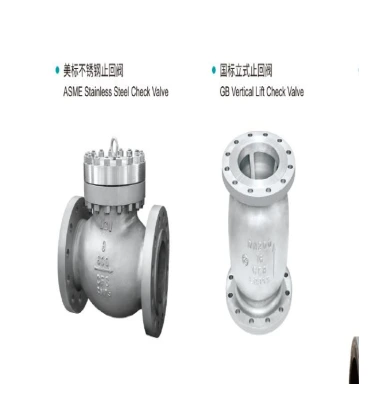
| Product image evidence | One catalog illustration beside this label | Appearance reference only; not a dimensioned drawing |
| Not provided in this entry | DN/NPS, PN/Class, materials, end dimensions, pressure loss, minimum flow and test records | Obtain the exact offered datasheet or drawing |
For purchasing: a quotation should identify the offered model and applicable standards, with a dimensioned drawing and pressure-temperature rating for the specified materials. A marking or photo alone does not supply those documents.
WHAT IS VERIFIED / WHAT IS NOT
Separate catalog identity from supply configuration
The printed label and corresponding illustration support identifying the catalog entry. All service and manufacturing parameters require a specific offered configuration before they can be used for engineering approval or purchase.
Visible in the catalog
- Name: GB Vertical Lift Check Valve, on physical PDF page 82
- Family: Check Valve Series; illustration appears directly below its own label
Request with the offered valve
- Actual disc design, spring/return method and permitted installation directions
- DN/NPS, pressure-temperature rating, connection standard and end dimensions
- Body, trim and seat materials; service-medium compatibility
- Cracking pressure, minimum stable flow and pressure-loss data where available
- Dimensional drawing, applicable GB/T standard number/edition and required inspection documents
CHECK-VALVE SELECTION
Will this valve open steadily and close acceptably in your line?
The key question is not just whether the pipe is vertical. A lift disc must open against its closing forces and remain sufficiently stable across the actual duty range. Size on operating flow and permitted pressure loss as well as the line connection.
1 · Direction and installation
Provide an arrow on the piping sketch showing normal flow and identify a vertical-up, vertical-down, or horizontal run. Do not select this catalog item for downward flow or horizontal duty without explicit approval for that construction.
2 · Minimum stable flow
Cracking pressure starts disc movement; it does not prove the disc stays fully open at minimum operating flow. A low-flow or variable-speed duty needs the supplier’s stable-flow guidance where available. An oversized check valve may chatter and damage its seat or guide.
3 · Hydraulic pressure loss
Check the valve’s differential pressure at normal and maximum flow against the available pump or system head. A restrictive lift-flow path may impose more loss than a swing or axial design; no pressure-drop number is established for this catalog entry.
4 · Shutdown and reverse flow
Specify pump shutdown, rapid reversal, pulsation and surge sensitivity. Closure timing depends on the disc, spring/weight, liquid column and system dynamics. Do not assume zero water hammer or “non-slam” performance from the vertical-lift name.
5 · Connection and inspection
Attach the line size, mating flange standard/facing, required face-to-face dimension and operating pressure/temperature. Request the exact material specification, pressure-temperature rating, applicable GB/T references, test acceptance and approved drawing for the quotation.
WHEN TO RECONSIDER
Where another check-valve pattern may be the better start
Use the operating condition to decide whether to continue this catalog inquiry or review a different check-valve family. No alternative is automatically qualified without its own datasheet.
Frequent low-load operation
If normal or minimum flow may not hold the disc open steadily, ask for a stable-flow assessment before ordering. Compare a correctly sized alternative rather than selecting by line diameter alone.
Rapid pump stops or high transients
If surge or slam risk is critical, examine closure characteristics and the system transient study. A silent check valve series is an alternative route to evaluate, not a guarantee of surge elimination.
Horizontal routing or different orientation
For a horizontal line or vertical downflow, start with the lift check valve series and the parent check-valve catalog to locate a manufacturer-approved orientation and arrangement.
PRIMARY SOURCE EVIDENCE
Catalog location of this product label and illustration
This excerpt reproduces the GB Vertical Lift Check Valve label and adjacent check-valve entries on physical PDF page 82. It documents which illustration belongs to this name; it does not identify pressure rating, internal disc details, materials or order-ready dimensions. Open the full original catalog.
CHECK-VALVE FAMILY
Related catalog entries to compare—not interchangeable specifications
Utilice el check valve category for the wider range. The following records are adjacent catalog identities; confirm orientation and duty separately for each.
válvula de retención H44W según norma GB
Another GB-labeled check-valve catalog entry. Evaluate its closure arrangement and installation orientation with its own drawing; do not transfer this product’s assumptions.
Válvula de retención de acero inoxidable ASME
A separate catalog entry with ASME and stainless-steel descriptors. Neither term specifies this GB vertical-lift item’s material or standard compliance.
Válvula de retención tipo wafer de acero forjado
A different body/connection concept to review where installation space is a primary constraint. Verify its own face-to-face and pressure loss.
PRODUCT-SPECIFIC QUESTIONS
Questions before specifying this catalog item
Use the response to each question to decide whether further technical evidence is required.
Does “vertical lift” approve any vertical installation?
No. Upward flow in a vertical riser is the initial arrangement to check. Obtain written confirmation of the permitted flow direction, disc return design and installation position for the offered valve.
Is cracking pressure enough to establish minimum operating flow?
No. Cracking pressure indicates the start of disc opening; stable operation also depends on flow rate, pressure drop and valve design. Supply the complete flow range and request configuration-specific data.
Does the “GB” label prove a GB/T standard or test result?
No. The label does not identify a specific standard number or edition. Include the required design, connection, dimension and test references in the RFQ and verify them against the offered documents.
What is needed for a meaningful quotation?
Send vertical flow direction and installation sketch, medium, size and connection, minimum/normal/maximum flow, pressure and temperature, quantity, pressure-loss and closure concerns, and drawing/test-document requirements.
CONFIGURATION-SPECIFIC RFQ
Request a GB Vertical Lift Check Valve configuration review
Reference the catalog label and attach your piping sketch or an existing valve drawing. VALMORA can review the requested duty and identify the offered design, documented limits and quotation conditions; this page does not confirm stock, compliance or a particular valve rating.
- Vertical-up / vertical-down / horizontal orientation and normal flow arrow
- Medium; minimum, normal and maximum flow; pump shutdown or surge conditions
- Size, design pressure/temperature, connection and face-to-face constraints
- Preferred materials and standard numbers/editions, where specified
- Quantity and required drawings, performance data, tests and certificates