
Producto identificado en catálogo
Válvula de mariposa para red de tuberías
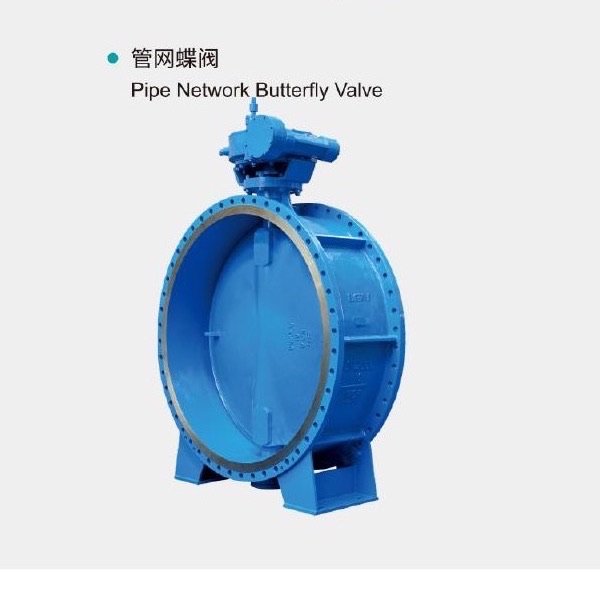
El catálogo inglés recuperado etiqueta este artículo Válvula de mariposa para red de tuberías en la página 94 del PDF. Identifica una válvula de mariposa, pero no publica un diseño listo para pedido, conexión de extremos, tamaño, clasificación de presión ni aprobación de servicio. La válvula debe adecuarse al servicio real de la línea y a un plano de instalación acotado.
- Fuente: catálogo inglés de Lianggong, página 94 del PDF
- Configuración: tamaño, conexión, clasificación y materiales no se indican en este registro
Identidad de catálogo
Qué identifica el registro de origen
El registro de origen identifica un artículo de catálogo; no proporciona una especificación completa del producto. Utilice la categoría principal Gama de válvulas de mariposa para comparar construcciones, pero no transfiera clasificaciones ni dimensiones de otras entradas.
Familia de producto
Válvula de mariposa — la ruta comercial principal es la Gama de válvulas de mariposa.
Serie de catálogo
Válvula de mariposa — el catálogo recuperado incluye esta entrada en la serie de válvulas de mariposa; no se muestra un código de modelo independiente.
Fuente de evidencia
Catálogo de productos Lianggong recuperado en inglés, página 94 del PDF (páginas impresas 177–178); recorte de producto AST-PDFCROP-0113.
Evidencia del catálogo
Datos de producto documentados en catálogo
El registro del catálogo confirma únicamente la designación y la familia del producto. Aquí no se publican valores numéricos ni datos de interfaz; para la compra, utilice la ficha técnica ofrecida y el plano general (GA) aprobado.
| Campo | Valor documentado en catálogo | Estado de la evidencia |
|---|---|---|
| Etiqueta del producto | Válvula de mariposa para red de tuberías | VERIFICADO — designación del catálogo en la página 94 del PDF |
| Tipo / familia de válvula | Válvula de mariposa | VERIFICADO — etiqueta de catálogo |
| Serie de catálogo | Válvula de mariposa | VERIFICADO — contexto del catálogo de origen |
| Ubicación de origen | Página 94 del PDF (páginas impresas 177–178) | VERIFICADO — correspondencia de página recuperada |
No publicado en este registro: tamaño nominal, clase de presión, envolvente de presión-temperatura, norma de diseño o de ensayo y edición, norma de conexión, grado de material, clase de fugas, especificación del actuador y aprobaciones del proyecto. Nada de ello se deduce de “Pipe Network” ni de la fotografía.
Límite de selección
Qué debe confirmarse antes de una oferta técnica
El nombre y la fotografía establecen la identidad del producto, no su idoneidad para el servicio. Las lagunas decisivas son el servicio de la válvula, la presión diferencial máxima, la geometría de la tubería de empalme y la construcción ofrecida de la válvula.
La identidad no es una aprobación de servicio
- “Red de tuberías” no identifica servicio de agua o aguas residuales, aprobación para agua potable, cumplimiento de AWWA C504 ni aceptación por la empresa de servicios local.
Confirmar antes de cotizar
- Conexión de extremo, norma de brida y taladrado, longitud entre caras, disposición de pernos y requisitos de junta / cara de asiento
- Diámetro interior de tubería, revestimiento, geometría del reductor y envolvente barrida por el disco en apertura total
- Presión de diseño de la línea, ΔP máximo admisible del disco, temperatura de diseño y envolvente presión–temperatura del proveedor para la configuración ofrecida de cuerpo / asiento / material
- Requisito de estanqueidad en aislamiento o rango de caudal de regulación y datos de Cv/Kv
- Materiales de cuerpo, disco, eje y asiento para el medio real, temperaturas de operación mínima / normal / máxima y temperatura de diseño
- Par del actuador, tiempo de carrera solicitado, frecuencia de ciclos y controles; donde exista riesgo de transitorio líquido, proporcione los datos de evaluación del sistema y solicite el perfil de cierre efectivo del conjunto ofrecido
Selección técnica
Ajuste la válvula a su función en la red
Comience por la tarea real de la válvula: aislamiento todo/nada o control de caudal modulante. Después verifique el diferencial de presión y la envolvente física frente al trazado real de la tubería.
¿Aislamiento o regulación?
Para aislamiento todo/nada, indique el criterio de estanqueidad requerido, la dirección del flujo y la presión diferencial máxima a través del disco cerrado, incluidos los casos de contrapresión o transitorios cuando apliquen. Para regulación, proporcione el caudal mínimo, normal y máximo con su ΔP correspondiente, y solicite los datos de Cv/Kv de la válvula ofrecida según la apertura del disco y el rango de control admisible. Una coincidencia de tamaño nominal con la línea no establece por sí sola un rango de control utilizable; si se requiere regulación precisa o continua, compare el Control Valves range rather than assuming this catalog entry can provide the required control range.
Pressure and temperature limits
Provide line design and operating pressure separately from the maximum differential pressure (ΔP) across the disc during shutoff, opening, closing and any partial-open duty. Ask the supplier to state the allowable ΔP and torque basis for the offered seat / body configuration; line pressure or a nominal pressure class is not a substitute. Provide the minimum, normal and maximum operating temperatures plus the design temperature and, where relevant, start-up, shutdown and thermal-cycling conditions. The supplier should state the pressure–temperature allowable envelope for the offered body, seat and material configuration, and confirm allowable disc ΔP and operating torque at the applicable temperature.
Where the service is water and transient risk is relevant, provide the water-hammer assessment; for other liquid services, provide the hydraulic-transient / surge assessment. Include initiating events such as pump start, stop or trip and rapid valve opening or closing; normal flow or velocity; relevant pipe lengths and system boundaries; fluid properties used in the assessment; and the calculated maximum positive and minimum transient pressures, including any vacuum. Include event duration and repetition frequency where known. State the required operating sequence and target opening / closing time. Ask for the offered valve / actuator effective closing profile and the valve flow characteristic versus disc position: total stroke time alone does not show how flow changes during closure. Ask the supplier to assess the offered assembly against the project transient envelope and confirm allowable transient pressure, disc ΔP and torque. No generic safe closing time is inferred from this catalog record.
Materiales y conexión de extremo
State fluid composition, solids / abrasion, corrosion / erosion and temperature, then confirm body, disc, shaft and seat materials against that service. Separately specify the actual end connection, mating-flange standard and drilling, face-to-face length, bolt arrangement and gasket / seat-face requirements. The catalog name does not identify wafer, lug, flanged or another connection.
Operator and torque
Specify manual / gear or powered operation, local / remote control, cycle frequency, required stroke time, utilities and fail position. Ask for valve torque data at the stated ΔP and flow conditions, then verify actuator output against both the required operating torque and the valve’s allowable stem torque.
Documents for approval
Request the offered GA drawing and datasheet; the pressure–temperature allowable envelope for the stated body / seat / material configuration; allowable disc ΔP, leakage criterion and test basis; Cv/Kv data for modulating duty; torque / actuator sizing and closing-characteristic basis; and the project-required inspection, traceability, witness and certification / approval documents, including the issuing body and scope where applicable.
Pipeline fit
Verify the full disc sweep in the installed line
A butterfly disc rotates across the bore and may project beyond the valve end face when fully open. A nominal DN/NPS match or bolt-circle match alone does not prove clearance. The final check must use the exact offered valve drawing and the as-designed pipe geometry.
Service medium and contaminants
Identify the actual fluid, concentration, solids, abrasives, corrosion / erosion potential, temperature and any cleaning or treatment chemicals. These conditions affect seat and wetted-material compatibility and must be checked against the offered materials.
Network location and flow disturbances
Show whether the valve sits on a main, branch, pump discharge / suction, bypass or equipment connection. Include flow direction and nearby pumps, elbows, tees and other valves so the supplier can assess inlet-flow disturbance against the offered design and its installation instructions. Straight-run requirements are design-specific; do not apply a universal distance.
Pipe interface and clearance
Provide pipe inside diameter, liner thickness, reducer / spool geometry, mating-flange bore and drilling, face-to-face dimension, gasket arrangement, and the locations of adjacent valves or fittings. Request the valve’s full-open disc swept envelope or minimum required clear bore and compare it with every obstruction. Also confirm shaft / actuator orientation, operator access and independent pipe support.
Related butterfly valve records
Use a separate product route when the requirement changes
These are distinct catalog identities, not variants whose specifications can be transferred to this item.
Accionamiento eléctrico
If electric drive is the required differentiator, review the separate Electric Butterfly Valve record. Its operator and valve configuration must be confirmed as one offered assembly.
Large-bore flanged body
If the project specifically requires a large-diameter flanged connection, compare the separate Large Diameter Flanged Butterfly Valve record. The “Pipe Network” label does not establish a flanged end.
Válvula de mariposa hidráulica
Otro registro de catálogo de válvula de mariposa documentado en PDF. Revise su propia evidencia y el alcance de su configuración.
Preguntas del comprador
Pipe Network Butterfly Valve FAQ
Use these answers to separate the catalog image and label from the data needed for an order-specific offer.
Which product and commercial details are not established by the catalog?
Dimensions, material grades, pressure-temperature limits, end connections, leakage criteria, design or test standards, certification / approval scope, price and delivery lead time are not established by this catalog record. Confirm them for the exact offered configuration and project.
Can the catalog image be used as a dimensional, fabrication or installation reference?
No. It identifies the catalog product and its appearance only. Use the offered datasheet and approved GA / order drawing for dimensions, fabrication and installation; the image does not establish certification or approval scope.
¿Qué debe incluirse en la solicitud de cotización?
State the medium and temperature range, isolation or throttling duty, flow and disc differential pressure, line pressure, connection and pipe geometry, materials and actuation. Where liquid-transient risk is relevant, include the system surge assessment and required operating sequence; identify quantity and required drawings, inspection and approval documents.
Consulta técnica
Request a Pipe Network Butterfly Valve configuration review
Reference catalog item CCE-R2-0113 and describe the required isolation or control duty. Include the operating envelope and mating-pipe dimensions so the offered design can be checked against the real installation. Use the message field for written details; if drawing review is needed, ask the team for a suitable document-submission route.
- Service medium, minimum / normal / maximum operating temperature, design temperature, solids and corrosion / erosion conditions
- Isolation or throttling duty, leakage target and flow range
- DN/NPS, line design pressure, maximum differential pressure across the disc and supplier-confirmed pressure–temperature envelope
- End connection, pipe / flange dimensions, liner and disc-clearance constraints
- Quantity, actuation, torque basis and requested stroke time; where liquid-transient risk exists, include pump / valve events and the system surge assessment, and request the offered assembly’s effective closing profile