
Endüstriyel çek valf serisi
Kaldırmalı Çek Valfler
Kaldırmalı çek valfler, ileri akış basıncı altında açılan ve akış azaldığında veya tersine döndüğünde yuvasına geri hareket eden kılavuzlu bir disk veya tıkaç kullanır. Doğru konfigürasyon; boru yönüne, akış aralığına, kabul edilebilir basınç kaybına ve ters akışın ne kadar hızlı gelişebileceğine bağlıdır.
Aşağıda katalogda listelenen iki GB kaldırmalı çek valf tipini inceleyin. Adları ve katalog görselleri ürünleri tanımlar; çalışma limitlerini belirlemeden önce onaylanmış bir veri sayfası ve montaj çizimi gereklidir.
İlk karar: Hat yatay mı dikey mi ve kapanma yerçekimi, yay veya her ikisiyle mi sağlanıyor? Aynı kaldırmalı çek valf yapısının her konumda çalıştığını varsaymayın.
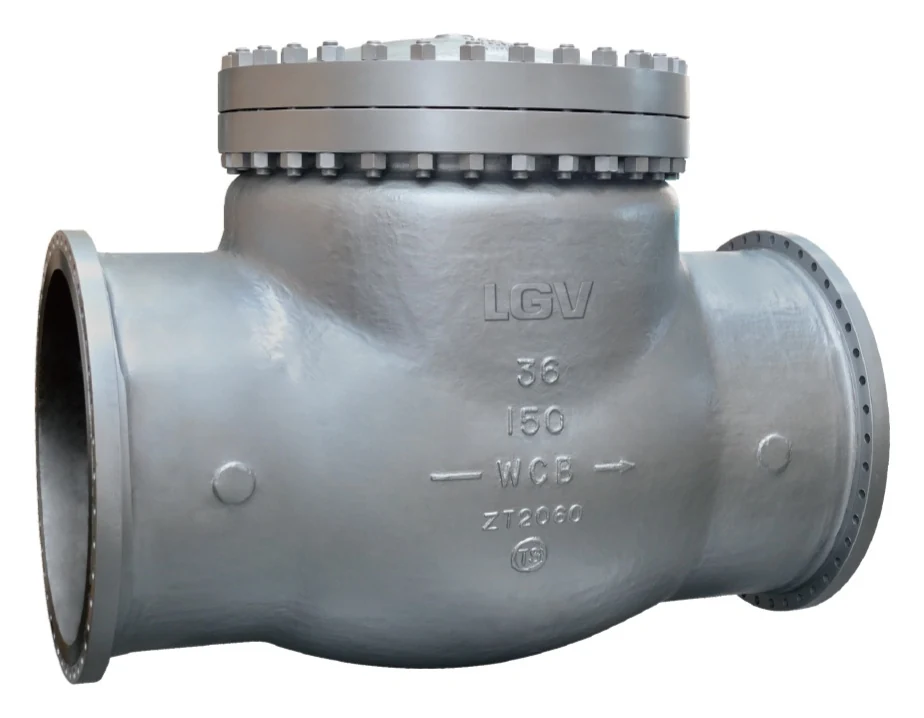
Katalogda listelenen ürün yolları
Katalogda iki kaldırmalı çek valf kaydı
Kaynak katalog, bir GB Dikey Kaldırmalı Çek Valf on physical page 82 and a GB Dökme Çelik Kaldırma Çek Valf on page 83. These are catalog identities, not a confirmed common specification: installation position, disc return mechanism, end dimensions, grades and pressure-temperature ratings require the exact offered product documents.
Catalog p. 82. The photographed item is labeled GB Vertical Lift Check Valve. “Vertical” in the product name is not permission to install it in every vertical or downward-flow arrangement; obtain the model-specific orientation and flow-direction instructions.
Catalog p. 83. The catalog identifies a GB Cast Steel Lift Check Valve. Confirm the offered material grade, end connection, pressure-temperature rating and installation drawing. Request a matching product photograph or dimensional drawing when reviewing the quotation.
Catalog source · photographed identities are not technical data sheets
Installation and operating principle
Horizontal versus vertical lift check valve installation
With a conventional gravity-return straight-pattern lift check valve, horizontal piping normally places the bonnet above the line so the disc can lift and reseat vertically. A design intended for a vertical pipe may work with upward flow, but this requires a verified disc arrangement and the manufacturer’s installation instructions. Spring-assisted products may have different permitted orientations; the presence or absence of a spring must be checked, not assumed from appearance.
A vertical pipe run is not the same thing as vertical disc travel. For a downflow leg, an unverified gravity-return lift check is not a default selection. Check the flow arrow, actual internals and approved orientation before committing the piping layout.
Gravity-return construction
Forward differential pressure raises the closure member; its weight and the changing differential help it return. Orientation determines whether gravity assists seating. Specify a mounting position consistent with the offered drawing.
Spring-assisted construction
A spring can influence opening threshold and closing response, but not all lift check models include one. Request spring details and approved orientation; do not infer universal vertical suitability or slam-free closure.
Minimum-flow limit
Cracking pressure indicates the differential needed to start opening. It does not establish the flow needed to keep the disc fully and steadily open. If the system operates for long periods at low flow, request the stable-flow guidance and pressure-drop curve for the exact size.
Mühendislik seçimi
Choose by stable opening, head loss and shutdown response
Start with the lowest normal operating flow. If a proposed valve cannot remain stably open there, selecting by nominal pipe size alone may produce disc chatter and accelerated seat wear. At normal and peak flow, compare its documented differential pressure or flow coefficient with the system’s allowable head loss. Finally, review pump-trip or rapid reversal behavior: gravity-return lift and spring-assisted designs do not share one guaranteed closing time.
| Operating condition | Pratik karar | Ask for |
|---|---|---|
| Horizontal pipe, steady flow | A conventional lift check may be evaluated if the disc is oriented to return to its seat and the pressure loss is acceptable. | Installation drawing; pressure-drop data at normal and peak flow. |
| Vertical pipe | Only evaluate a model expressly approved for the intended upward or downward flow. The product name alone is insufficient. | Flow arrow; permitted orientation; gravity/spring return details. |
| Long periods at low flow | Exclude or resize a configuration that cannot stay stably open; nominal diameter and cracking pressure alone will not settle this. | Minimum stable-flow or velocity guidance; flow profile. |
| Fast pump trip or surge-sensitive line | Compare the actual closure response with axial/silent or quick-closing alternatives; no check valve is a universal water-hammer cure. | Transient case, pump coast-down, reverse-flow conditions and closing data. |
Where the selection changes
Three situations where lift check selection needs care
These are engineering selection scenarios, not claims about completed customer installations. The final product choice depends on the actual piping and operating data.
Pump discharge with a fast shutdown
If flow reverses rapidly after a pump trip, checking only non-return function is insufficient. Review pump coast-down and surge consequences; an axial/silent check valve or a quick-closing design may merit evaluation. Compare measured or calculated closing behavior rather than a “no water hammer” claim.
Process line with restricted pressure budget
A lift check has a flow path and moving closure that can impose a meaningful pressure loss. Compare the product-specific ΔP–flow curve at normal and maximum rate. If head loss dominates the choice, also assess a swing check valve, while accounting for its closure characteristics.
Vertical piping or variable low flow
For a vertical leg, obtain written orientation approval for the offered construction, including whether flow must be upward. For turndown service, validate disc stability at minimum flow. If neither is documented, keep the selection open rather than treating “vertical lift” as an installation certificate.
Quote-level specification
What the supplier must document for the selected valve
The catalog confirms two product names, but it does not establish a shared size range, nominal pressure, temperature limit, material grade, test standard or flow coefficient for this series. Review those values on the offered datasheet and drawing rather than deriving them from cast markings or a photograph.
Configuration and interfaces
Request the exact model or catalog identifier, valve size, end connection, face-to-face and mating dimensions, and installation orientation with flow direction. Check whether the disc is guided and whether a spring is included.
Operating and hydraulic data
Match the offered material and seat/trim construction to the medium and pressure-temperature cases. Ask for opening characteristics, stable flow guidance, pressure loss at your flow rates and any available closure-response data.
Purchase and inspection documents
Identify the applicable design, inspection and leakage-test requirements in the project specification. Request the relevant drawings and records for the order; a catalog picture does not demonstrate an individual valve has passed a particular test or certification.
Compare adjacent check valve designs
When a different check valve is a better starting point
Lift: assess disc guidance, mounting orientation and stable opening, alongside pressure loss. Swing: often worth comparing where a relatively open flow path is valuable, but closure depends on hinge dynamics and operating conditions. Axial/silent: evaluate for short-travel, spring-influenced response where reverse-flow acceleration matters. Quick-closing: compare when the project has a defined rapid-shutdown or surge-control objective. None can be chosen by family name alone.
Other site routes: all products, industry contexts ve technical resources.
Check Valve Categories
Return to the full check-valve family when the required closing mechanism has not yet been selected.
Salınımlı Çek Valfler
Compare flow-path resistance and disc swing on relatively steady liquid service; verify reverse-flow conditions and orientation.
Silent / Axial Check Valves
Compare spring-assisted short-travel closure where pump-trip reversal and slam risk influence the choice.
Hızlı Kapanan Çek Valfler
Assess separately when closing response is specified for an abrupt operating event; obtain design-specific data.
Technical RFQ
Send the flow and installation conditions for a lift check valve quote
Identify the GB Vertical Lift or GB Cast Steel Lift catalog route, or ask for help comparing them. State the installation and operating conditions first; VALMORA can then review a proposed configuration and the documents required for quotation. Unavailable product values should remain open questions, not assumed specifications.
- Requested catalog identity and required quantity
- Fluid or gas, composition, solids and service temperature
- Minimum, normal and maximum flow, and duty cycle
- Pipe size, connection type, line orientation and flow direction
- Normal/design pressures, temperature limits and allowable pressure drop
- Pump stop or reversal scenario; permitted surge if applicable
- Required installation drawing, test basis and purchase records
- Specify which dimensions, grades and performance values need supplier confirmation