
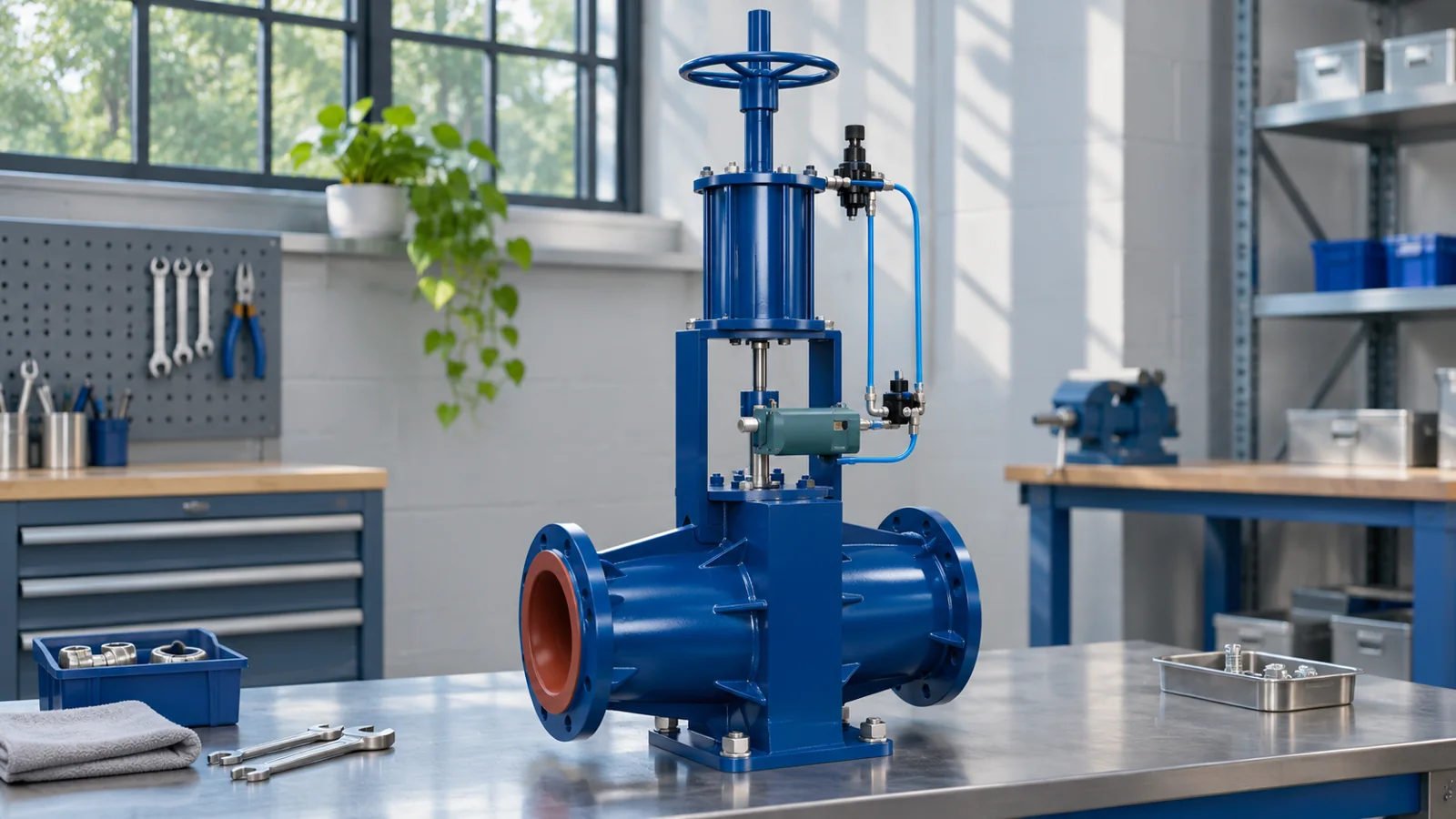
Bir pinç valf, proses malzemesini taşıyan esnek manşonu sıkarak kapanır. Yeniden açılmak için aktüatör bu sıkıştırmayı serbest bırakır ve manşon eski haline dönebilir. Uygun bir tasarımdaki açık geçiş, bulamaçlar, tozlar ve granüller için uygun olabilir. Valf seçmeden önce manşonun ortamla uyumluluğunu doğrulayın ve gerçek basınç veya vakumu, çevrim sıklığını ve kapama ya da kontrol görevini kontrol edin. Bu koşullar, manşonun güvenilir şekilde yeniden açılıp açılamayacağını ve gerektiği gibi sızdırmazlık sağlayıp sağlayamayacağını belirler.
Pinç Valf Nasıl Çalışır?
Açık bir pinç valfte manşon, valf boyunca nispeten doğrudan bir geçiş sağlar. Kapama elemanı, ayrı bir küre, sürgü veya disk yerine deforme olabilen manşonun kendisidir. Uygun bir tam geçişli tasarımda bu, katıların iç kapama parçaları çevresinde birikmeden geçmesine yardımcı olabilir. Bu, valfin sıfır basınç kaybına sahip olduğu anlamına gelmez: manşonun gerçek iç çapı, geçişleri ve durumu akış direncini hâlâ etkiler.
Valfi kapatmak için bir kuvvet, manşonun karşılıklı kenarlarını geçiş tamamen sıkışana kadar birbirine doğru iter. Karşılıklı manşon yüzeyleri kapama arayüzünü oluşturur. Valf yeniden açıldığında aktüasyon sistemi sıkıştırmayı serbest bırakır ve manşon geçişini geri kazanır. Bunun ne kadar güvenilir gerçekleştiği, manşonun esnekliğine, onu destekleyen veya açmaya çeken mekanizmaya ve manşonun içindeki ve dışındaki basınç koşullarına bağlıdır.
Manşon, ilgili proses basıncını ve kendi deformasyon direncini yenmeye yetecek kuvvetle sıkıştırılmalıdır. Doğrudan hava ile çalışan bir modelde kontrol basıncı ile hat basıncı arasındaki ilişki bu nedenle belirleyicidir. Mekanik bir modelde ise aktüatör ve kapama mekanizması gerekli kuvveti ve stroku sağlamalıdır. Her iki tip de yalnızca adından evrensel bir aktüasyon basıncı veya kapama performansı atanamaz.

Manşon Tasarımı Neden Önemlidir?
Manşon yalnızca değiştirilebilir bir astar değildir. Tipik bütün manşonlu konstrüksiyonlarda akışkanla temas eden geçiş yolunu oluşturur ve akışı durdurmak için aynı zamanda deforme olur. Pinç valfin rijit bir iç kapama elemanına sahip valften farklı davranmasının nedeni budur: aşınma, kimyasal etki, basınç ve tekrarlanan kapama, şeklini geri kazanması ve sızdırmazlık sağlaması gereken aynı bileşen üzerinde etkili olur.
Katı içeren akışlarda elastomer, parçacıklar yüzeyine çarptığında metal gibi aynı rijit darbe yüzeyini sunmak yerine deforme olabilir. Bu, uygun bir bulamaç (slurry) hizmetinde aşınmayı azaltabilir; ancak manşonu erozyona karşı bağışık hale getirmez. Parçacık boyutu ve şekli, bulamaç hızı, konsantrasyon ve çalışma çevrimleri malzemenin nasıl kaldırıldığını veya yorulduğunu değiştirebilir. Bu nedenle yalnızca "aşınmaya dayanıklı" olarak tanımlandığı için seçilen bir manşon, gerçek proses olağandışı sıcaksa, kimyasal açıdan agresifse veya sık kısılma (throttling) uygulanıyorsa uygun olmayabilir.
Manşon konstrüksiyonu, kauçuğun adı kadar önemlidir. Bazı üreticiler akışkanla temas eden bir iç katman, basınç yüklerini taşımaya yardımcı takviye katmanları ve bir dış koruyucu katman kullanır. Diğer düzenlemeler farklı destek veya gövde tasarımları kullanır. Örneğin Valmet'in manşon seçimi kılavuzu kimyasal yapıyı, sıcaklığı, basınç veya vakumu ve çevrim sıklığını birbiriyle bağlantılı seçim girdileri olarak ele alır. Manşonun ve valf gövdesinin basınç tutma rolü gerçek konstrüksiyon için anlaşılmalıdır; tüm pinç valflerde aynı değildir.
Bu etkileşim, aksi halde makul olan bir seçimi tersine çevirebilir. Bir manşon malzemesi aşındırıcı sulu bir bulamacı tolere edebilir ancak belirli bir çözücüyü tolere etmeyebilir. Takviyeli bir manşon pozitif basınca dayanabilir ancak emme altında farklı bir düzenleme gerektirebilir. Ara sıra izolasyon çevrimlerine dayanan bir malzeme, uzun süreler kısmen kapalı tutulduğunda farklı şekilde aşınabilir. Sonuç olarak manşon ömrü uygulamaya bağlı bir sonuçtur; tüm bir valf ailesine atanabilecek sabit bir aralık değildir.
Hava ile Çalıştırılan ve Mekanik Olarak Sıkıştırılan Tasarımlar
Doğrudan manşon sıkıştırmalı hava ile çalıştırılan bir pinç valf mekanik olarak basittir: kontrol ortamı manşonun çevresinde etkili olur, bu nedenle ayrı bir sıkıştırma çubuğu düzeneği bulunmayabilir. Uygun bir basınçlı hava beslemesi ve kontrol devresinin mevcut olduğu durumlarda tekrarlanan aç/kapa izolasyonu için pratik bir düzenleme olabilir. Bununla birlikte kapama ve yeniden açma, kontrol basıncına, proses basıncına, manşon durumuna ve haznenin tahliyesi için kullanılan düzenlemeye bağlıdır.
Mekanik olarak sıkıştırılan bir tasarım kuvveti bir itici veya sıkıştırma çubukları aracılığıyla iletir. Aktüatör bu parçaları hareket ettirir ve bunlar manşonu deforme eder. Bu, kapama düzeneğinin tanımlı bir hareketini sağlayabilir; ancak aktüatör stroku ile kalan akış alanı arasındaki ilişki otomatik olarak doğrusal değildir. Aynı nominal çapa sahip iki mekanik olarak sıkıştırılan valf farklı strok, manşon şekli ve akış karakteristiklerine sahip olabilir.
İlgili bir ayrım, aktüasyon enerjisi kaybolduğunda valfin tepkisidir. Bazı doğrudan hava ile çalıştırılan tasarımlar kontrol basıncı bırakıldığında normalde açıktır. Diğer pinç valf düzenlemeleri farklı bir arıza konumu elde etmek için yay geri dönüşlü veya farklı aktüatör konfigürasyonları kullanabilir. Kapatma veya kilitleme (interlock) görevi için gerekli arıza-açık veya arıza-kapalı davranışı, "pnömatik" veya "mekanik" ifadesinden çıkarılmak yerine komple valf-aktüatör montajından belirlenmelidir."
On/off capability is not proof of throttling capability. Partially pinching the sleeve changes the passage shape, local flow velocity and mechanical loading. A control-grade valve may use a specially shaped sleeve and a suitable positioner to obtain a useful regulating characteristic. An ordinary isolation model may not tolerate sustained partial opening. As a concrete product-specific counterexample, Valmet's Flowrox PVEG operating instructions (4PV72EN, 1/2024) specify on/off use and warn against throttling because it can prematurely damage that series' sleeve. This restriction belongs to the PVEG design, not to every pinch valve; the reverse claim that all pinch valves can regulate flow is equally unjustified.
Where Pinch Valves Work Well—and Where They Do Not
Pinch valves merit consideration when a process stream carries particles that could lodge around rigid internal trim or rapidly abrade a conventional closing surface. Typical candidate duties include isolating slurries in mineral processing, suspensions in wastewater handling, and certain powder or granule conveying lines. The sleeve presents a continuous wetted surface in many designs, while the closing motion itself changes the passage shape. These features can be useful in difficult media, provided the chosen sleeve and valve construction are suitable for that particular process.
Their suitability is less obvious where the service imposes a different demand on the sleeve. Strongly incompatible chemicals can attack the elastomer even if the valve's body material is resistant. High temperatures or frequent cycling can change its recovery and wear behavior. Under vacuum, a sleeve that holds its shape under positive pressure may deform inward even while the valve has been commanded open. Depending on the design, this can reduce the effective passage or prevent reliable reopening. AKO's vacuum-conveying guidance describes special compensation arrangements for its air-operated products; the cited operating limits are specific to that product system.
Illustrative scenario: Consider two hypothetical lines that both carry solid particles. Line A transfers an abrasive water-based slurry under positive pressure and needs intermittent isolation. If the sleeve material is compatible with the liquid and particles, and the selected valve meets the pressure and cycling duty, a pinch valve is a credible shortlist option. Line B conveys dry powder under suction. Its particles may also suit a sleeve-type passage, but Line B adds a separate question: will the sleeve retain its open shape when the pressure inside the line is below the pressure around it? Line B cannot be accepted merely because Line A is suitable. It may require a vacuum-rated sleeve or a specific pressure-compensation arrangement. No numeric performance result or actual installation is implied by this example.
The sleeve is also a containment boundary, not an indestructible barrier. If it wears through or ruptures, process material may enter parts of the body or, in some air-operated arrangements, the control-air circuit. Control medium may also reach the process side. This consequence matters especially for hazardous or contamination-sensitive service: the surrounding equipment and operating procedures must address a credible sleeve failure, rather than treating routine sleeve replacement as the only maintenance consideration. Service personnel should isolate and depressurize the system according to the applicable equipment instructions before any inspection or sleeve replacement.
What to Check Before Specifying a Pinch Valve
Start with the job the valve must perform. For intermittent shutoff of a solids-bearing stream, a compatible sleeve and an on/off design may be sufficient. For continuous modulation, require a model intended for that duty and assess its usable travel, flow characteristic and expected sleeve wear. For a suction line, investigate open-sleeve stability before assuming that a positive-pressure rating answers the problem. Those are different selection questions even when the pipe size is identical.
Next, describe what actually passes through the valve: liquid or gas carrier, solids content and particle characteristics, concentration of any aggressive chemical, and the normal and limiting temperatures. These details are used to choose the sleeve material and construction. Provide normal and maximum positive pressure, any minimum absolute pressure or vacuum condition, and the highest operating differential pressure. The valve's nominal diameter alone does not establish its actual bore, pressure capability or controllability.
Finally, match the operating mechanism to the plant. A direct air-operated design needs an appropriate control-pressure supply and circuit; a mechanically pinched design needs the specified actuator force, travel and control arrangement. Where a particular fail position matters, it must be part of the configuration. Confirm end connections and installation dimensions, space to remove the sleeve, and the product-specific shutoff acceptance conditions. A supplier's datasheet and operating instructions should resolve these points for the actual series rather than leaving them as generic valve-family assumptions.
Example bid review: For a powder line under suction, a quotation gives the sleeve compound and maximum positive line pressure but no vacuum data. Keep open-passage performance under suction unverified. Give the supplier the lowest expected absolute pressure and ask for the sleeve and control arrangement that maintain the required opening under those conditions. If the line also needs modulation, request evidence for that duty separately. Use the industrial valve datasheet guide to record what the offered model supports.